English

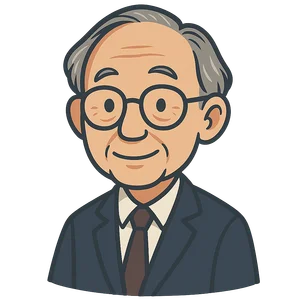
Charles K. Kao
A Chinese-born physicist and electrical engineer who pioneered the development and use of fiber optics in…
Reads at Grades 3–5 Listens at Grades 1–5
Print & create
Answer keys·No prep·Free with an account
28 worksheets · answer keys · full story · quiz · Ages 8-10 · CEFR B1
Plus adds 244,000+ more stories in 27 languages, audio for every one, and printables for all of them.
Just want Charles K. Kao?
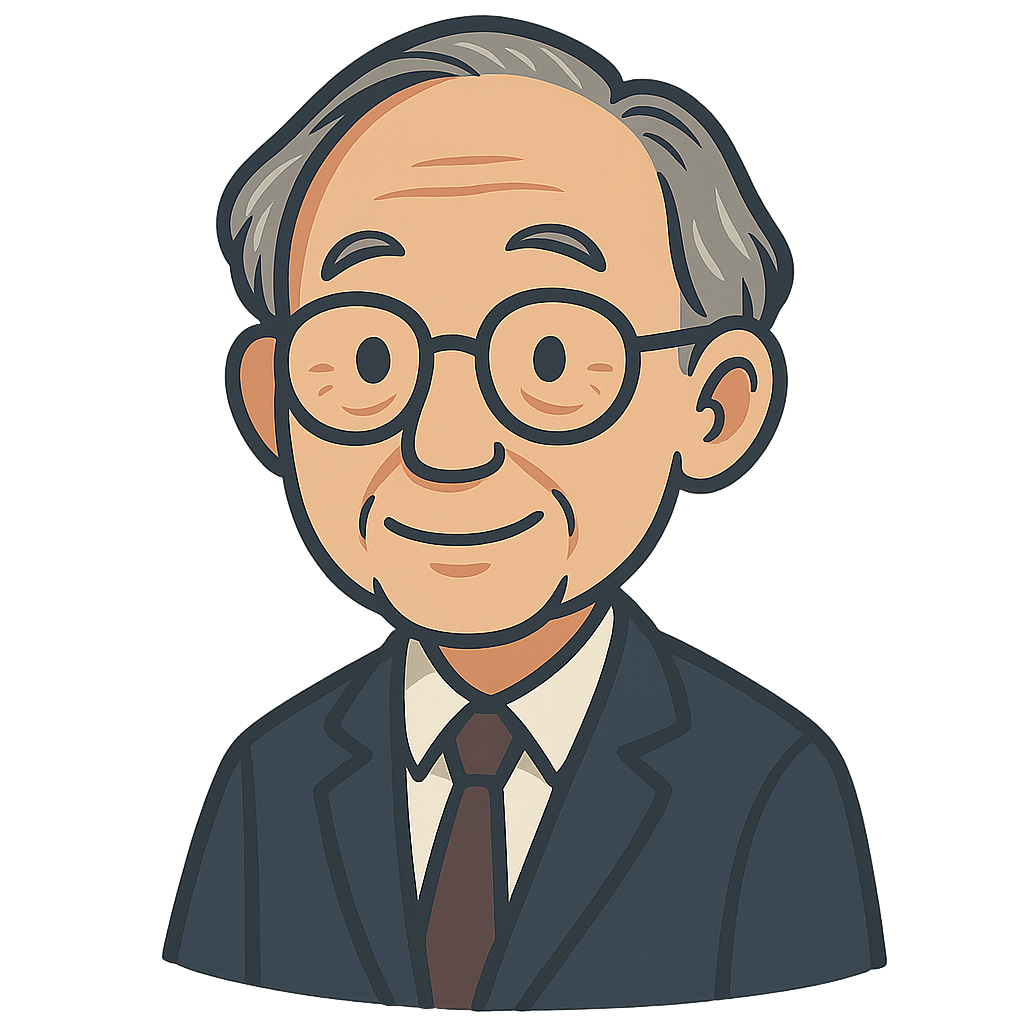
Hello! My name is Charles Kao. My story begins on November 4th, 1933, in Shanghai, China, where I was born. My family lived in a place with a special history, and this environment made me very curious. Even as a young boy, I was fascinated by the world around me. I didn't just want to see things; I wanted to understand how they worked. With my brother, I would spend hours doing little experiments. We even tried making our own simple chemicals, carefully mixing things together to see what would happen. This love for discovery was a big part of my childhood. In 1948, when our family moved to Hong Kong, my world became even bigger. I saw new things and had new questions. I knew then, more than ever, that I wanted to spend my life learning, exploring, and uncovering the secrets of science and technology.
When I grew older, I knew I had to travel to learn even more. So, in 1953, I moved all the way across the world to England to attend college. It was a huge change, but I was ready for the challenge. I decided to study a subject called electrical engineering. This field is all about how electricity works and how we can use it to create amazing inventions that help people. I found it absolutely fascinating! I studied very hard, spending countless hours in libraries and laboratories. My hard work paid off, and in 1965, I earned my PhD. A PhD is a very special degree that you earn after many years of study, and it means you have become an expert in your chosen subject. Soon after, I began a new chapter of my life when I got a job at a company called Standard Telecommunication Laboratories. I was so excited because I knew this was where my real adventure in science was about to begin. I couldn't wait to use everything I had learned to help solve some of the world's biggest problems.
Charles K. Kao: The Man Who Lit Up the World
Hello! My name is Charles Kao. My story begins on November 4th, 1933, in Shanghai, China, where I was born. My family lived in a place with a special history, and this environment made me very curious. Even as a young boy, I was fascinated by the world around me. I didn't just want to see things; I wanted to understand how they worked. With my brother, I would spend hours doing little experiments. We even tried making our own simple chemicals, carefully mixing things together to see what would happen. This love for discovery was a big part of my childhood. In 1948, when our family moved to Hong Kong, my world became even bigger. I saw new things and had new questions. I knew then, more than ever, that I wanted to spend my life learning, exploring, and uncovering the secrets of science and technology.
When I grew older, I knew I had to travel to learn even more. So, in 1953, I moved all the way across the world to England to attend college. It was a huge change, but I was ready for the challenge. I decided to study a subject called electrical engineering. This field is all about how electricity works and how we can use it to create amazing inventions that help people. I found it absolutely fascinating! I studied very hard, spending countless hours in libraries and laboratories. My hard work paid off, and in 1965, I earned my PhD. A PhD is a very special degree that you earn after many years of study, and it means you have become an expert in your chosen subject. Soon after, I began a new chapter of my life when I got a job at a company called Standard Telecommunication Laboratories. I was so excited because I knew this was where my real adventure in science was about to begin. I couldn't wait to use everything I had learned to help solve some of the world's biggest problems.
At my new job, I joined a team of scientists who were trying to solve a very big puzzle: how to send lots of information, like phone calls and messages, over very long distances quickly and clearly. At the time, they were using thick, heavy copper wires. These wires could only carry a small amount of information at a time and were expensive to use. Some people were experimenting with a different idea, using thin threads of glass called optical fibers. They would send information as tiny pulses of light through these glass threads. It was a clever idea, but it had a major flaw. The light signal would fade away and disappear after traveling just a short distance. Everyone thought the light source was the problem. But in 1966, I had a different idea—a big, bright idea. I thought, 'What if the problem isn't the light? What if the problem is the glass itself?' I believed the glass they were using had tiny impurities in it that were blocking the light. I did a lot of careful calculations and realized that if we could make glass that was incredibly pure, the light could travel for miles and miles without fading! My colleague, George Hockham, and I wrote a scientific paper explaining our discovery. At first, many other scientists were skeptical and didn't think it would work, but I was sure it could.
Even though some people had doubts, my idea started to get other scientists and engineers very excited. They saw the possibility of a brand-new way to communicate. A few years later, in 1970, a team of researchers at a company in America took my theory and put it to the test. They successfully created the world’s first ultra-pure glass fiber, just like the one I had described in my paper. And guess what? It worked perfectly! They sent a beam of light through it, and it traveled a long distance without fading, proving my calculations were correct. This single invention changed everything. Those tiny, pure glass fibers became the backbone of our modern world. They are the reason we have high-speed internet that connects us all today. These fibers act like super-highways for information, carrying everything from your video calls with family to the online games you play and the movies you watch. My idea helped light up the world and connect the entire planet.
For my discovery, which helped change how the world communicates, I was given a very special award in 2009 called the Nobel Prize in Physics. It is one of the highest honors a scientist can receive, and it was one of the proudest moments of my life. I lived to be 84 years old. Today, people remember me as the 'Father of Fiber Optics.' My work helped create the connected world we all live in, and I hope it inspires you to stay curious, ask big questions, and follow your own bright ideas, no matter how impossible they might seem at first.
Wow facts
About
A Chinese-born physicist and electrical engineer who pioneered the development and use of fiber optics in telecommunications, earning him the 2009 Nobel Prize in Physics and the title 'Father of Fiber Optics.'
Take a Quiz
Question 1 of 5
In what year did I write the scientific paper about my idea for pure glass fibers?
Explore next





Want to do even more?
Go beyond exploring. Unlock tools that turn every story into real learning.

Storypie Plus for families
Full stories, quizzes, and printables. Nights and car rides, sorted.
- Unlimited audio stories
- Create Mode: your child stars in the story
- Offline downloads
- Printable worksheets & coloring pages

Why Storypie for Schools
Students engaged. Prep in seconds. Evenings back to you.
- Worksheets & Quizzes
- Classroom Management
- Formative Assessment
- Custom Curriculum & Lesson Plans
- 27 Languages

Why Storypie for Homeschool
Curriculum done. They'll ask for more. Hours back in your day.
- Worksheet Generator
- First-Person Audio Stories
- Built-in Comprehension Quizzes
- Custom Curriculum & Lesson Plans
- Print & Go Activities