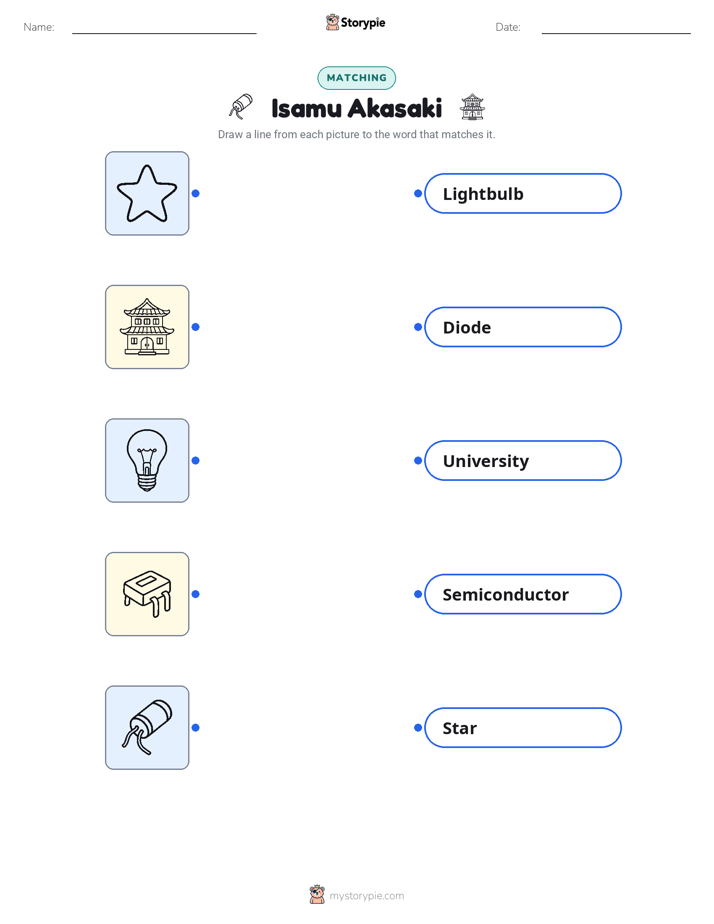
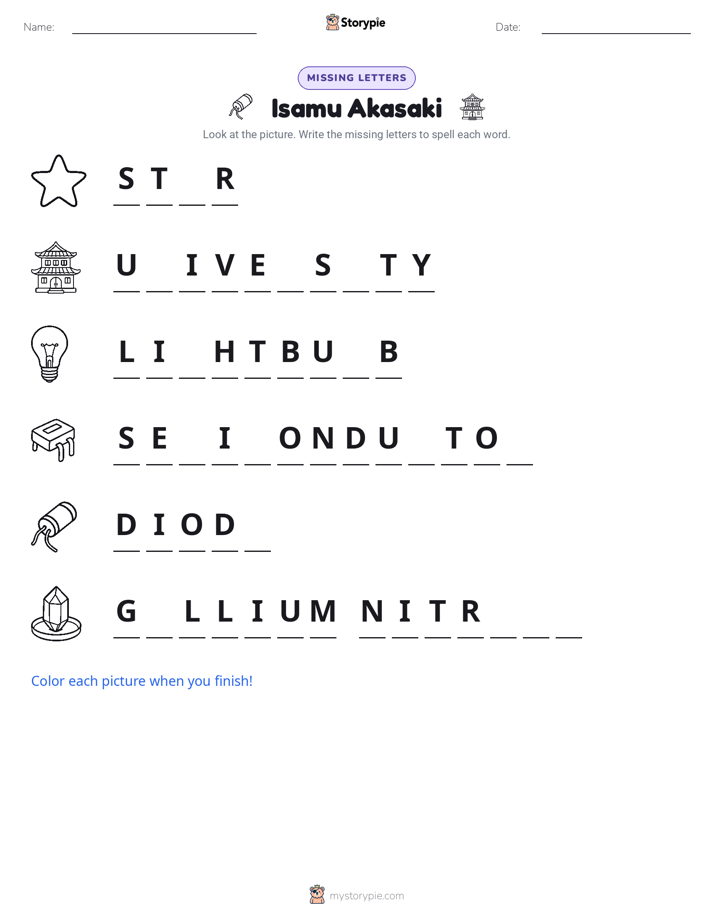
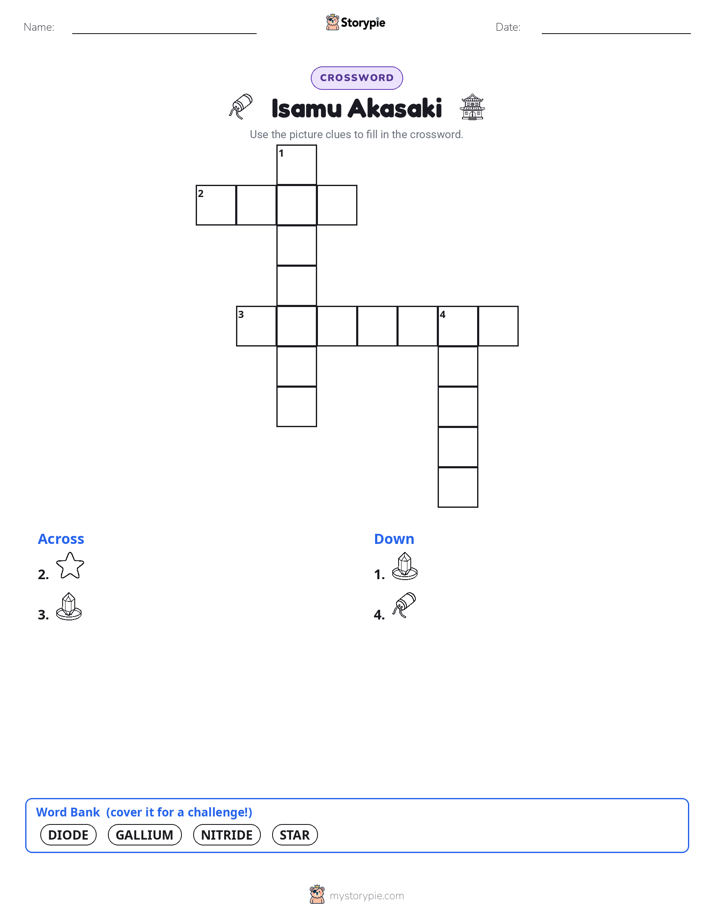
English


Isamu Akasaki
Isamu Akasaki was a Japanese scientist and engineer who was awarded the Nobel Prize in Physics for helping to…
Reads at Grades 3–5 Listens at Grades 1–5
Print & create
Answer keys·No prep·Free with an account
28 worksheets · answer keys · full story · quiz · Ages 8-10 · CEFR B1
Plus adds 244,000+ more stories in 27 languages, audio for every one, and printables for all of them.
Just want Isamu Akasaki?
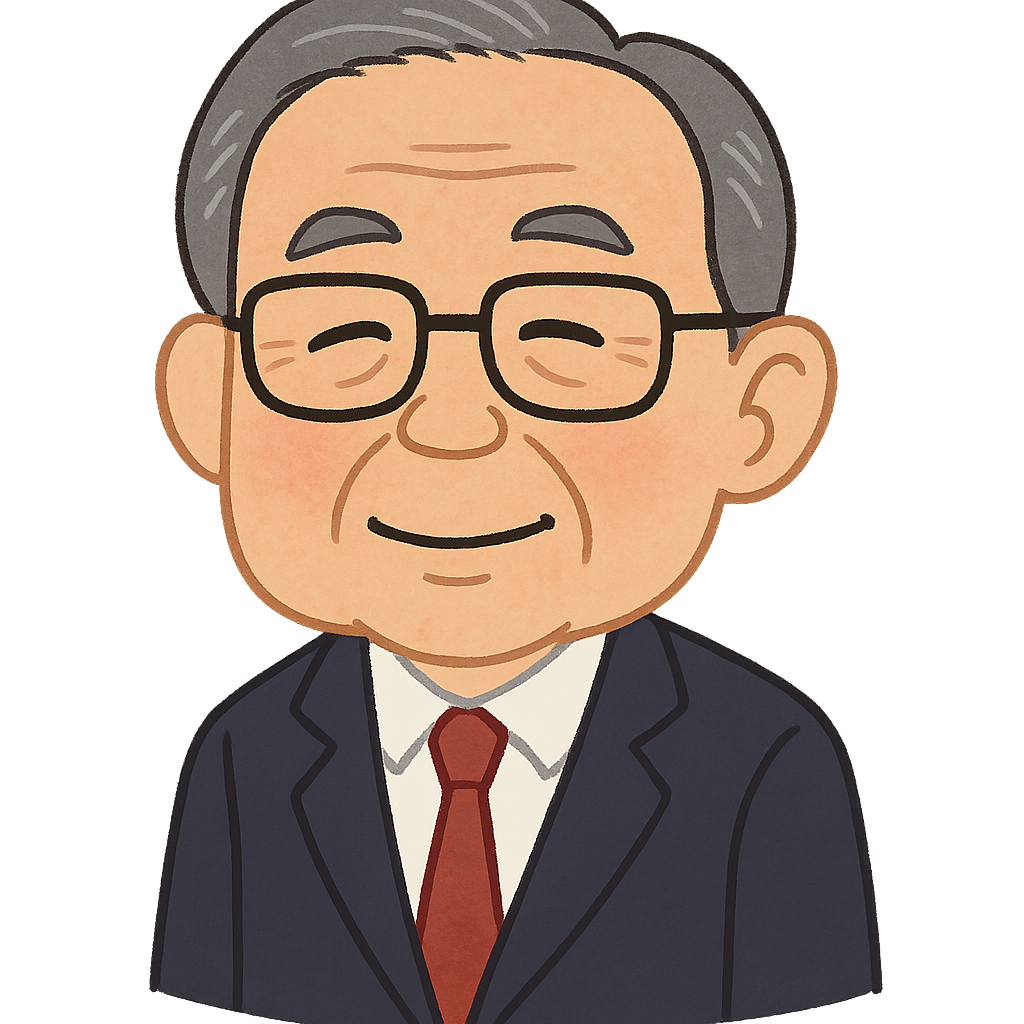
Hello! My name is Isamu Akasaki. I was born in a town called Chiran in Japan on January 30th, 1929. When I was a boy, I was very curious about everything around me. I especially loved looking up at the sky and seeing all the beautiful lights, from the bright sun to the twinkling stars at night. This wonder made me want to understand how light worked, and it set me on a path to become a scientist.
After I finished school, I went to Kyoto University and graduated in 1952, ready to solve big problems. At that time, scientists had a huge puzzle they couldn't solve. They had invented tiny lights called LEDs, which stands for light-emitting diodes. They could make red and green LEDs, but they couldn't make a bright blue one. Without blue, you can't make white light. Think of it like mixing paint: you need red, green, and blue to make all the other colors, including white. For more than 20 years, scientists all over the world tried to make a blue LED, but everyone failed. Many said it was impossible.
I love a good challenge, so I decided to try to solve the 'impossible' puzzle. In 1973, I started working with a special material called gallium nitride, or GaN for short. I believed it was the key to making blue light. But GaN was very tricky to work with. Making good crystals out of it was like trying to build a tower with sand that kept falling apart. For years, my team and I worked very hard. We had many experiments that didn't work, but we never gave up. One of my students, Hiroshi Amano, worked alongside me. Finally, in 1985, we had a breakthrough! We figured out a new way to grow beautiful, smooth crystals of GaN. It was a huge step forward.
Isamu Akasaki: The Man Who Created Blue Light
Hello! My name is Isamu Akasaki. I was born in a town called Chiran in Japan on January 30th, 1929. When I was a boy, I was very curious about everything around me. I especially loved looking up at the sky and seeing all the beautiful lights, from the bright sun to the twinkling stars at night. This wonder made me want to understand how light worked, and it set me on a path to become a scientist.
After I finished school, I went to Kyoto University and graduated in 1952, ready to solve big problems. At that time, scientists had a huge puzzle they couldn't solve. They had invented tiny lights called LEDs, which stands for light-emitting diodes. They could make red and green LEDs, but they couldn't make a bright blue one. Without blue, you can't make white light. Think of it like mixing paint: you need red, green, and blue to make all the other colors, including white. For more than 20 years, scientists all over the world tried to make a blue LED, but everyone failed. Many said it was impossible.
I love a good challenge, so I decided to try to solve the 'impossible' puzzle. In 1973, I started working with a special material called gallium nitride, or GaN for short. I believed it was the key to making blue light. But GaN was very tricky to work with. Making good crystals out of it was like trying to build a tower with sand that kept falling apart. For years, my team and I worked very hard. We had many experiments that didn't work, but we never gave up. One of my students, Hiroshi Amano, worked alongside me. Finally, in 1985, we had a breakthrough! We figured out a new way to grow beautiful, smooth crystals of GaN. It was a huge step forward.
Once we had our perfect crystals, we could finally build our LED. In 1989, we turned it on, and there it was—a bright, beautiful blue light! It was a moment of pure joy. Our hard work had paid off. This little blue light was a very big deal. Because we now had blue, we could mix it with red and green to create bright, white LED light. This meant we could make light bulbs that use much, much less electricity and last for a very long time. Our invention would help light up the world more efficiently than ever before.
For this discovery, I was honored to share the Nobel Prize in Physics in 2014 with Hiroshi Amano and another brilliant scientist named Shuji Nakamura. Today, the blue LED I helped create is everywhere—in the screen of your phone, your television, and in the lights that brighten your home and city. I lived to be 92 years old, and I am so happy that my work helps save energy and bring light to people all over the world. I hope my story reminds you that even when people say something is impossible, you can achieve amazing things with curiosity and persistence.
Wow facts
About
Isamu Akasaki was a Japanese scientist and engineer who was awarded the Nobel Prize in Physics for helping to develop the efficient blue light-emitting diode (LED), a breakthrough that enabled energy-efficient white lighting.
Take a Quiz
Question 1 of 5
Why was creating a blue LED so important for making white light?
Explore next






Want to do even more?
Go beyond exploring. Unlock tools that turn every story into real learning.

Storypie Plus for families
Full stories, quizzes, and printables. Nights and car rides, sorted.
- Unlimited audio stories
- Create Mode: your child stars in the story
- Offline downloads
- Printable worksheets & coloring pages

Why Storypie for Schools
Students engaged. Prep in seconds. Evenings back to you.
- Worksheets & Quizzes
- Classroom Management
- Formative Assessment
- Custom Curriculum & Lesson Plans
- 27 Languages

Why Storypie for Homeschool
Curriculum done. They'll ask for more. Hours back in your day.
- Worksheet Generator
- First-Person Audio Stories
- Built-in Comprehension Quizzes
- Custom Curriculum & Lesson Plans
- Print & Go Activities