English


Isamu Akasaki
Isamu Akasaki was a Japanese scientist and engineer who was awarded the Nobel Prize in Physics for helping to…
Reads at Grades 6–8 Listens at Grades 4–8
Print & create
Answer keys·No prep·Free with an account
28 worksheets · answer keys · full story · quiz · Ages 10-12 · CEFR B2
Plus adds 244,000+ more stories in 27 languages, audio for every one, and printables for all of them.
Just want Isamu Akasaki?
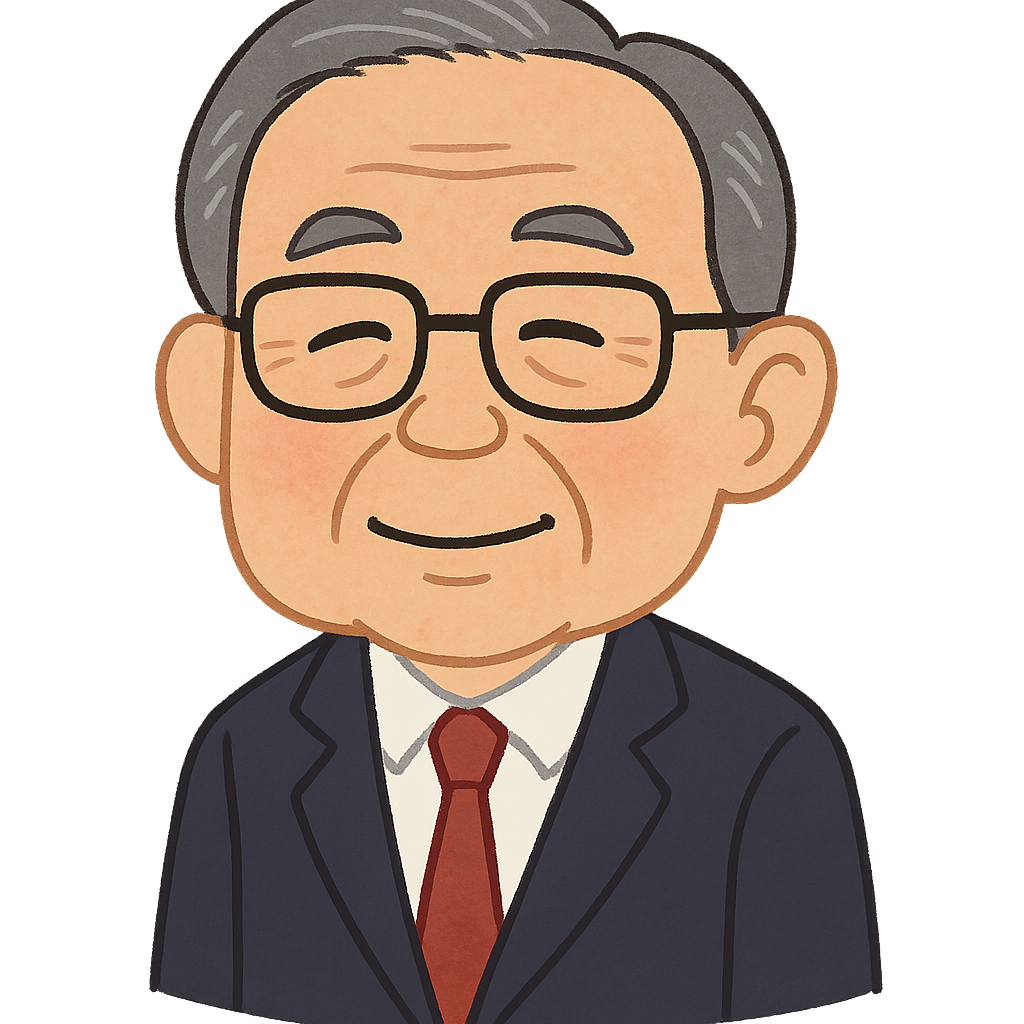
Hello! My name is Isamu Akasaki, and I want to tell you a story about light. I was born on January 30th, 1929, in a town called Chiran in Japan. Growing up in the cultural and historical setting of early 20th-century Japan, I was always a deeply curious boy. I loved looking up at the stars and wondering how the universe worked. My school years took place during a challenging period for my country, but my passion for learning never faded. I was especially drawn to the fields of science and electronics. It wasn't just about understanding things; I had a strong desire to invent and create things that could genuinely help people and improve their lives. This drive to make a positive impact through technology became the guiding principle of my entire career.
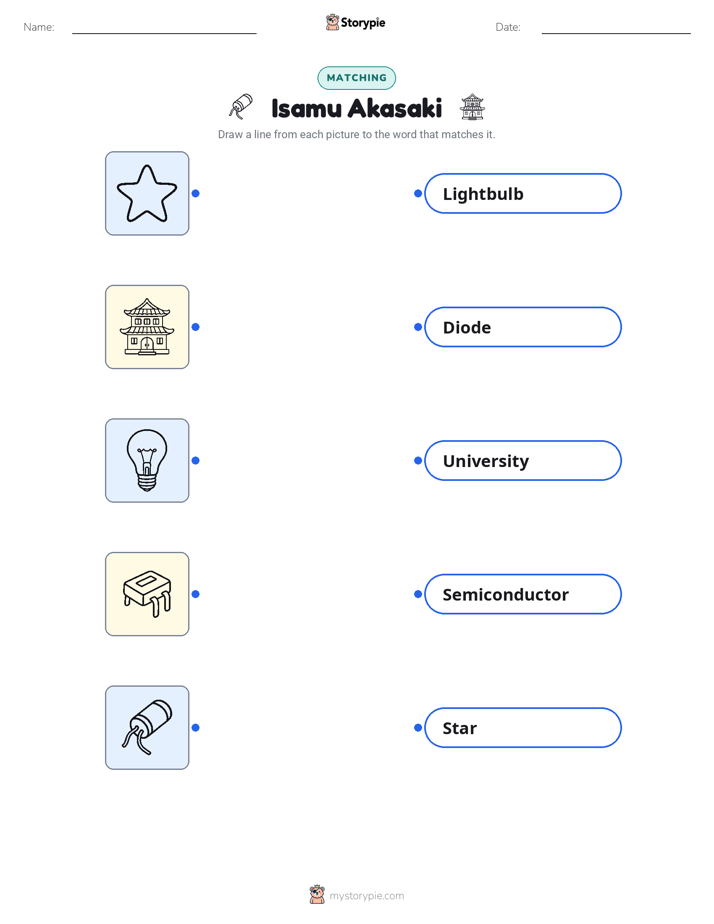
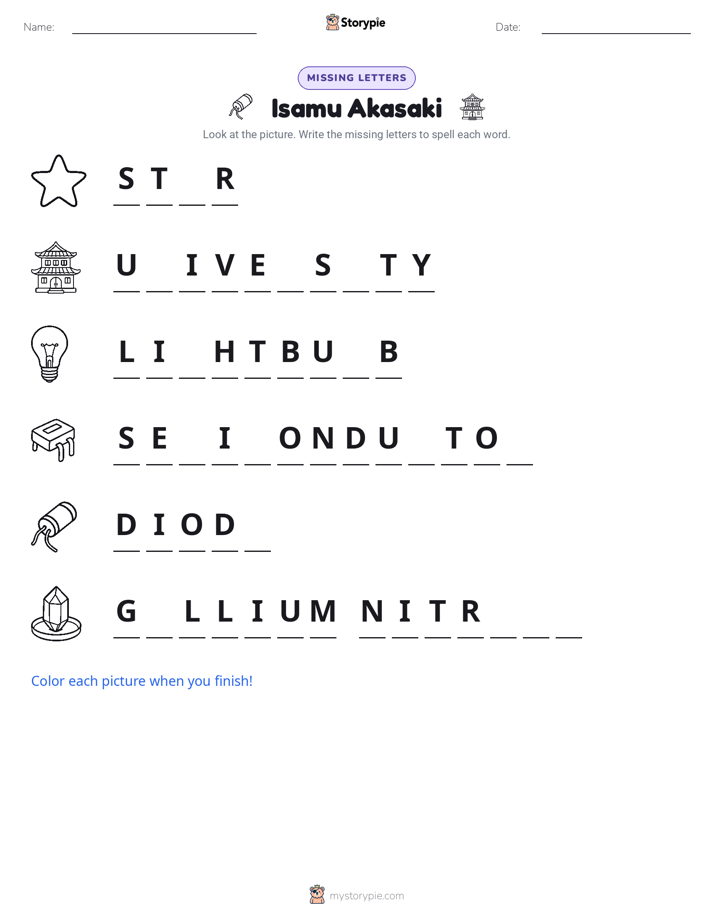
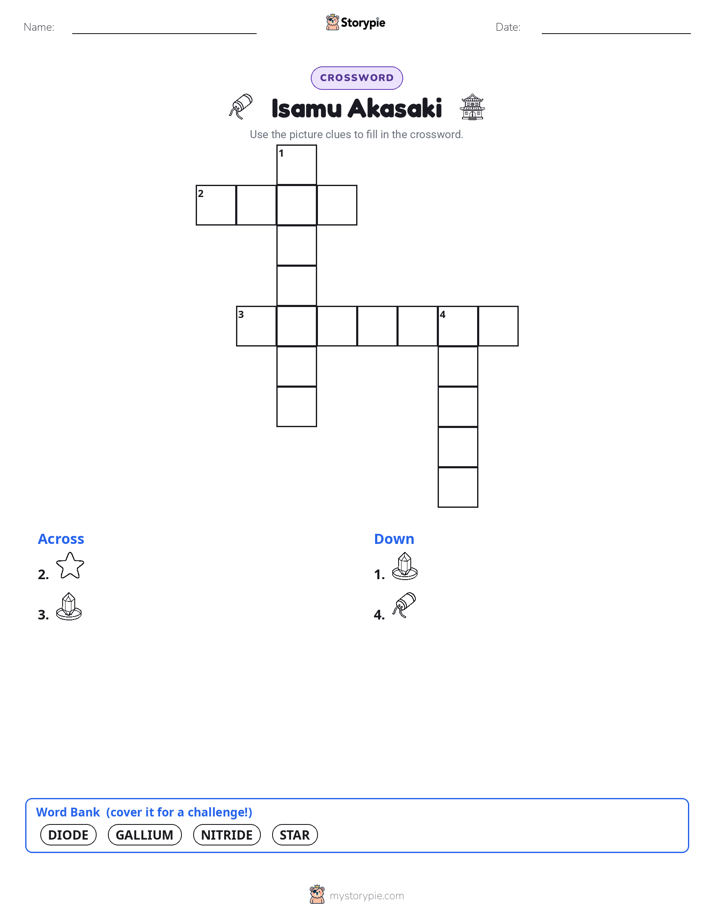
After I graduated from Kyoto University in 1952, I embarked on my journey as a scientist. In the world of electronics at that time, there was a major puzzle that had stumped the greatest minds for decades. Scientists had invented tiny, efficient lights called LEDs, which stands for light-emitting diodes. They had successfully created red LEDs and green LEDs, but a bright, efficient blue LED remained elusive. This was a significant obstacle because, without the color blue, it was impossible to combine the three primary colors of light—red, green, and blue—to produce clean, white light. For about twenty years, experts around the globe declared that a high-quality blue LED was simply impossible to make. I decided to dedicate my work to solving this 'impossible' challenge. Around 1973, I began my research focusing on a unique material called gallium nitride, or GaN. Most other scientists had abandoned GaN, believing it was too unstable and difficult to work with, but I had a strong intuition that it held the answer.
Isamu Akasaki: The Man Who Created an Impossible Light
Hello! My name is Isamu Akasaki, and I want to tell you a story about light. I was born on January 30th, 1929, in a town called Chiran in Japan. Growing up in the cultural and historical setting of early 20th-century Japan, I was always a deeply curious boy. I loved looking up at the stars and wondering how the universe worked. My school years took place during a challenging period for my country, but my passion for learning never faded. I was especially drawn to the fields of science and electronics. It wasn't just about understanding things; I had a strong desire to invent and create things that could genuinely help people and improve their lives. This drive to make a positive impact through technology became the guiding principle of my entire career.
After I graduated from Kyoto University in 1952, I embarked on my journey as a scientist. In the world of electronics at that time, there was a major puzzle that had stumped the greatest minds for decades. Scientists had invented tiny, efficient lights called LEDs, which stands for light-emitting diodes. They had successfully created red LEDs and green LEDs, but a bright, efficient blue LED remained elusive. This was a significant obstacle because, without the color blue, it was impossible to combine the three primary colors of light—red, green, and blue—to produce clean, white light. For about twenty years, experts around the globe declared that a high-quality blue LED was simply impossible to make. I decided to dedicate my work to solving this 'impossible' challenge. Around 1973, I began my research focusing on a unique material called gallium nitride, or GaN. Most other scientists had abandoned GaN, believing it was too unstable and difficult to work with, but I had a strong intuition that it held the answer.
For many years, my research team at Nagoya University and I poured all our energy into this problem. One of my students, a brilliant and dedicated young man named Hiroshi Amano, worked closely with me. Our greatest challenge was figuring out how to grow a perfect, smooth crystal of gallium nitride, which was necessary to build the LED. Trying to work with the poor-quality crystals we were producing was like attempting to build a sturdy house on shaky, uneven ground—it was destined to fail. We were relentless in our pursuit, conducting more than 1,500 experiments. We faced constant failure and setbacks, but our determination never wavered. Then, in 1985, we achieved a monumental breakthrough. We discovered that by first applying a special buffer layer of aluminum nitride, we could grow beautiful, high-quality GaN crystals on top of it. This layer provided the smooth, stable foundation we had been searching for. Building on this success, a few years later, in 1989, we solved the final piece of the puzzle and created the world's first efficient blue LED.
Our invention completely transformed the world of lighting and electronics. With the creation of the blue LED, companies could finally combine red, green, and blue light sources to produce brilliant, white LED lightbulbs. These new bulbs were not only bright but also incredibly energy-efficient, using a fraction of the electricity of older technologies. The impact is all around you today. The vibrant screen on your phone, the sharp colors on your television, and the bright, long-lasting lightbulbs in your home and school—all of these technologies exist thanks to the development of the blue LED. In 2014, I received the highest honor a scientist can achieve. I, along with Hiroshi Amano and another pioneering scientist named Shuji Nakamura, who also made critical contributions to this field, was awarded the Nobel Prize in Physics. The Nobel committee recognized our invention for its immense benefit to all humankind, which filled me with a profound sense of pride and accomplishment.
I lived to be 92 years old, passing away on April 1st, 2021. It brought me great joy to see how our persistent work helped to light up the world in a more efficient, sustainable, and beautiful way. My story shows that you should never be discouraged if people tell you that your dream is impossible. With patience, hard work, and a little spark of curiosity, you can solve the toughest problems and make the world a brighter place.
Wow facts
About
Isamu Akasaki was a Japanese scientist and engineer who was awarded the Nobel Prize in Physics for helping to develop the efficient blue light-emitting diode (LED), a breakthrough that enabled energy-efficient white lighting.
Take a Quiz
Question 1 of 5
What was the main scientific problem that Isamu Akasaki and his team solved to create the blue LED?
Explore next






Want to do even more?
Go beyond exploring. Unlock tools that turn every story into real learning.

Storypie Plus for families
Full stories, quizzes, and printables. Nights and car rides, sorted.
- Unlimited audio stories
- Create Mode: your child stars in the story
- Offline downloads
- Printable worksheets & coloring pages

Why Storypie for Schools
Students engaged. Prep in seconds. Evenings back to you.
- Worksheets & Quizzes
- Classroom Management
- Formative Assessment
- Custom Curriculum & Lesson Plans
- 27 Languages

Why Storypie for Homeschool
Curriculum done. They'll ask for more. Hours back in your day.
- Worksheet Generator
- First-Person Audio Stories
- Built-in Comprehension Quizzes
- Custom Curriculum & Lesson Plans
- Print & Go Activities