English

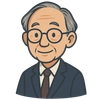
Charles K. Kao
A Chinese-born physicist and electrical engineer who pioneered the development and use of fiber optics in…
Reads at Grades 6–8 Listens at Grades 4–8
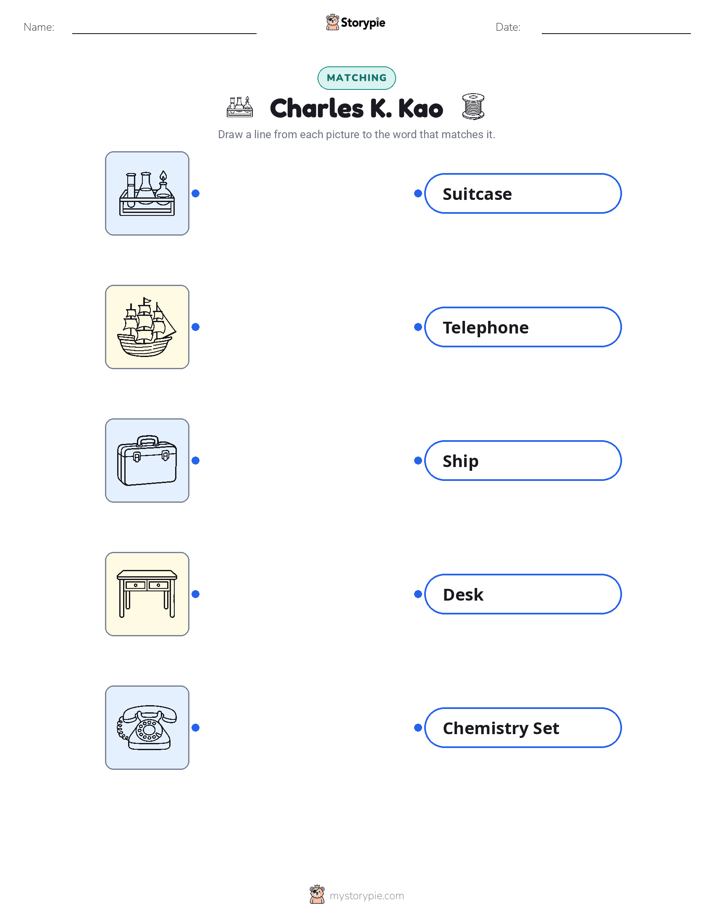
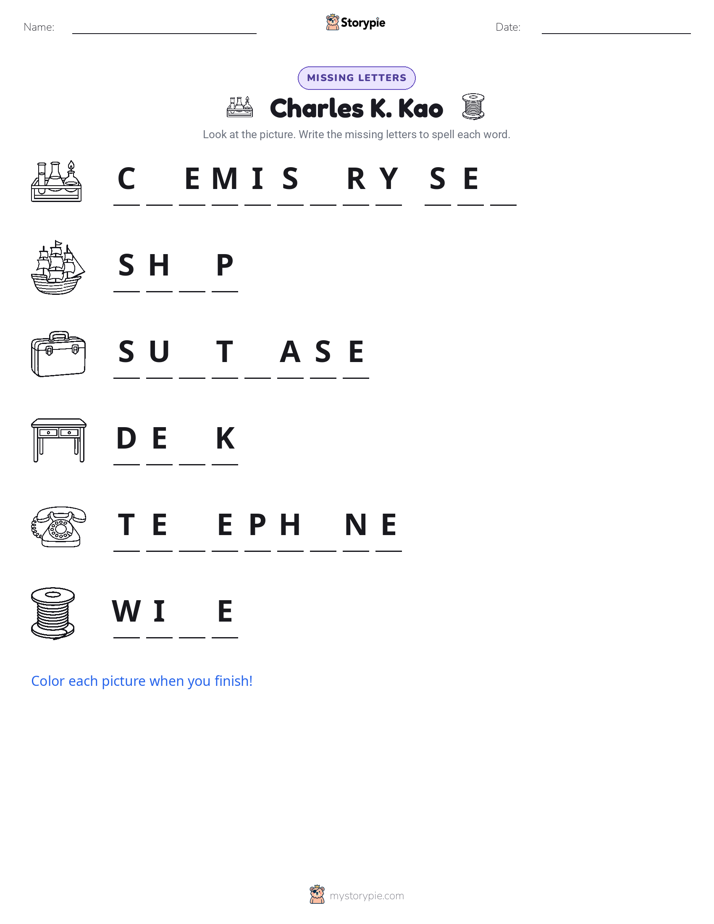
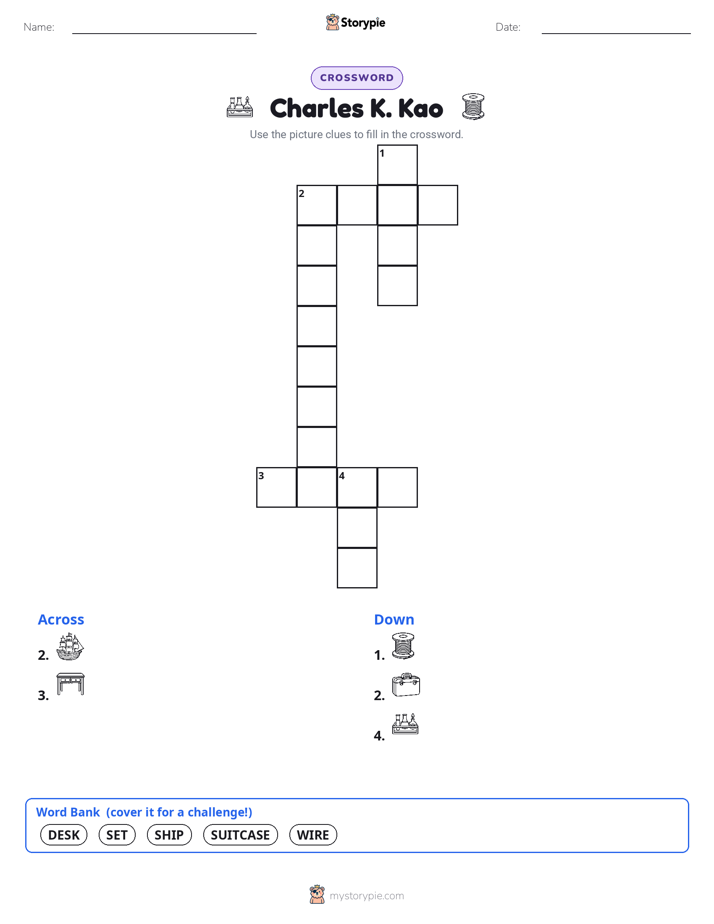
Print & create
Answer keys·No prep·Free with an account
28 worksheets · answer keys · full story · quiz · Ages 10-12 · CEFR B2
Plus adds 244,000+ more stories in 27 languages, audio for every one, and printables for all of them.
Just want Charles K. Kao?
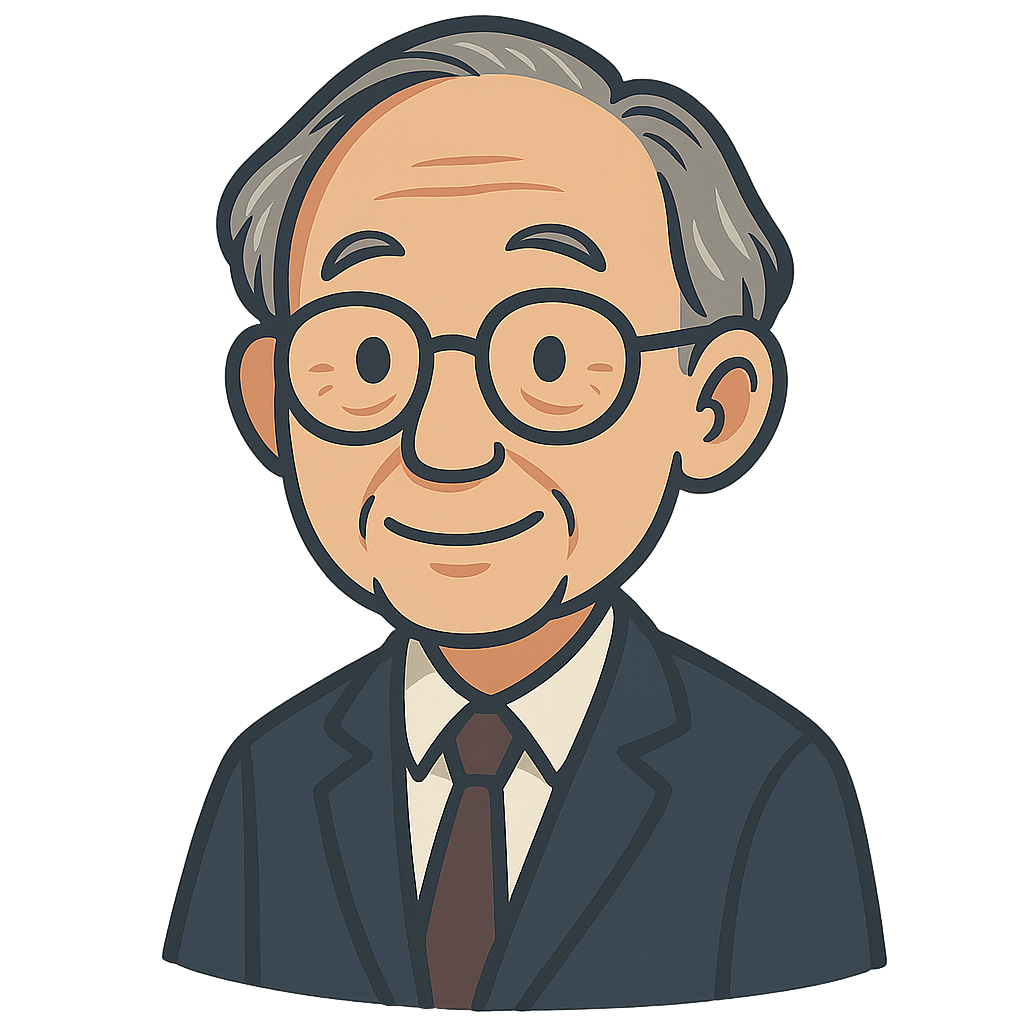
Hello! My name is Charles Kao, and I want to share my story with you. I was born in Shanghai, China, on November 4th, 1933. The world was a different place then, but even as a boy, I was filled with an incredible sense of curiosity. While other children were outside playing games, my favorite place to be was in my own little chemistry lab at home. I would get chemicals from the local pharmacy and spend hours mixing them, watching the reactions, and trying to understand why things worked the way they did. My experiments often made a big mess, and I'm sure my parents weren't always thrilled, but they were my first lessons in science. They taught me about cause and effect and fueled my desire to learn more. In 1948, when I was a teenager, a big change came to my life. My family moved from the mainland to Hong Kong. It was a new city and a new culture, but the one thing that remained constant was my passion for science and discovery. That curiosity came with me, ready for the next adventure.
After I finished my schooling in Hong Kong, I felt a strong pull to continue my education and explore the world. My dream was to become an engineer. So, in 1953, I boarded a ship and sailed all the way to England to study electrical engineering. It was a long journey and a brand-new country, which was both exciting and quite challenging. During my studies in England, I met a wonderful woman named Gwen, who became my greatest supporter and, later, my wife. We would face all of life's adventures together. After earning my first degree, I began working for a company called Standard Telephones and Cables. It was a good job, but I still felt a hunger for more knowledge; I wanted to dive deeper into the mysteries of science. I knew I had more to learn, so I decided to return to my studies. I enrolled at University College London and, in 1965, after years of hard work, I earned my PhD in electrical engineering. This advanced degree prepared me for the biggest challenge of my career.
Charles Kao: The Father of Fiber Optics
Hello! My name is Charles Kao, and I want to share my story with you. I was born in Shanghai, China, on November 4th, 1933. The world was a different place then, but even as a boy, I was filled with an incredible sense of curiosity. While other children were outside playing games, my favorite place to be was in my own little chemistry lab at home. I would get chemicals from the local pharmacy and spend hours mixing them, watching the reactions, and trying to understand why things worked the way they did. My experiments often made a big mess, and I'm sure my parents weren't always thrilled, but they were my first lessons in science. They taught me about cause and effect and fueled my desire to learn more. In 1948, when I was a teenager, a big change came to my life. My family moved from the mainland to Hong Kong. It was a new city and a new culture, but the one thing that remained constant was my passion for science and discovery. That curiosity came with me, ready for the next adventure.
After I finished my schooling in Hong Kong, I felt a strong pull to continue my education and explore the world. My dream was to become an engineer. So, in 1953, I boarded a ship and sailed all the way to England to study electrical engineering. It was a long journey and a brand-new country, which was both exciting and quite challenging. During my studies in England, I met a wonderful woman named Gwen, who became my greatest supporter and, later, my wife. We would face all of life's adventures together. After earning my first degree, I began working for a company called Standard Telephones and Cables. It was a good job, but I still felt a hunger for more knowledge; I wanted to dive deeper into the mysteries of science. I knew I had more to learn, so I decided to return to my studies. I enrolled at University College London and, in 1965, after years of hard work, I earned my PhD in electrical engineering. This advanced degree prepared me for the biggest challenge of my career.
With my PhD complete, I began working at my company’s dedicated research center, known as Standard Telecommunication Laboratories, or STL. At that time, in the mid-1960s, communicating over long distances was a major challenge. We relied on thick, heavy copper wires to send information like phone calls. The problem was that these wires were inefficient; they couldn't carry much information at once, and the signal would weaken over long distances, making communication slow and expensive. I became fascinated with this problem and started thinking about a completely different solution. What if, instead of using electricity through copper, we could use light? Light is the fastest thing in the universe, but the common belief among scientists was that it could only travel in a perfectly straight line. They thought that any attempt to send it through a flexible material, like a glass fiber, would cause the signal to fade out and disappear almost immediately. But I had a different idea. I believed that if we could create a glass fiber that was almost perfectly pure, it could act as a guide to carry a beam of light for miles and miles without losing its signal.
This idea of using light was a radical one, and I knew I couldn't prove it alone. I began working closely with my colleague, George Hockham. Together, we dedicated ourselves to solving this puzzle. We spent countless hours in the lab, testing various types of materials and performing complex mathematical calculations to support my theory. We were on a mission to prove that fiber optic communication wasn't just a fantasy, but a real possibility. In 1966, after a tremendous amount of work, we were ready to share our findings with the world. We published a scientific paper that explained our findings. In it, we showed that it was theoretically possible to create glass fibers pure enough to carry vast amounts of information—far more than any copper wire ever could. At first, the scientific community was very skeptical. Many prominent scientists dismissed our idea, saying that manufacturing glass with such a high level of purity was simply impossible. But our paper did something very important: it lit a spark. It was like a starting gun for a global race, inspiring researchers and engineers around the world to take on the challenge and try to create this 'impossible' material.
It didn't take long for our idea to catch on. In 1970, just four years after our paper was published, scientists at an American company called Corning Glass Works created the first ultra-pure optical fiber. They had done it. This invention changed the world forever. These tiny glass threads, thinner than a single human hair, became the backbone of a new global communication network. They are the reason you have high-speed internet today. Every time you stream a movie, video chat with a friend, or play an online game, you are using the technology that grew from that little idea I had back in the 1960s. After my work in England, I moved to the United States and then, in 1987, I returned to Hong Kong to lead The Chinese University of Hong Kong as its Vice-Chancellor.
Years later, in 2009, I received one of the greatest honors a scientist can imagine: the Nobel Prize in Physics. It was a wonderful recognition of the work we had done so many years before. Later in my life, I was diagnosed with Alzheimer's disease, which is an illness that affects a person's memory. My wife Gwen and I established a foundation to help raise awareness and support for others affected by it. I lived to be 84 years old, passing away in 2018. Today, people call me the 'Father of Fiber Optics.' I am proud that my curiosity helped connect the world with threads of light, and I hope my story inspires you to ask big questions and chase your own bright ideas.
Wow facts
About
A Chinese-born physicist and electrical engineer who pioneered the development and use of fiber optics in telecommunications, earning him the 2009 Nobel Prize in Physics and the title 'Father of Fiber Optics.'
Take a Quiz
Question 1 of 5
What was the main problem with using copper wires for communication that Charles Kao wanted to solve?
Explore next




Want to do even more?
Go beyond exploring. Unlock tools that turn every story into real learning.

Storypie Plus for families
Full stories, quizzes, and printables. Nights and car rides, sorted.
- Unlimited audio stories
- Create Mode: your child stars in the story
- Offline downloads
- Printable worksheets & coloring pages

Why Storypie for Schools
Students engaged. Prep in seconds. Evenings back to you.
- Worksheets & Quizzes
- Classroom Management
- Formative Assessment
- Custom Curriculum & Lesson Plans
- 27 Languages

Why Storypie for Homeschool
Curriculum done. They'll ask for more. Hours back in your day.
- Worksheet Generator
- First-Person Audio Stories
- Built-in Comprehension Quizzes
- Custom Curriculum & Lesson Plans
- Print & Go Activities