English

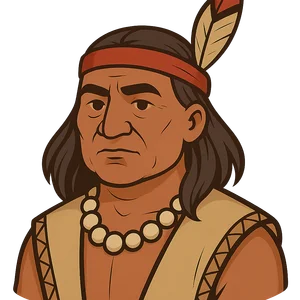
Chief Powhatan
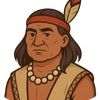
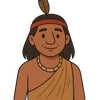
Wahunsenacawh, known as Chief Powhatan, was the paramount chief of the Powhatan Confederacy…
Reads at Grades 6–8 Listens at Grades 4–8
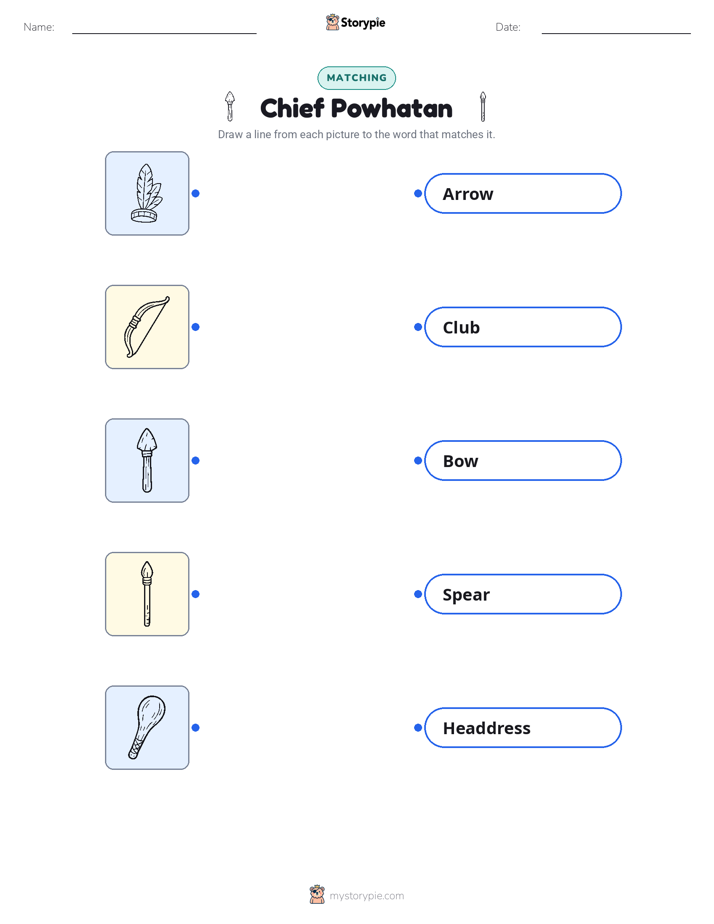
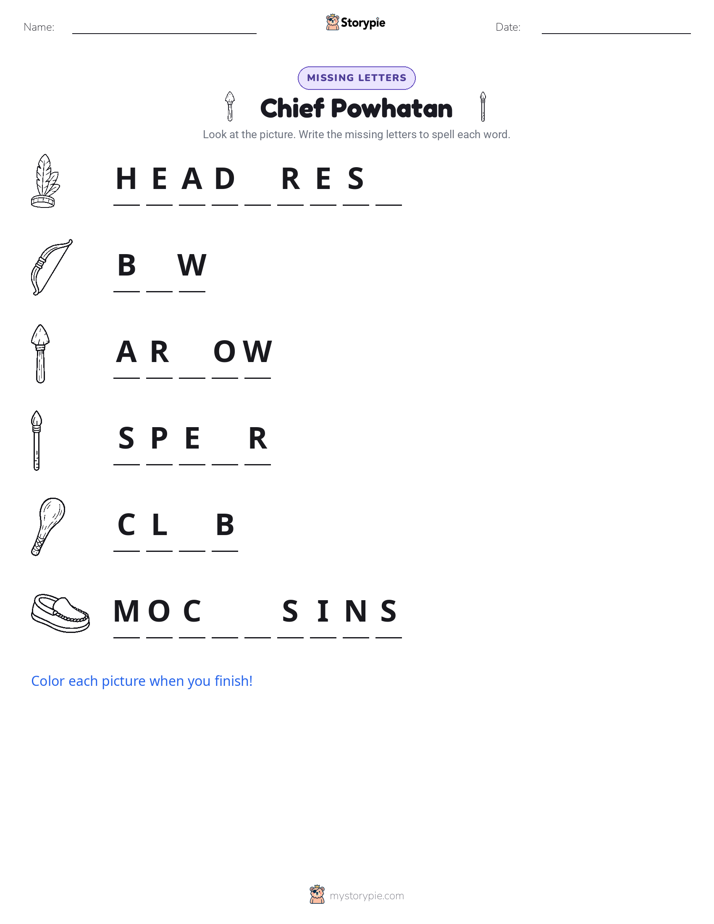
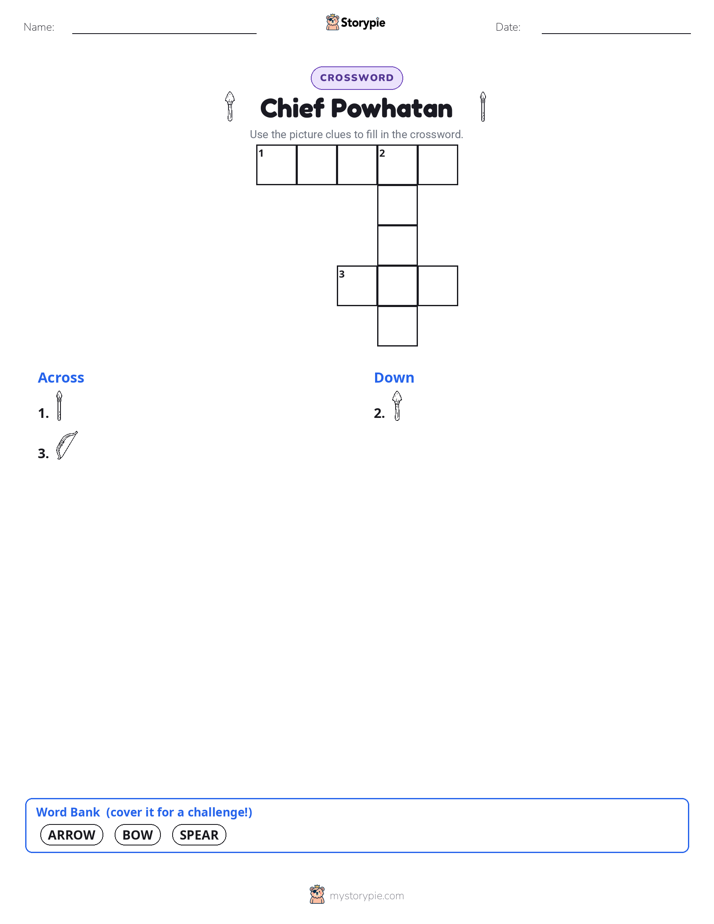
Print & create
Answer keys·No prep·Free with an account
28 worksheets · answer keys · full story · quiz · Ages 10-12 · CEFR B2
Plus adds 102,000+ more stories in 27 languages, audio for every one, and printables for all of them.
Just want Chief Powhatan?
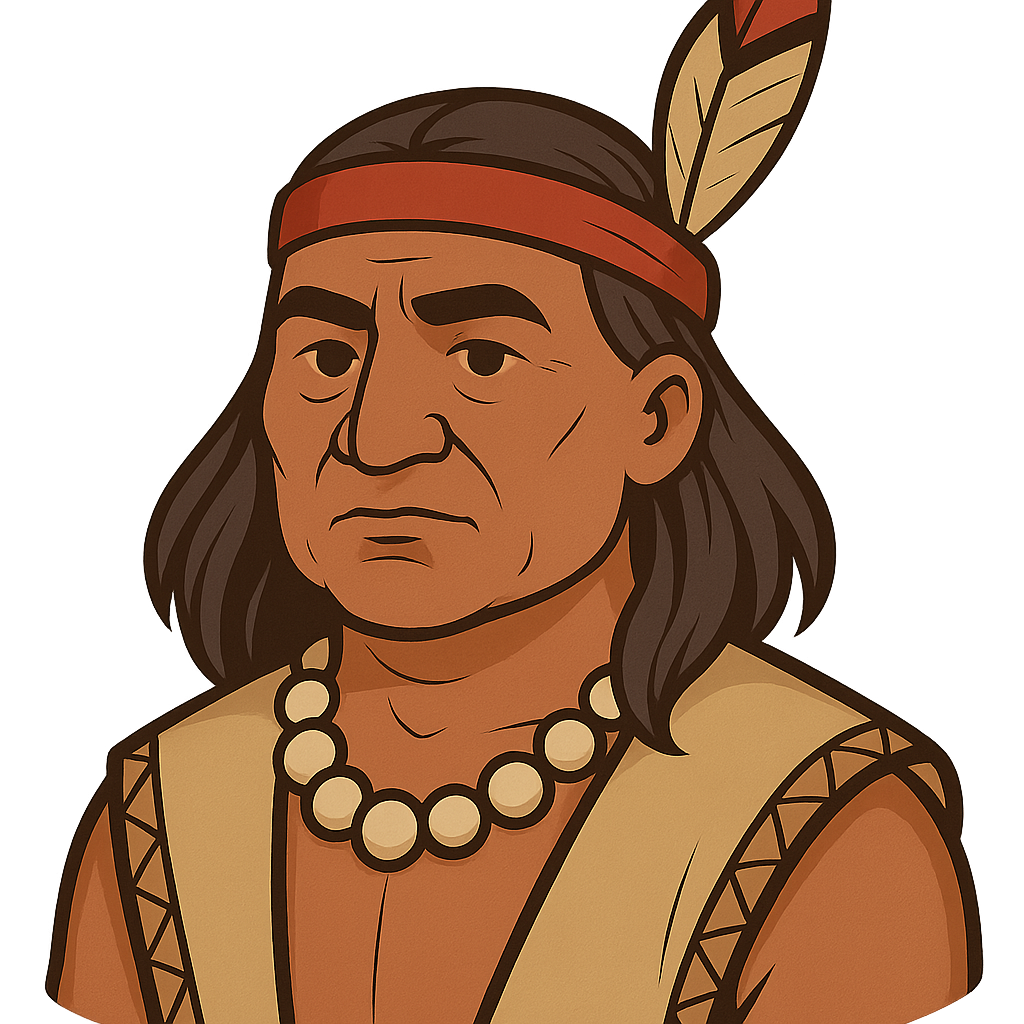
Hello. You may have heard of me by the name Powhatan, but my true name, the one I was given at birth, is Wahunsenacawh. I was born around the year 1547 in a land of great forests and wide, flowing rivers that you now call Virginia. My world was shaped by nature, and my people, the Powhatan, lived in harmony with it. From a young age, I was taught the ways of my people. I learned to hunt, to track, and to understand the rhythms of the seasons. More than that, I was trained in the skills of a leader and a warrior, for it was my destiny to guide others. When my father passed on, I inherited the leadership of six tribes, a great responsibility that I took with the seriousness it deserved. This was the beginning of my journey to build something much larger for all of our people.
As I grew into my role as chief, I saw that our many separate tribes could be stronger if we were united. I had a vision of a great nation, a powerful alliance that could protect our lands and our way of life. Beginning in the late 1500s, I set out to make this vision a reality. I used many methods to bring our peoples together. Sometimes, I would use diplomacy, speaking with other chiefs and forming alliances through mutual respect and shared goals. At other times, I had to be a strong warrior, using force to convince tribes that our strength lay in unity. Over time, I successfully brought more than 30 different Algonquian-speaking tribes under my single rule. I called our great nation Tsenacommacah. My people gave me the title of Mamanatowick, which means paramount chief. This position was the highest honor, giving me the authority to lead and protect thousands of people across our lands.
A Biography of Wahunsenacawh (Chief Powhatan)
Hello. You may have heard of me by the name Powhatan, but my true name, the one I was given at birth, is Wahunsenacawh. I was born around the year 1547 in a land of great forests and wide, flowing rivers that you now call Virginia. My world was shaped by nature, and my people, the Powhatan, lived in harmony with it. From a young age, I was taught the ways of my people. I learned to hunt, to track, and to understand the rhythms of the seasons. More than that, I was trained in the skills of a leader and a warrior, for it was my destiny to guide others. When my father passed on, I inherited the leadership of six tribes, a great responsibility that I took with the seriousness it deserved. This was the beginning of my journey to build something much larger for all of our people.
As I grew into my role as chief, I saw that our many separate tribes could be stronger if we were united. I had a vision of a great nation, a powerful alliance that could protect our lands and our way of life. Beginning in the late 1500s, I set out to make this vision a reality. I used many methods to bring our peoples together. Sometimes, I would use diplomacy, speaking with other chiefs and forming alliances through mutual respect and shared goals. At other times, I had to be a strong warrior, using force to convince tribes that our strength lay in unity. Over time, I successfully brought more than 30 different Algonquian-speaking tribes under my single rule. I called our great nation Tsenacommacah. My people gave me the title of Mamanatowick, which means paramount chief. This position was the highest honor, giving me the authority to lead and protect thousands of people across our lands.
For many years, my nation of Tsenacommacah thrived. Then, in the year 1607, everything began to change. Three large ships, unlike any canoe I had ever seen, appeared in the great bay we call the Chesapeake. Onboard were strangers with pale skin and strange clothing. These were the English. From the moment they arrived, I watched them with great caution. They built a settlement on a swampy piece of my territory, which they named Jamestown. I did not know their intentions. Were they here to trade? To stay? To conquer? My strategy was to be careful and deliberate. I sent my warriors to observe them from a distance to learn about their weapons and their ways. I decided to engage in trade with them, offering food from our bountiful harvests in exchange for their metal tools and beads. Through this trade, I could help my people while also showing the newcomers that I was the Mamanatowick, the ruler of this land.
During the cold winter of 1607, one of the English leaders, a man named Captain John Smith, was captured by my hunters. He was brought before me in one of my villages. I decided to hold a traditional ceremony to show him my power and adopt him into our society. The English completely misunderstood what happened. They believed my young daughter, Pocahontas, saved his life by pleading with me. In truth, her role in the ceremony was planned, a symbolic gesture to show that this stranger was now under my protection and our people could live in peace. After this, our relationship with Captain Smith and the other English was complicated. There were times of peaceful trade and cooperation, but also times of great tension and disagreement. Throughout it all, my daughter Pocahontas served as a vital ambassador. She was a link between our two very different worlds, often carrying messages and helping to negotiate when misunderstandings arose.
As the years passed, more and more English settlers arrived, and the conflicts between our peoples grew worse. The newcomers demanded more land and more food, and the trust that we had carefully tried to build began to break down. A truly painful time came in the year 1613, when the English captured my daughter Pocahontas and held her as a prisoner. They hoped to use her to gain an advantage over me. While she was with them, an English farmer named John Rolfe asked to marry her. This was a difficult decision for me to make. I knew that this marriage could create an alliance and bring an end to the fighting that was hurting so many. For the sake of my people, I gave my agreement to their marriage in 1614. It was a choice I made in the hope of securing a lasting peace, a peace that our nations desperately needed.
In my final years, I passed my duties as Mamanatowick to my brother, knowing the leadership of Tsenacommacah would be in good hands. I lived to be around 71 years old, passing away in 1618, just before the great wars between my people and the English began. My life is remembered as that of a powerful leader who built a nation from many separate tribes and guided his people through one of the greatest challenges we had ever faced: the arrival of a completely new culture on our shores. Throughout all the years of trade, negotiation, and conflict, I always worked to protect my people and preserve our way of life. That is the legacy I hope is remembered.
Wow facts
About
Wahunsenacawh, known as Chief Powhatan, was the paramount chief of the Powhatan Confederacy, a powerful alliance of Algonquian-speaking tribes in the Virginia region during the arrival of the first English colonists in the early 1600s.
Take a Quiz
Question 1 of 5
What was Wahunsenacawh's main motivation for agreeing to his daughter's marriage to John Rolfe in 1614?
Explore next



Want to do even more?
Go beyond exploring. Unlock tools that turn every story into real learning.

Storypie Plus for families
Full stories, quizzes, and printables. Nights and car rides, sorted.
- Unlimited audio stories
- Create Mode: your child stars in the story
- Offline downloads
- Printable worksheets & coloring pages

Why Storypie for Schools
Students engaged. Prep in seconds. Evenings back to you.
- Worksheets & Quizzes
- Classroom Management
- Formative Assessment
- Custom Curriculum & Lesson Plans
- 27 Languages

Why Storypie for Homeschool
Curriculum done. They'll ask for more. Hours back in your day.
- Worksheet Generator
- First-Person Audio Stories
- Built-in Comprehension Quizzes
- Custom Curriculum & Lesson Plans
- Print & Go Activities