English

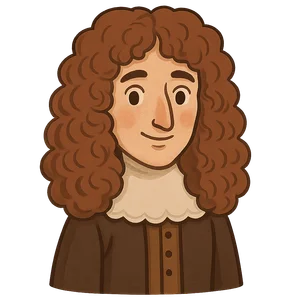
Christiaan Huygens
A Dutch mathematician, physicist, astronomer, and inventor from the 17th century…
Reads at Grades 3–5 Listens at Grades 1–5
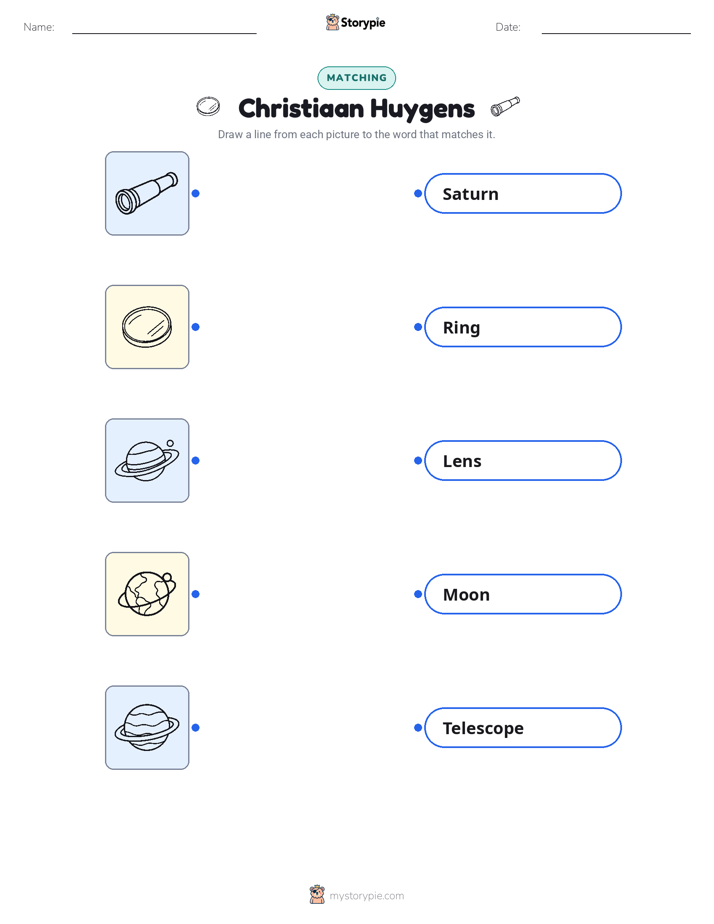
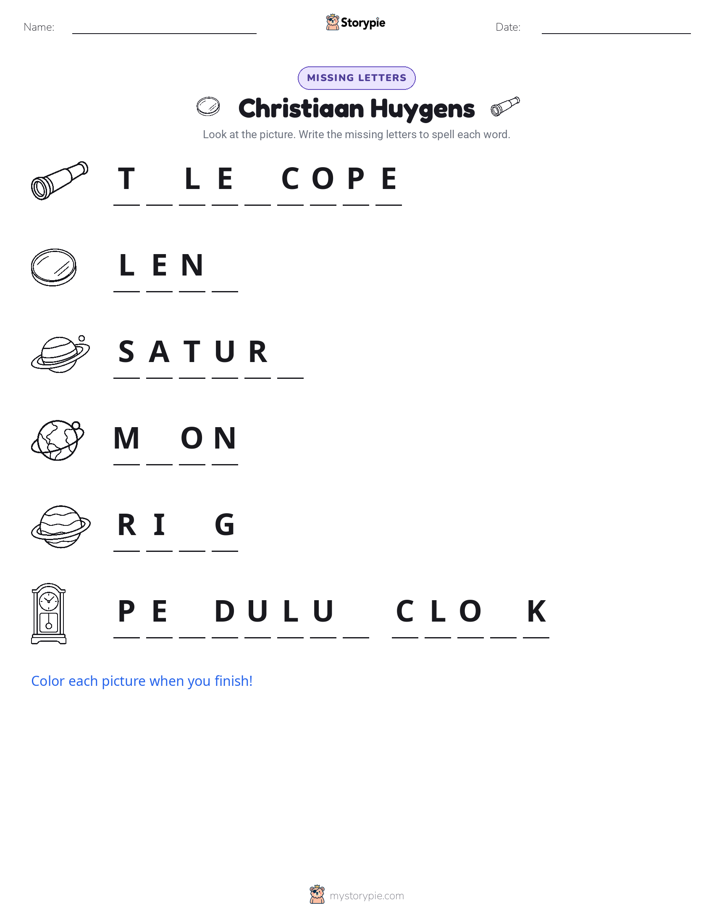
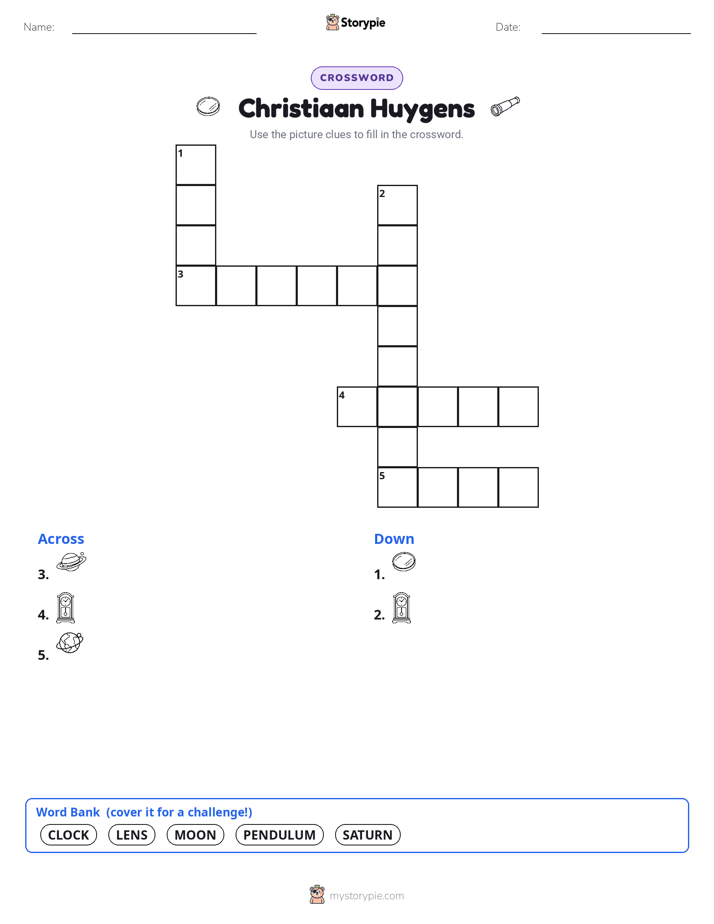
Print & create
Answer keys·No prep·Free with an account
28 worksheets · answer keys · full story · quiz · Ages 8-10 · CEFR B1
Plus adds 164,000+ more stories in 27 languages, audio for every one, and printables for all of them.
Just want Christiaan Huygens?
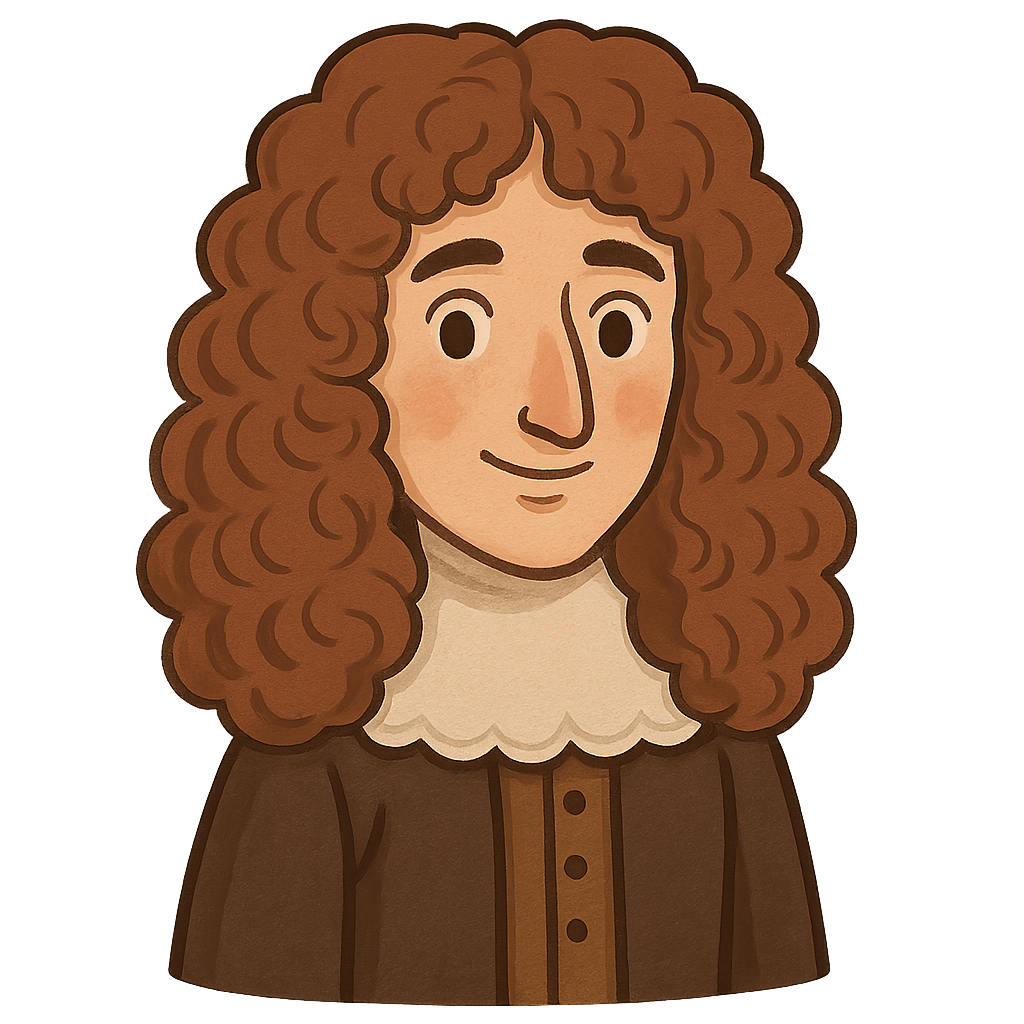
Hello! My name is Christiaan Huygens, and I want to tell you my story. It begins on April 14th, 1629, in a busy city called The Hague in the Netherlands. My father, Constantijn, was a famous poet who worked for important people, so our house was always filled with interesting books and ideas. From a very young age, I was fascinated by how things worked. I loved mathematics and was always tinkering, building my own little machines and models. My father noticed my passion and nicknamed me his 'little Archimedes,' after a great inventor from ancient times. He made sure I had the best tutors, and by the time I was a teenager in the 1640s, I was already studying at a university, eager to learn everything I could about the world and the stars above.
Looking at the night sky was my favorite thing to do. I read all about the discoveries of astronomers like Galileo Galilei, who had used a telescope to see the moons of Jupiter. But the telescopes in my time weren't perfect. When you looked through them, the edges of planets and stars would have fuzzy, colorful halos, which made it hard to see details clearly. I knew I could do better. Around 1654, my brother Constantijn and I started grinding our own glass lenses. It was very difficult work that required a lot of patience. We figured out new ways to shape the glass to make the images sharper and bigger. Our telescopes became some of the most powerful in the world. With my new and improved telescope, I was ready to unlock some of the sky's biggest secrets.
Christiaan Huygens
Hello! My name is Christiaan Huygens, and I want to tell you my story. It begins on April 14th, 1629, in a busy city called The Hague in the Netherlands. My father, Constantijn, was a famous poet who worked for important people, so our house was always filled with interesting books and ideas. From a very young age, I was fascinated by how things worked. I loved mathematics and was always tinkering, building my own little machines and models. My father noticed my passion and nicknamed me his 'little Archimedes,' after a great inventor from ancient times. He made sure I had the best tutors, and by the time I was a teenager in the 1640s, I was already studying at a university, eager to learn everything I could about the world and the stars above.
Looking at the night sky was my favorite thing to do. I read all about the discoveries of astronomers like Galileo Galilei, who had used a telescope to see the moons of Jupiter. But the telescopes in my time weren't perfect. When you looked through them, the edges of planets and stars would have fuzzy, colorful halos, which made it hard to see details clearly. I knew I could do better. Around 1654, my brother Constantijn and I started grinding our own glass lenses. It was very difficult work that required a lot of patience. We figured out new ways to shape the glass to make the images sharper and bigger. Our telescopes became some of the most powerful in the world. With my new and improved telescope, I was ready to unlock some of the sky's biggest secrets.
I pointed my powerful new telescope at the planet Saturn. Other astronomers had seen strange shapes on either side of it, but no one could figure out what they were. On March 25th, 1655, I noticed something else—a tiny, bright dot moving around the planet. I had discovered Saturn's very first moon! I named it Titan. But the riddle of Saturn's odd shape remained. I watched it night after night. Then, in 1656, I had a brilliant idea. The shapes weren't 'ears' or moons attached to the planet. Saturn was surrounded by a thin, flat ring that didn't touch it at all! It was an amazing moment. I announced my discovery to the world in a book I published in 1659, called Systema Saturnium, which means 'The Saturn System'.
My curiosity wasn't just for the stars; I also loved solving problems here on Earth. One of the biggest challenges of my time was for sailors at sea. To know where they were, they needed a clock that could keep very accurate time, but the rocking of the ship made all the clocks go wrong. I remembered watching chandeliers swing back and forth in church and thought about how regular that motion was. Using this idea of a swinging weight, or a pendulum, I designed a brand new kind of clock. In 1656, I built the first pendulum clock. It was so accurate that it was the best timekeeper in the world for almost 300 years, helping sailors navigate the oceans and scientists perform better experiments.
I spent the rest of my life studying many things, from the nature of light to the forces that govern motion. I worked in Paris for many years at the invitation of the King of France before returning to my home in The Hague. I lived to be 66 years old. Today, people remember me as one of the great scientists who helped us understand our universe. My discoveries about Saturn and its moon Titan, my invention of the pendulum clock, and my ideas about light paved the way for other thinkers like Isaac Newton. When scientists sent a space probe to explore Saturn and its moons, they even named the lander that touched down on Titan's surface 'Huygens' in my honor.
Wow facts
About
A Dutch mathematician, physicist, astronomer, and inventor from the 17th century, famous for discovering Saturn's moon Titan, explaining its rings, inventing the pendulum clock, and contributing to optics and mechanics.
Take a Quiz
Question 1 of 5
What did I name the first moon of Saturn that I discovered on March 25th, 1655?
Explore next




Want to do even more?
Go beyond exploring. Unlock tools that turn every story into real learning.

Storypie Plus for families
Full stories, quizzes, and printables. Nights and car rides, sorted.
- Unlimited audio stories
- Create Mode: your child stars in the story
- Offline downloads
- Printable worksheets & coloring pages

Why Storypie for Schools
Students engaged. Prep in seconds. Evenings back to you.
- Worksheets & Quizzes
- Classroom Management
- Formative Assessment
- Custom Curriculum & Lesson Plans
- 27 Languages

Why Storypie for Homeschool
Curriculum done. They'll ask for more. Hours back in your day.
- Worksheet Generator
- First-Person Audio Stories
- Built-in Comprehension Quizzes
- Custom Curriculum & Lesson Plans
- Print & Go Activities