English


Claudette Colvin
Claudette Colvin is an American civil rights pioneer who, at age 15 in 1955…
Reads at Grades 6–8 Listens at Grades 4–8
Print & create
Answer keys·No prep·Free with an account
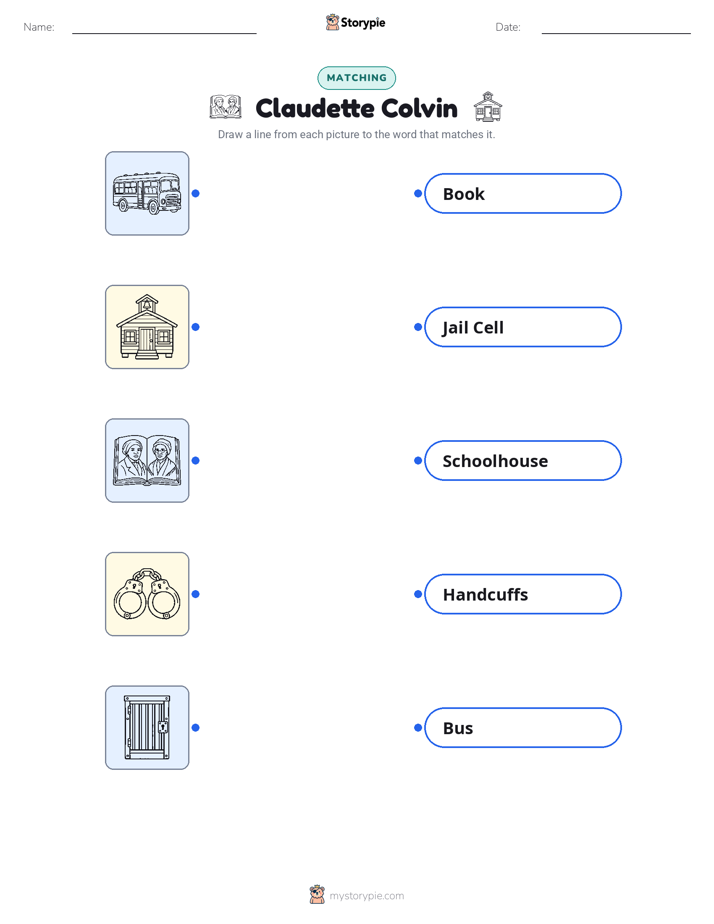
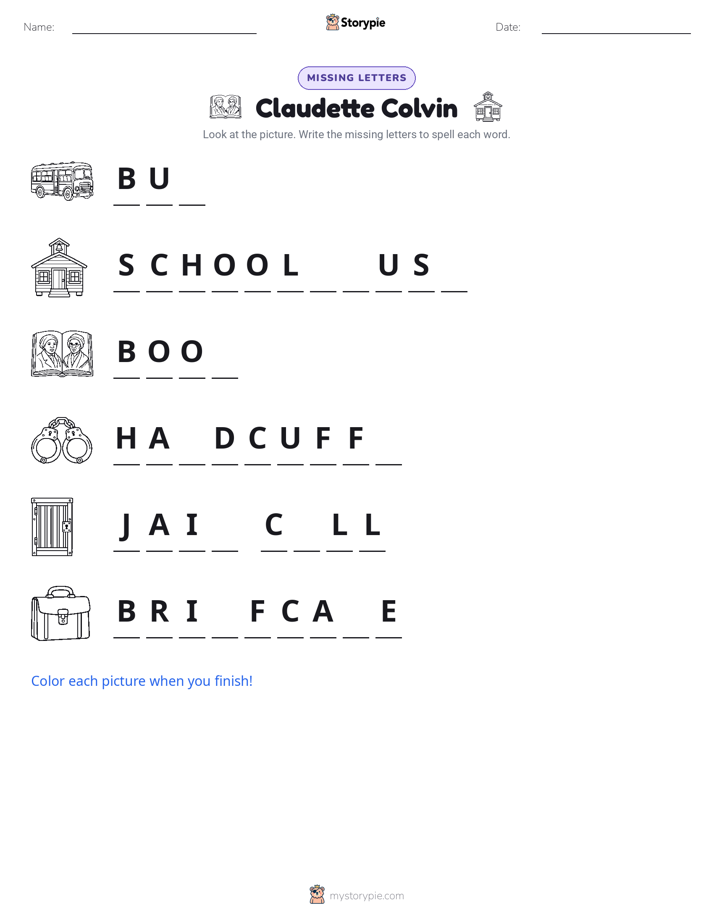
28 worksheets · answer keys · full story · quiz · Ages 10-12 · CEFR B2
Plus adds 290,000+ more stories in 27 languages, audio for every one, and printables for all of them.
Just want Claudette Colvin?

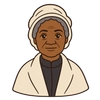
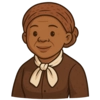
My name is Claudette Colvin, and I want to tell you a story about a time when I stood up for what was right, even when it was scary. I was born in Montgomery, Alabama, on September 5th, 1939. Growing up in the American South during that time meant living under a system of laws known as Jim Crow. These laws were designed to keep Black people and white people separate and to treat Black people as if they were less important. Every day, I saw the unfairness with my own eyes. There were separate water fountains, one for white people and one labeled for 'colored' people. We had to sit in different sections on the bus. This was called segregation, and it was a constant, painful reminder that we were not seen as equal. In school, however, I learned about brave Black leaders who had fought against injustice. Hearing the stories of heroes like Harriet Tubman, who led enslaved people to freedom, and Sojourner Truth, who spoke out for the rights of women and African Americans, filled me with a powerful feeling. They taught me that one person could make a difference. These lessons planted a seed in my mind: I, too, had a right to be treated with dignity and respect, and I should be prepared to fight for it.
That seed of defiance took root on a day I will never forget: March 2nd, 1955. I was just 15 years old, and I was riding the city bus home from school, just like any other day. The bus started to fill up, and soon all the seats in the 'white' section were taken. When a white woman got on and had nowhere to sit, the bus driver turned around and ordered me and three other Black students in my row to get up and move to the back. The other students moved, but I did not. I stayed right where I was. I thought about the lessons from school, about my rights as a citizen. The driver yelled at me, but I calmly told him that it was my constitutional right to sit there. I had paid my fare, just like everyone else. The driver called the police, and soon two officers came onto the bus. They tried to drag me from my seat, and it was terrifying. I was just a teenager, and these were grown men with authority. But as they arrested me, putting me in handcuffs and taking me to jail, I also felt a strong sense of purpose. I knew I was doing something important, something that Harriet Tubman and Sojourner Truth would have understood. I was taking a stand against a law that was wrong.
Claudette Colvin: The Girl Who Acted First
My name is Claudette Colvin, and I want to tell you a story about a time when I stood up for what was right, even when it was scary. I was born in Montgomery, Alabama, on September 5th, 1939. Growing up in the American South during that time meant living under a system of laws known as Jim Crow. These laws were designed to keep Black people and white people separate and to treat Black people as if they were less important. Every day, I saw the unfairness with my own eyes. There were separate water fountains, one for white people and one labeled for 'colored' people. We had to sit in different sections on the bus. This was called segregation, and it was a constant, painful reminder that we were not seen as equal. In school, however, I learned about brave Black leaders who had fought against injustice. Hearing the stories of heroes like Harriet Tubman, who led enslaved people to freedom, and Sojourner Truth, who spoke out for the rights of women and African Americans, filled me with a powerful feeling. They taught me that one person could make a difference. These lessons planted a seed in my mind: I, too, had a right to be treated with dignity and respect, and I should be prepared to fight for it.
That seed of defiance took root on a day I will never forget: March 2nd, 1955. I was just 15 years old, and I was riding the city bus home from school, just like any other day. The bus started to fill up, and soon all the seats in the 'white' section were taken. When a white woman got on and had nowhere to sit, the bus driver turned around and ordered me and three other Black students in my row to get up and move to the back. The other students moved, but I did not. I stayed right where I was. I thought about the lessons from school, about my rights as a citizen. The driver yelled at me, but I calmly told him that it was my constitutional right to sit there. I had paid my fare, just like everyone else. The driver called the police, and soon two officers came onto the bus. They tried to drag me from my seat, and it was terrifying. I was just a teenager, and these were grown men with authority. But as they arrested me, putting me in handcuffs and taking me to jail, I also felt a strong sense of purpose. I knew I was doing something important, something that Harriet Tubman and Sojourner Truth would have understood. I was taking a stand against a law that was wrong.
After my arrest, things became complicated. My act of defiance caught the attention of local civil rights leaders, including those from the NAACP, which was an organization that fought for the rights of Black people. For a moment, they considered using my case to challenge the segregation laws in court. This was a huge deal, a chance to fight the entire system. But in the end, they decided against it. They told me I was too young to be the face of such an important movement. They were looking for a symbol, someone who they felt the public would support without question, and they didn't think a teenager was the right choice. It was a difficult thing to hear. Nine months later, on December 1st, 1955, a respected woman named Rosa Parks was arrested for doing the exact same thing I had done—refusing to give up her seat on a Montgomery bus. Her case was the one the leaders chose. It sparked the famous Montgomery Bus Boycott, a massive protest where Black citizens refused to ride the buses for over a year. It hurt to be overlooked, but I never once doubted my decision. I knew in my heart that I had done the right thing that day on the bus, whether anyone knew my name or not.
My part in the fight for justice was not over, though. Even though my initial arrest wasn't used to start the boycott, my voice was still needed. In 1956, a new legal battle began. A federal lawsuit was filed to challenge the constitutionality of bus segregation directly. The case was called Browder v. Gayle, named for Aurelia Browder, one of the brave women who joined the lawsuit. I was one of the four women who served as plaintiffs in that case, which meant we were the ones officially suing the city. I became a star witness. I remember standing in the courtroom and testifying about what happened to me on that bus on March 2nd, 1955. I told the judges everything, explaining why I refused to move. Our case was successful, and it was appealed all the way to the highest court in the country, the U.S. Supreme Court. On December 17th, 1956, the Supreme Court made its final decision. It ruled that segregation on public buses was against the law. This ruling legally ended the Montgomery Bus Boycott and was a major victory for the Civil Rights Movement.
After these world-changing events, my life became much quieter. I eventually moved to New York, where I worked for many years as a nurse aide. For decades, very few people knew about the 15-year-old girl who had refused to give up her seat nine months before Rosa Parks. My story was mostly forgotten by history books. But I never stopped believing in what I did, and I never lost that sense of purpose I felt on the bus that day. Now, many years later, people are finally starting to learn about my role in the Civil Rights Movement. My voice, which was once considered too young, is finally being heard. I want my story to be a message to every young person out there: you are never too young to stand up for justice. Your actions matter, and your voice has power, even if it takes a long time for the world to listen. Always remember that.
Wow facts
About
Claudette Colvin is an American civil rights pioneer who, at age 15 in 1955, refused to give up her bus seat to a white person in Montgomery, Alabama. She was a key plaintiff in the landmark court case Browder v. Gayle, which ruled that bus segregation was unconstitutional.
Take a Quiz
Question 1 of 5
In your own words, retell the main events of Claudette Colvin's story from the bus incident to the Supreme Court case.
Explore next




Want to do even more?
Go beyond exploring. Unlock tools that turn every story into real learning.

Storypie Plus for families
Full stories, quizzes, and printables. Nights and car rides, sorted.
- Unlimited audio stories
- Create Mode: your child stars in the story
- Offline downloads
- Printable worksheets & coloring pages

Why Storypie for Schools
Students engaged. Prep in seconds. Evenings back to you.
- Worksheets & Quizzes
- Classroom Management
- Formative Assessment
- Custom Curriculum & Lesson Plans
- 27 Languages

Why Storypie for Homeschool
Curriculum done. They'll ask for more. Hours back in your day.
- Worksheet Generator
- First-Person Audio Stories
- Built-in Comprehension Quizzes
- Custom Curriculum & Lesson Plans
- Print & Go Activities