English

Daniel Gabriel Fahrenheit
German-Dutch-Polish physicist, inventor…
Reads at Grades 3–5 Listens at Grades 1–5
Print & create
Answer keys·No prep·Free with an account
28 worksheets · answer keys · full story · quiz · Ages 8-10 · CEFR B1
Plus adds 244,000+ more stories in 27 languages, audio for every one, and printables for all of them.
Just want Daniel Gabriel Fahrenheit?
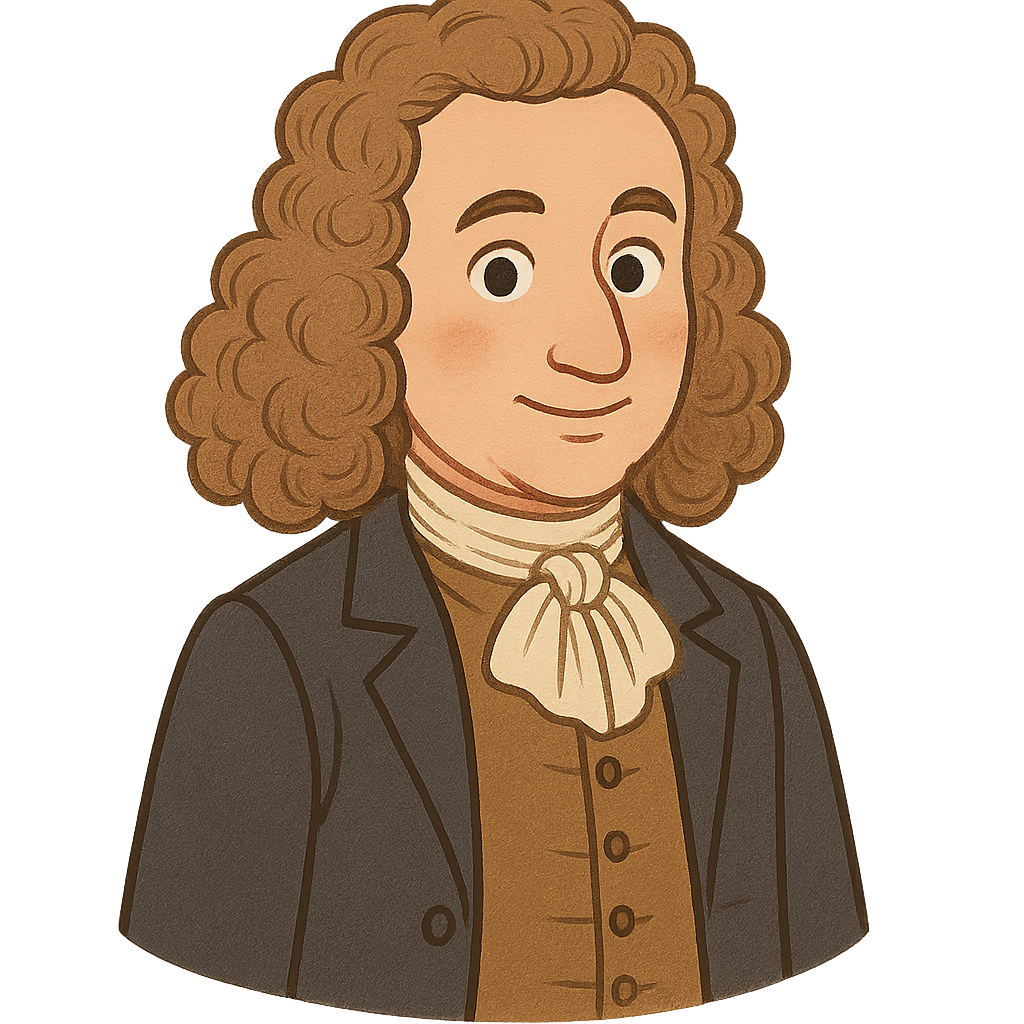
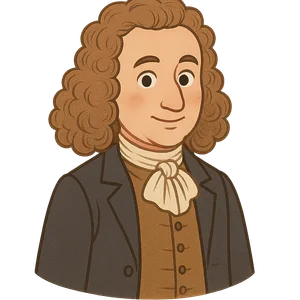
Hello! My name is Daniel Gabriel Fahrenheit. I was born a long, long time ago, on May 24th, 1686, in a busy port city called Gdańsk. My family were merchants, and they expected me to learn about business. However, I was always more interested in the world around me and how things worked. I loved science! My life changed suddenly in 1701 when I was just 15 years old. In that year, both of my parents sadly passed away. I was sent to the city of Amsterdam to learn a trade, but I carried my passion for science with me and never forgot my big questions about the world.
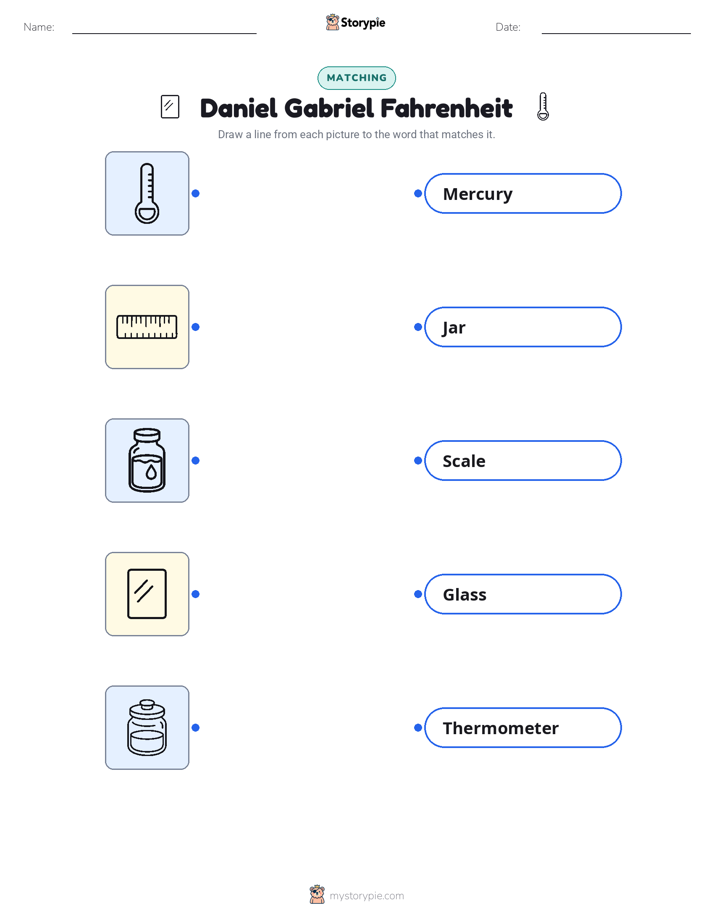
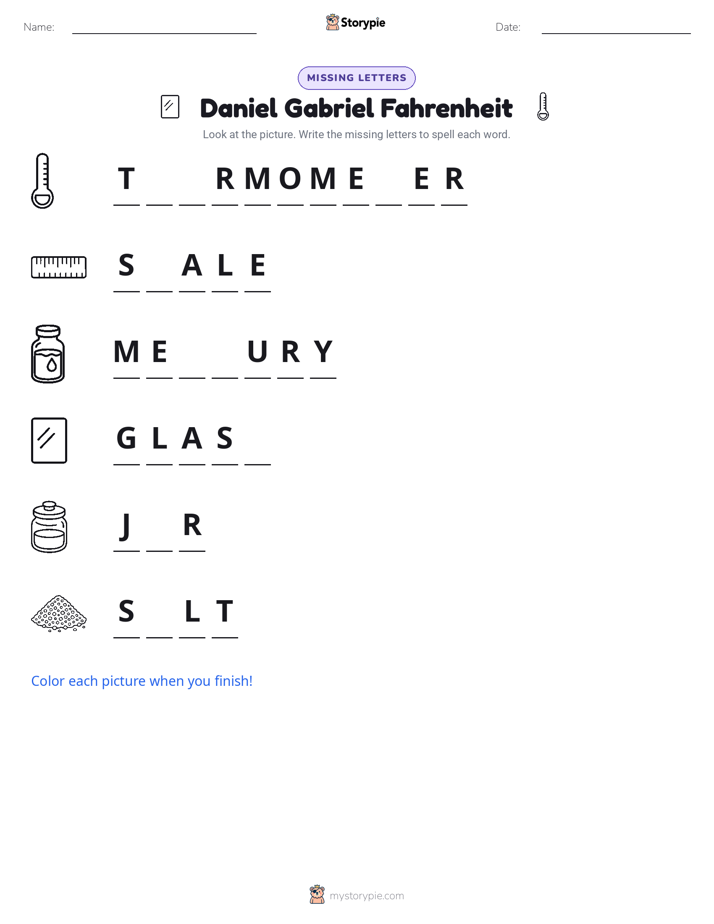
Even though I was supposed to be training as a bookkeeper, I spent all my free time reading science books and learning how to make scientific instruments. I became fascinated with thermometers, which are tools used to measure how hot or cold something is. The thermometers back then were not very good at all. You could place two of them in the very same room, and they might show completely different temperatures! I knew there had to be a better way. Starting around 1707, I began to travel across Europe. I wanted to meet other scientists and learn everything I could about glassblowing so I could build better instruments myself.
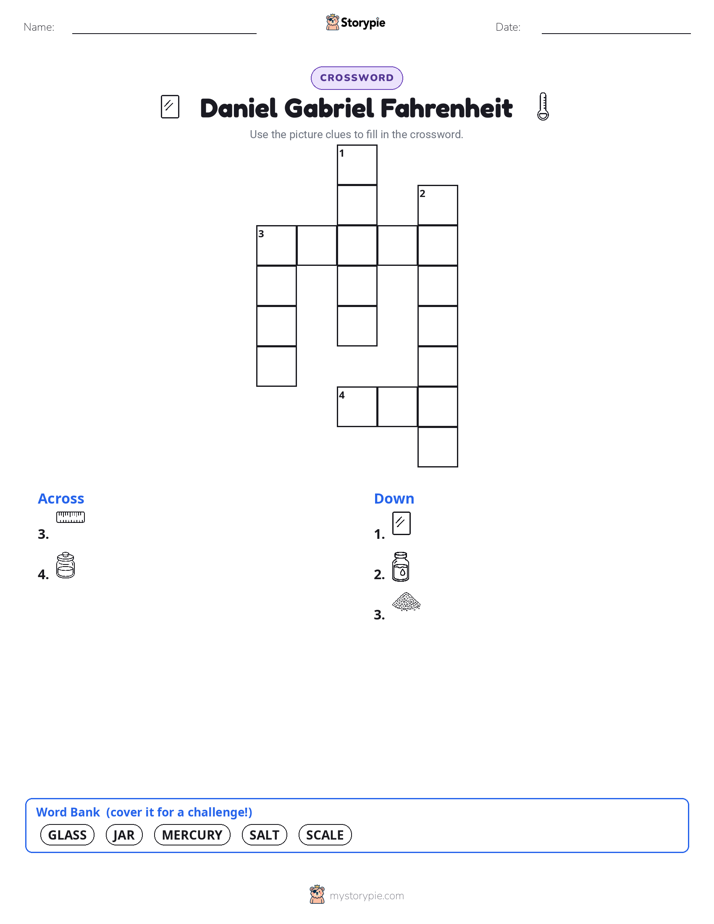
My first big challenge was to improve the thermometers that used alcohol. Around 1709, I discovered a method to create two alcohol thermometers that would always show the exact same temperature, which was a huge improvement. But I was not satisfied. I had an idea to use a different liquid entirely: a shiny, silvery metal called mercury. No one had ever managed to make a successful mercury thermometer before, but I was determined to try. Finally, in 1714, I did it! My mercury thermometer was a great success. It was much more accurate than the alcohol ones and could measure a much wider range of temperatures, from freezing cold all the way to boiling hot.
Daniel Gabriel Fahrenheit
Hello! My name is Daniel Gabriel Fahrenheit. I was born a long, long time ago, on May 24th, 1686, in a busy port city called Gdańsk. My family were merchants, and they expected me to learn about business. However, I was always more interested in the world around me and how things worked. I loved science! My life changed suddenly in 1701 when I was just 15 years old. In that year, both of my parents sadly passed away. I was sent to the city of Amsterdam to learn a trade, but I carried my passion for science with me and never forgot my big questions about the world.
Even though I was supposed to be training as a bookkeeper, I spent all my free time reading science books and learning how to make scientific instruments. I became fascinated with thermometers, which are tools used to measure how hot or cold something is. The thermometers back then were not very good at all. You could place two of them in the very same room, and they might show completely different temperatures! I knew there had to be a better way. Starting around 1707, I began to travel across Europe. I wanted to meet other scientists and learn everything I could about glassblowing so I could build better instruments myself.
My first big challenge was to improve the thermometers that used alcohol. Around 1709, I discovered a method to create two alcohol thermometers that would always show the exact same temperature, which was a huge improvement. But I was not satisfied. I had an idea to use a different liquid entirely: a shiny, silvery metal called mercury. No one had ever managed to make a successful mercury thermometer before, but I was determined to try. Finally, in 1714, I did it! My mercury thermometer was a great success. It was much more accurate than the alcohol ones and could measure a much wider range of temperatures, from freezing cold all the way to boiling hot.
Now that I had created a trustworthy thermometer, I needed a reliable scale so that everyone could measure temperature in the same way. In 1724, I introduced my own scale, which you probably know as the Fahrenheit scale. To create it, I set 0 degrees as the coldest temperature I could make in my lab using a special mixture of ice, water, and salt. I decided that the temperature at which plain water freezes would be 32 degrees, and I set the temperature of a healthy person at 96 degrees. At last, scientists everywhere could share their results and understand one another's measurements perfectly. My work became so well-known that in 1724, I was invited to become a member of the famous Royal Society in London. This was a huge honor for any scientist!
I spent the rest of my life working as an inventor and scientist in the Netherlands. I lived to be 50 years old. Though many years have passed since my time, my work is still remembered. The Fahrenheit scale is still used today in the United States and a few other places, and my invention of the accurate mercury thermometer helped make countless other scientific discoveries possible. I am proud that my curiosity helped people understand the world just a little bit better.
Wow facts
About
German-Dutch-Polish physicist, inventor, and scientific instrument maker who is best known for developing the first reliable mercury-in-glass thermometer by 1714 and for creating the widely used Fahrenheit temperature scale in 1724.
Take a Quiz
Question 1 of 5
Why were the thermometers Daniel Fahrenheit first studied not very good?
Explore next




Want to do even more?
Go beyond exploring. Unlock tools that turn every story into real learning.

Storypie Plus for families
Full stories, quizzes, and printables. Nights and car rides, sorted.
- Unlimited audio stories
- Create Mode: your child stars in the story
- Offline downloads
- Printable worksheets & coloring pages

Why Storypie for Schools
Students engaged. Prep in seconds. Evenings back to you.
- Worksheets & Quizzes
- Classroom Management
- Formative Assessment
- Custom Curriculum & Lesson Plans
- 27 Languages

Why Storypie for Homeschool
Curriculum done. They'll ask for more. Hours back in your day.
- Worksheet Generator
- First-Person Audio Stories
- Built-in Comprehension Quizzes
- Custom Curriculum & Lesson Plans
- Print & Go Activities