English

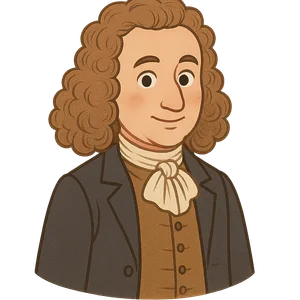
Daniel Gabriel Fahrenheit
German-Dutch-Polish physicist, inventor…
Reads at Grades 6–8 Listens at Grades 4–8
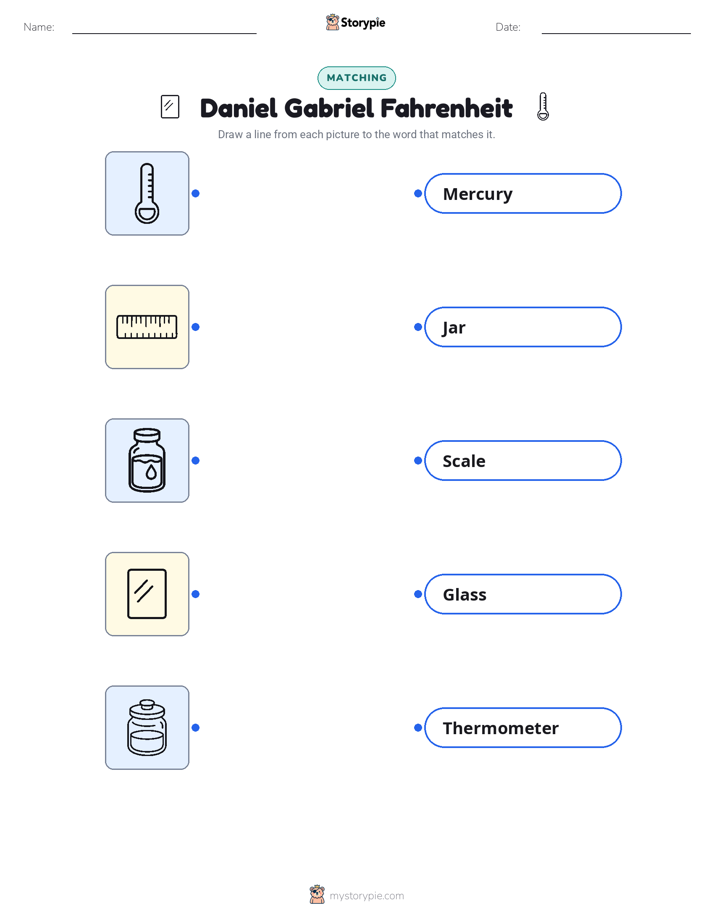
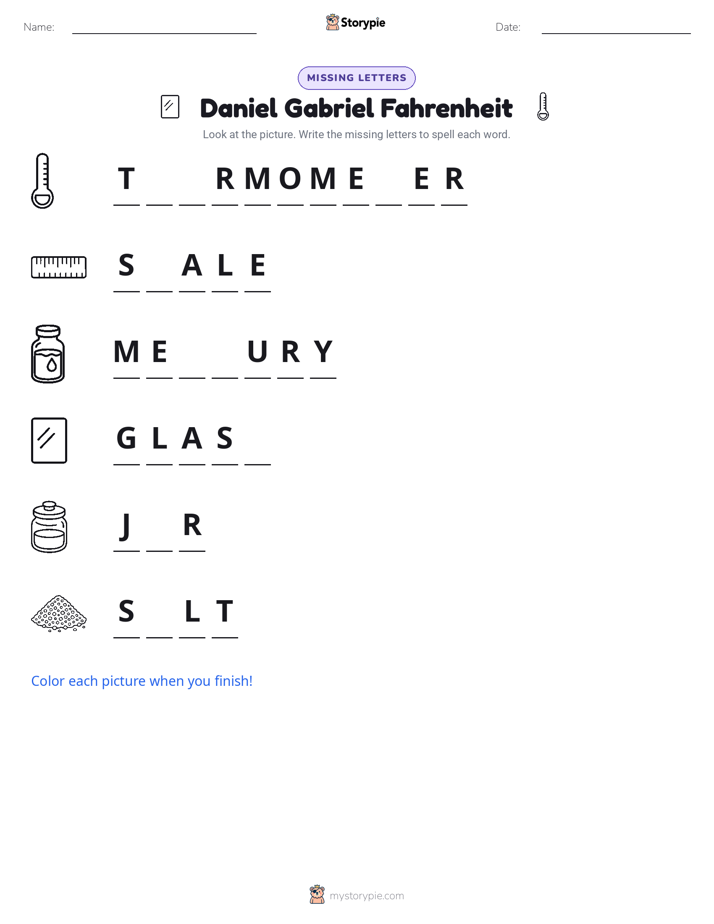
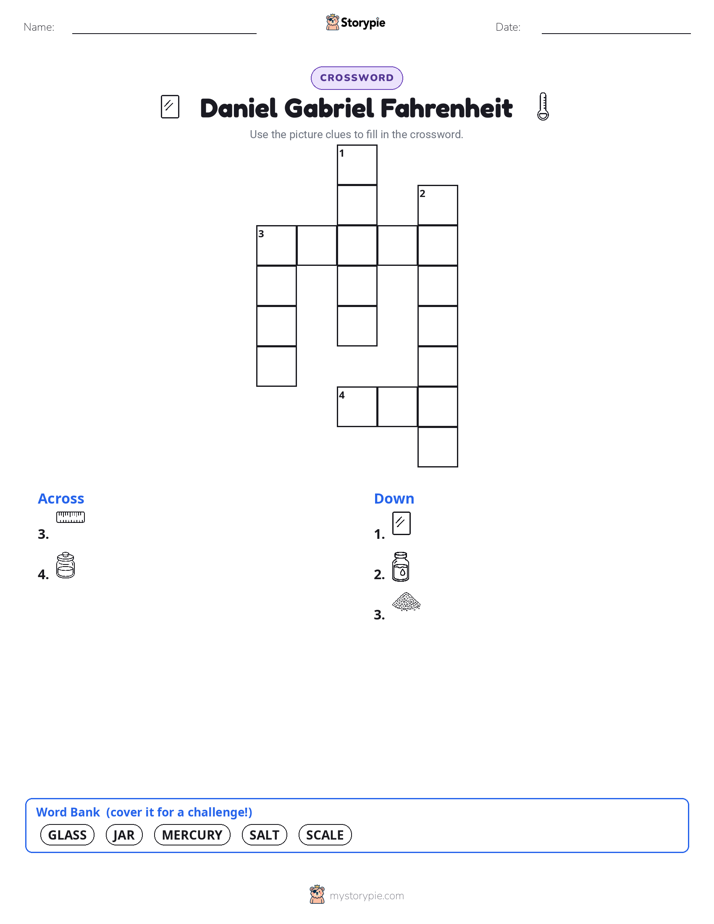
Print & create
Answer keys·No prep·Free with an account
28 worksheets · answer keys · full story · quiz · Ages 10-12 · CEFR B2
Plus adds 244,000+ more stories in 27 languages, audio for every one, and printables for all of them.
Just want Daniel Gabriel Fahrenheit?
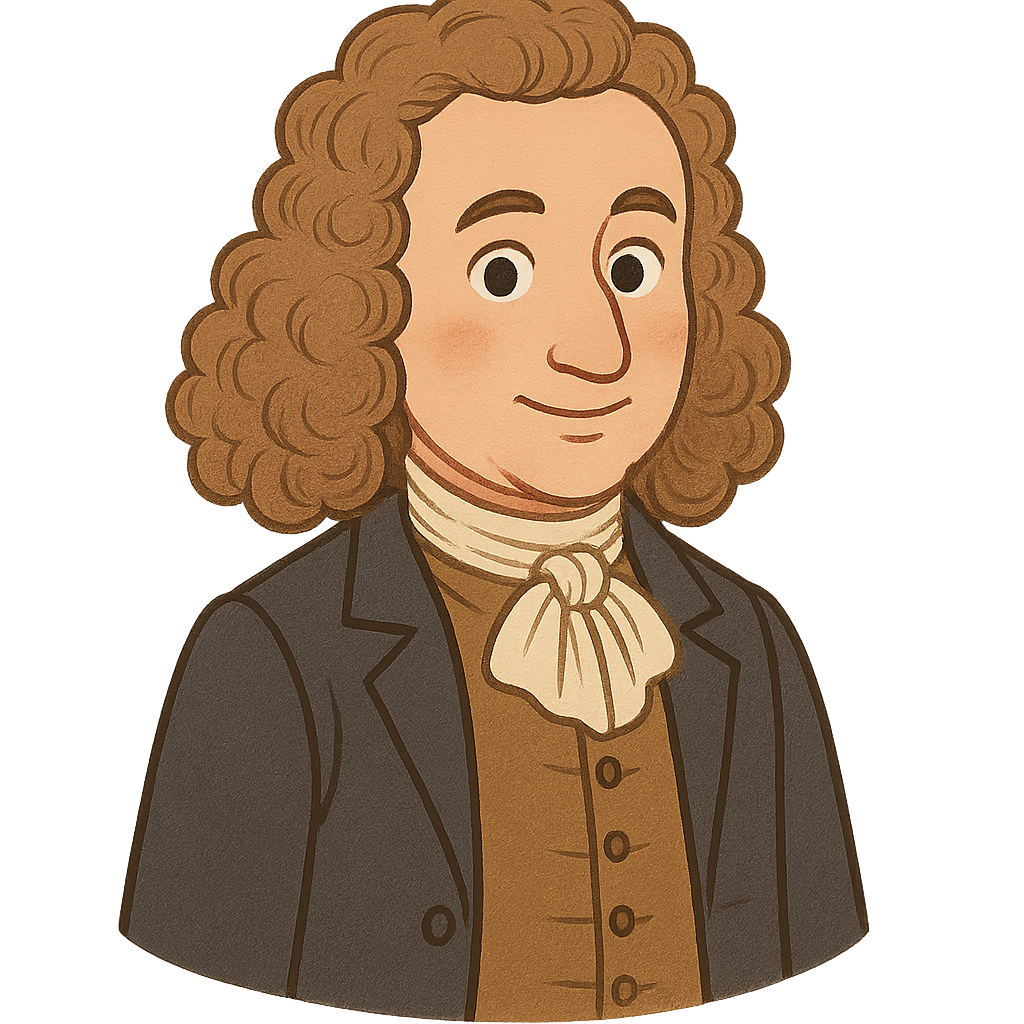
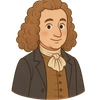
Hello, my name is Daniel Gabriel Fahrenheit. I was born on May 24th, 1686, in the lively port city of Danzig. My family were merchants, always busy with trade, but my own mind was fascinated by something different: science. I spent my childhood observing the world around me, filled with questions about how everything worked. My life changed dramatically in 1701 when a tragedy occurred, and both of my parents passed away. I was only fifteen years old. My guardians sent me to Amsterdam to train as a bookkeeper, hoping I would follow a practical path in business. While I understood their intentions, I knew deep down that a life spent with numbers in a ledger was not for me. My heart belonged to the world of scientific instruments and discovery. I dreamed of creating tools that could help us understand the natural world with greater accuracy than ever before.
I made the bold decision to leave the path of a bookkeeper and follow my true calling. Around 1707, I began a long journey across Europe, hungry for knowledge. I traveled through Germany, Denmark, and England, seeking out the most brilliant scientific minds and skilled instrument makers of my time. I learned from each person I met, absorbing their techniques and ideas. A pivotal moment in my journey came in 1708 when I visited the renowned Danish astronomer Ole Rømer. He was working on his own thermometers, and seeing his efforts ignited a spark in me. At the time, thermometers were unreliable. Two different instruments could give two different readings for the same temperature. I realized there was a critical problem to solve: how to create a thermometer that was not only accurate but also consistent, so that any scientist, anywhere in the world, could trust their measurements.
Daniel Gabriel Fahrenheit: The Quest for Precision
Hello, my name is Daniel Gabriel Fahrenheit. I was born on May 24th, 1686, in the lively port city of Danzig. My family were merchants, always busy with trade, but my own mind was fascinated by something different: science. I spent my childhood observing the world around me, filled with questions about how everything worked. My life changed dramatically in 1701 when a tragedy occurred, and both of my parents passed away. I was only fifteen years old. My guardians sent me to Amsterdam to train as a bookkeeper, hoping I would follow a practical path in business. While I understood their intentions, I knew deep down that a life spent with numbers in a ledger was not for me. My heart belonged to the world of scientific instruments and discovery. I dreamed of creating tools that could help us understand the natural world with greater accuracy than ever before.
I made the bold decision to leave the path of a bookkeeper and follow my true calling. Around 1707, I began a long journey across Europe, hungry for knowledge. I traveled through Germany, Denmark, and England, seeking out the most brilliant scientific minds and skilled instrument makers of my time. I learned from each person I met, absorbing their techniques and ideas. A pivotal moment in my journey came in 1708 when I visited the renowned Danish astronomer Ole Rømer. He was working on his own thermometers, and seeing his efforts ignited a spark in me. At the time, thermometers were unreliable. Two different instruments could give two different readings for the same temperature. I realized there was a critical problem to solve: how to create a thermometer that was not only accurate but also consistent, so that any scientist, anywhere in the world, could trust their measurements.
My quest for a reliable thermometer led me to years of careful experimentation. The thermometers of the early 18th century were typically filled with alcohol. While alcohol worked to some degree, it didn't expand and contract in a perfectly even way, which made precise readings difficult. I knew there had to be a better way. After much work, I had a breakthrough. Around 1714, I developed the first modern mercury-in-glass thermometer. Mercury was the perfect substance for the job. It expanded and contracted very smoothly and consistently as the temperature changed. More importantly, it remained a liquid over a much wider range of temperatures than alcohol. It could measure the intense cold of a freezing winter and the heat of boiling water without freezing solid or boiling away itself. This innovation meant my thermometers were far more accurate and versatile than any that had come before. For the first time, scientists had a tool they could truly depend on.
Creating an accurate thermometer was only half the battle. If a scientist in London and a scientist in Paris had my thermometers, how could they be sure they were measuring temperature the same way? I understood that science needed a standard scale that everyone could use to compare their findings. So, I set out to create one. Around 1724, I introduced the temperature scale that would eventually bear my name: the Fahrenheit scale. To make it consistent, I based it on three fixed points. The first, which I marked as 0 degrees, was the temperature of a freezing mixture of ice, water, and salt. The second fixed point was 32 degrees, the temperature at which pure water freezes. For my third point, I used what I measured as the temperature of a healthy human body, which I set at 96 degrees. This scale provided a reliable framework for measurement. During my studies, I also made other important discoveries, such as observing that the boiling point of water changes depending on the surrounding atmospheric pressure.
With my inventions gaining recognition, I decided to settle down and establish a workshop. Around 1717, I made my home in The Hague in the Netherlands. There, I became a professional glassblower and instrument maker. My workshop produced not only my famous thermometers but also other scientific tools like barometers and hydrometers, which were used to measure air pressure and liquid density. My work did not go unnoticed by the scientific community. In 1724, I received one of the greatest honors a scientist of my time could achieve: I was elected a Fellow of the prestigious Royal Society of London. This was a clear sign that my contributions to science were valued and respected by the world’s leading thinkers. It was a moment of immense pride, confirming that my decision to leave bookkeeping and follow my passion had been the right one.
I lived to be 50 years old, passing away in 1736. In my life, I dedicated myself to the pursuit of accuracy and reliability in science. My work creating precise instruments gave scientists, doctors, and engineers the tools they needed to make incredible new discoveries and understand the world in greater detail. My greatest legacy is the Fahrenheit scale, which provided a common language for temperature that helped unify scientific research. Today, my name is still used every day by millions of people when they check the weather, a lasting reminder of a lifelong quest for precision.
Wow facts
About
German-Dutch-Polish physicist, inventor, and scientific instrument maker who is best known for developing the first reliable mercury-in-glass thermometer by 1714 and for creating the widely used Fahrenheit temperature scale in 1724.
Take a Quiz
Question 1 of 5
In the story, what was the main problem with early thermometers that Daniel Gabriel Fahrenheit set out to solve?
Explore next



Want to do even more?
Go beyond exploring. Unlock tools that turn every story into real learning.

Storypie Plus for families
Full stories, quizzes, and printables. Nights and car rides, sorted.
- Unlimited audio stories
- Create Mode: your child stars in the story
- Offline downloads
- Printable worksheets & coloring pages

Why Storypie for Schools
Students engaged. Prep in seconds. Evenings back to you.
- Worksheets & Quizzes
- Classroom Management
- Formative Assessment
- Custom Curriculum & Lesson Plans
- 27 Languages

Why Storypie for Homeschool
Curriculum done. They'll ask for more. Hours back in your day.
- Worksheet Generator
- First-Person Audio Stories
- Built-in Comprehension Quizzes
- Custom Curriculum & Lesson Plans
- Print & Go Activities