English

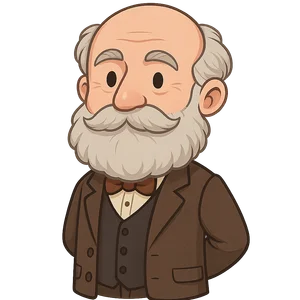
Eadweard Muybridge
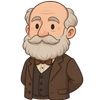
Eadweard Muybridge was an English photographer and inventor who is considered one of the fathers of the…
Reads at Grades 6–8 Listens at Grades 4–8
Print & create
Answer keys·No prep·Free with an account
28 worksheets · answer keys · full story · quiz · Ages 10-12 · CEFR B2
Plus adds 244,000+ more stories in 27 languages, audio for every one, and printables for all of them.
Just want Eadweard Muybridge?
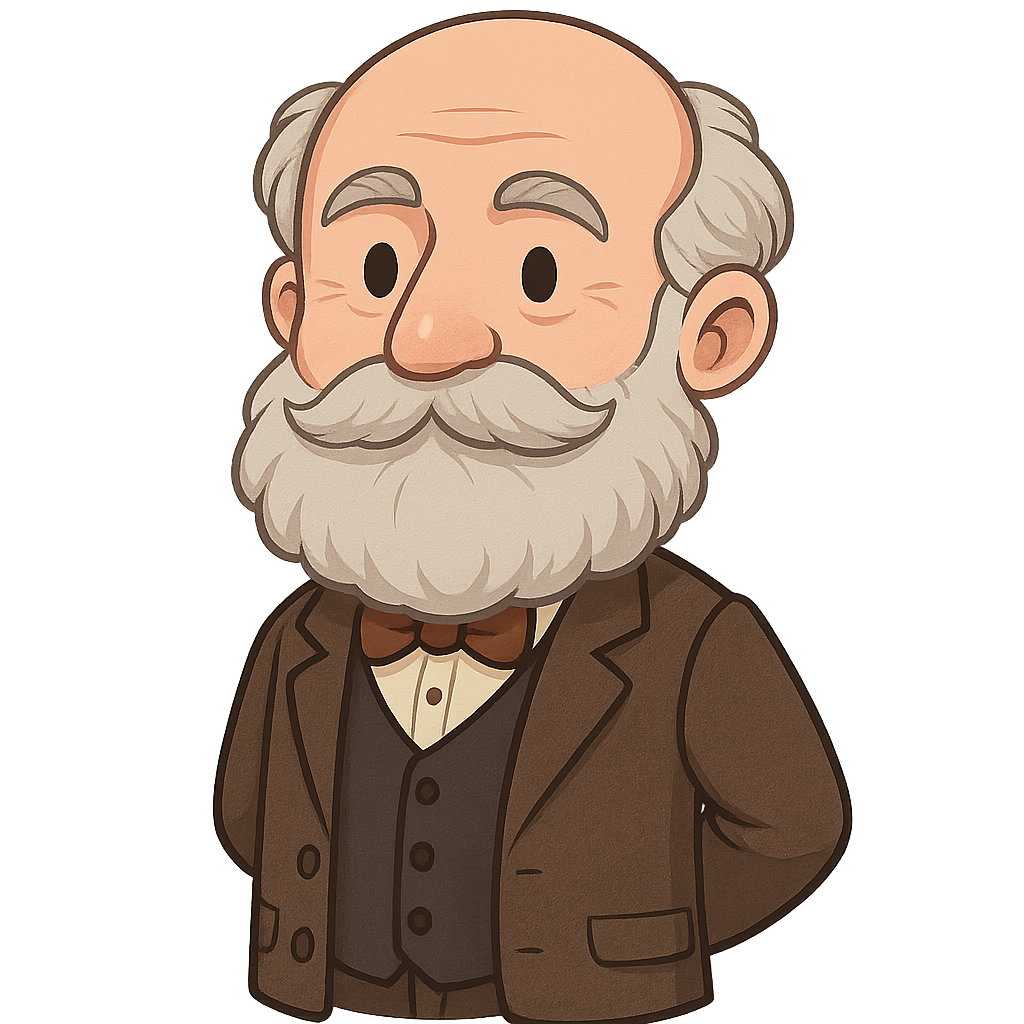
Hello, my name is Eadweard Muybridge, and I am known as one of the fathers of the motion picture. But my story begins with a different name. I was born Edward James Muggeridge in Kingston upon Thames, England, on April 9th, 1830. From a young age, I was filled with an adventurous spirit. That spirit led me to leave England and sail to America around the year 1850. I first landed in New York, but my journey didn't stop there; I traveled all the way across the continent to the bustling city of San Francisco. It was there, on the edge of a new world, that I decided I needed a name that matched my unique personality. I changed my name to Eadweard Muybridge, believing it sounded more ancient and distinctive. With a new name and a new home, I was ready to begin my life's work as a photographer.
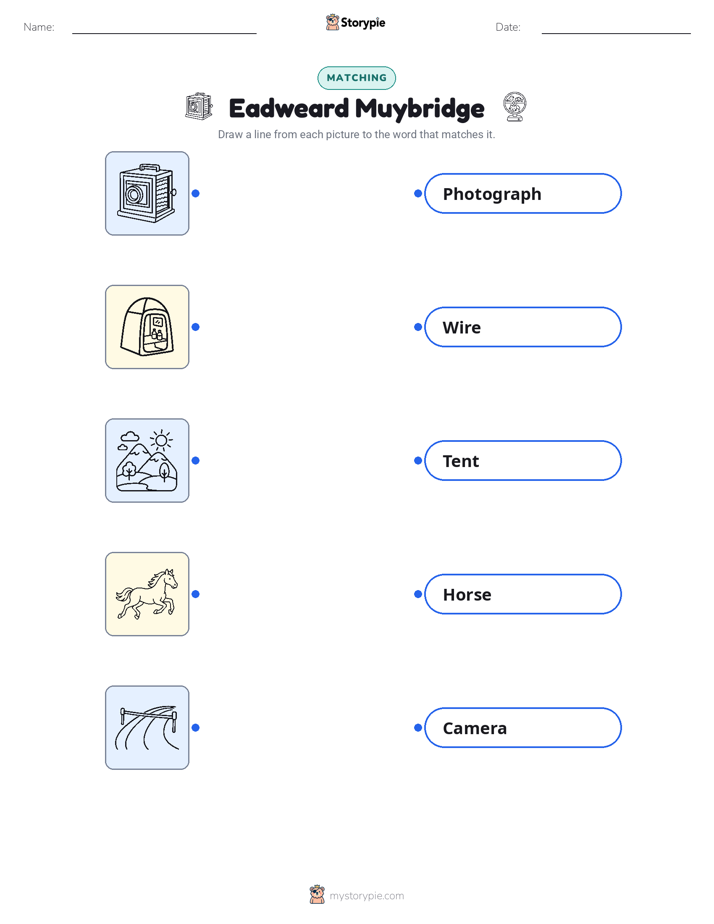
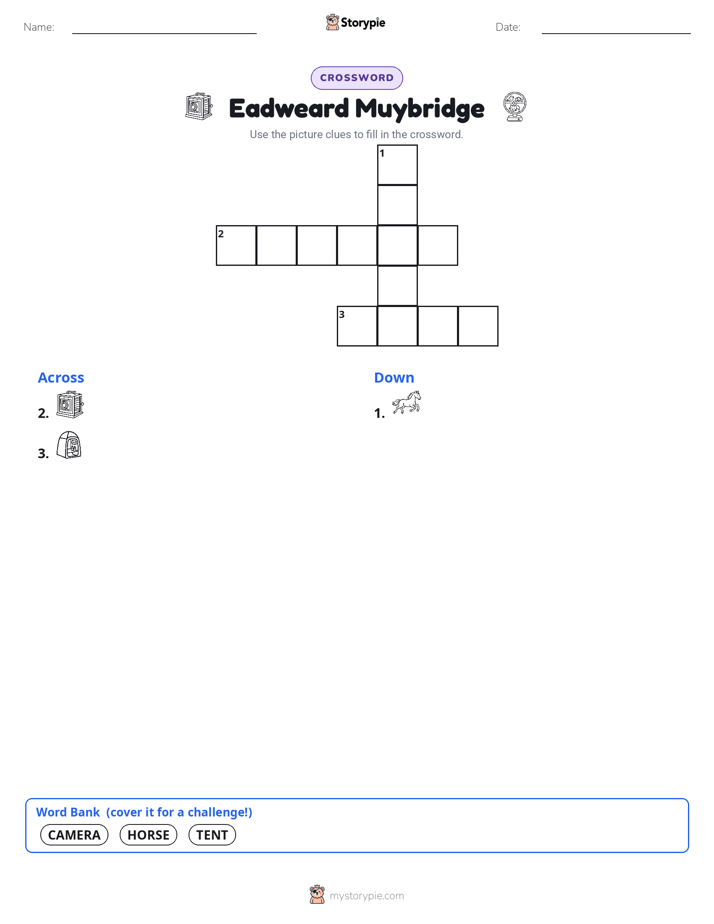
In the 1860s, photography was not as simple as it is today. My passion for capturing the world on film was met with many challenges. My camera was a huge, heavy box that I named 'Helios,' after the Greek god of the sun. It was so large that I needed a portable darkroom—a tent filled with chemicals and equipment—that I had to carry with me everywhere I went. This was especially difficult during my famous trips to Yosemite Valley, which I began in 1867. I hauled my heavy gear through the rugged wilderness to capture breathtaking photographs of the giant mountains, towering trees, and magnificent waterfalls. These images were unlike anything people had seen before. When I brought them back, they were celebrated for their beauty and clarity. These pictures made me famous and showed people living in the eastern United States the incredible, wild landscapes of the American West for the very first time.
Eadweard Muybridge: The Man Who Made Pictures Move
Hello, my name is Eadweard Muybridge, and I am known as one of the fathers of the motion picture. But my story begins with a different name. I was born Edward James Muggeridge in Kingston upon Thames, England, on April 9th, 1830. From a young age, I was filled with an adventurous spirit. That spirit led me to leave England and sail to America around the year 1850. I first landed in New York, but my journey didn't stop there; I traveled all the way across the continent to the bustling city of San Francisco. It was there, on the edge of a new world, that I decided I needed a name that matched my unique personality. I changed my name to Eadweard Muybridge, believing it sounded more ancient and distinctive. With a new name and a new home, I was ready to begin my life's work as a photographer.
In the 1860s, photography was not as simple as it is today. My passion for capturing the world on film was met with many challenges. My camera was a huge, heavy box that I named 'Helios,' after the Greek god of the sun. It was so large that I needed a portable darkroom—a tent filled with chemicals and equipment—that I had to carry with me everywhere I went. This was especially difficult during my famous trips to Yosemite Valley, which I began in 1867. I hauled my heavy gear through the rugged wilderness to capture breathtaking photographs of the giant mountains, towering trees, and magnificent waterfalls. These images were unlike anything people had seen before. When I brought them back, they were celebrated for their beauty and clarity. These pictures made me famous and showed people living in the eastern United States the incredible, wild landscapes of the American West for the very first time.
My life took a fascinating turn in 1872 because of a popular debate and a wealthy man named Leland Stanford. He hired me to help him solve a puzzle that people had argued about for years: when a horse gallops, do all four of its hooves ever leave the ground at the exact same time? It was impossible to see with the naked eye, and nobody knew the answer for sure. I believed photography could provide the truth. I spent years perfecting a method to capture the horse's movement. Finally, I set up a row of special cameras along a racetrack, each designed to take a picture faster than any camera before. On June 15th, 1878, a horse named Sallie Gardner was raced down the track. As she galloped, she tripped a series of thin wires that were stretched across her path. Each wire was connected to a different camera, triggering it to take a picture at the perfect moment. The result was a series of images showing every phase of the gallop. When I developed the photographs, the proof was undeniable. There, in one of the frames, was Sallie Gardner completely airborne, with all four hooves off the ground for a split second. We had solved the great horse debate!
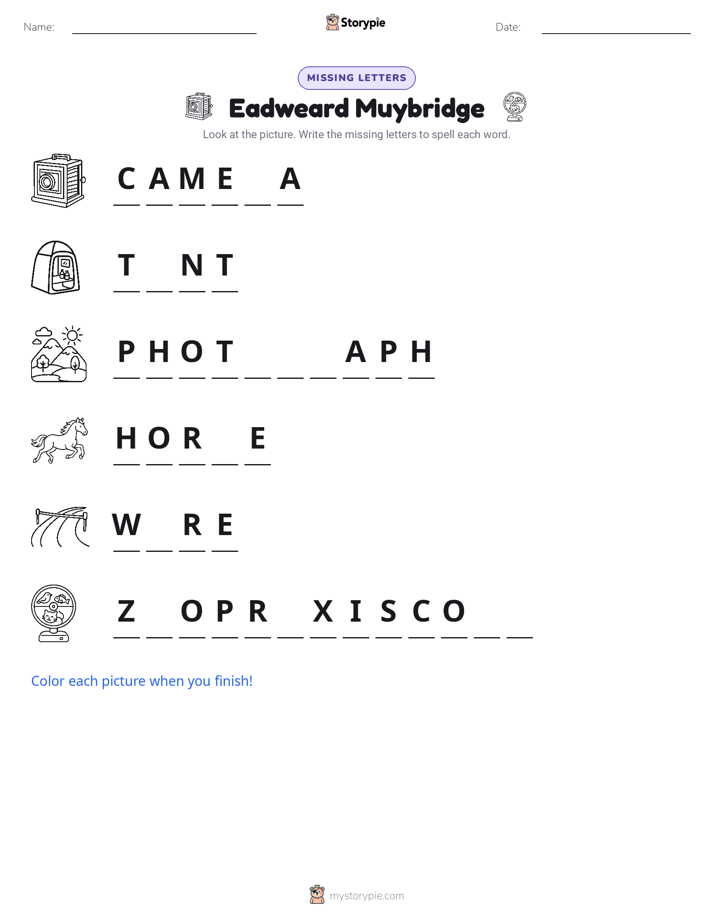
After proving that a horse could fly, another idea began to form in my mind. I had captured the individual moments of motion, but what if I could string them together to recreate the movement itself? What if I could make the pictures move? In 1879, I acted on this idea and invented a device I called the zoopraxiscope. It was a machine that used a circular glass disc. I carefully painted the images from my photographs, like the galloping horse, around the edge of the disc. When the disc was spun rapidly, a special lamp projected the images through a lens and onto a screen. The effect was astonishing. The horse appeared to gallop across the screen, smooth and lifelike. For the first time, an audience could see a realistic projection of a photograph in motion. I traveled to cities in America and Europe, giving presentations with my zoopraxiscope and amazing audiences with what they called my 'motion pictures.'
My work on the galloping horse and the zoopraxiscope caught the attention of scientists and academics. They realized my methods could be used to study all kinds of movement in a way that had never been possible. In 1884, I accepted a position at the University of Pennsylvania, where I was given the resources to conduct the most extensive study of motion ever attempted. For several years, I took thousands of pictures of animals and people. I photographed elephants walking, birds flying, and tigers pacing. I also captured humans performing all sorts of tasks, from walking and running to jumping and lifting. In 1887, I published this massive collection in a groundbreaking work titled 'Animal Locomotion.' This series of books was like a visual dictionary of how living things move. It became an invaluable resource for artists who wanted to draw figures more realistically and for scientists who wanted to understand the mechanics of biology.
Later in my life, I returned to my hometown of Kingston upon Thames in England, where I continued my work and organized my vast collection of photographs. I lived to be 74 years old, passing away in 1904. It's remarkable to think that my journey started with a simple question about a galloping horse and led to something so much bigger. Today, I am remembered as one of the 'fathers of the motion picture.' My stop-motion photographs and my zoopraxiscope were crucial steps that inspired other inventors to develop the technology that eventually gave us the movies we all love and enjoy today.
Wow facts
About
Eadweard Muybridge was an English photographer and inventor who is considered one of the fathers of the motion picture for his pioneering work in chronophotography and his invention of the zoopraxiscope.
Take a Quiz
Question 1 of 5
Based on the story, describe the steps I took to solve the mystery of the galloping horse.
Explore next



Want to do even more?
Go beyond exploring. Unlock tools that turn every story into real learning.

Storypie Plus for families
Full stories, quizzes, and printables. Nights and car rides, sorted.
- Unlimited audio stories
- Create Mode: your child stars in the story
- Offline downloads
- Printable worksheets & coloring pages

Why Storypie for Schools
Students engaged. Prep in seconds. Evenings back to you.
- Worksheets & Quizzes
- Classroom Management
- Formative Assessment
- Custom Curriculum & Lesson Plans
- 27 Languages

Why Storypie for Homeschool
Curriculum done. They'll ask for more. Hours back in your day.
- Worksheet Generator
- First-Person Audio Stories
- Built-in Comprehension Quizzes
- Custom Curriculum & Lesson Plans
- Print & Go Activities