English

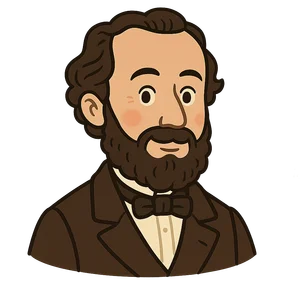
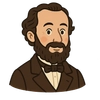
Edmond Becquerel
A French physicist who discovered the photovoltaic effect in 1839…
Reads at Grades 6–8 Listens at Grades 4–8
Print & create
Answer keys·No prep·Free with an account
28 worksheets · answer keys · full story · quiz · Ages 10-12 · CEFR B2
Plus adds 244,000+ more stories in 27 languages, audio for every one, and printables for all of them.
Just want Edmond Becquerel?
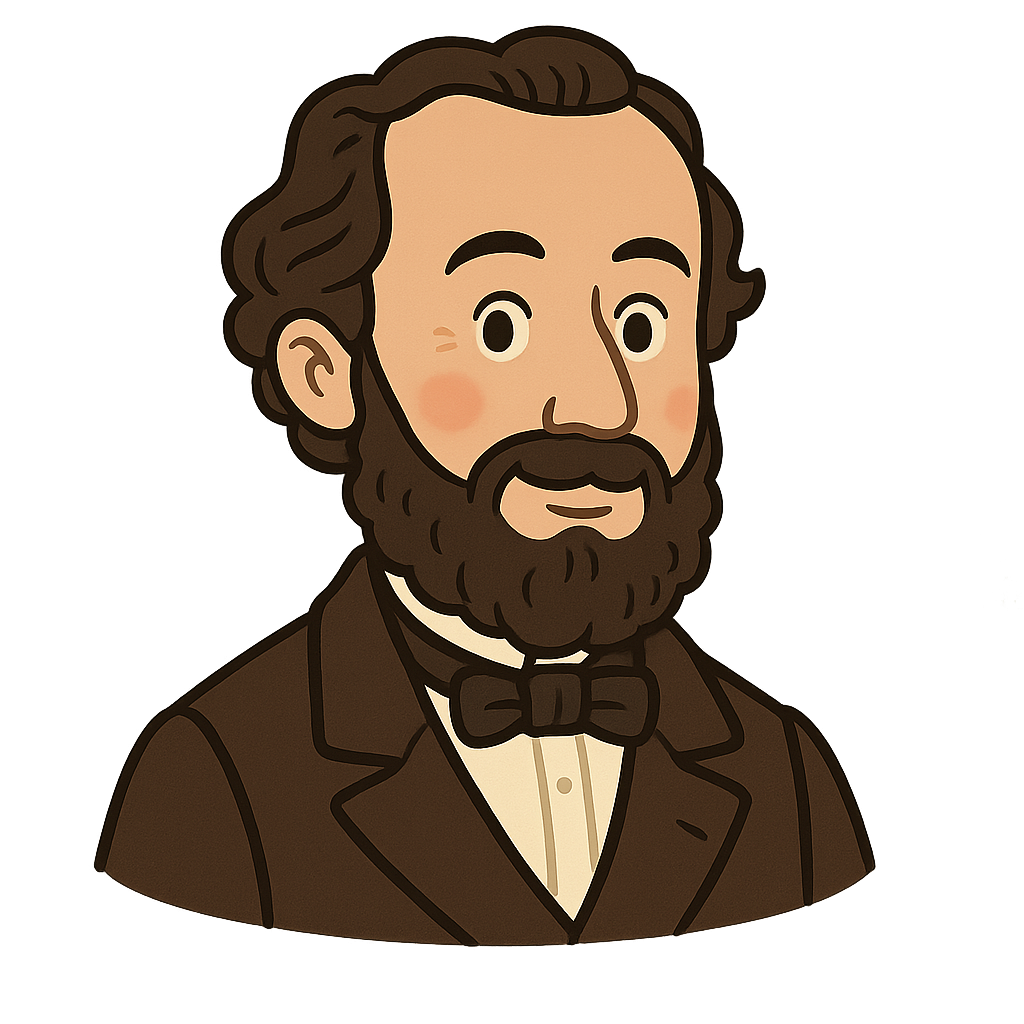
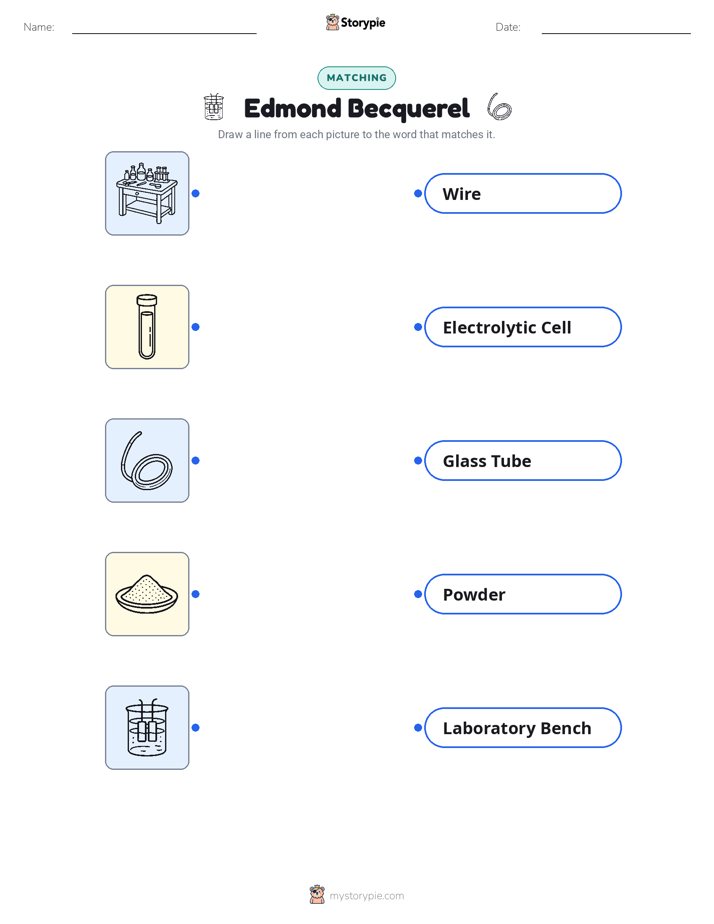
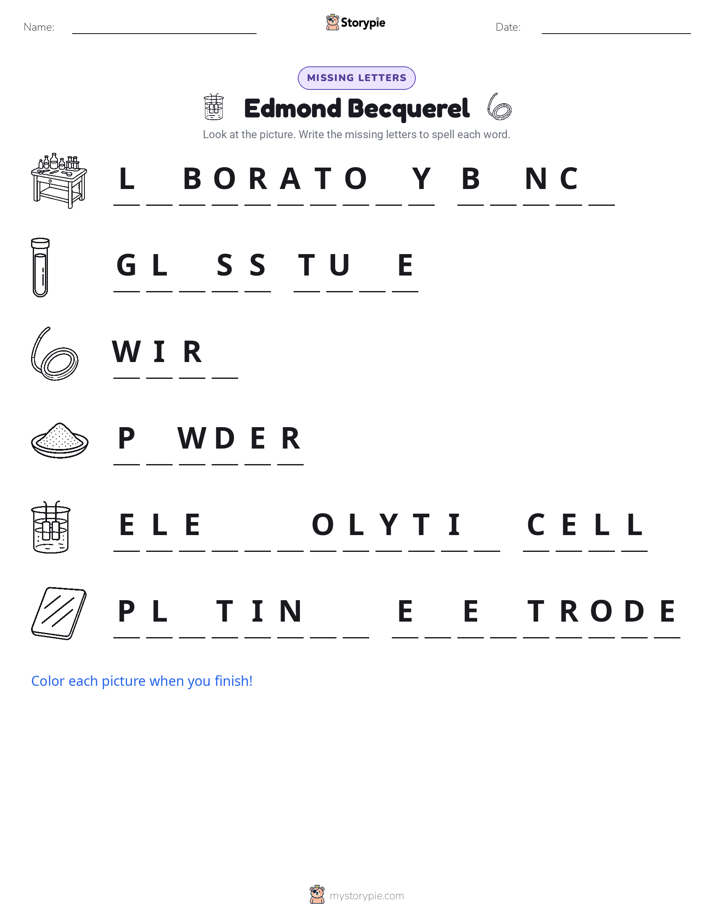
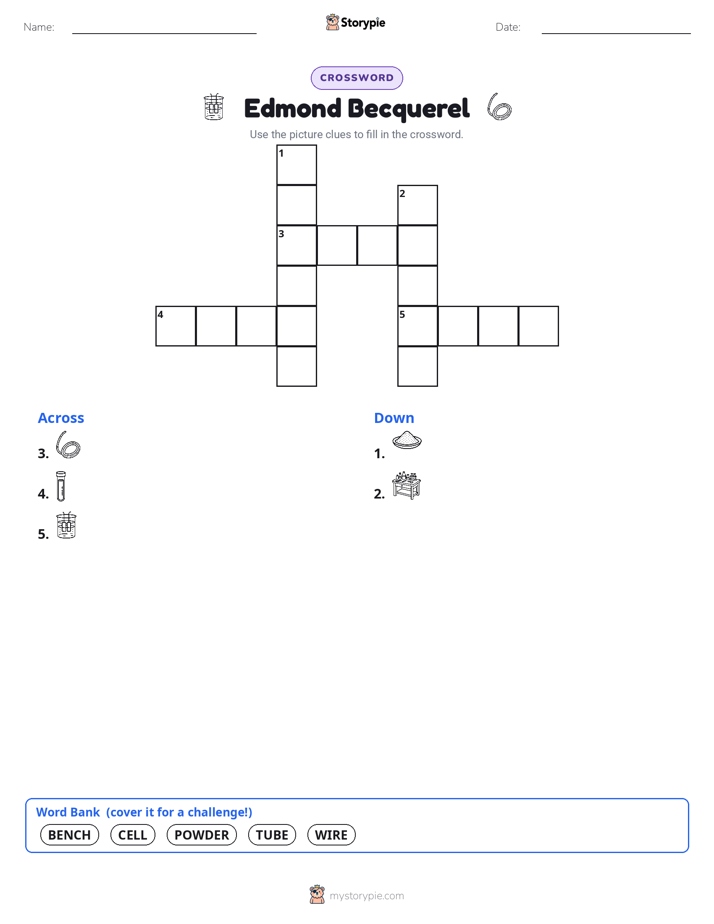
Hello. My name is Edmond Becquerel, and my story is one of fascination with light and electricity. I was born in the bustling city of Paris, France, on March 24th, 1820, into a world lit mostly by candles and gas lamps. My father, Antoine Becquerel, was a renowned physicist, and his laboratory was my childhood playground. The shelves were filled with strange glass tubes, wires, and mysterious powders. While other children might have played with wooden toys, I was captivated by the wonders of science. I would watch my father conduct amazing experiments with electricity and magnetism, and I knew from a very early age that I wanted to follow in his footsteps. My greatest desire was to become a scientist and help uncover the secrets of the natural world.
My life's most important discovery came when I was still a young man. The year was 1839, and at just 19 years old, I was fortunate enough to be working as my father’s assistant in his laboratory. One day, I was performing an experiment with an electrolytic cell. This device consisted of two platinum electrodes placed inside a chemical solution. As I was working, I noticed something truly astonishing. When I allowed sunlight to shine on one of the electrodes, a small but measurable electric current began to flow between them. It was a moment of pure inspiration. The light itself was creating power. I had just observed, for the first time, what is now called the photovoltaic effect. This simple observation was the very beginning of solar power, the fundamental principle that allows every solar panel today to turn sunlight into electricity.
Edmond Becquerel: Capturing the Light
Hello. My name is Edmond Becquerel, and my story is one of fascination with light and electricity. I was born in the bustling city of Paris, France, on March 24th, 1820, into a world lit mostly by candles and gas lamps. My father, Antoine Becquerel, was a renowned physicist, and his laboratory was my childhood playground. The shelves were filled with strange glass tubes, wires, and mysterious powders. While other children might have played with wooden toys, I was captivated by the wonders of science. I would watch my father conduct amazing experiments with electricity and magnetism, and I knew from a very early age that I wanted to follow in his footsteps. My greatest desire was to become a scientist and help uncover the secrets of the natural world.
My life's most important discovery came when I was still a young man. The year was 1839, and at just 19 years old, I was fortunate enough to be working as my father’s assistant in his laboratory. One day, I was performing an experiment with an electrolytic cell. This device consisted of two platinum electrodes placed inside a chemical solution. As I was working, I noticed something truly astonishing. When I allowed sunlight to shine on one of the electrodes, a small but measurable electric current began to flow between them. It was a moment of pure inspiration. The light itself was creating power. I had just observed, for the first time, what is now called the photovoltaic effect. This simple observation was the very beginning of solar power, the fundamental principle that allows every solar panel today to turn sunlight into electricity.
Beyond the world of electricity, I was also deeply fascinated by the new art of photography. In the 1840s, photographs were magical, but they were all in black and white. I dreamed of a way to capture the world in its true, vibrant colors. It became a personal challenge, a puzzle that I spent years trying to solve. I experimented with different chemicals and techniques, searching for a way to make a surface that would record the colors of the light that hit it. In 1848, I finally achieved a major breakthrough. I successfully produced the world's first full-color photograph, a beautiful image of the solar spectrum—the rainbow of colors created when light passes through a prism. My method wasn't perfect, as the colors would sadly fade over time when exposed to more light, but it was a pioneering step that showed the world that color photography was possible.
My curiosity about light didn't stop there. I was also intrigued by materials that seemed to hold onto light and glow in the dark, a phenomenon known as phosphorescence. I wanted to understand not just that it happened, but precisely how it worked. Why did some substances glow for a few seconds, while others could glow for minutes? To study this properly, I needed a new tool, so I invented one. In 1857, I designed and built the phosphoroscope. This clever device allowed me to expose a material to a bright flash of light and then measure exactly how long its afterglow lasted, even if it was for a fraction of a second. My work with the phosphoroscope provided valuable data that helped other scientists better understand the complex relationship between light and energy at a molecular level.
I was very proud to carry on my family's scientific tradition. My father had been a great inspiration to me, and in 1878, I was honored to take over his position as the professor of physics at the Muséum d'Histoire Naturelle in Paris. It was a role I cherished, allowing me to continue my research and teach a new generation of scientists. But my greatest joy was seeing that same passion for discovery ignite in my own son, Henri Becquerel. He grew up to be a brilliant physicist in his own right. He would go on to make his own monumental discovery—radioactivity—which changed our understanding of the atom forever and earned him a Nobel Prize in 1903. It was a profound feeling to know that our family's love for science would continue to illuminate the world.
I lived to be 71 years old, passing away in 1891. Though my life came to an end, my discoveries have continued to shine brightly. That incredible moment I witnessed in my father's lab back in 1839—the photovoltaic effect—is the very science that powers our world in new ways today. Every time you see a solar panel on a roof or in a field, quietly generating clean energy from the sun's rays, you are seeing the legacy of my work. It is a wonderful thought that a flash of inspiration from so long ago is still helping to create a brighter future for everyone.
Wow facts
About
A French physicist who discovered the photovoltaic effect in 1839, which is the scientific basis for solar cells.
Take a Quiz
Question 1 of 5
What happened during Edmond Becquerel's experiment in 1839 that led to the discovery of the photovoltaic effect?
Explore next





Want to do even more?
Go beyond exploring. Unlock tools that turn every story into real learning.

Storypie Plus for families
Full stories, quizzes, and printables. Nights and car rides, sorted.
- Unlimited audio stories
- Create Mode: your child stars in the story
- Offline downloads
- Printable worksheets & coloring pages

Why Storypie for Schools
Students engaged. Prep in seconds. Evenings back to you.
- Worksheets & Quizzes
- Classroom Management
- Formative Assessment
- Custom Curriculum & Lesson Plans
- 27 Languages

Why Storypie for Homeschool
Curriculum done. They'll ask for more. Hours back in your day.
- Worksheet Generator
- First-Person Audio Stories
- Built-in Comprehension Quizzes
- Custom Curriculum & Lesson Plans
- Print & Go Activities