English

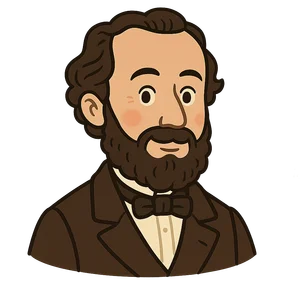
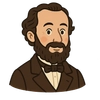
Edmond Becquerel
A French physicist who discovered the photovoltaic effect in 1839…
Reads at Grades 3–5 Listens at Grades 1–5
Print & create
Answer keys·No prep·Free with an account
28 worksheets · answer keys · full story · quiz · Ages 8-10 · CEFR B1
Plus adds 244,000+ more stories in 27 languages, audio for every one, and printables for all of them.
Just want Edmond Becquerel?
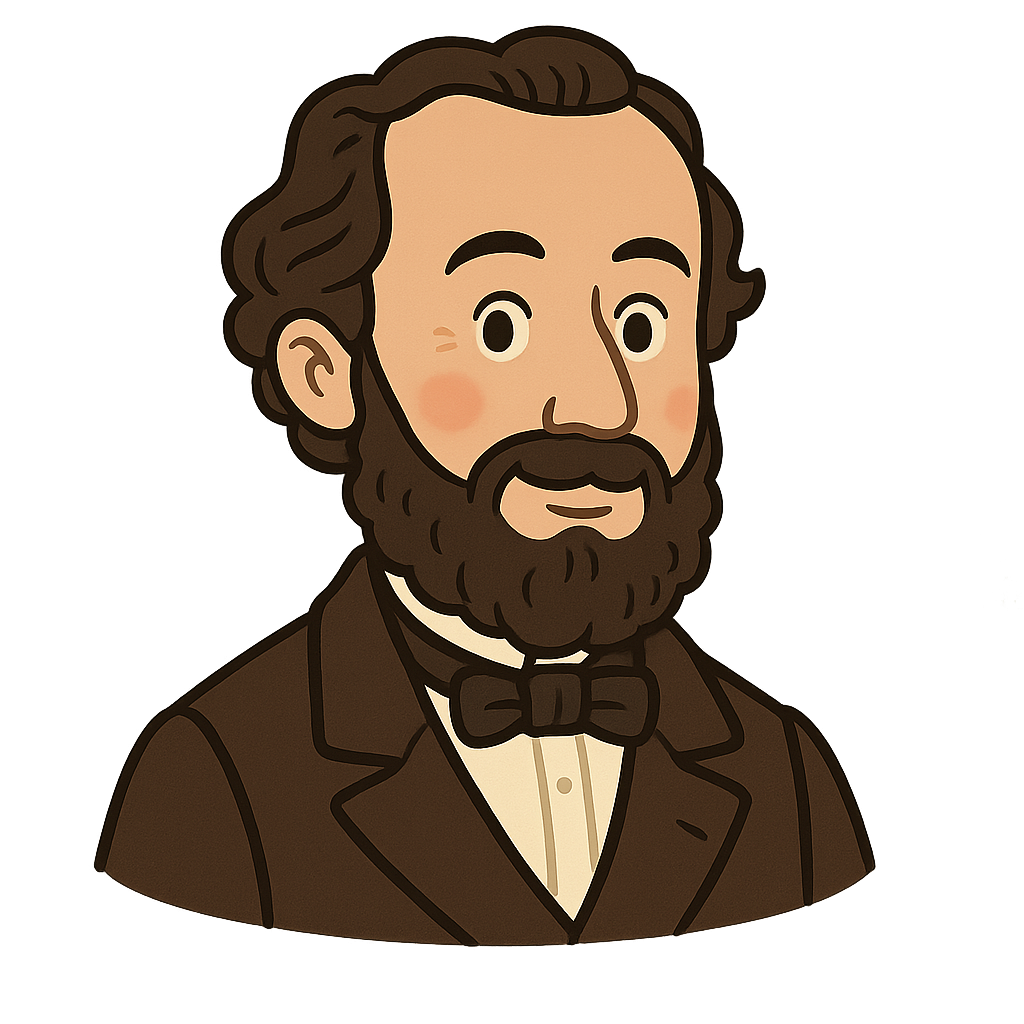
Hello! My name is Edmond Becquerel. I was born on March 24th, 1820, in the beautiful city of Paris, France. My house was always buzzing with excitement because my father, Antoine Becquerel, was a very famous scientist! Instead of toys, our home was filled with wires, batteries, and strange glowing rocks. Science felt like our family's great adventure. I loved watching my father work in his laboratory, and when I was old enough, I became his assistant at a famous place called the Muséum National d'Histoire Naturelle. I was so proud to help him and learn everything I could about the world around me. I knew from a very young age that I wanted to be a scientist, just like him.
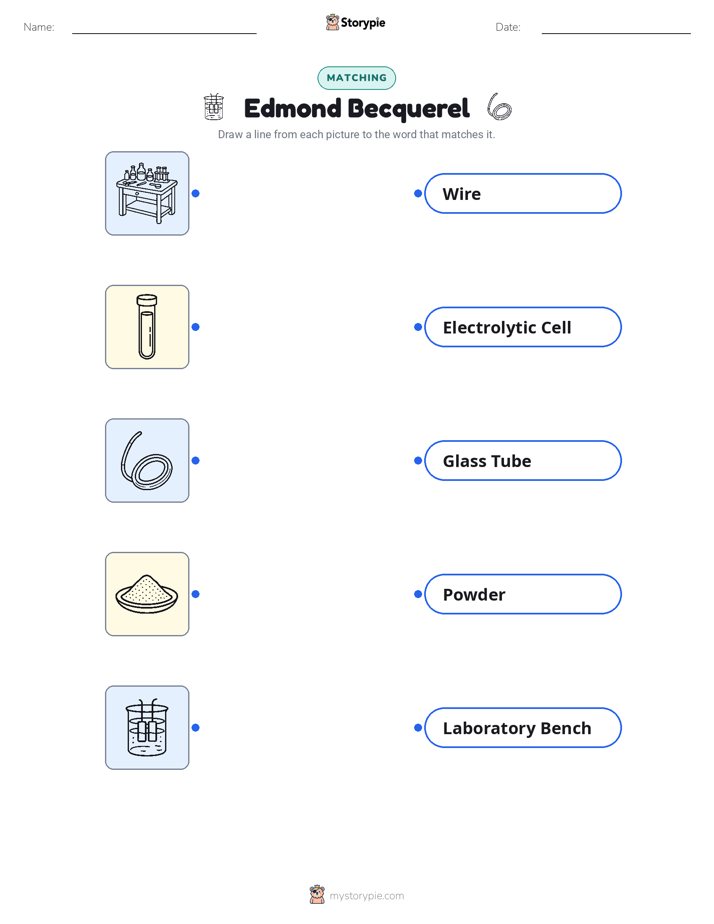
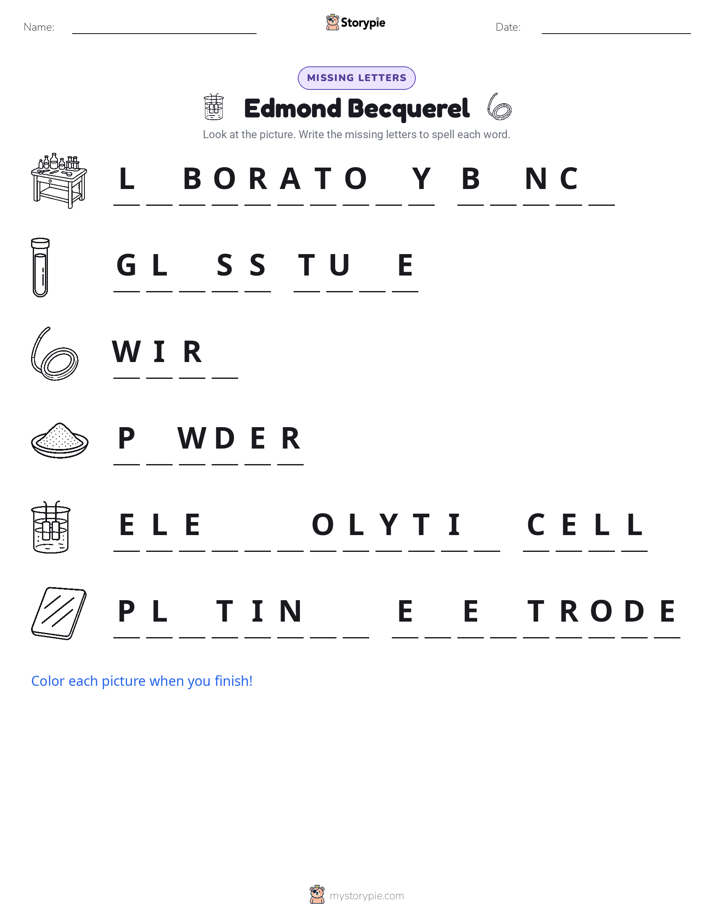
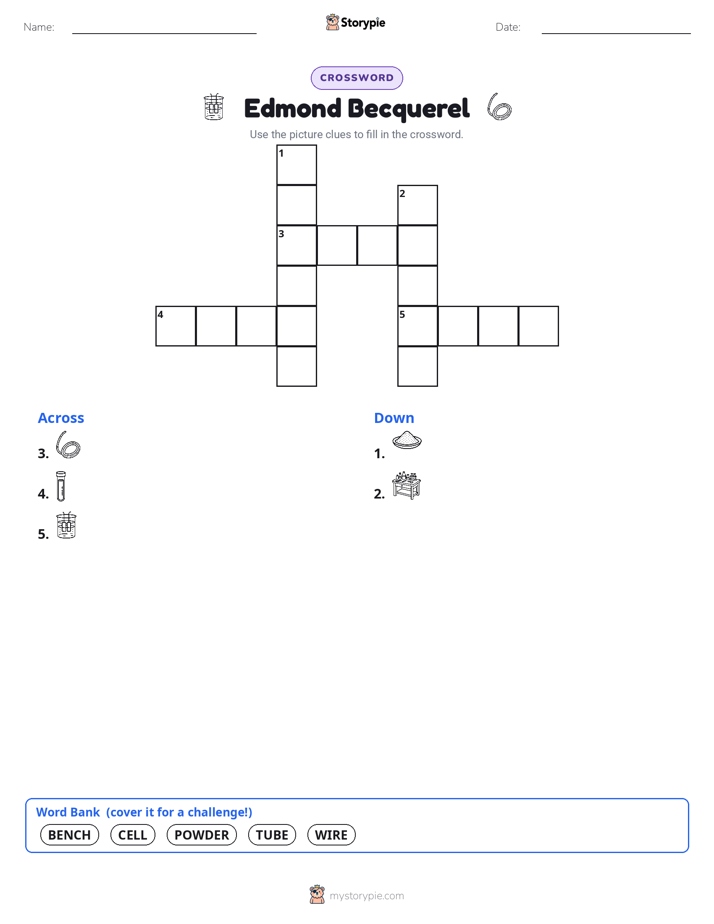
I have always been fascinated by light. One day in 1839, when I was only 19 years old, I was working on an experiment in my father's lab. I took two plates made of a special metal called platinum and dipped them into a jar of acidic liquid. My goal was to see what would happen when I shone a bright light on them. I connected wires to see if any electricity would be created. To my absolute surprise, when the sunlight hit one of the plates, a small electric current started to flow between them! It was like magic happening right before my eyes. I realized I had found a way to turn light directly into electricity. I called this amazing discovery the 'photovoltaic effect.' The word 'photo' means light, and 'voltaic' means electricity, so it was the perfect name. It was a discovery that, many years later, would one day change the world.
Edmond Becquerel: The Boy Who Captured Sunlight
Hello! My name is Edmond Becquerel. I was born on March 24th, 1820, in the beautiful city of Paris, France. My house was always buzzing with excitement because my father, Antoine Becquerel, was a very famous scientist! Instead of toys, our home was filled with wires, batteries, and strange glowing rocks. Science felt like our family's great adventure. I loved watching my father work in his laboratory, and when I was old enough, I became his assistant at a famous place called the Muséum National d'Histoire Naturelle. I was so proud to help him and learn everything I could about the world around me. I knew from a very young age that I wanted to be a scientist, just like him.
I have always been fascinated by light. One day in 1839, when I was only 19 years old, I was working on an experiment in my father's lab. I took two plates made of a special metal called platinum and dipped them into a jar of acidic liquid. My goal was to see what would happen when I shone a bright light on them. I connected wires to see if any electricity would be created. To my absolute surprise, when the sunlight hit one of the plates, a small electric current started to flow between them! It was like magic happening right before my eyes. I realized I had found a way to turn light directly into electricity. I called this amazing discovery the 'photovoltaic effect.' The word 'photo' means light, and 'voltaic' means electricity, so it was the perfect name. It was a discovery that, many years later, would one day change the world.
My work with light didn't stop there. After my big discovery, I became very curious about other ways light worked. I was especially interested in things that glow in the dark, a phenomenon called 'phosphorescence.' I wanted to understand how some materials could soak up light and then release it slowly as a beautiful glow long after the light source was gone. To study this better, I even invented a special tool called the phosphoroscope. It helped me measure how long different materials could glow. Around the 1840s, I also became fascinated with photography. I spent many hours experimenting with ways to take color pictures. While my early color photographs would fade over time, they were some of the very first ever created, and I was proud to capture the world in color.
Just like my father, I became a professor of science, and I loved it. In 1853, I was given his important job as the chair of physics at the Muséum National d'Histoire Naturelle. It was a great honor to follow in his footsteps. I enjoyed teaching and sharing my love for discovery with all of my students, hoping to inspire them the same way my father inspired me. My scientific curiosity was also passed on to my own son, Henri Becquerel. He grew up watching me in the lab, just as I had watched my father, and he became a famous scientist too. Henri went on to make his own incredible discoveries, continuing our family's scientific story for another generation.
I lived a full and exciting life of discovery for 71 years, until May 11th, 1891. Back when I first discovered the photovoltaic effect as a teenager, I had no idea how important it would become. Today, my discovery is the science behind every solar panel you see. Those panels on rooftops and in big fields, soaking up the sun's rays to power our homes, schools, and even spaceships, are all thanks to that experiment I did so long ago. My bright idea is still helping to light up our world in a clean and wonderful way.
Wow facts
About
A French physicist who discovered the photovoltaic effect in 1839, which is the scientific basis for solar cells.
Take a Quiz
Question 1 of 5
What does the word 'photovoltaic' mean, as explained in the story?
Explore next




Want to do even more?
Go beyond exploring. Unlock tools that turn every story into real learning.

Storypie Plus for families
Full stories, quizzes, and printables. Nights and car rides, sorted.
- Unlimited audio stories
- Create Mode: your child stars in the story
- Offline downloads
- Printable worksheets & coloring pages

Why Storypie for Schools
Students engaged. Prep in seconds. Evenings back to you.
- Worksheets & Quizzes
- Classroom Management
- Formative Assessment
- Custom Curriculum & Lesson Plans
- 27 Languages

Why Storypie for Homeschool
Curriculum done. They'll ask for more. Hours back in your day.
- Worksheet Generator
- First-Person Audio Stories
- Built-in Comprehension Quizzes
- Custom Curriculum & Lesson Plans
- Print & Go Activities