English

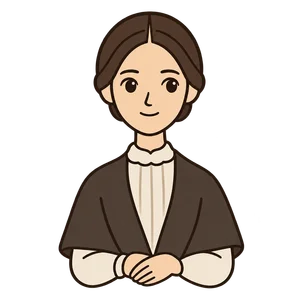
Emily Dickinson
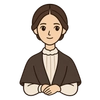
Emily Dickinson was a poet who lived much of her life in Amherst, Massachusetts, rarely leaving her home…
Reads at Grades 6–8 Listens at Grades 4–8
Print & create
Answer keys·No prep·Free with an account
28 worksheets · answer keys · full story · quiz · Ages 10-12 · CEFR B2
Plus adds 290,000+ more stories in 27 languages, audio for every one, and printables for all of them.
Just want Emily Dickinson?
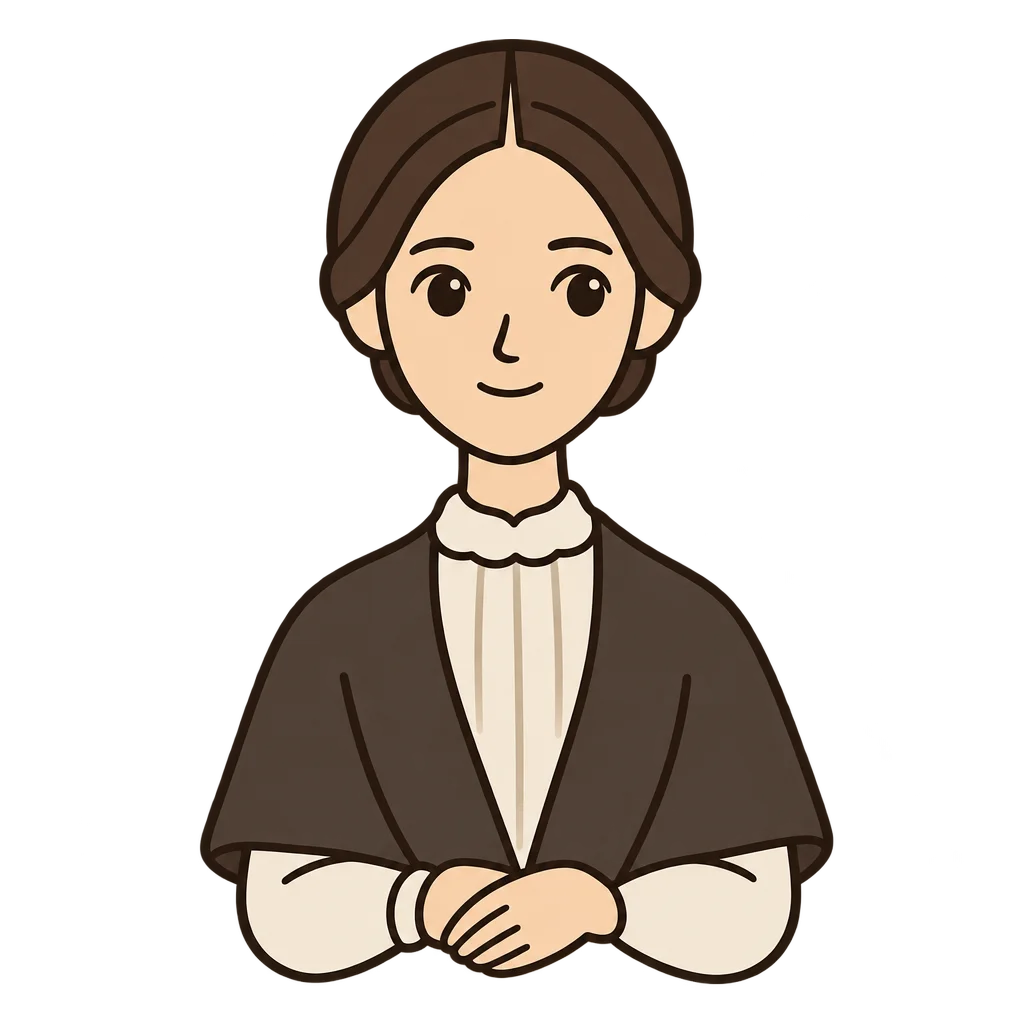
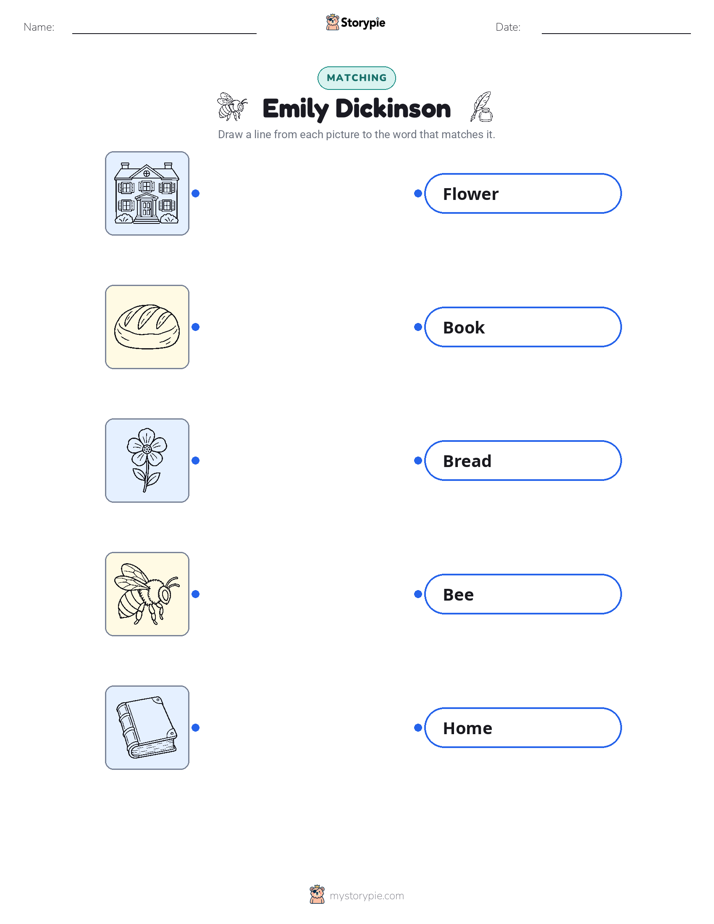
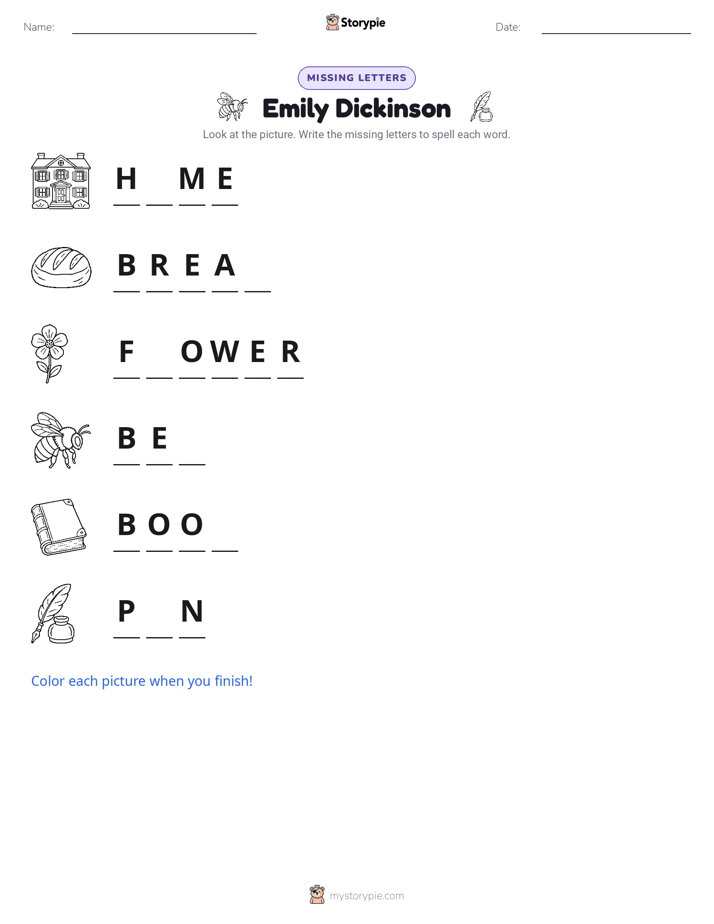
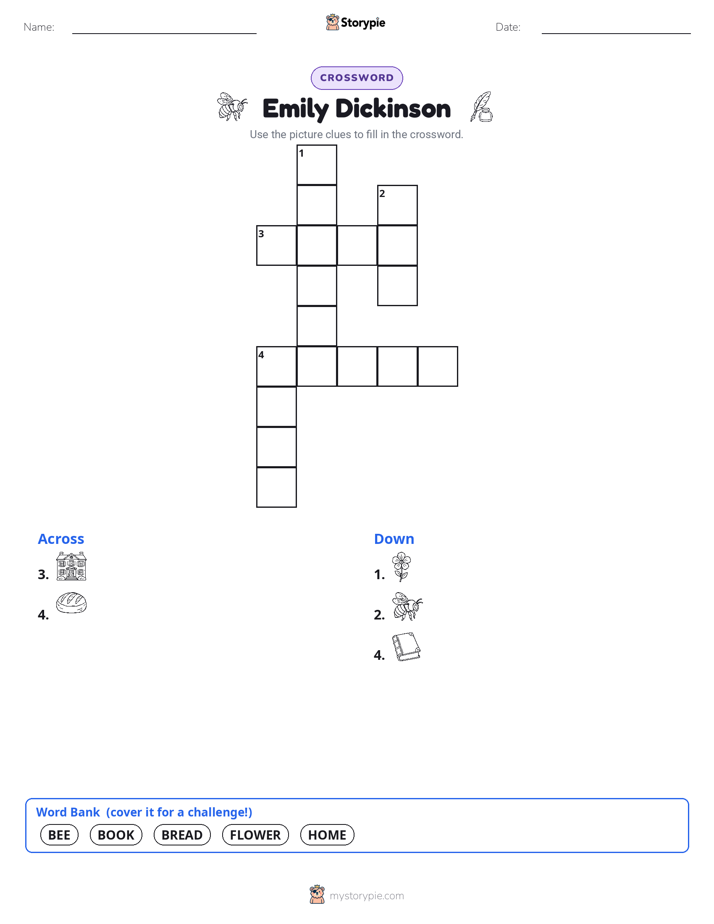
Hello. My name is Emily Dickinson, and I'd like to tell you my story, which is a story about words. I was born on December 10th, 1830, in a town called Amherst, Massachusetts. My world was my family's home, which we called the Homestead. I lived there with my father, Edward, who was a respected lawyer; my quiet mother, also named Emily; my older brother, Austin; and my younger sister, Lavinia, whom I always called Vinnie. Our home was always bustling, but I found my own quiet corners. I loved to bake bread for my family, and my greatest joy was our garden. I knew every flower and every bee that visited. Starting in 1840, I attended Amherst Academy, where I discovered that I loved learning. My studies, especially in science and writing, opened my mind to the wonders of the world, both big and small.
In 1847, when I was sixteen, I left home to study at Mount Holyoke Female Seminary. It was a new and different environment, but I found myself missing my family and the familiar comforts of the Homestead terribly. After nearly a year away, I made the choice to return to Amherst for good. Some might think my world became smaller, but to me, it grew richer. The Homestead became my entire universe, and I was perfectly happy with that. I didn't need to travel to have adventures; I found them in the pages of books by great writers like William Shakespeare and Ralph Waldo Emerson. I realized that poems could be little worlds all on their own. It was during these years that I began to truly dedicate myself to writing. I didn't just write about big, grand ideas; I wrote about the slant of sunlight on my floor, the buzz of a fly, or the feeling of hope, which I once described as 'the thing with feathers.'
Emily Dickinson
Hello. My name is Emily Dickinson, and I'd like to tell you my story, which is a story about words. I was born on December 10th, 1830, in a town called Amherst, Massachusetts. My world was my family's home, which we called the Homestead. I lived there with my father, Edward, who was a respected lawyer; my quiet mother, also named Emily; my older brother, Austin; and my younger sister, Lavinia, whom I always called Vinnie. Our home was always bustling, but I found my own quiet corners. I loved to bake bread for my family, and my greatest joy was our garden. I knew every flower and every bee that visited. Starting in 1840, I attended Amherst Academy, where I discovered that I loved learning. My studies, especially in science and writing, opened my mind to the wonders of the world, both big and small.
In 1847, when I was sixteen, I left home to study at Mount Holyoke Female Seminary. It was a new and different environment, but I found myself missing my family and the familiar comforts of the Homestead terribly. After nearly a year away, I made the choice to return to Amherst for good. Some might think my world became smaller, but to me, it grew richer. The Homestead became my entire universe, and I was perfectly happy with that. I didn't need to travel to have adventures; I found them in the pages of books by great writers like William Shakespeare and Ralph Waldo Emerson. I realized that poems could be little worlds all on their own. It was during these years that I began to truly dedicate myself to writing. I didn't just write about big, grand ideas; I wrote about the slant of sunlight on my floor, the buzz of a fly, or the feeling of hope, which I once described as 'the thing with feathers.'
The years between about 1858 and 1865 were my most creative. It felt like a flood of words poured out of me, and during this time I wrote hundreds and hundreds of poems. I knew I didn't write like other poets of my time. My poems were short, like little bursts of thought, and I used language in my own way. I used dashes to make the reader pause and think, and I capitalized words in the middle of sentences to give them special importance and make them stand out. I would write on any scrap of paper I could find. Later, I would carefully copy my poems into little booklets that I sewed together by hand. I called these my 'fascicles.' In 1862, I gathered the courage to send a few of my poems to a well-known editor named Thomas Wentworth Higginson to ask for his advice. He was kind in his response, but he didn't quite understand my unusual style. Very few of my poems were published while I was alive. The ones that were had been changed by editors to look more 'normal,' which always disappointed me. So, I kept my poems to myself, a secret treasure stored away.
As I grew older, I preferred the company of my home and family to the wider world. People in town began to see me as a mystery, especially because I often chose to wear simple white dresses. They called me the 'Belle of Amherst' and whispered that I was a recluse, someone who shuts themselves away. But I was never lonely. My world was full and vibrant. I had deep and meaningful friendships that I maintained through letters. I wrote constantly to my dear sister-in-law, Susan, who lived next door, and to other friends like the editor Samuel Bowles and Judge Otis Lord. My letters were as full of ideas and feelings as my poems. Through my writing, I could share my whole self without ever leaving my room. My garden, my books, my baking, and my words—these were the things that filled my days with meaning and joy.
I lived to be 55 years old. After my life came to an end on May 15th, 1886, my sister Vinnie made an incredible discovery. Hidden away in my room, she found a wooden chest filled with all my fascicles and other papers. Inside were nearly 1,800 poems that almost no one had ever seen. Vinnie knew the world needed to read my words. She worked tirelessly to share my life's work, and in 1890, the first small book of my poems was finally published. At first, only a few people read them, but over time, more and more people discovered my work. Today, my poems are read all over the world. I am remembered as one of America's greatest poets, not for being a mystery, but for finding the whole universe in the smallest details of life and sharing it in a way that was uniquely my own.
Wow facts
About
Emily Dickinson was a poet who lived much of her life in Amherst, Massachusetts, rarely leaving her home, but she maintained active correspondence and engaged with a select circle of friends and family. Her unique style and profound themes of nature, death, and immortality made her one of the most important figures in American poetry, though her work was largely unpublished during her lifetime.
Take a Quiz
Question 1 of 5
Based on the story, which statement best summarizes the main idea of Emily Dickinson's life?
Explore next




Want to do even more?
Go beyond exploring. Unlock tools that turn every story into real learning.

Storypie Plus for families
Full stories, quizzes, and printables. Nights and car rides, sorted.
- Unlimited audio stories
- Create Mode: your child stars in the story
- Offline downloads
- Printable worksheets & coloring pages

Why Storypie for Schools
Students engaged. Prep in seconds. Evenings back to you.
- Worksheets & Quizzes
- Classroom Management
- Formative Assessment
- Custom Curriculum & Lesson Plans
- 27 Languages

Why Storypie for Homeschool
Curriculum done. They'll ask for more. Hours back in your day.
- Worksheet Generator
- First-Person Audio Stories
- Built-in Comprehension Quizzes
- Custom Curriculum & Lesson Plans
- Print & Go Activities