English

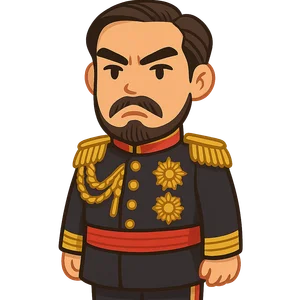
Emperor Meiji
The 122nd Emperor of Japan who reigned from 1867 to 1912.
Reads at Grades 6–8 Listens at Grades 4–8
Print & create
Answer keys·No prep·Free with an account
28 worksheets · answer keys · full story · quiz · Ages 10-12 · CEFR B2
Plus adds 244,000+ more stories in 27 languages, audio for every one, and printables for all of them.
Just want Emperor Meiji?
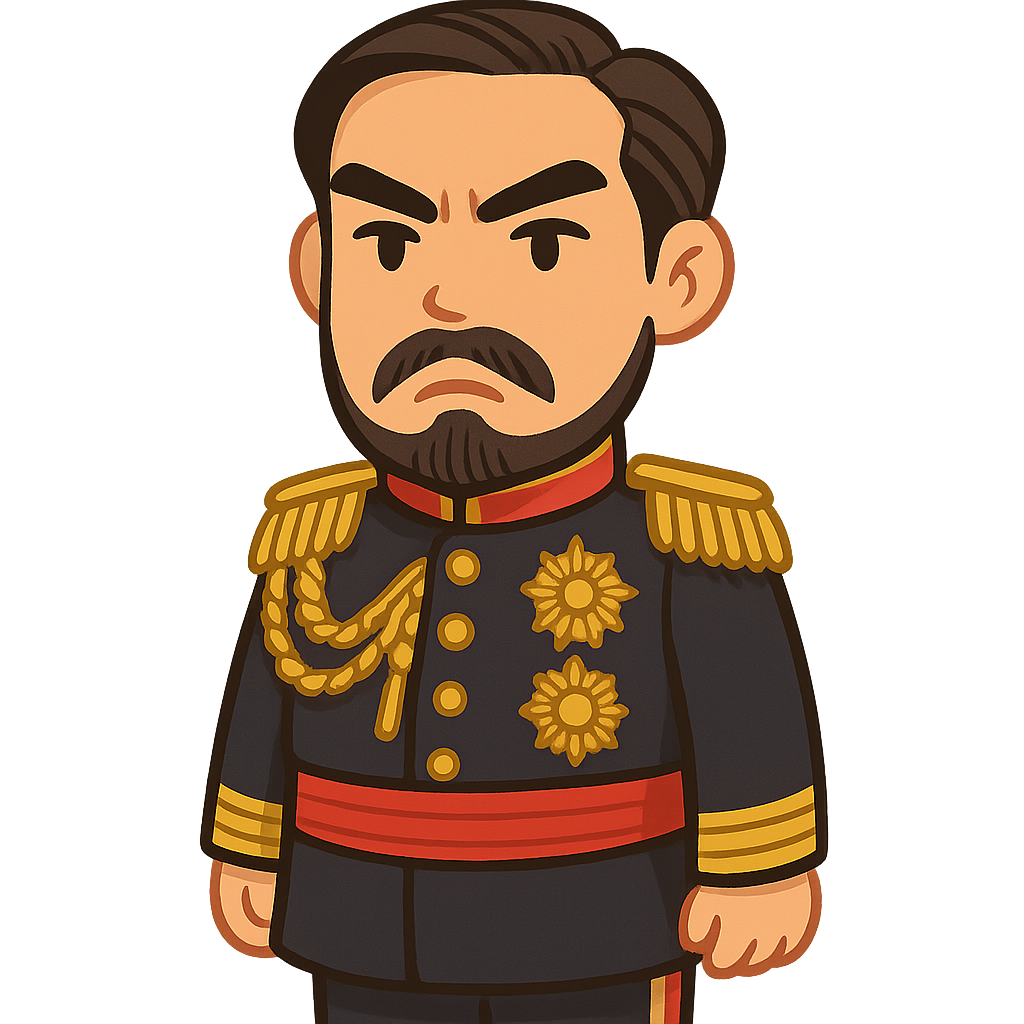
Hello. My name is Mutsuhito, but history knows me better as Emperor Meiji. I was born on November 3rd, 1852, in Kyoto, which was the old imperial capital of Japan. During my childhood, Japan was a country intentionally isolated from the rest of the world. The true power was held by a military leader known as the shogun, while the emperor, like my father, served as a more symbolic, spiritual figurehead for our nation. This long period of isolation was suddenly shattered when I was just a baby. In 1853, powerful American warships arrived in our waters. We called them the 'Black Ships,' and their arrival forced Japan to open its ports to foreign trade. This event created great uncertainty and debate across the land about the future of our country.
My father, Emperor Kōmei, passed away when I was still a teenager. On February 3rd, 1867, I ascended to the Chrysanthemum Throne as the 122nd Emperor of Japan. I was only fourteen years old, and my country was deeply divided. Some powerful lords wanted to keep the shogun in power, while others believed that power should be restored to the emperor to make Japan strong enough to face the outside world. This disagreement erupted into a conflict called the Boshin War in 1868. The forces loyal to me and to the idea of a restored imperial government were victorious, and later that year, the shogunate officially came to an end. My reign was given the name 'Meiji,' which means 'enlightened rule.' This name was chosen to signal a new beginning and a bright future for Japan.
Emperor Meiji: The Enlightened Ruler
Hello. My name is Mutsuhito, but history knows me better as Emperor Meiji. I was born on November 3rd, 1852, in Kyoto, which was the old imperial capital of Japan. During my childhood, Japan was a country intentionally isolated from the rest of the world. The true power was held by a military leader known as the shogun, while the emperor, like my father, served as a more symbolic, spiritual figurehead for our nation. This long period of isolation was suddenly shattered when I was just a baby. In 1853, powerful American warships arrived in our waters. We called them the 'Black Ships,' and their arrival forced Japan to open its ports to foreign trade. This event created great uncertainty and debate across the land about the future of our country.
My father, Emperor Kōmei, passed away when I was still a teenager. On February 3rd, 1867, I ascended to the Chrysanthemum Throne as the 122nd Emperor of Japan. I was only fourteen years old, and my country was deeply divided. Some powerful lords wanted to keep the shogun in power, while others believed that power should be restored to the emperor to make Japan strong enough to face the outside world. This disagreement erupted into a conflict called the Boshin War in 1868. The forces loyal to me and to the idea of a restored imperial government were victorious, and later that year, the shogunate officially came to an end. My reign was given the name 'Meiji,' which means 'enlightened rule.' This name was chosen to signal a new beginning and a bright future for Japan.
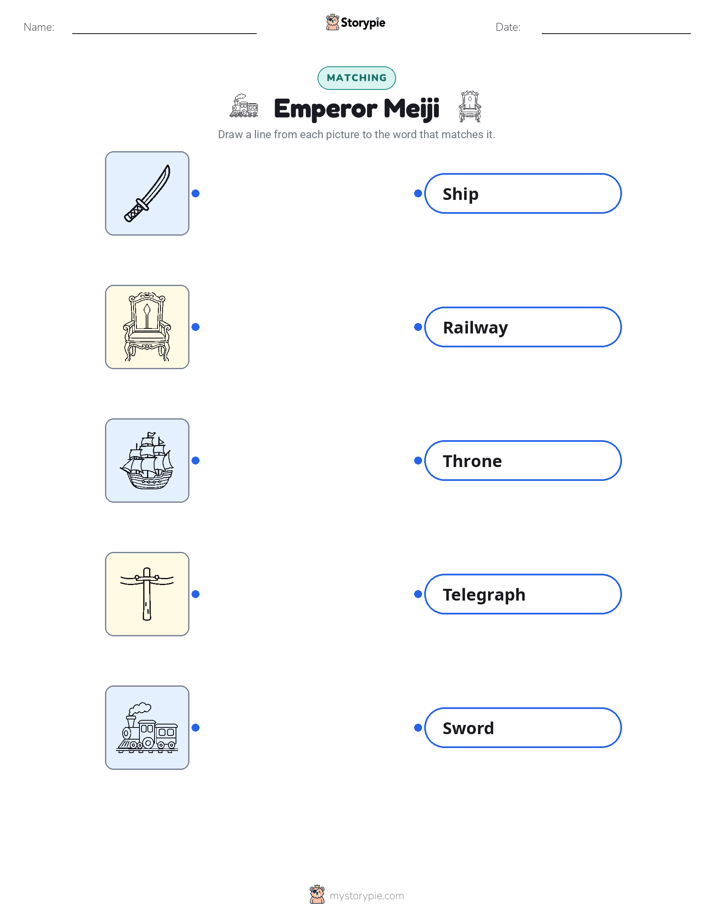
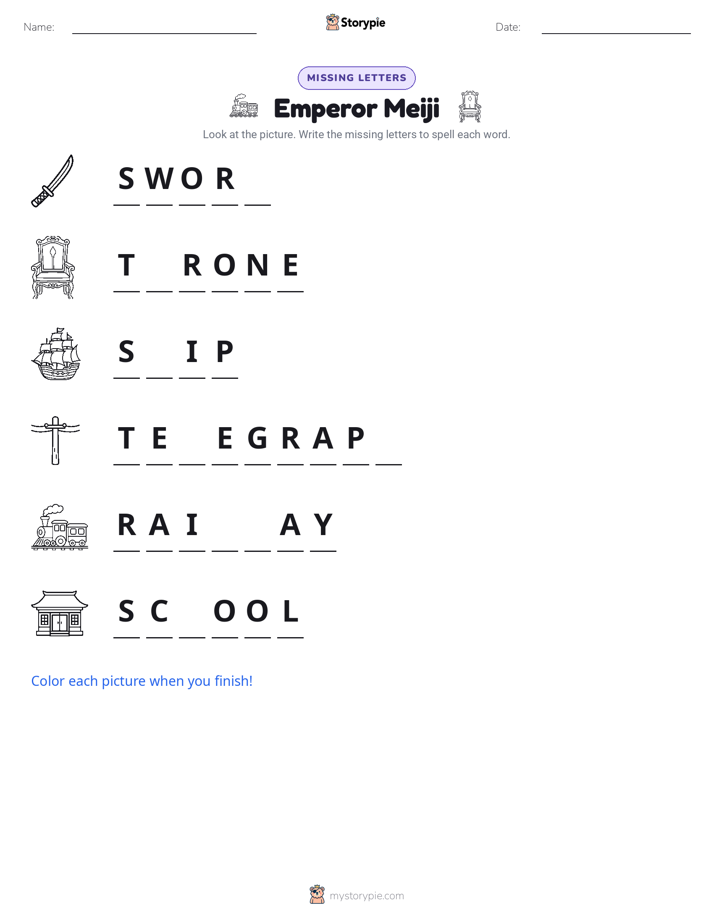
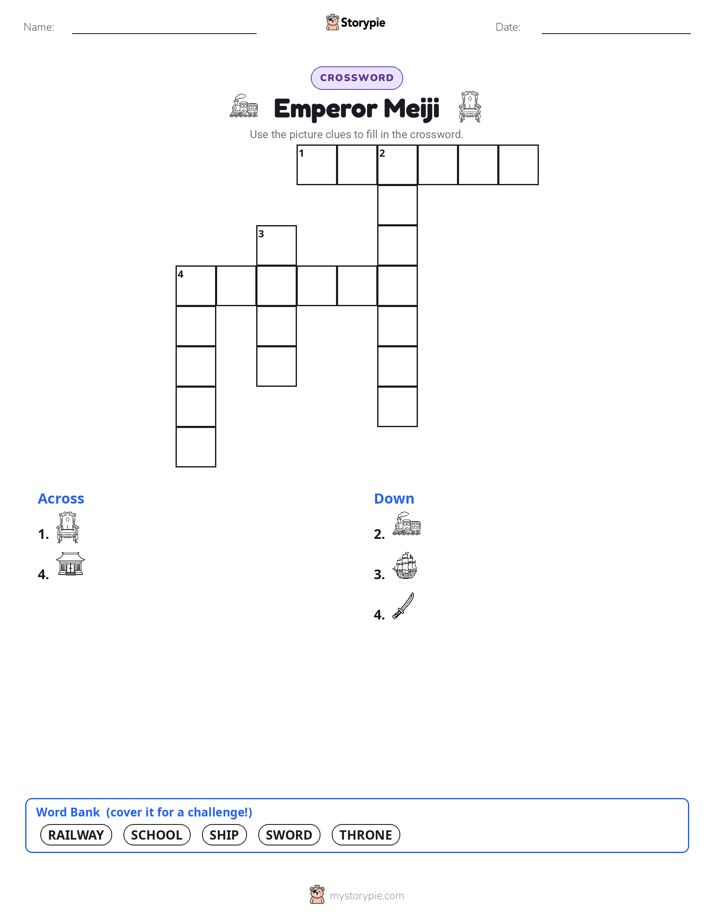
To show everyone that a new era had truly begun, I made a major decision in 1869 to move the imperial capital from Kyoto to the city of Edo, which I renamed Tokyo, meaning 'Eastern Capital.' In 1868, I had announced my goals for the nation in a document called the Charter Oath. In it, I promised that Japan would seek knowledge from all over the world to build a modern and powerful country. This kicked off a period of rapid modernization known as the Meiji Restoration. We built railways to connect our cities and telegraph lines to speed up communication. We created a new school system that required all children, both boys and girls, to receive an education. We also adopted Western technology, government ideas, and even clothing styles to show our commitment to change. A very important step was taken in 1889, when we established a new government with a constitution and a parliament, giving more of my people a voice in how the country was run.
All of our hard work and rapid changes paid off. In just a few decades, Japan grew from an isolated, feudal nation into a strong, modern country that was respected on the world stage. Our nation's new industrial and military strength was tested in major conflicts, including the First Sino-Japanese War, which took place between 1894 and 1895, and the Russo-Japanese War, from 1904 to 1905. To serve as a symbol for this new, unified Japan, I broke with centuries of tradition. Unlike emperors before me who remained secluded in the palace, I traveled all across the country to meet my people, from farmers to factory workers, to help foster a sense of national identity and shared purpose.
My reign lasted for 45 years, a time of incredible transformation for Japan. I lived to be 59 years old, and my passing in 1912 marked the end of the Meiji era. Today, people remember this period as the Meiji Restoration, a time when Japan successfully changed from a closed-off feudal society into a powerful, modern country. My wife, Empress Shōken, and I are honored at the Meiji Jingu shrine in the heart of Tokyo. This peaceful forest and shrine stand as a reminder of the spirit of progress and enlightened rule that defined our time.
Wow facts
About
The 122nd Emperor of Japan who reigned from 1867 to 1912. He presided over the Meiji Restoration, a period of rapid modernization and Westernization that transformed Japan from an isolated feudal state into a world power.
Take a Quiz
Question 1 of 5
What is the main idea of the story of Emperor Meiji?
Explore next


Want to do even more?
Go beyond exploring. Unlock tools that turn every story into real learning.

Storypie Plus for families
Full stories, quizzes, and printables. Nights and car rides, sorted.
- Unlimited audio stories
- Create Mode: your child stars in the story
- Offline downloads
- Printable worksheets & coloring pages

Why Storypie for Schools
Students engaged. Prep in seconds. Evenings back to you.
- Worksheets & Quizzes
- Classroom Management
- Formative Assessment
- Custom Curriculum & Lesson Plans
- 27 Languages

Why Storypie for Homeschool
Curriculum done. They'll ask for more. Hours back in your day.
- Worksheet Generator
- First-Person Audio Stories
- Built-in Comprehension Quizzes
- Custom Curriculum & Lesson Plans
- Print & Go Activities