English

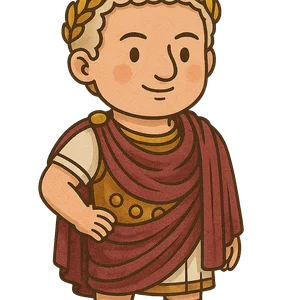
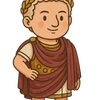
Emperor Titus
Roman emperor from 79 to 81 CE…
Reads at Grades 6–8 Listens at Grades 4–8
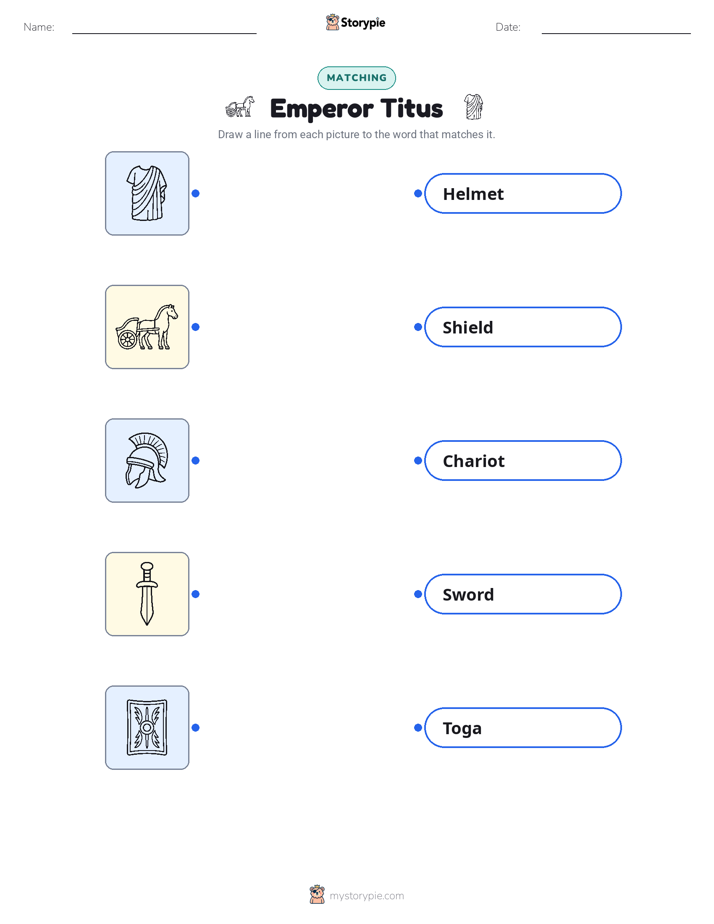
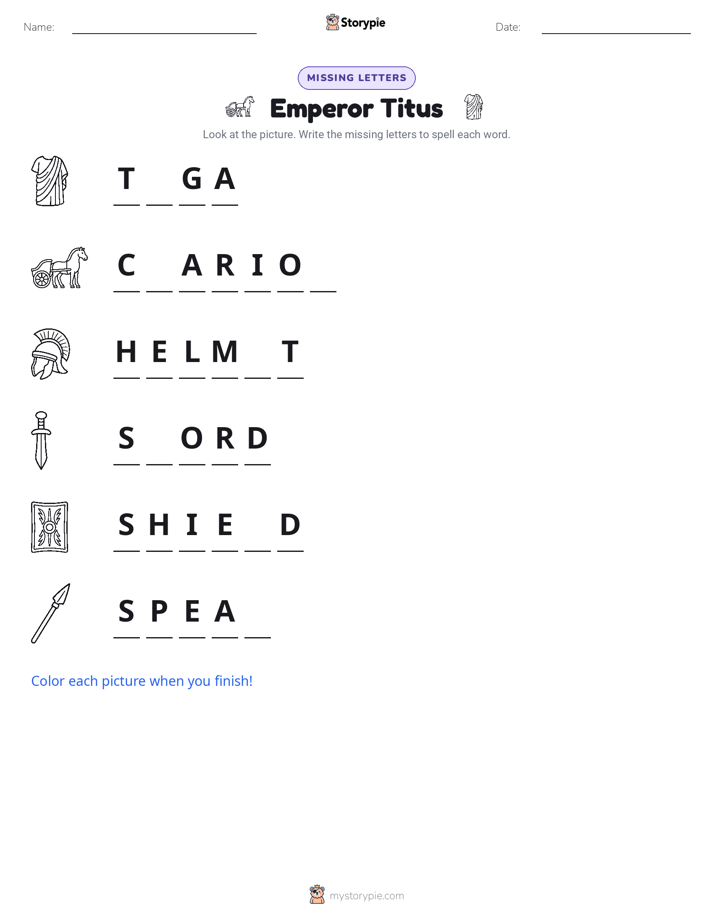
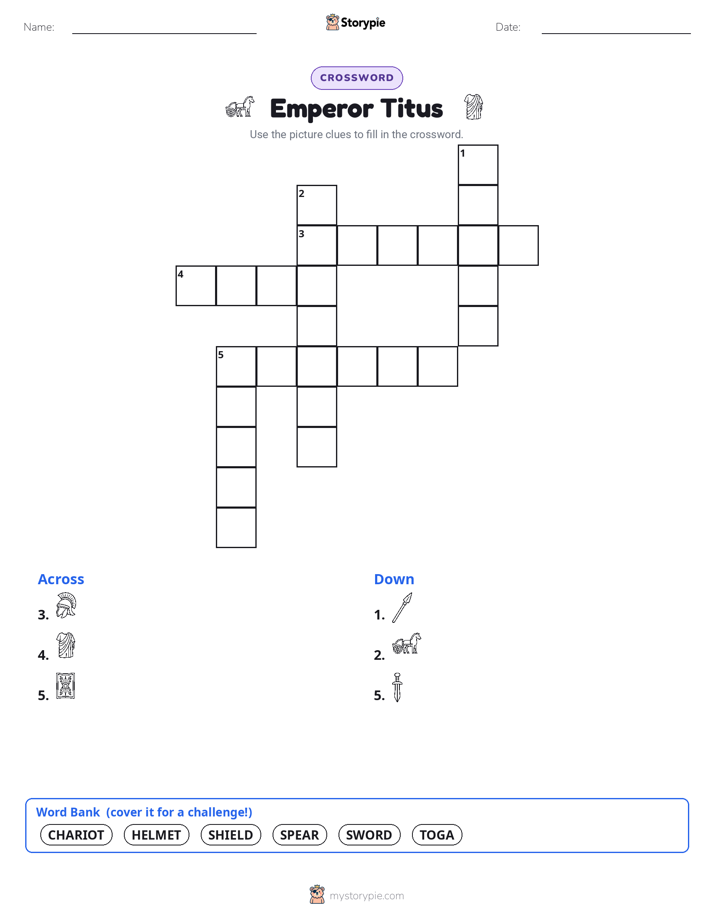
Print & create
Answer keys·No prep·Free with an account
28 worksheets · answer keys · full story · quiz · Ages 10-12 · CEFR B2
Plus adds 279,000+ more stories in 27 languages, audio for every one, and printables for all of them.
Just want Emperor Titus?
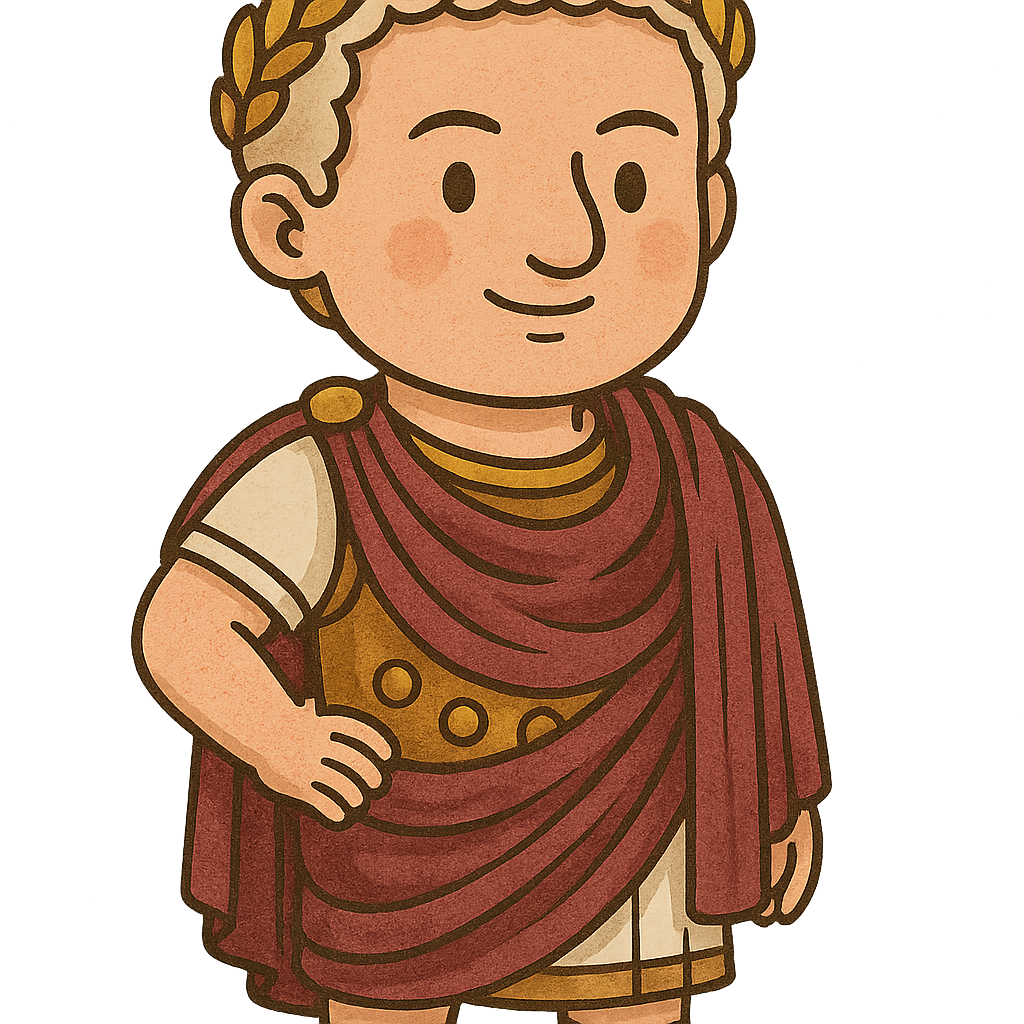
Hello, my name is Titus Flavius Vespasianus, and I was once the emperor of Rome. I was born in the great city on December 30th, 39 CE, into a family that was becoming quite important. My father, Vespasian, was a respected and powerful general in the Roman army, and his success meant that I was given opportunities many other Roman boys could only dream of. I did not grow up in a typical Roman home; instead, my childhood was spent in the imperial court of the emperor himself. There, I became very close friends with a boy named Britannicus, who was the son of Emperor Claudius. Being surrounded by power and politics from a young age taught me a great deal. I received an excellent education, studying military strategy to follow in my father’s footsteps, but also learning to speak Greek fluently and practicing the art of public speaking. These lessons were not just for knowledge; they were carefully designed to shape me into a future leader of Rome.
My first real test as a leader came when I joined the military. Around 57 CE, I served as a military tribune, a type of officer, in the Roman provinces of Germania and Britannia. Far from the comforts of the palace, I learned how to command soldiers on the frontiers of the empire, facing real dangers and making difficult decisions. This experience was invaluable. My skills were truly put to the test when the First Jewish-Roman War broke out in the province of Judaea in 66 CE. I traveled there with my father, Vespasian, who was tasked with putting down the rebellion. We fought side-by-side, but Roman politics soon changed our lives forever. The year 69 CE was a time of great chaos back in Rome, now known as the 'Year of the Four Emperors.' In the midst of the turmoil, the armies in the east declared my father emperor. He had to return to Rome to secure his power, and when he left, he placed his full trust in me. At a young age, I was left in charge of the entire Roman army in Judaea, with a difficult war still to win.
Titus Flavius Vespasianus: Emperor of Rome
Hello, my name is Titus Flavius Vespasianus, and I was once the emperor of Rome. I was born in the great city on December 30th, 39 CE, into a family that was becoming quite important. My father, Vespasian, was a respected and powerful general in the Roman army, and his success meant that I was given opportunities many other Roman boys could only dream of. I did not grow up in a typical Roman home; instead, my childhood was spent in the imperial court of the emperor himself. There, I became very close friends with a boy named Britannicus, who was the son of Emperor Claudius. Being surrounded by power and politics from a young age taught me a great deal. I received an excellent education, studying military strategy to follow in my father’s footsteps, but also learning to speak Greek fluently and practicing the art of public speaking. These lessons were not just for knowledge; they were carefully designed to shape me into a future leader of Rome.
My first real test as a leader came when I joined the military. Around 57 CE, I served as a military tribune, a type of officer, in the Roman provinces of Germania and Britannia. Far from the comforts of the palace, I learned how to command soldiers on the frontiers of the empire, facing real dangers and making difficult decisions. This experience was invaluable. My skills were truly put to the test when the First Jewish-Roman War broke out in the province of Judaea in 66 CE. I traveled there with my father, Vespasian, who was tasked with putting down the rebellion. We fought side-by-side, but Roman politics soon changed our lives forever. The year 69 CE was a time of great chaos back in Rome, now known as the 'Year of the Four Emperors.' In the midst of the turmoil, the armies in the east declared my father emperor. He had to return to Rome to secure his power, and when he left, he placed his full trust in me. At a young age, I was left in charge of the entire Roman army in Judaea, with a difficult war still to win.
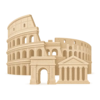
With my father now emperor, the responsibility to end the war fell squarely on my shoulders. The greatest challenge was the Siege of Jerusalem in 70 CE. The city was protected by massive walls and was fiercely defended by those inside. The campaign was long and difficult, requiring all the military strategy I had ever learned. After a grueling siege, my legions finally broke through the defenses and captured the city. During the intense fighting, the city’s magnificent Second Temple was destroyed, a deeply significant event that marked the turning point of the war. I returned to Rome in 71 CE, not just as a general's son, but as a victorious commander. My father and I celebrated our victory with a grand triumph, a massive parade through the streets of Rome to display our success. To ensure this victory would never be forgotten, a monument was built in the Roman Forum. It still stands today and is known as the Arch of Titus, a lasting reminder of the campaign in Judaea.
In 79 CE, my father passed away, and I became the emperor of Rome. I had hoped for a peaceful reign, but my time as emperor began with a series of terrible disasters that tested my leadership and my spirit. On August 24th, 79 CE, the volcano Mount Vesuvius erupted with unimaginable force. The eruption sent a massive cloud of ash and rock into the sky, which then rained down and completely buried the nearby cities of Pompeii and Herculaneum. As soon as I heard the news, I traveled to the disaster zone to oversee the relief efforts myself. I used a great deal of my own money to help the survivors find new homes and rebuild their lives. But the challenges did not stop there. In 80 CE, a great fire swept through Rome, destroying important buildings like the Pantheon and the Temple of Jupiter. Shortly after, a severe plague struck the city. Through all these hardships, I worked tirelessly to care for my people, organizing aid and offering comfort. It was my duty to see Rome through its darkest hours.
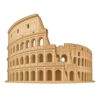
Despite the tragedies that marked my reign, I also had the opportunity to give the Roman people a gift that would be remembered for centuries. My father had begun construction on a massive stone amphitheater in the center of Rome, and I was proud to complete it. In 80 CE, I dedicated the finished building with 100 days of spectacular games, including gladiator contests and animal hunts, for the people of Rome to enjoy. Today, this incredible structure is world-famous and is known as the Colosseum. My time as emperor, however, was short. Just a year after dedicating the amphitheater, I fell ill. My life came to an end on September 13th, 81 CE. I lived to be 41 years old. Though my reign was brief, I was remembered by many for the compassion and generosity I showed during times of crisis. For my efforts to help my people, I was given the nickname 'the darling of mankind.' The Colosseum and the Arch of Titus still stand in Rome today, monuments of stone that tell the story of my life and my time as emperor.
Wow facts
About
Roman emperor from 79 to 81 CE, known for his generosity during major disasters like the eruption of Mount Vesuvius and for finishing the building of the Colosseum, which started under Emperor Vespasian around 72 CE and was completed in 80 CE.
Take a Quiz
Question 1 of 5
What is the main idea of the section 'An Emperor's Trials'?
Explore next


Want to do even more?
Go beyond exploring. Unlock tools that turn every story into real learning.

Storypie Plus for families
Full stories, quizzes, and printables. Nights and car rides, sorted.
- Unlimited audio stories
- Create Mode: your child stars in the story
- Offline downloads
- Printable worksheets & coloring pages

Why Storypie for Schools
Students engaged. Prep in seconds. Evenings back to you.
- Worksheets & Quizzes
- Classroom Management
- Formative Assessment
- Custom Curriculum & Lesson Plans
- 27 Languages

Why Storypie for Homeschool
Curriculum done. They'll ask for more. Hours back in your day.
- Worksheet Generator
- First-Person Audio Stories
- Built-in Comprehension Quizzes
- Custom Curriculum & Lesson Plans
- Print & Go Activities