English

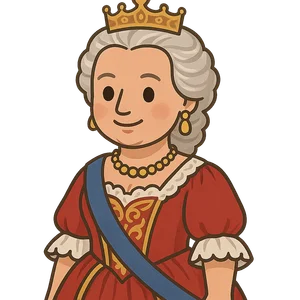
Empress Maria Theresa
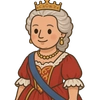
Maria Theresa was the only female sovereign of the Habsburg dominions and the last sovereign ruler of the…
Reads at Grades 6–8 Listens at Grades 4–8
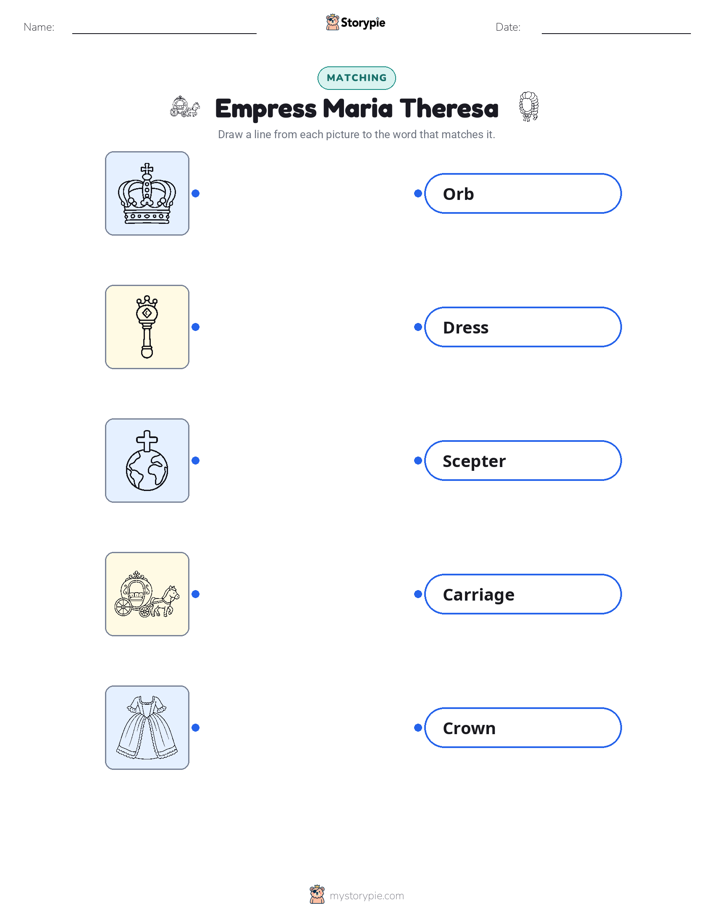
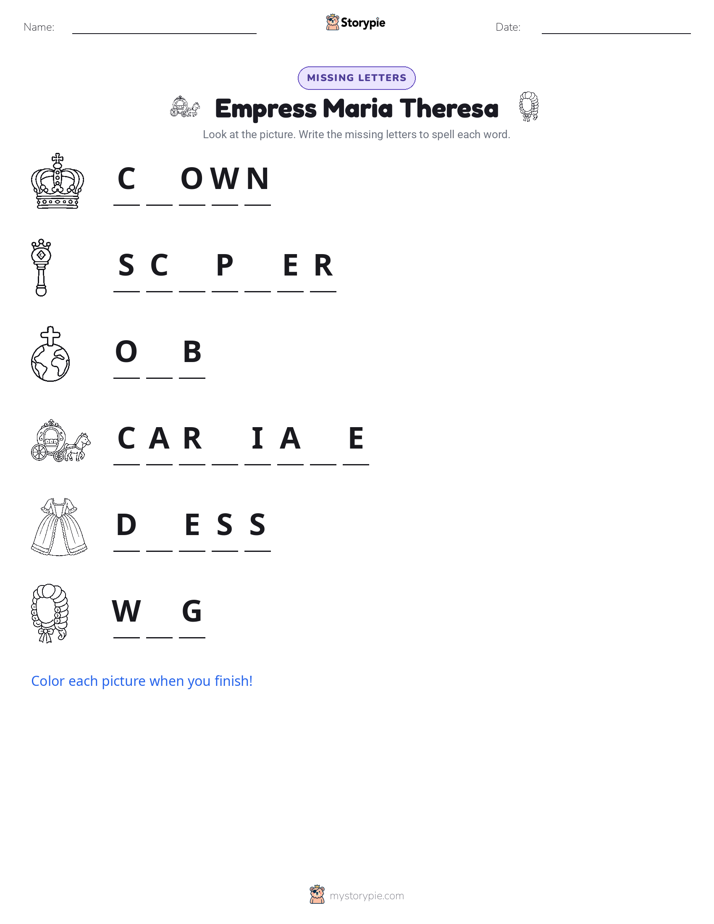
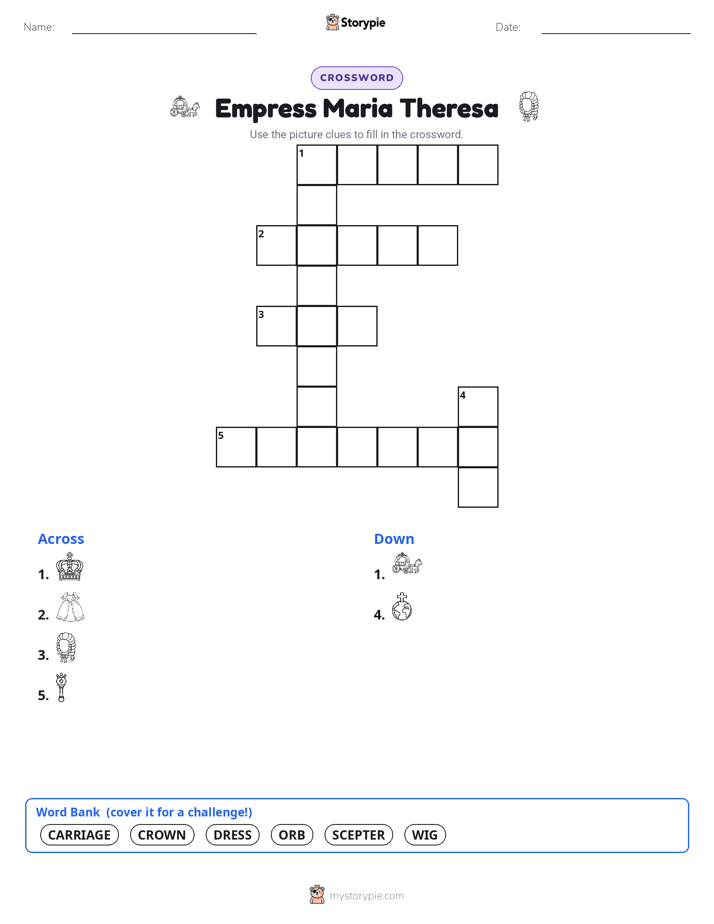
Print & create
Answer keys·No prep·Free with an account
28 worksheets · answer keys · full story · quiz · Ages 10-12 · CEFR B2
Plus adds 208,000+ more stories in 27 languages, audio for every one, and printables for all of them.
Just want Empress Maria Theresa?
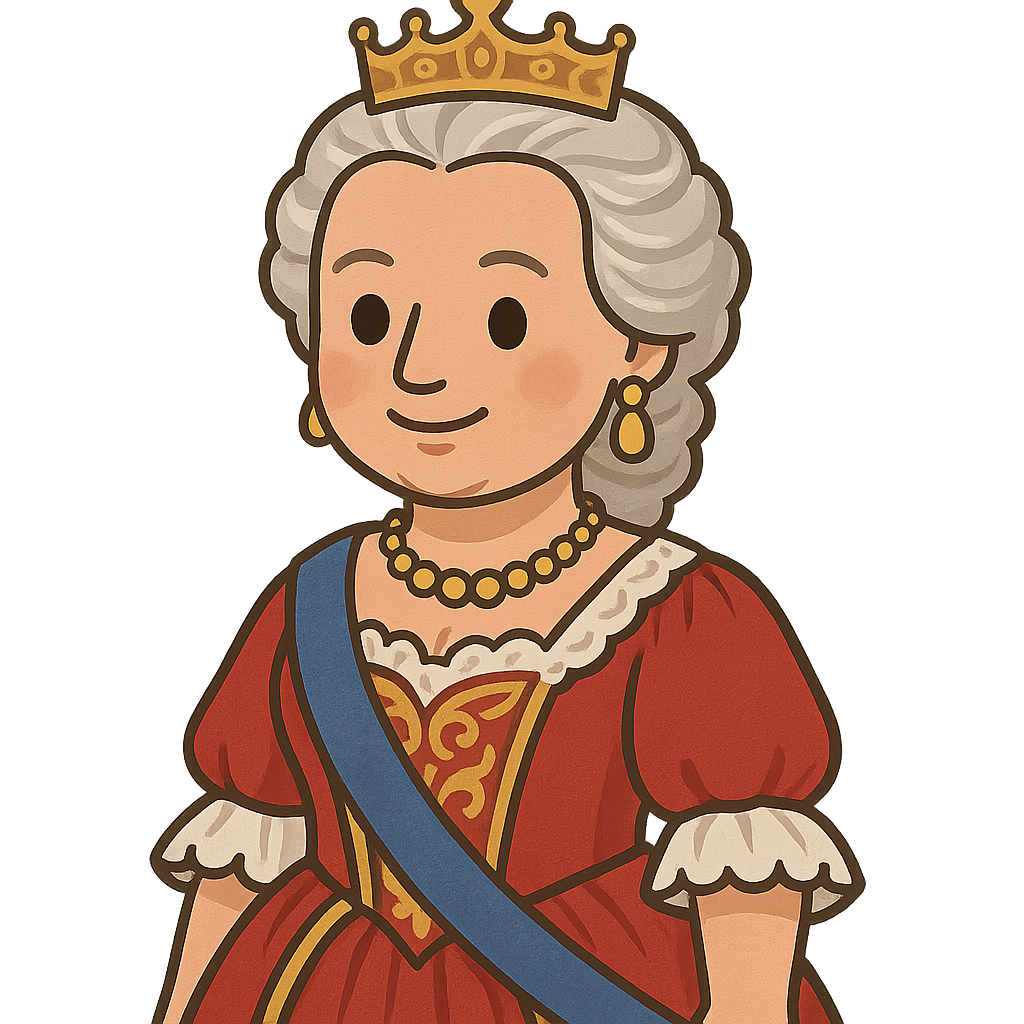
Hello! My name is Maria Theresa, and I was once one of the most powerful rulers in Europe. But my story didn't start out that way. I was born on May 13th, 1717, in the beautiful city of Vienna, Austria. My father was Charles VI, the Holy Roman Emperor, and he very much wanted a son to inherit his vast lands. When I was born, a girl, it was a surprise. But my father was clever. Years before I was born, in 1713, he created a special rule called the Pragmatic Sanction. This law said that if he had no sons, his eldest daughter—me!—could inherit the throne. Many other European rulers agreed to it, but I would later learn that a promise on paper is not always a promise kept.
Even though I was being prepared to rule, I also had a heart full of love. I fell for a handsome duke named Francis Stephen of Lorraine. We were married in 1736, and it was a true love match, which was rare for royalty back then. Our happiness was shaken just four years later. In 1740, my dear father died, and at just 23 years old, I became the ruler of the Habsburg lands—Austria, Hungary, Bohemia, and more. Immediately, other rulers broke their promises. King Frederick II of Prussia invaded one of my richest provinces, Silesia. This started a long and difficult conflict called the War of the Austrian Succession, which lasted from 1740 to 1748. They thought that because I was a woman, I would be a weak leader. I was determined to prove them all wrong.
While I was fighting to keep my empire together, I was also starting my family. Over the years, my dear Francis and I had sixteen children. It was a bustling, lively household. Some of my children would become rulers themselves, like my sons Joseph and Leopold, who both became emperors after their father. My youngest daughter, Maria Antonia, would become famous as Marie Antoinette, the Queen of France. Being a mother and a monarch was a tremendous balancing act. I wrote letters to my children constantly, offering advice and love, even as I managed the daily business of governing millions of people. My family was my strength, and they reminded me what I was fighting for.
Maria Theresa: Mother of Her Country
Hello! My name is Maria Theresa, and I was once one of the most powerful rulers in Europe. But my story didn't start out that way. I was born on May 13th, 1717, in the beautiful city of Vienna, Austria. My father was Charles VI, the Holy Roman Emperor, and he very much wanted a son to inherit his vast lands. When I was born, a girl, it was a surprise. But my father was clever. Years before I was born, in 1713, he created a special rule called the Pragmatic Sanction. This law said that if he had no sons, his eldest daughter—me!—could inherit the throne. Many other European rulers agreed to it, but I would later learn that a promise on paper is not always a promise kept.
Even though I was being prepared to rule, I also had a heart full of love. I fell for a handsome duke named Francis Stephen of Lorraine. We were married in 1736, and it was a true love match, which was rare for royalty back then. Our happiness was shaken just four years later. In 1740, my dear father died, and at just 23 years old, I became the ruler of the Habsburg lands—Austria, Hungary, Bohemia, and more. Immediately, other rulers broke their promises. King Frederick II of Prussia invaded one of my richest provinces, Silesia. This started a long and difficult conflict called the War of the Austrian Succession, which lasted from 1740 to 1748. They thought that because I was a woman, I would be a weak leader. I was determined to prove them all wrong.
While I was fighting to keep my empire together, I was also starting my family. Over the years, my dear Francis and I had sixteen children. It was a bustling, lively household. Some of my children would become rulers themselves, like my sons Joseph and Leopold, who both became emperors after their father. My youngest daughter, Maria Antonia, would become famous as Marie Antoinette, the Queen of France. Being a mother and a monarch was a tremendous balancing act. I wrote letters to my children constantly, offering advice and love, even as I managed the daily business of governing millions of people. My family was my strength, and they reminded me what I was fighting for.
The War of the Austrian Succession taught me a very important lesson: my empire needed to be stronger and more unified to survive. So, once the war ended in 1748, I began a series of major changes, which historians now call my reforms. I realized our army wasn't modern enough, so I established military academies to train better officers. I saw that the government was complicated and inefficient, so I created a more centralized system in Vienna to run things more smoothly. I also changed the tax system. Before, nobles and the church paid very little in taxes, which wasn't fair. I made them contribute their share, which gave the state more money to pay for the army and other improvements. I also believed deeply in the power of education and medicine, reforming universities and improving public health. My goal was to make the Habsburg Monarchy more secure and improve the lives of my subjects.
My work was not without its challenges. The rivalry with Prussia continued, leading to another major conflict, the Seven Years' War, from 1756 to 1763. It was a difficult time, but we persevered. A great sadness came into my life in 1765 when my beloved husband, Francis, died suddenly. I was heartbroken and wore black for the rest of my life to mourn him. After his death, my eldest son, Joseph II, became Holy Roman Emperor and my co-ruler. We had very different ideas about how to govern. Joseph was eager for fast, radical changes, while I was more cautious and traditional. We often disagreed, but we both worked for what we believed was best for our people. Ruling alongside my son was a new chapter, and it taught me patience and compromise.
After a long reign of 40 years, my time came to an end. I lived to be 63 years old, passing away in 1780. People remember me as the only woman to ever rule the Habsburg lands in her own right, a mother of sixteen children who was also the 'mother of her country.' My reforms to the military, government, and education system helped modernize my empire and laid the foundation for its future. I hope my story shows that with determination, courage, and a deep sense of duty, you can overcome any obstacle, even when the world expects you to fail.
Wow facts
About
Maria Theresa was the only female sovereign of the Habsburg dominions and the last sovereign ruler of the House of Habsburg. She was a formidable and reformist monarch who ruled for 40 years, strengthening her empire through significant financial, educational, and military reforms. After her death, the Habsburg dominions passed to the House of Habsburg-Lorraine.
Take a Quiz
Question 1 of 5
What does the phrase 'a promise on paper is not always a promise kept' suggest about the situation Maria Theresa faced in 1740?
Explore next


Want to do even more?
Go beyond exploring. Unlock tools that turn every story into real learning.

Storypie Plus for families
Full stories, quizzes, and printables. Nights and car rides, sorted.
- Unlimited audio stories
- Create Mode: your child stars in the story
- Offline downloads
- Printable worksheets & coloring pages

Why Storypie for Schools
Students engaged. Prep in seconds. Evenings back to you.
- Worksheets & Quizzes
- Classroom Management
- Formative Assessment
- Custom Curriculum & Lesson Plans
- 27 Languages

Why Storypie for Homeschool
Curriculum done. They'll ask for more. Hours back in your day.
- Worksheet Generator
- First-Person Audio Stories
- Built-in Comprehension Quizzes
- Custom Curriculum & Lesson Plans
- Print & Go Activities