English

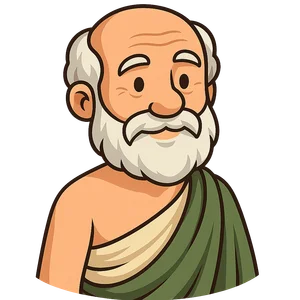
Eratosthenes of Cyrene
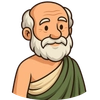
Eratosthenes of Cyrene was an ancient Greek polymath: a mathematician, geographer, poet, astronomer…
Reads at Grades 6–8 Listens at Grades 4–8
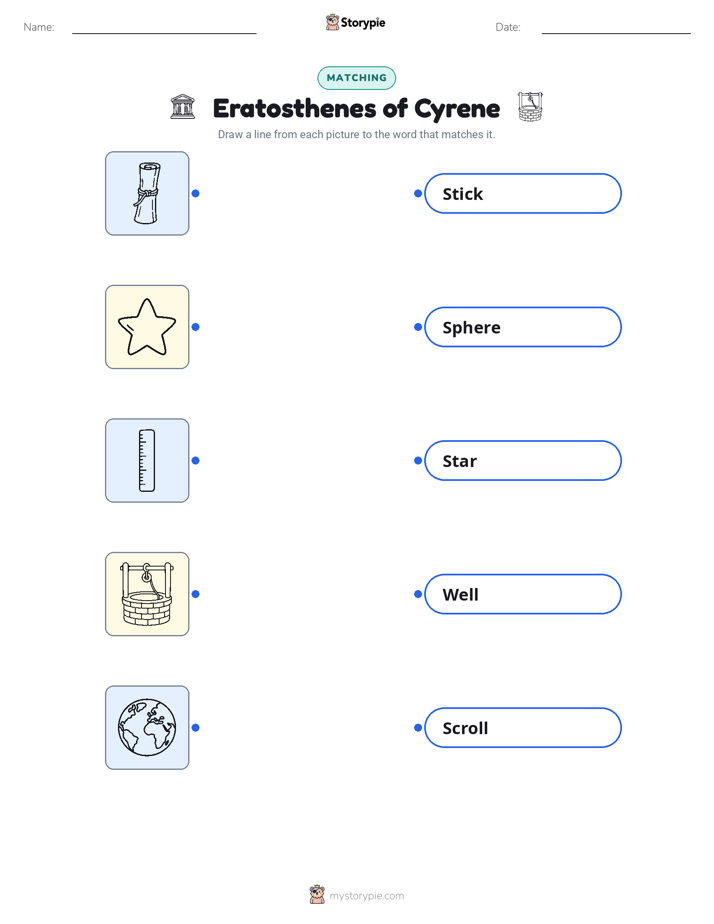
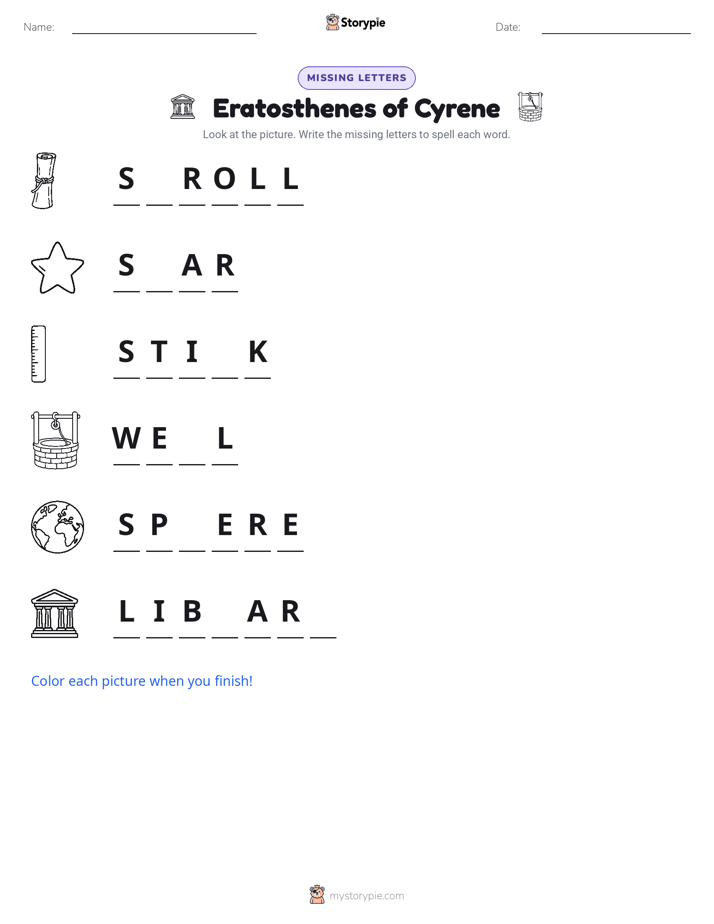
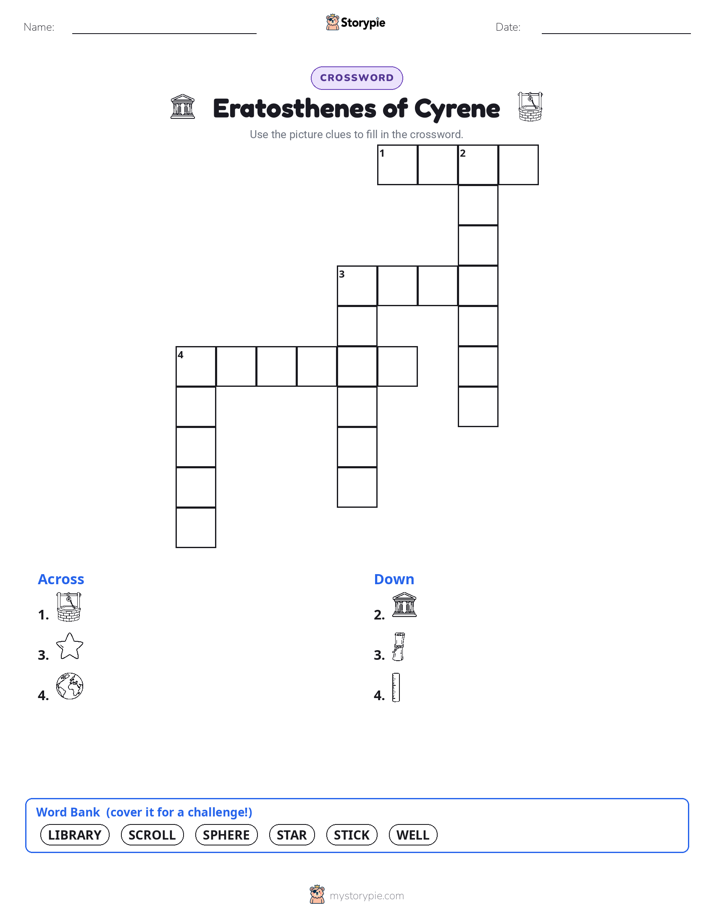
Print & create
Answer keys·No prep·Free with an account
28 worksheets · answer keys · full story · quiz · Ages 10-12 · CEFR B2
Plus adds 164,000+ more stories in 27 languages, audio for every one, and printables for all of them.
Just want Eratosthenes of Cyrene?
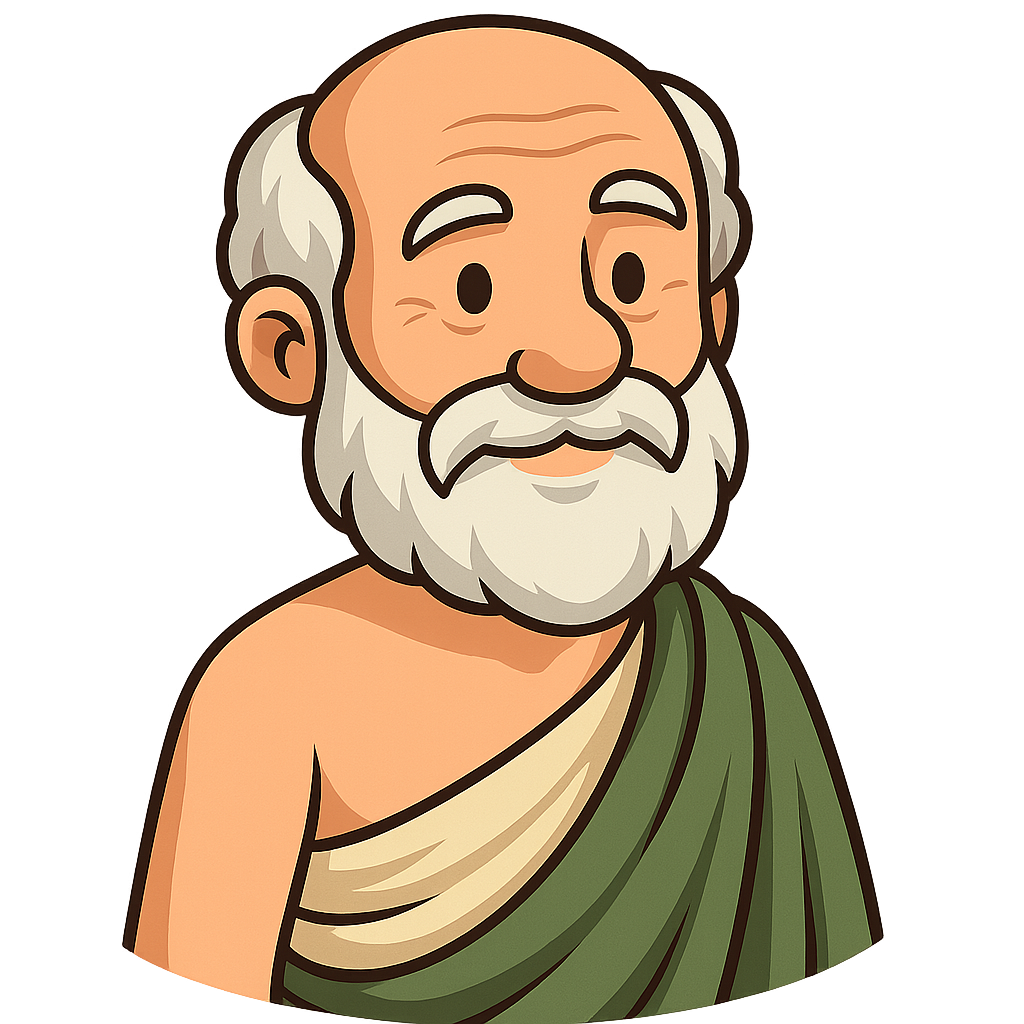
Hello, my name is Eratosthenes of Cyrene. My story begins a very long time ago, in the year 276 BCE, in a beautiful Greek city called Cyrene, located on the coast of what is now Libya. From my earliest days, I was filled with an insatiable curiosity about the world around me. I spent countless hours reading papyrus scrolls, my mind captivated by everything from the lyrical verses of poetry to the distant, twinkling stars in the night sky. I wanted to understand how everything worked. I knew that to find the answers I was looking for, I had to go where the world's greatest knowledge was gathered. So, as a young man, I traveled to the famous city of Athens. There, I had the privilege of studying with the most brilliant thinkers of my time, delving into complex subjects like philosophy and mathematics. I never stopped asking questions, always pushing to learn more and uncover the truth.
My dedication to learning did not go unnoticed. Around the year 245 BCE, I received an extraordinary invitation from the king of Egypt himself, Ptolemy the 3rd. He asked me to come to the magnificent city of Alexandria and take on the role of head librarian at the Great Library. This was not just any library; it was the most important center of knowledge in the entire world. Imagine a building filled with hundreds of thousands of scrolls, a vast treasure chest of human thought. These scrolls contained histories, scientific discoveries, epic poems, and plays from every corner of the known world. My job was more than just protecting these precious documents. I was responsible for organizing this immense collection, and I created the first-ever library catalog to help scholars find the information they needed. Being at the heart of the world's learning, surrounded by brilliant minds, was a dream come true for a curious person like me.
Eratosthenes: The Man Who Measured the World
Hello, my name is Eratosthenes of Cyrene. My story begins a very long time ago, in the year 276 BCE, in a beautiful Greek city called Cyrene, located on the coast of what is now Libya. From my earliest days, I was filled with an insatiable curiosity about the world around me. I spent countless hours reading papyrus scrolls, my mind captivated by everything from the lyrical verses of poetry to the distant, twinkling stars in the night sky. I wanted to understand how everything worked. I knew that to find the answers I was looking for, I had to go where the world's greatest knowledge was gathered. So, as a young man, I traveled to the famous city of Athens. There, I had the privilege of studying with the most brilliant thinkers of my time, delving into complex subjects like philosophy and mathematics. I never stopped asking questions, always pushing to learn more and uncover the truth.
My dedication to learning did not go unnoticed. Around the year 245 BCE, I received an extraordinary invitation from the king of Egypt himself, Ptolemy the 3rd. He asked me to come to the magnificent city of Alexandria and take on the role of head librarian at the Great Library. This was not just any library; it was the most important center of knowledge in the entire world. Imagine a building filled with hundreds of thousands of scrolls, a vast treasure chest of human thought. These scrolls contained histories, scientific discoveries, epic poems, and plays from every corner of the known world. My job was more than just protecting these precious documents. I was responsible for organizing this immense collection, and I created the first-ever library catalog to help scholars find the information they needed. Being at the heart of the world's learning, surrounded by brilliant minds, was a dream come true for a curious person like me.
While working in the library, I came across a fascinating piece of information in a scroll. It described a deep well in a city called Syene, far to the south of Alexandria. Travelers reported that on a single day each year, the summer solstice, the midday sun shone directly to the bottom of the well, which meant it cast no shadows at all. The sun was perfectly, directly overhead. I knew from my own observations that this was not true in Alexandria. On that very same day and at the exact same time, a tall stick placed vertically in the ground in Alexandria definitely cast a shadow. This simple difference sparked a monumental idea in my mind: the Earth could not be flat. It had to be a sphere. I reasoned that the curve of the Earth was causing the sun's rays to hit the two cities at different angles. If I could measure the angle of the shadow in Alexandria and find the distance between the two cities, I could use geometry to calculate the circumference of the entire planet. Around 240 BCE, I put my idea to the test. I carefully measured the shadow's angle, hired a surveyor to pace out the distance from Alexandria to Syene, and performed my calculations. The result was astonishingly accurate, proving for the first time that we could measure our world with reason and mathematics.
Measuring the Earth became my most famous accomplishment, but my mind was always racing with new questions and ideas. My interests were so broad that some people called me a 'polymath,' which is a person who has expertise in many different subjects. My work was not confined to a single field. I used my knowledge to create one of the first maps of the known world, and I even invented the word we still use today: 'geography,' which literally means 'writing about the Earth.' For those who shared my love of mathematics, I developed a simple but brilliant tool called the 'Sieve of Eratosthenes,' a method for identifying prime numbers. My curiosity also led me to astronomy, where I built instruments to study the stars and measure the tilt of the Earth's axis. Beyond science, I wrote books on history and the theater, and I even found time to compose poetry. I firmly believed that all forms of knowledge were interconnected, and I spent my life trying to understand as many of those connections as I could.
I continued my work as the head of the Great Library in Alexandria for many decades. As I grew older, my eyesight began to fail, which was a profound sadness for someone whose greatest joy was reading and writing. I lived to be about 82 years old, a long and full life, passing away around the year 194 BCE. Although my time on this world came to an end, I hope that my ideas have endured. My measurement of the Earth's circumference was more than just a number; it was a powerful demonstration that humans could comprehend the vastness of our universe through logic and careful observation. Today, I am remembered as the father of geography and one of the earliest scientific thinkers to use mathematics to unlock the secrets of our world. My story serves as a reminder to never stop asking questions, because curiosity is the key that can unlock the most amazing discoveries.
Wow facts
About
Eratosthenes of Cyrene was an ancient Greek polymath: a mathematician, geographer, poet, astronomer, and music theorist. He is best known for being the first person to calculate the circumference of the Earth with remarkable accuracy.
Take a Quiz
Question 1 of 5
What key observation led Eratosthenes to believe the Earth was curved and not flat?
Explore next




Want to do even more?
Go beyond exploring. Unlock tools that turn every story into real learning.

Storypie Plus for families
Full stories, quizzes, and printables. Nights and car rides, sorted.
- Unlimited audio stories
- Create Mode: your child stars in the story
- Offline downloads
- Printable worksheets & coloring pages

Why Storypie for Schools
Students engaged. Prep in seconds. Evenings back to you.
- Worksheets & Quizzes
- Classroom Management
- Formative Assessment
- Custom Curriculum & Lesson Plans
- 27 Languages

Why Storypie for Homeschool
Curriculum done. They'll ask for more. Hours back in your day.
- Worksheet Generator
- First-Person Audio Stories
- Built-in Comprehension Quizzes
- Custom Curriculum & Lesson Plans
- Print & Go Activities