English


Eric Carle
Eric Carle was a beloved American author and illustrator of children's books…
Reads at Grades 6–8 Listens at Grades 4–8
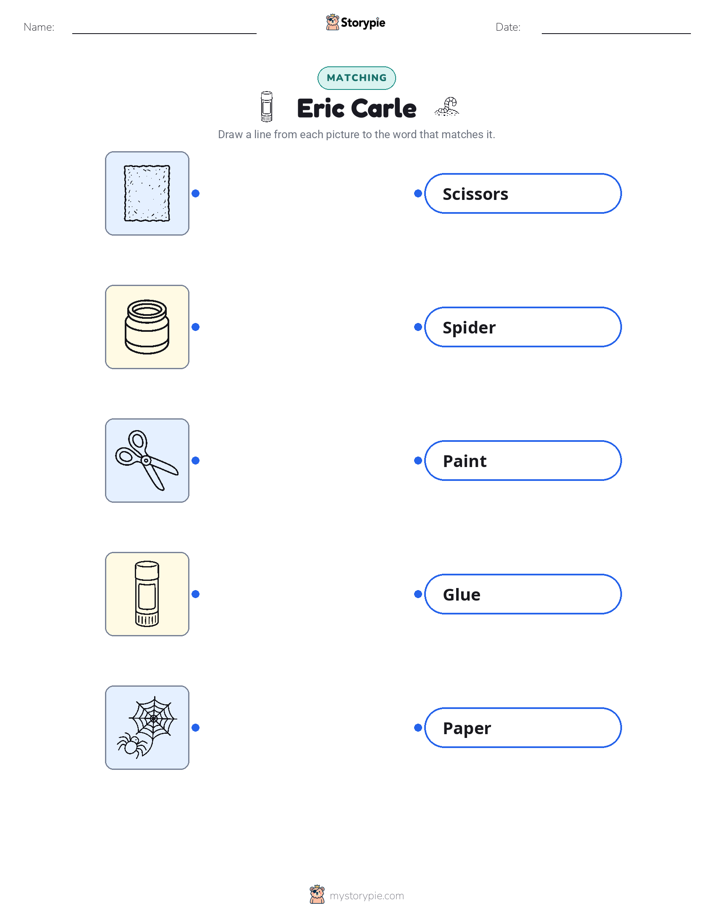
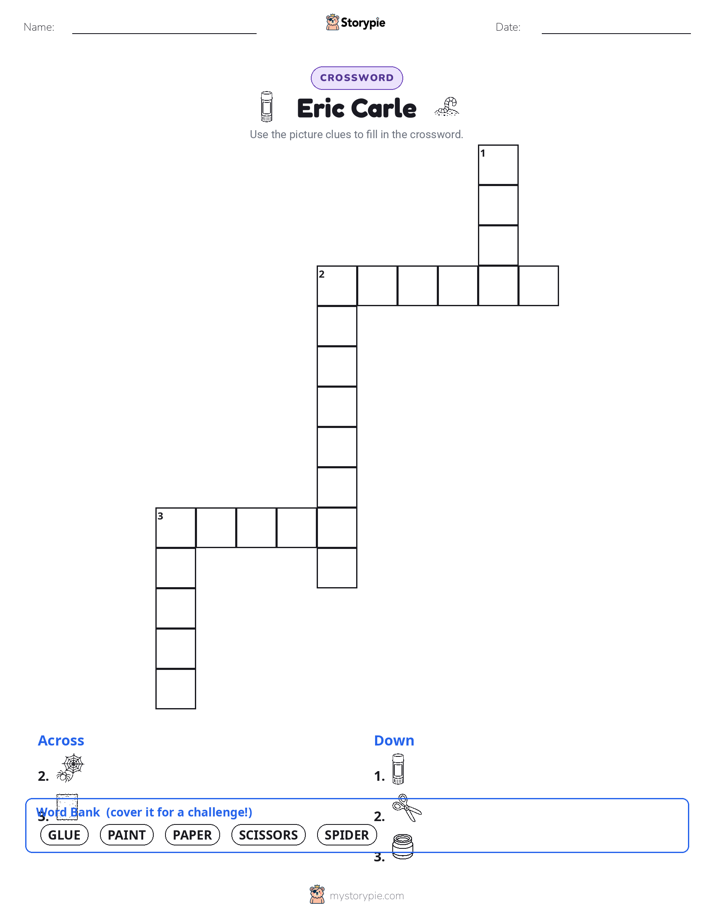
Print & create
Answer keys·No prep·Free with an account
28 worksheets · answer keys · full story · quiz · Ages 10-12 · CEFR B2
Plus adds 208,000+ more stories in 27 languages, audio for every one, and printables for all of them.
Just want Eric Carle?
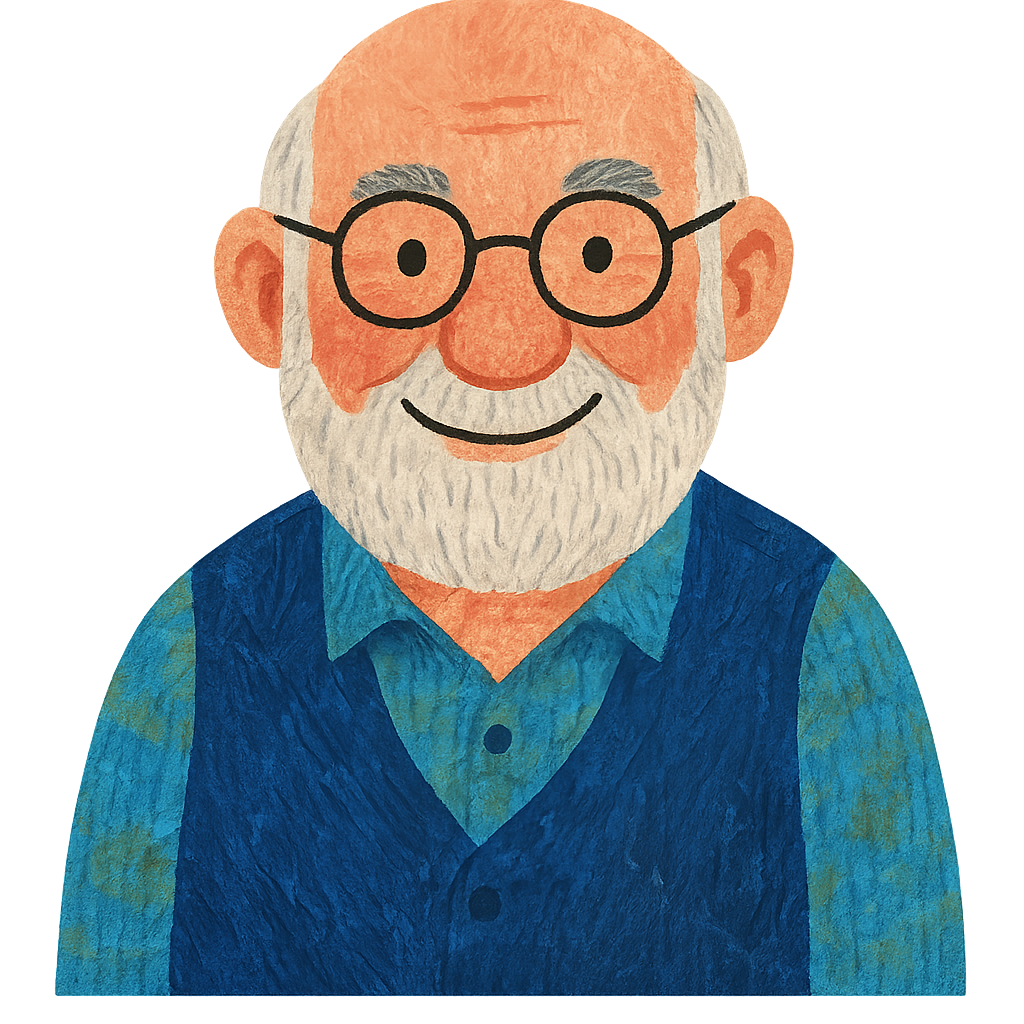
Hello! My name is Eric Carle, and I am an artist who tells stories with colors and paper. My own story began on June 25th, 1929, in a place called Syracuse, New York. My earliest memories are filled with sunshine, my mother’s laughter, and long walks in nature with my father. He showed me the tiny wonders of the world—the spiders spinning webs and the worms digging in the dirt. But my world changed when I was six years old. In 1935, my parents decided we should move back to their homeland, Germany. I missed America terribly. My bright, happy school was replaced by a strict, gray one, and the feeling of being an outsider was a heavy coat I couldn't take off. I dreamed of the day I could return to the country where I was born.
Living in Germany became very difficult as World War II began. It was a time of fear and sadness, and my father was sent away to be a soldier. The world felt like it had lost all its color. But even in the darkest times, a little bit of light can find its way in. For me, that light was my high school art teacher, Herr Kraus. He saw that I loved to draw and paint. One day, he invited me to his home and secretly showed me something forbidden by the government at the time: prints of modern art. The paintings were bursting with brilliant blues, radiant yellows, and colors I had never imagined. It was a secret world of beauty that I never forgot. That moment planted a seed in me, a belief that art could bring hope and joy, even when it felt like there was none.
Eric Carle: A Story of Color and Hope
Hello! My name is Eric Carle, and I am an artist who tells stories with colors and paper. My own story began on June 25th, 1929, in a place called Syracuse, New York. My earliest memories are filled with sunshine, my mother’s laughter, and long walks in nature with my father. He showed me the tiny wonders of the world—the spiders spinning webs and the worms digging in the dirt. But my world changed when I was six years old. In 1935, my parents decided we should move back to their homeland, Germany. I missed America terribly. My bright, happy school was replaced by a strict, gray one, and the feeling of being an outsider was a heavy coat I couldn't take off. I dreamed of the day I could return to the country where I was born.
Living in Germany became very difficult as World War II began. It was a time of fear and sadness, and my father was sent away to be a soldier. The world felt like it had lost all its color. But even in the darkest times, a little bit of light can find its way in. For me, that light was my high school art teacher, Herr Kraus. He saw that I loved to draw and paint. One day, he invited me to his home and secretly showed me something forbidden by the government at the time: prints of modern art. The paintings were bursting with brilliant blues, radiant yellows, and colors I had never imagined. It was a secret world of beauty that I never forgot. That moment planted a seed in me, a belief that art could bring hope and joy, even when it felt like there was none.
After the war ended, I knew I had to follow my passion for art. I studied graphic design at an art school in Stuttgart, Germany, but my dream of returning to America never faded. Finally, in 1952, when I was 23 years old, I packed a small suitcase and my art portfolio and sailed back to New York City. I arrived with only forty dollars in my pocket, but I was full of hope. I was lucky enough to get a job as a graphic designer for a very famous newspaper, The New York Times. I later worked as an art director for an advertising agency, designing posters and advertisements. I was making a life for myself as an artist, just as I had always dreamed.
My career took an unexpected turn because of a big, red lobster. I had created an advertisement featuring a lobster I had drawn, and an author named Bill Martin Jr. saw it and loved it. He tracked me down and asked if I would like to illustrate a children's book he had written. I had never done anything like it before, but I said yes! That book was 'Brown Bear, Brown Bear, What Do You See?', which was published in 1967. Through that experience, I discovered a new kind of joy in making art for children. It felt like I had finally found what I was meant to do. This wonderful project gave me the confidence to start writing and illustrating my very own stories.
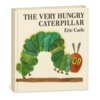
The idea for my most famous book came to me while I was using a hole punch. As I punched holes in a stack of paper, I thought of a bookworm. I called my book 'A Week with Willi the Worm.' My editor liked the idea of the holes but wasn't so sure about a worm. 'How about a caterpillar?' she suggested. And so, 'The Very Hungry Caterpillar' was born! I published it in 1969. I created the pictures using my special technique: painting on tissue paper and then cutting and pasting the pieces to make a collage. The book, with its chewed-through pages, tells a story of hope. It shows that even a small, insignificant caterpillar can grow and change into something beautiful. That's a feeling I think we all have inside of us.
I spent my life creating more than 70 books for children, hoping to make learning fun and the world a little brighter. One of my proudest moments came in 2002, when my wife Bobbie and I opened The Eric Carle Museum of Picture Book Art in Massachusetts. It is a place dedicated to celebrating the beautiful artwork found in children's books from all over the world. I lived to be 91 years old, and it filled my heart to know that my stories and art have a home on the bookshelves of so many children. I hope that when you see my hungry caterpillar or my brown bear, you remember that creativity and hope can help you grow into the amazing person you are meant to be.
Wow facts
About
Eric Carle was a beloved American author and illustrator of children's books, famous for his unique collage art style and iconic works like "The Very Hungry Caterpillar."
Take a Quiz
Question 1 of 5
What does the word 'insignificant' mean, and how did the caterpillar's story show that something insignificant could become important?
Explore next




Want to do even more?
Go beyond exploring. Unlock tools that turn every story into real learning.

Storypie Plus for families
Full stories, quizzes, and printables. Nights and car rides, sorted.
- Unlimited audio stories
- Create Mode: your child stars in the story
- Offline downloads
- Printable worksheets & coloring pages

Why Storypie for Schools
Students engaged. Prep in seconds. Evenings back to you.
- Worksheets & Quizzes
- Classroom Management
- Formative Assessment
- Custom Curriculum & Lesson Plans
- 27 Languages

Why Storypie for Homeschool
Curriculum done. They'll ask for more. Hours back in your day.
- Worksheet Generator
- First-Person Audio Stories
- Built-in Comprehension Quizzes
- Custom Curriculum & Lesson Plans
- Print & Go Activities