English

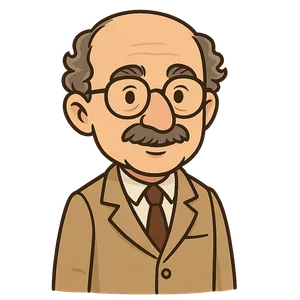
Ernst Boris Chain
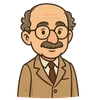
A German-born British biochemist who was a co-recipient of the Nobel Prize in Physiology or Medicine in 1945…
Reads at Grades 6–8 Listens at Grades 4–8
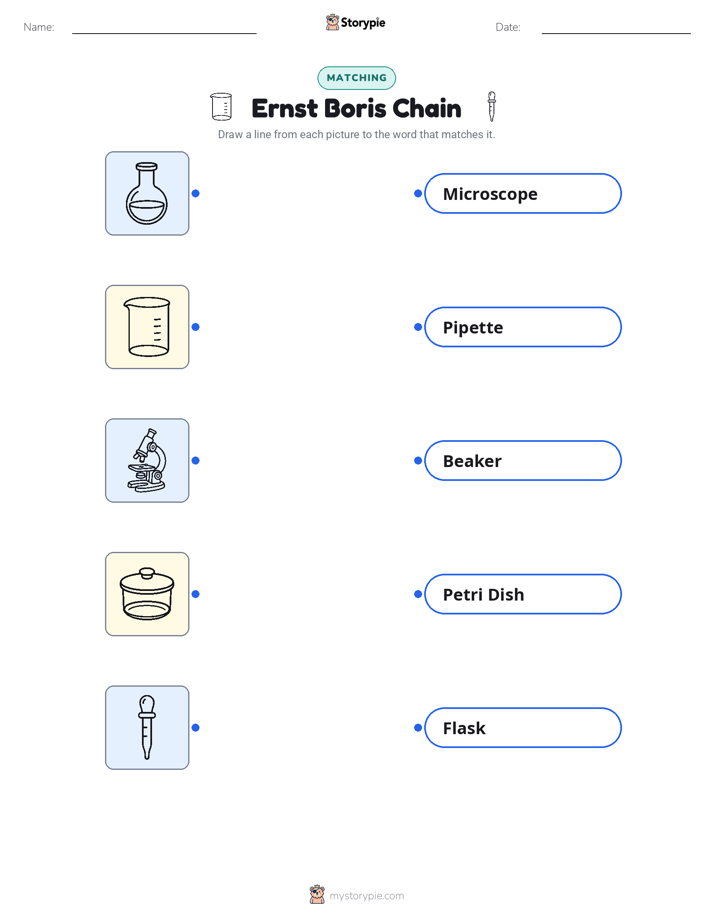
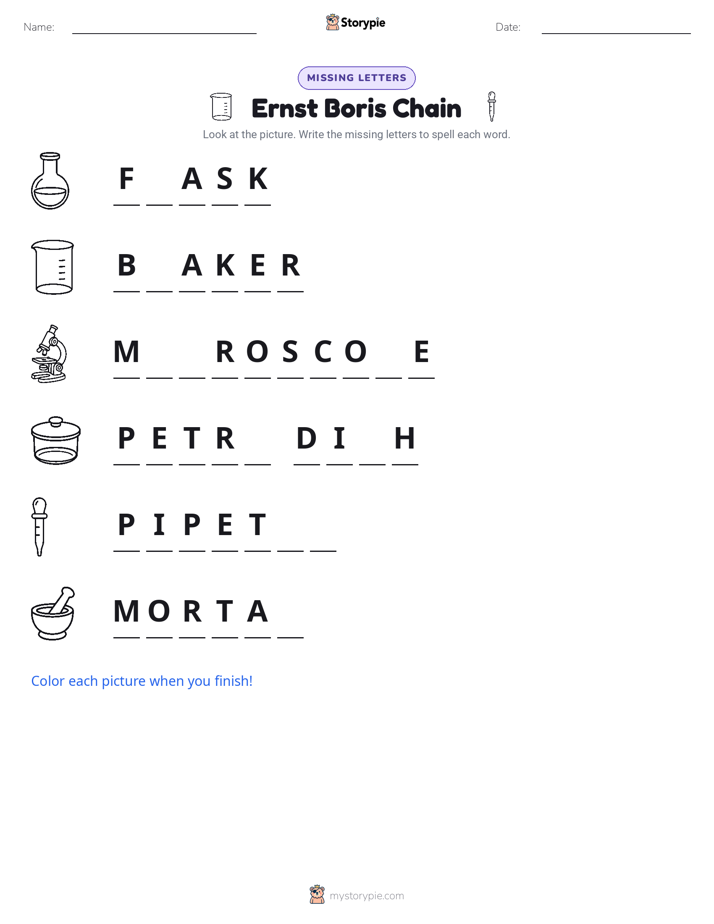
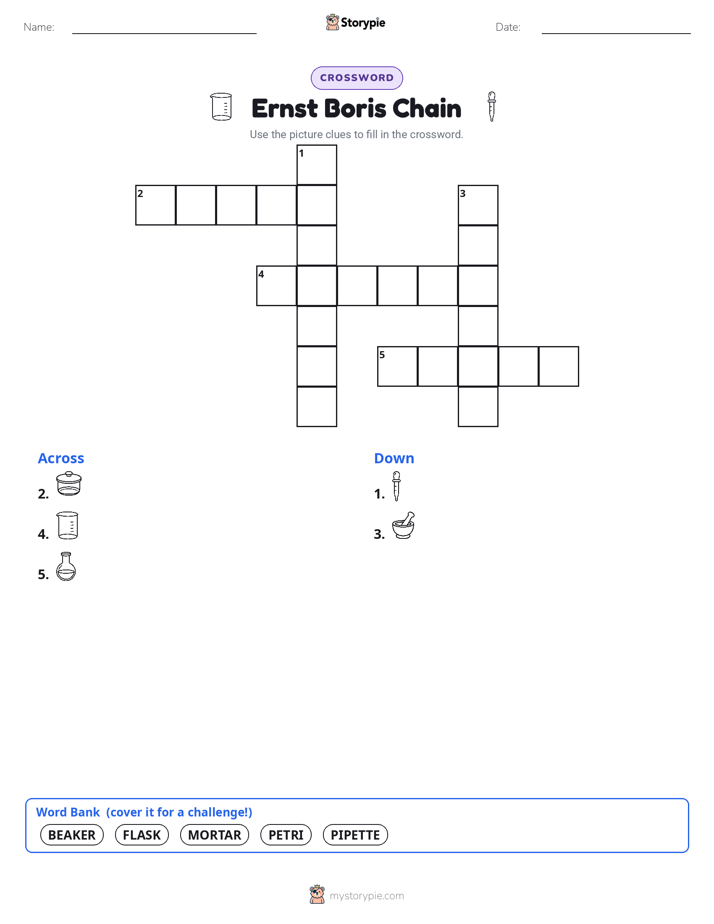
Print & create
Answer keys·No prep·Free with an account
28 worksheets · answer keys · full story · quiz · Ages 10-12 · CEFR B2
Plus adds 208,000+ more stories in 27 languages, audio for every one, and printables for all of them.
Just want Ernst Boris Chain?
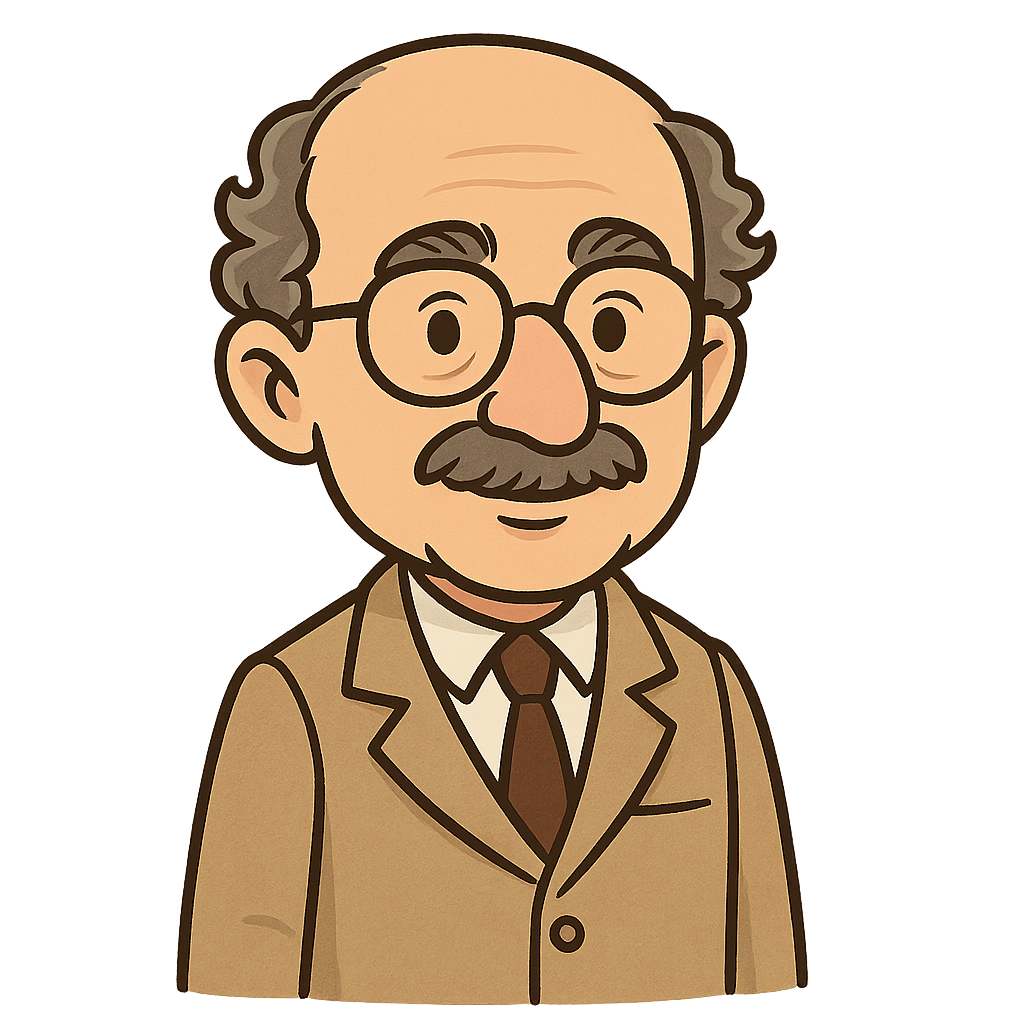
Hello! My name is Ernst Boris Chain, and I want to share my story with you. I was born in Berlin, Germany, on June 19th, 1906. My world was shaped by science from the very beginning. My father was a chemist, and our home was a place of discovery, which ignited a deep curiosity in me. I knew I wanted to understand the world on a molecular level, just like he did. Following this passion, I enrolled at Friedrich Wilhelm University to study chemistry and physiology. In 1930, I proudly earned my degree, excited to uncover the chemical secrets of how life works.
My life took a sudden and dramatic turn in 1933. A political party known as the Nazis rose to power in Germany, and their rule created a dangerous environment for Jewish families like mine. It became clear that it was no longer safe for me to stay in the country I called home. I had to make the incredibly difficult decision to leave everything behind and move to England. Though it was a frightening time filled with uncertainty, this move set me on a new path. I began working at the University of Cambridge, and then, in 1935, a wonderful opportunity arose. I joined the University of Oxford to work alongside a brilliant scientist named Howard Florey.
By 1939, the world was on the brink of another major conflict, World War II. It was during this tense period that Howard Florey and I embarked on a project that would change the course of medicine. We decided to investigate the earlier work of a scientist named Alexander Fleming. Years before, in 1928, Fleming had made a fascinating observation: he had discovered a type of mold, called *Penicillium*, that seemed to kill bacteria. However, for over a decade, his discovery remained a scientific curiosity. No one had figured out how to harness its power to create a usable medicine. As a biochemist, I saw a challenge. My job was to dive into the chemistry of this mold, to see if I could isolate the exact substance that killed the germs and find a way to make it stable enough for medical use.
Ernst Boris Chain
Hello! My name is Ernst Boris Chain, and I want to share my story with you. I was born in Berlin, Germany, on June 19th, 1906. My world was shaped by science from the very beginning. My father was a chemist, and our home was a place of discovery, which ignited a deep curiosity in me. I knew I wanted to understand the world on a molecular level, just like he did. Following this passion, I enrolled at Friedrich Wilhelm University to study chemistry and physiology. In 1930, I proudly earned my degree, excited to uncover the chemical secrets of how life works.
My life took a sudden and dramatic turn in 1933. A political party known as the Nazis rose to power in Germany, and their rule created a dangerous environment for Jewish families like mine. It became clear that it was no longer safe for me to stay in the country I called home. I had to make the incredibly difficult decision to leave everything behind and move to England. Though it was a frightening time filled with uncertainty, this move set me on a new path. I began working at the University of Cambridge, and then, in 1935, a wonderful opportunity arose. I joined the University of Oxford to work alongside a brilliant scientist named Howard Florey.
By 1939, the world was on the brink of another major conflict, World War II. It was during this tense period that Howard Florey and I embarked on a project that would change the course of medicine. We decided to investigate the earlier work of a scientist named Alexander Fleming. Years before, in 1928, Fleming had made a fascinating observation: he had discovered a type of mold, called Penicillium, that seemed to kill bacteria. However, for over a decade, his discovery remained a scientific curiosity. No one had figured out how to harness its power to create a usable medicine. As a biochemist, I saw a challenge. My job was to dive into the chemistry of this mold, to see if I could isolate the exact substance that killed the germs and find a way to make it stable enough for medical use.
Our work at the Oxford lab was incredibly demanding. Howard and I, along with our team, worked tirelessly to purify the bacteria-killing agent from the fuzzy green mold. It was a painstaking process of trial and error. After many long days and countless experiments, I finally succeeded in understanding its chemical structure and developed a method to extract and purify it. We named this powerful substance penicillin. Our first major test came in 1940, when we injected mice infected with a deadly strain of bacteria with our purified penicillin. The results were miraculous—they all survived. The following year, in 1941, we were ready to test it on a human. Our first patient showed remarkable improvement, but we couldn't produce the drug fast enough to save him. Despite this sad outcome, we had proven that penicillin could fight serious infections in humans, a monumental breakthrough as the war created a desperate need for such a medicine.
Our discovery fundamentally changed the world of medicine. Soon, factories were established to mass-produce penicillin, and this new drug saved an untold number of lives, especially among wounded soldiers during the war and countless civilians afterward. The impact of our research was recognized on a global scale. In 1945, for our combined efforts in turning a laboratory observation into a life-saving treatment, Alexander Fleming, Howard Florey, and I were jointly awarded the Nobel Prize in Physiology or Medicine. It was the greatest honor of my life, knowing that our teamwork had given the world a tool to heal people everywhere.
After the war, my scientific journey continued. I led research institutes, first in Rome, Italy, and later back in London. In 1969, I received another great honor when I was knighted by the Queen, becoming Sir Ernst Boris Chain. I lived to be 73 years old, passing away on August 12th, 1979. People remember me as one of the key scientists who transformed a chance discovery into a medical miracle. My work on penicillin helped launch the age of antibiotics, providing doctors with powerful medicines that continue to save lives and help people heal to this very day.
Wow facts
About
A German-born British biochemist who was a co-recipient of the Nobel Prize in Physiology or Medicine in 1945 for his work on the discovery and purification of penicillin.
Take a Quiz
Question 1 of 5
Why did Ernst Chain have to leave his home country of Germany in 1933?
Explore next



Want to do even more?
Go beyond exploring. Unlock tools that turn every story into real learning.

Storypie Plus for families
Full stories, quizzes, and printables. Nights and car rides, sorted.
- Unlimited audio stories
- Create Mode: your child stars in the story
- Offline downloads
- Printable worksheets & coloring pages

Why Storypie for Schools
Students engaged. Prep in seconds. Evenings back to you.
- Worksheets & Quizzes
- Classroom Management
- Formative Assessment
- Custom Curriculum & Lesson Plans
- 27 Languages

Why Storypie for Homeschool
Curriculum done. They'll ask for more. Hours back in your day.
- Worksheet Generator
- First-Person Audio Stories
- Built-in Comprehension Quizzes
- Custom Curriculum & Lesson Plans
- Print & Go Activities