English

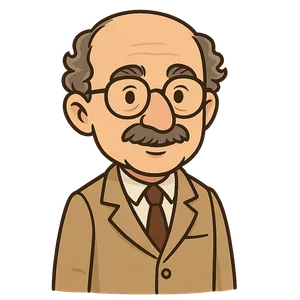
Ernst Boris Chain
Ernst Boris Chain was a German-born British biochemist who co-developed a method to isolate and concentrate…
Reads at Grades 3–5 Listens at Grades 1–5
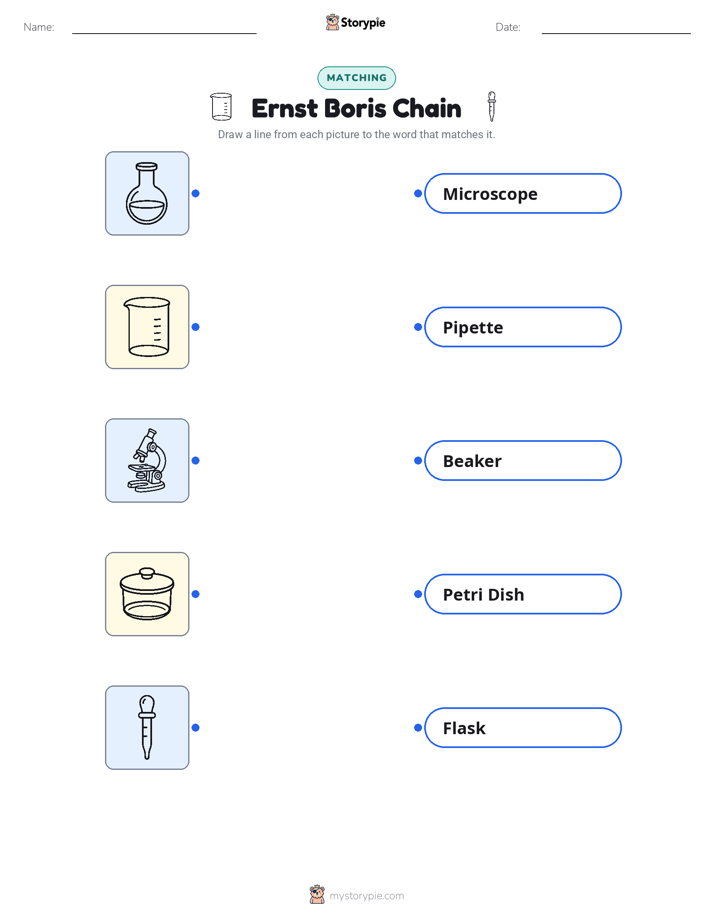
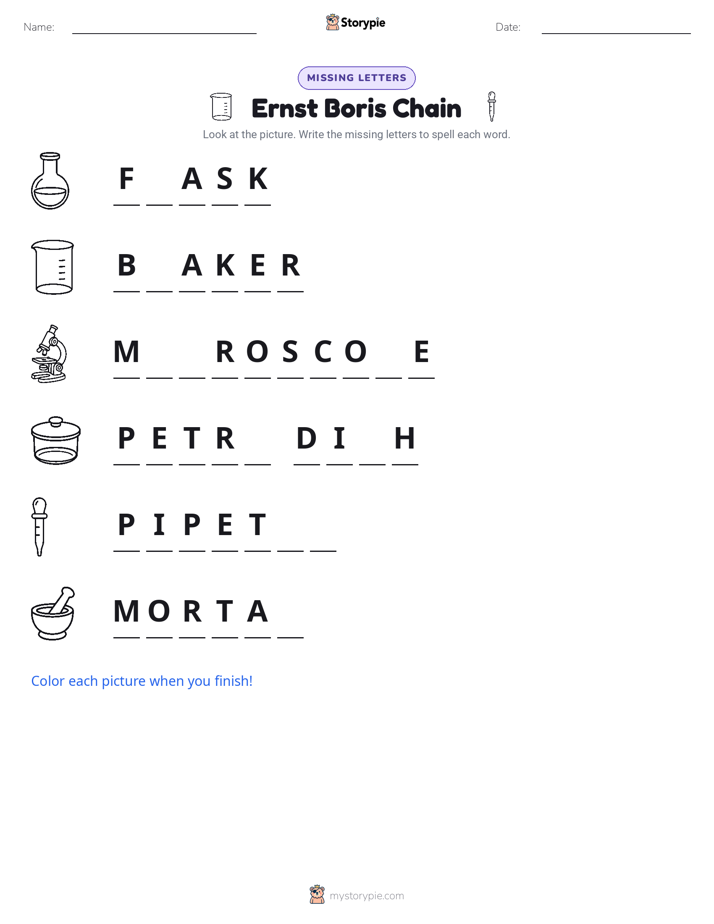
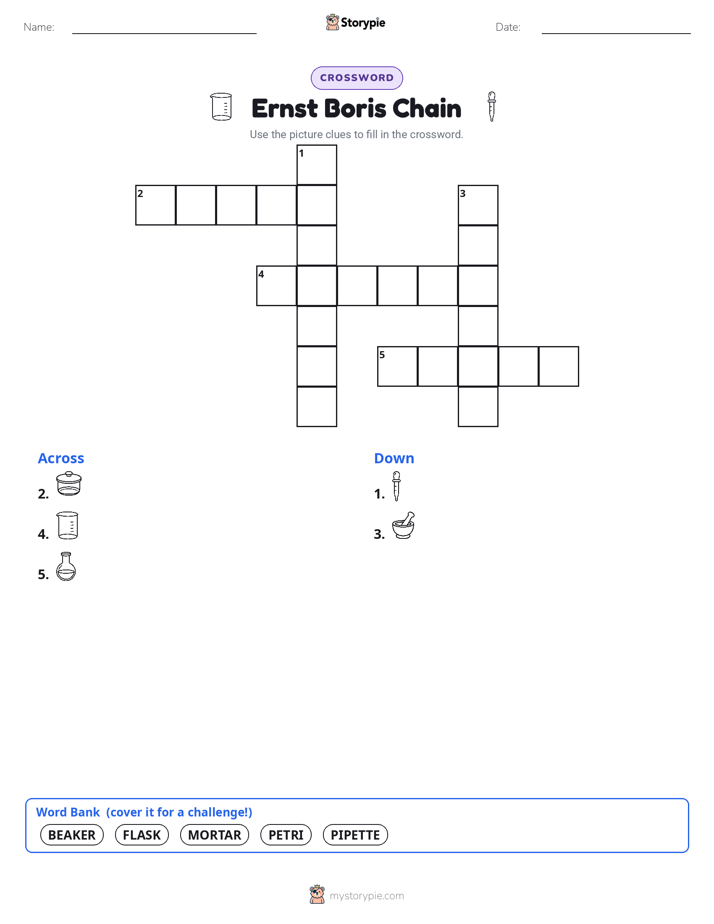
Print & create
Answer keys·No prep·Free with an account
28 worksheets · answer keys · full story · quiz · Ages 8-10 · CEFR B1
Plus adds 208,000+ more stories in 27 languages, audio for every one, and printables for all of them.
Just want Ernst Boris Chain?
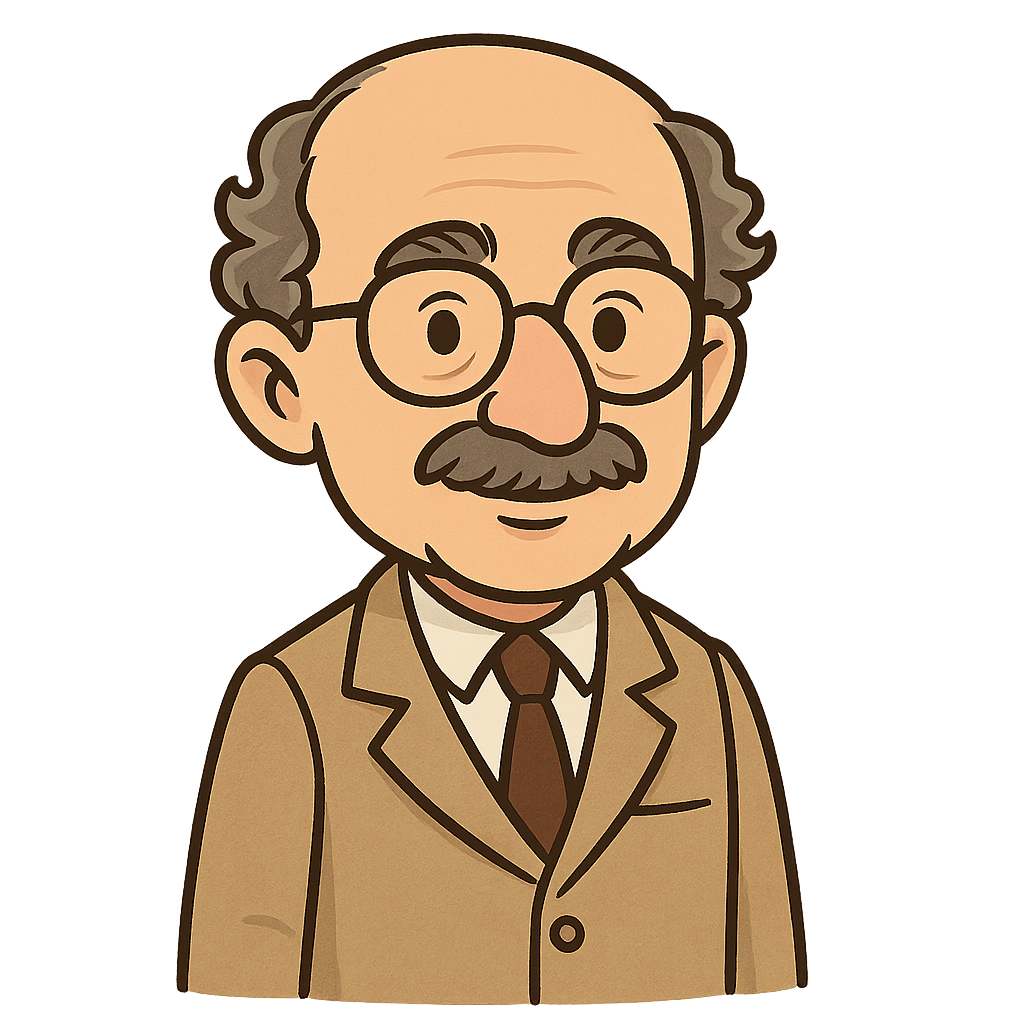
Hello! My name is Ernst Boris Chain. I was born in the city of Berlin, Germany, on June 19th, 1906. My father was a chemist, and I was fascinated by science from a very young age. But I had another passion, too—music! I practiced hard and became a talented concert pianist. Life felt full of possibilities, but things began to change in my country. When a new government came to power in Germany, it was no longer safe for me to live there because I was Jewish. In 1933, when I was 27 years old, I had to make the very difficult choice to leave my home. I moved to England so I could continue my work as a scientist in safety.
England became my new home. In 1935, I began working at the famous University of Oxford. There, I joined a team of scientists led by a brilliant man named Howard Florey. For a few years, we worked on different projects, but in 1939, Howard and I decided to investigate something very interesting. Over ten years earlier, in 1928, a scientist named Alexander Fleming had discovered a strange mold that could kill germs. He called it Penicillium. Mr. Fleming knew it was important, but he could not figure out how to turn the mold into a medicine that people could use. Howard and I believed that we could solve this puzzle.
As the team’s main chemist, my big job was to figure out how to get the special germ-killing ingredient out of the mold and make it pure enough to use as a medicine. It was very tricky work! We needed to grow a lot of the Penicillium mold, and we grew it in all sorts of containers we could find, even hospital bedpans. After many, many experiments, I finally figured out a way to extract a small amount of a brown powder. This powder was the powerful medicine we were looking for: penicillin! In 1940, we tested it on mice that had infections, and it worked like a miracle. The next year, in 1941, we were ready to test it on a person. We gave it to our first human patient, and it helped him fight off a terrible infection.
Ernst Boris Chain: The Penicillin Puzzle
Hello! My name is Ernst Boris Chain. I was born in the city of Berlin, Germany, on June 19th, 1906. My father was a chemist, and I was fascinated by science from a very young age. But I had another passion, too—music! I practiced hard and became a talented concert pianist. Life felt full of possibilities, but things began to change in my country. When a new government came to power in Germany, it was no longer safe for me to live there because I was Jewish. In 1933, when I was 27 years old, I had to make the very difficult choice to leave my home. I moved to England so I could continue my work as a scientist in safety.
England became my new home. In 1935, I began working at the famous University of Oxford. There, I joined a team of scientists led by a brilliant man named Howard Florey. For a few years, we worked on different projects, but in 1939, Howard and I decided to investigate something very interesting. Over ten years earlier, in 1928, a scientist named Alexander Fleming had discovered a strange mold that could kill germs. He called it Penicillium. Mr. Fleming knew it was important, but he could not figure out how to turn the mold into a medicine that people could use. Howard and I believed that we could solve this puzzle.
As the team’s main chemist, my big job was to figure out how to get the special germ-killing ingredient out of the mold and make it pure enough to use as a medicine. It was very tricky work! We needed to grow a lot of the Penicillium mold, and we grew it in all sorts of containers we could find, even hospital bedpans. After many, many experiments, I finally figured out a way to extract a small amount of a brown powder. This powder was the powerful medicine we were looking for: penicillin! In 1940, we tested it on mice that had infections, and it worked like a miracle. The next year, in 1941, we were ready to test it on a person. We gave it to our first human patient, and it helped him fight off a terrible infection.
Our discovery happened at a very important time in history. A big war, World War II, was happening, and millions of people were in danger. We knew that penicillin could save thousands of soldiers' lives by treating infections from their wounds. The problem was that we could only make tiny amounts of it in our small lab. To help more people, we needed to make huge amounts. We worked with companies in Great Britain and the United States to share our methods and figure out how to produce penicillin on a massive scale. Soon, this amazing medicine was being sent to help sick and injured people all over the world.
In 1945, after the war ended, my work was recognized with a very special award called the Nobel Prize. I was so proud to share it with Howard Florey and Alexander Fleming, the man who first discovered the mold. It was an incredible honor to know our work had helped so many. I continued my work as a scientist for many more years, always curious to learn more. I lived to be 73 years old. I am remembered for being a key part of the team that turned a curious mold into one of the most important medicines in history. Our discovery of penicillin started the age of antibiotics and has saved millions of lives since.
Wow facts
About
Ernst Boris Chain was a German-born British biochemist who co-developed a method to isolate and concentrate penicillin, sharing the 1945 Nobel Prize in Physiology or Medicine for this work.
Take a Quiz
Question 1 of 5
Why did Ernst Chain have to leave his home country of Germany in 1933?
Explore next




Want to do even more?
Go beyond exploring. Unlock tools that turn every story into real learning.

Storypie Plus for families
Full stories, quizzes, and printables. Nights and car rides, sorted.
- Unlimited audio stories
- Create Mode: your child stars in the story
- Offline downloads
- Printable worksheets & coloring pages

Why Storypie for Schools
Students engaged. Prep in seconds. Evenings back to you.
- Worksheets & Quizzes
- Classroom Management
- Formative Assessment
- Custom Curriculum & Lesson Plans
- 27 Languages

Why Storypie for Homeschool
Curriculum done. They'll ask for more. Hours back in your day.
- Worksheet Generator
- First-Person Audio Stories
- Built-in Comprehension Quizzes
- Custom Curriculum & Lesson Plans
- Print & Go Activities