English

Eunice Kennedy Shriver
American philanthropist, social activist, and founder of the Special Olympics…
Reads at Grades 6–8 Listens at Grades 4–8
Print & create
Answer keys·No prep·Free with an account
28 worksheets · answer keys · full story · quiz · Ages 10-12 · CEFR B2
Plus adds 290,000+ more stories in 27 languages, audio for every one, and printables for all of them.
Just want Eunice Kennedy Shriver?
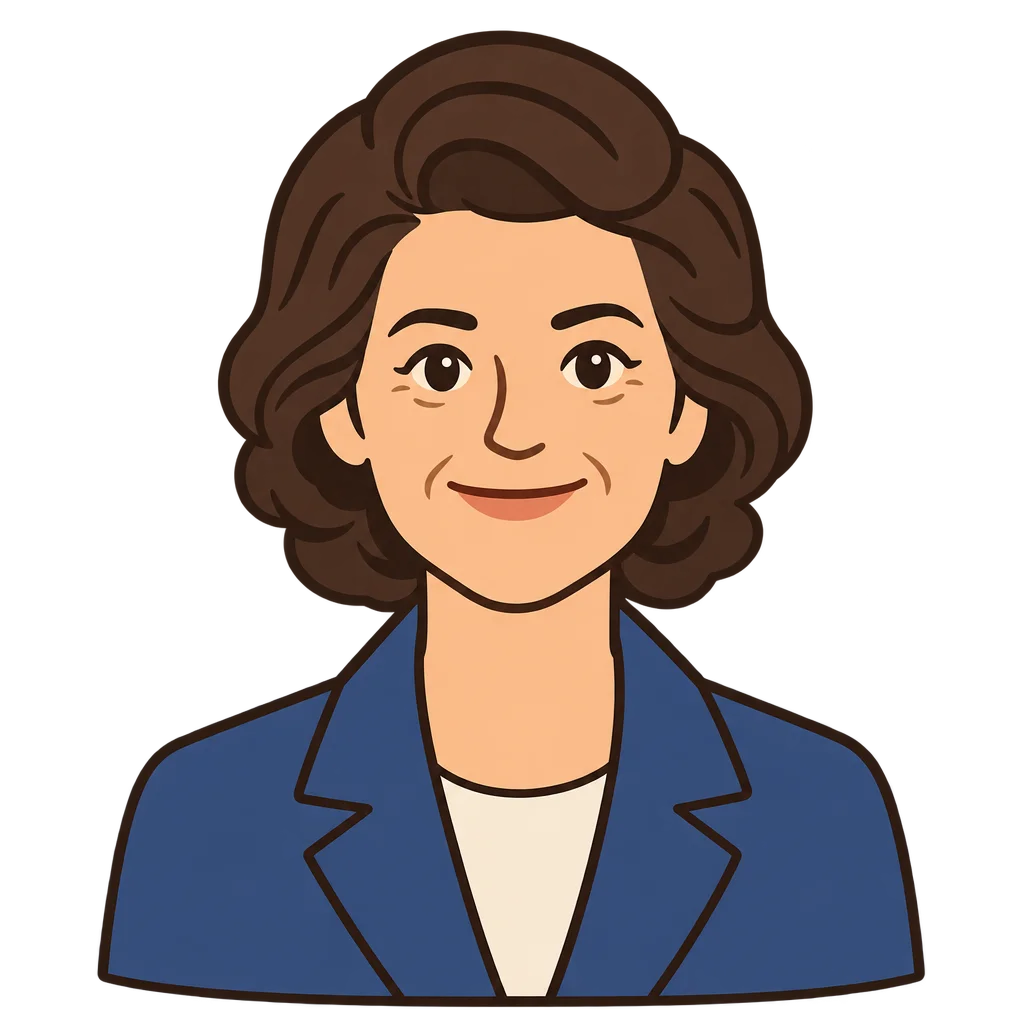
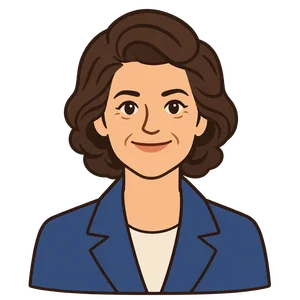
Hello, my name is Eunice Kennedy Shriver. I was born on July 10th, 1921, in a town called Brookline, Massachusetts. My world was a big and busy one, as I was the fifth of nine children in my family. Our house was always full of energy and noise! We all loved to play sports and were very competitive with one another, but our parents also taught us the importance of serving our community and helping others. One of my siblings was my older sister, Rosemary, whom I loved very much. Rosemary had an intellectual disability, which meant she learned and understood things differently from other people. In those days, many people did not understand intellectual disabilities, and children like my sister were often excluded or hidden away from the world. Seeing how unfairly she was treated lit a fire in me. I knew from a young age that I wanted to dedicate my life to changing things for people like her.
After I graduated from Stanford University in 1943, I was determined to find a way to make a real difference. I began my career in public service, working for the U.S. government, where I learned more about the social problems facing our country. My passion for helping people with intellectual disabilities grew stronger with each passing year. A significant moment came in the early 1960s when my brother, John F. Kennedy, was elected President of the United States. He knew how deeply I cared about this cause, and he listened carefully to my ideas. Together, in 1962, we helped establish the National Institute of Child Health and Human Development, an organization dedicated to studying issues affecting children. But I knew that research alone was not enough. I wanted to do something that would directly bring confidence and joy to people like my sister Rosemary.
Eunice Kennedy Shriver: The Flame of the Special Olympics
Hello, my name is Eunice Kennedy Shriver. I was born on July 10th, 1921, in a town called Brookline, Massachusetts. My world was a big and busy one, as I was the fifth of nine children in my family. Our house was always full of energy and noise! We all loved to play sports and were very competitive with one another, but our parents also taught us the importance of serving our community and helping others. One of my siblings was my older sister, Rosemary, whom I loved very much. Rosemary had an intellectual disability, which meant she learned and understood things differently from other people. In those days, many people did not understand intellectual disabilities, and children like my sister were often excluded or hidden away from the world. Seeing how unfairly she was treated lit a fire in me. I knew from a young age that I wanted to dedicate my life to changing things for people like her.
After I graduated from Stanford University in 1943, I was determined to find a way to make a real difference. I began my career in public service, working for the U.S. government, where I learned more about the social problems facing our country. My passion for helping people with intellectual disabilities grew stronger with each passing year. A significant moment came in the early 1960s when my brother, John F. Kennedy, was elected President of the United States. He knew how deeply I cared about this cause, and he listened carefully to my ideas. Together, in 1962, we helped establish the National Institute of Child Health and Human Development, an organization dedicated to studying issues affecting children. But I knew that research alone was not enough. I wanted to do something that would directly bring confidence and joy to people like my sister Rosemary.
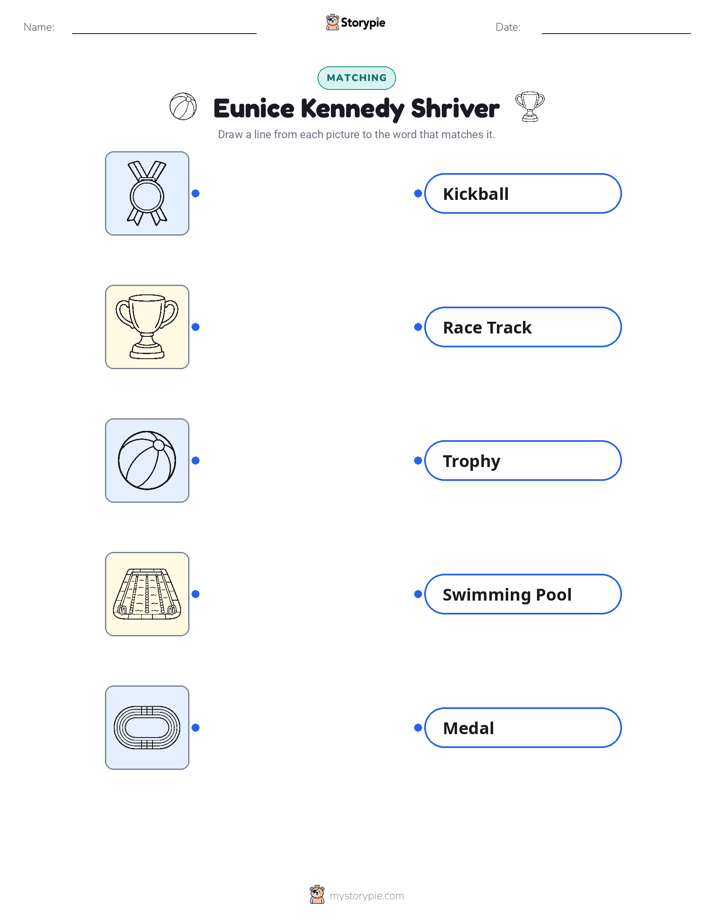
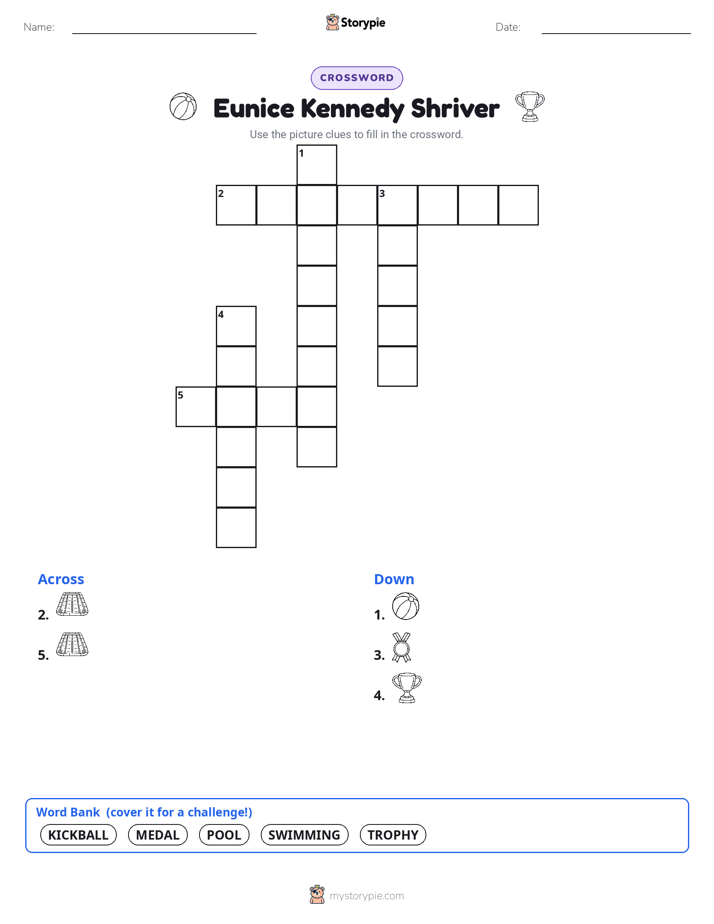
On May 23rd, 1953, I married a wonderful man named Sargent Shriver, who shared my dream of making the world a more just and compassionate place. In the summer of 1962, a simple but powerful idea came to me. I decided to invite a group of young people with intellectual disabilities to a summer camp right in my own backyard in Maryland. We called it 'Camp Shriver.' We didn't focus on what they couldn't do; we focused on what they could. We swam, played kickball, and ran races. For many of those children, it was the very first time they had ever heard someone say, 'You can do it!' I saw their faces light up with pride and accomplishment as they competed. It was clear to me then that they weren't 'disabled' when they were on the playing field—they were athletes. That small camp proved what I had always believed: everyone deserves a chance to play, to compete, and to be celebrated for their unique abilities.
The incredible success of Camp Shriver inspired me to dream even bigger. If a summer camp in my backyard could have such a positive impact, what could an international event do? The idea for an Olympics-style competition for these amazing athletes began to take shape. It took years of hard work, planning, and convincing others to believe in the vision. Finally, on a hot day in July of 1968, my dream became a reality. The first International Special Olympics Games were held at Soldier Field in Chicago. I watched with tears in my eyes as 1,000 athletes from the United States and Canada marched proudly into the stadium. It was one of the most beautiful sights I had ever seen. I stood before them and recited an oath that would become our motto: 'Let me win. But if I cannot win, let me be brave in the attempt.' Those words perfectly captured the spirit of what we were creating—a world where everyone is judged not by their limitations, but by their courage and effort.
What started as a small camp in my backyard grew into a global movement that has reached millions of athletes and their families in countries all over the world. The Special Olympics became a symbol of inclusion, hope, and the power of the human spirit. For my work, I was honored to receive the Presidential Medal of Freedom in 1984. I lived a full and happy life, and I was 88 years old when my time on Earth came to an end on August 11th, 2009. My greatest joy is knowing that the flame of the Special Olympics continues to burn brightly today. It lives on in every athlete who discovers their own strength and in every person who cheers them on, reminding the world that every single person has a gift to share.
Wow facts
About
American philanthropist, social activist, and founder of the Special Olympics, a global movement that provides sports training and competition for children and adults with intellectual disabilities.
Take a Quiz
Question 1 of 5
What was the problem Eunice Kennedy Shriver saw, and what was her first step to solve it?
Explore next






Want to do even more?
Go beyond exploring. Unlock tools that turn every story into real learning.

Storypie Plus for families
Full stories, quizzes, and printables. Nights and car rides, sorted.
- Unlimited audio stories
- Create Mode: your child stars in the story
- Offline downloads
- Printable worksheets & coloring pages

Why Storypie for Schools
Students engaged. Prep in seconds. Evenings back to you.
- Worksheets & Quizzes
- Classroom Management
- Formative Assessment
- Custom Curriculum & Lesson Plans
- 27 Languages

Why Storypie for Homeschool
Curriculum done. They'll ask for more. Hours back in your day.
- Worksheet Generator
- First-Person Audio Stories
- Built-in Comprehension Quizzes
- Custom Curriculum & Lesson Plans
- Print & Go Activities