English

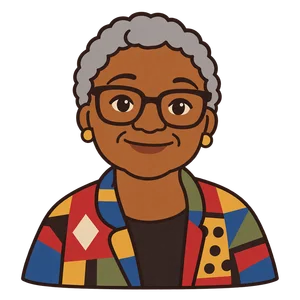
Faith Ringgold
Faith Ringgold was an influential African American artist, author…
Reads at Grades 6–8 Listens at Grades 4–8
Print & create
Answer keys·No prep·Free with an account
28 worksheets · answer keys · full story · quiz · Ages 10-12 · CEFR B2
Plus adds 290,000+ more stories in 27 languages, audio for every one, and printables for all of them.
Just want Faith Ringgold?
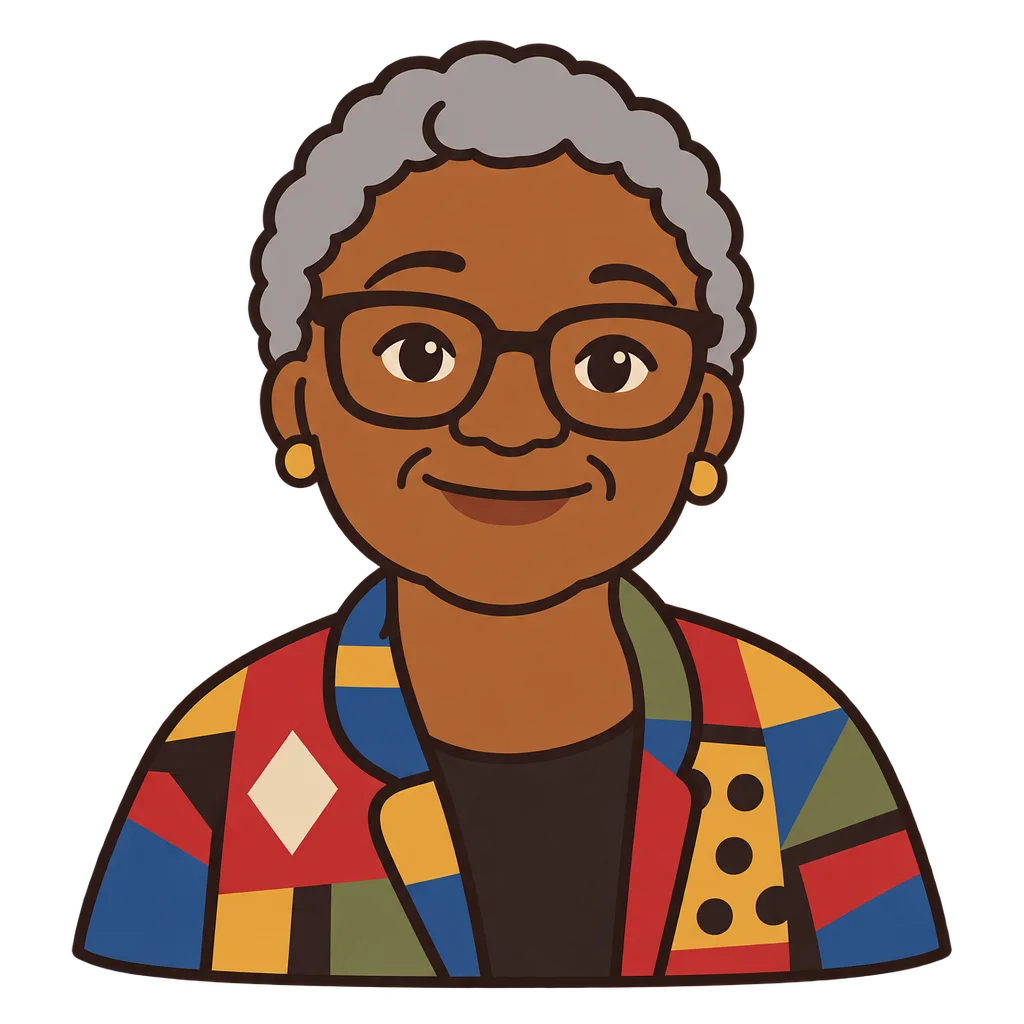
Hello! My name is Faith Ringgold, and I am an artist who tells stories with paint and fabric. I was born in the vibrant neighborhood of Harlem in New York City on October 8th, 1930. My childhood was an exciting time because I grew up during the Harlem Renaissance, a period when I was surrounded by incredible Black artists, writers, and musicians. Because I had asthma, I often had to stay indoors. My world was far from boring, though. My mother, Willi Posey, was a talented fashion designer, and she filled my days with creativity. She taught me how to sew and work with all kinds of fabrics. It was through her that I first discovered the joy of making things and telling stories with my hands.
When it came time for college, I knew my heart was set on being an artist. I enrolled at the City College of New York, but I soon discovered a major obstacle: the art school did not accept women at that time. I refused to let that barrier stop me. Instead, I chose to study art education, which allowed me to pursue my passion for creativity in a different way. I earned my bachelor's degree in 1955 and went on to complete my master's degree in 1959. For many years, from 1955 until 1973, I worked as an art teacher in public schools. My days were for my students, but my nights were for my own art. During the 1960s, I traveled to Europe to study the famous paintings in museums, but I came to an important realization. The most powerful stories I had to tell were not about faraway places, but about my own life and experiences as an African American woman.
Faith Ringgold: Stitching a Story
Hello! My name is Faith Ringgold, and I am an artist who tells stories with paint and fabric. I was born in the vibrant neighborhood of Harlem in New York City on October 8th, 1930. My childhood was an exciting time because I grew up during the Harlem Renaissance, a period when I was surrounded by incredible Black artists, writers, and musicians. Because I had asthma, I often had to stay indoors. My world was far from boring, though. My mother, Willi Posey, was a talented fashion designer, and she filled my days with creativity. She taught me how to sew and work with all kinds of fabrics. It was through her that I first discovered the joy of making things and telling stories with my hands.
When it came time for college, I knew my heart was set on being an artist. I enrolled at the City College of New York, but I soon discovered a major obstacle: the art school did not accept women at that time. I refused to let that barrier stop me. Instead, I chose to study art education, which allowed me to pursue my passion for creativity in a different way. I earned my bachelor's degree in 1955 and went on to complete my master's degree in 1959. For many years, from 1955 until 1973, I worked as an art teacher in public schools. My days were for my students, but my nights were for my own art. During the 1960s, I traveled to Europe to study the famous paintings in museums, but I came to an important realization. The most powerful stories I had to tell were not about faraway places, but about my own life and experiences as an African American woman.
The 1960s was a period of profound change in the United States, shaped by the Civil Rights Movement. I felt it was crucial for my art to be part of that important national conversation. Between 1963 and 1967, I created a powerful series of paintings called the 'American People Series.' These works explored what life was truly like in America and challenged viewers to think deeply about issues of race and equality. My voice wasn't just in my art; I also became an activist. I joined protests against major museums, like the Whitney Museum of American Art and the Museum of Modern Art, because their exhibitions rarely included art by women or Black artists. I held a strong belief that everyone's story was important and deserved to be seen and heard.
In the 1970s, I began to feel limited by the flat surface of a traditional canvas and started searching for new ways to express my ideas. I thought back to my childhood and the lessons my mother taught me about working with fabric. This inspired me to create soft sculptures and unique fabric-framed paintings that I called 'tankas.' This path of experimentation eventually led me to one of my most significant artistic innovations: the story quilt. In 1980, my mother and I collaborated to create my very first quilt, titled 'Echoes of Harlem.' A few years later, in 1983, I created what I consider my first true story quilt, 'Who's Afraid of Aunt Jemima?'. This piece was revolutionary because it combined painting, quilting, and a handwritten story into a single, powerful work of art.
One of my most celebrated story quilts is called 'Tar Beach,' which I completed in 1988. The quilt tells the imaginative story of a young girl named Cassie Louise Lightfoot. In the story, Cassie lies on the rooftop of her family's apartment building—what she calls the 'tar beach'—and dreams that she can fly. She soars high above the city, over the George Washington Bridge, feeling a powerful sense of freedom. From her view in the sky, she can claim anything she sees as her own. The story and the quilt are about the incredible power of imagination. They show how you can dream yourself into a better world, no matter what your circumstances might be.
So many people connected with the story woven into the 'Tar Beach' quilt that I was inspired to share it in a new way. I decided to transform the quilt's narrative into a children's book. The book, also titled 'Tar Beach,' was published in 1991 and was met with great success. It won several wonderful awards, including a prestigious Caldecott Honor. This opened up a whole new chapter for me, allowing me to share my art and stories directly with young people around the world. I continued this journey by writing and illustrating many more books, such as 'Aunt Harriet's Underground Railroad in the Sky,' which introduced children to important figures and events in African American history and culture.
I spent my life telling the stories that were important to me through my paintings, my quilts, my sculptures, and my books. I also had the great joy of teaching art to college students for many years, sharing my passion with a new generation of artists. I lived a full and creative life to be 93 years old. Today, people remember me for the way I combined art with storytelling to talk about family, history, and the fight for justice. My greatest hope is that my work inspires you to find your own unique and special way to tell your story, because every person's voice matters and deserves to be heard.
Wow facts
About
Faith Ringgold was an influential African American artist, author, and activist known for her narrative quilts and children's books that explore themes of race, gender, and community.
Take a Quiz
Question 1 of 5
Why did Faith Ringgold begin protesting museums in the 1960s?
Explore next






Want to do even more?
Go beyond exploring. Unlock tools that turn every story into real learning.
Storypie Plus for families
Full stories, quizzes, and printables. Nights and car rides, sorted.
- Unlimited audio stories
- Create Mode: your child stars in the story
- Offline downloads
- Printable worksheets & coloring pages

Why Storypie for Schools
Students engaged. Prep in seconds. Evenings back to you.
- Worksheets & Quizzes
- Classroom Management
- Formative Assessment
- Custom Curriculum & Lesson Plans
- 27 Languages

Why Storypie for Homeschool
Curriculum done. They'll ask for more. Hours back in your day.
- Worksheet Generator
- First-Person Audio Stories
- Built-in Comprehension Quizzes
- Custom Curriculum & Lesson Plans
- Print & Go Activities