English

Harlem Renaissance
An intellectual and cultural revival of African American music, dance, art, fashion, literature, theater…
Reads at Grades K-2 Listens at K–3
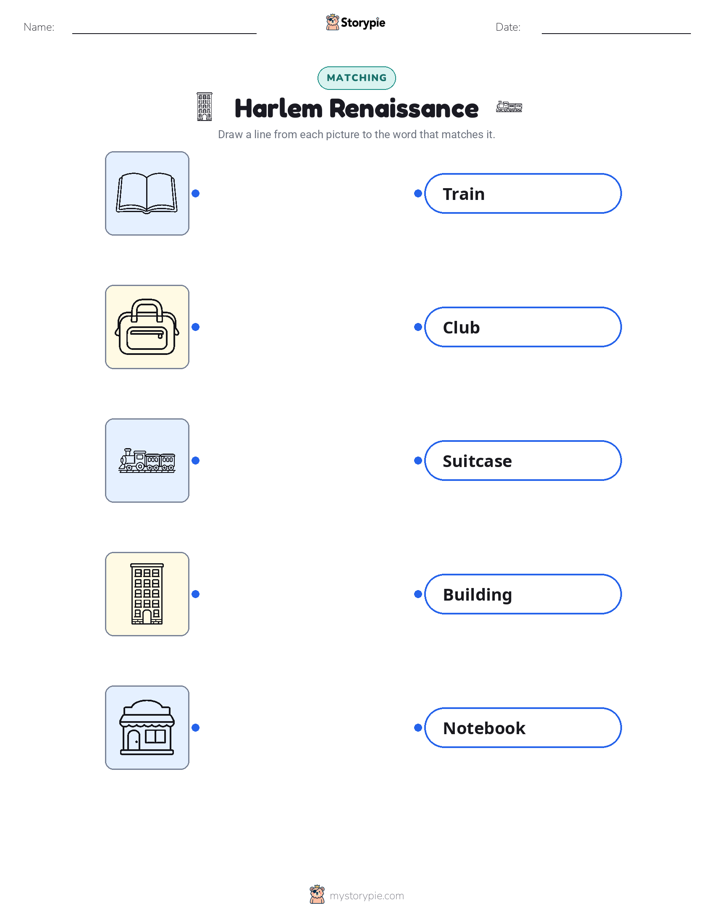
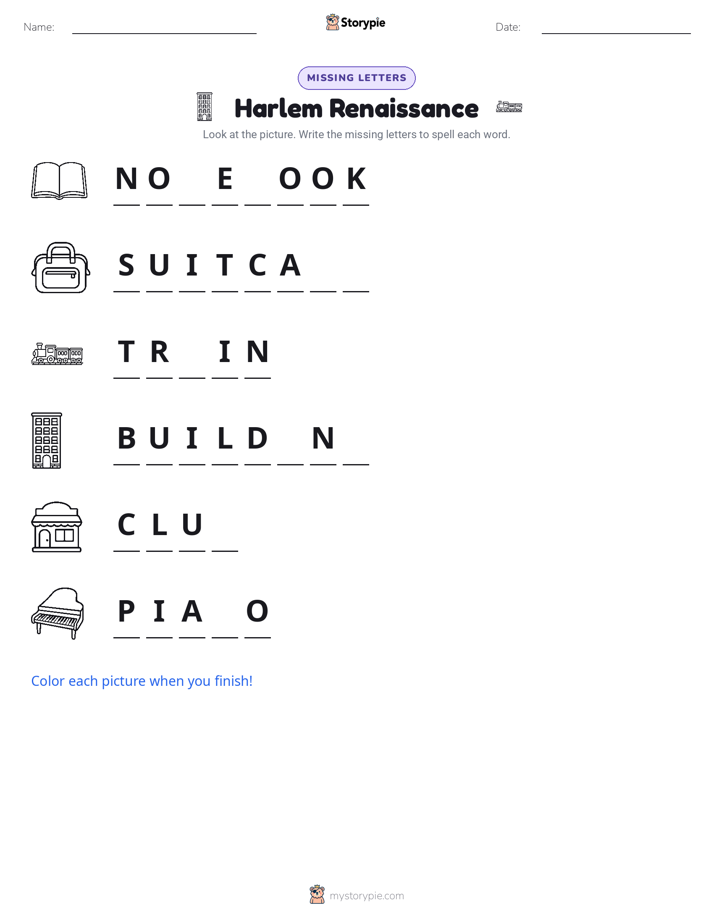
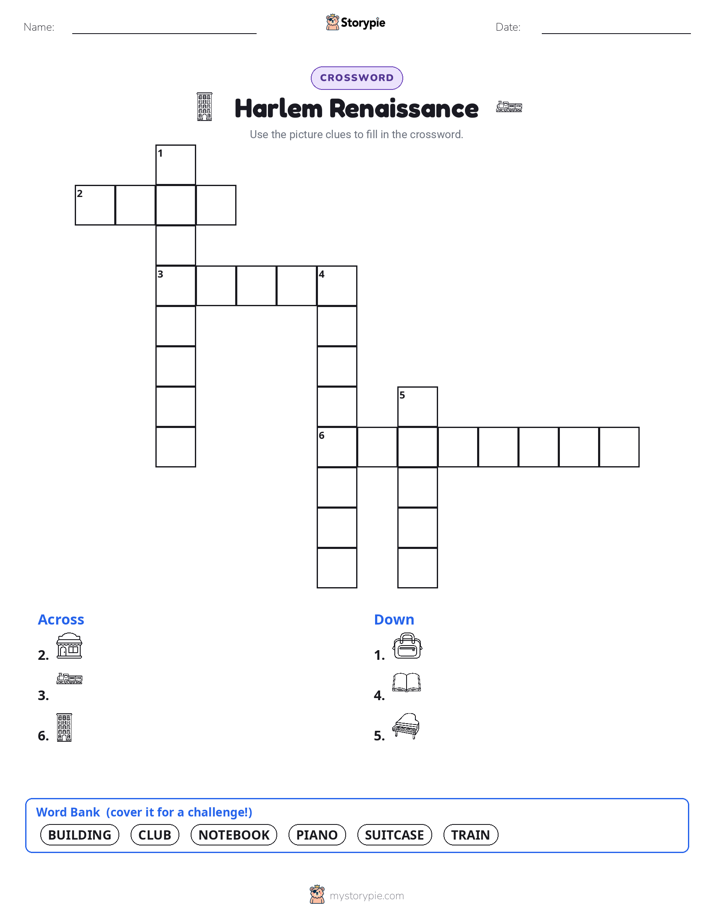
Print & create
Answer keys·No prep·Free with an account
28 worksheets · answer keys · full story · quiz · Ages 6-8 · CEFR A2
Plus adds 244,000+ more stories in 27 languages, audio for every one, and printables for all of them.
Just want Harlem Renaissance?
Hello there. My name is Langston Hughes, and ever since I was a boy, I have loved words. I loved how they could paint pictures in your mind or sing a song in your heart. I dreamed of becoming a poet. In the early 1920s, I packed my bags and my dreams and traveled to a very special place: a neighborhood in New York City called Harlem. When I arrived, the air felt like it was buzzing with excitement, like the moment right before a big surprise. It was a place where many Black artists, writers, and musicians were gathering. We all felt that something wonderful was about to happen. We had stories to tell and songs to sing, and Harlem was the perfect stage. It felt like coming home to a place I had never been before, a place where our dreams could finally take flight.
Harlem was a neighborhood full of magic. Everywhere I went, I heard the toe-tapping, finger-snapping sound of jazz music spilling out from the clubs. It was a brand-new kind of music that made you want to dance. My friend, Duke Ellington, was a master at playing it on his piano. I saw beautiful, colorful paintings in the windows of shops, and I met so many amazing new friends. One of my best friends was Zora Neale Hurston. She could tell stories that would make you laugh out loud and see the world in a whole new way. Being around all this art and music made me want to write more than ever. I wanted my poems to have a beat, just like the jazz music. I wrote about the people I saw, the things I felt, and the dreams we all shared. We were like one big family of creators, encouraging each other to shine our brightest. We would read our poems and stories to each other and listen to the new songs our friends had written. It was a time of great joy and friendship.
Langston Hughes and the Harlem Renaissance
Hello there. My name is Langston Hughes, and ever since I was a boy, I have loved words. I loved how they could paint pictures in your mind or sing a song in your heart. I dreamed of becoming a poet. In the early 1920s, I packed my bags and my dreams and traveled to a very special place: a neighborhood in New York City called Harlem. When I arrived, the air felt like it was buzzing with excitement, like the moment right before a big surprise. It was a place where many Black artists, writers, and musicians were gathering. We all felt that something wonderful was about to happen. We had stories to tell and songs to sing, and Harlem was the perfect stage. It felt like coming home to a place I had never been before, a place where our dreams could finally take flight.
Harlem was a neighborhood full of magic. Everywhere I went, I heard the toe-tapping, finger-snapping sound of jazz music spilling out from the clubs. It was a brand-new kind of music that made you want to dance. My friend, Duke Ellington, was a master at playing it on his piano. I saw beautiful, colorful paintings in the windows of shops, and I met so many amazing new friends. One of my best friends was Zora Neale Hurston. She could tell stories that would make you laugh out loud and see the world in a whole new way. Being around all this art and music made me want to write more than ever. I wanted my poems to have a beat, just like the jazz music. I wrote about the people I saw, the things I felt, and the dreams we all shared. We were like one big family of creators, encouraging each other to shine our brightest. We would read our poems and stories to each other and listen to the new songs our friends had written. It was a time of great joy and friendship.
This special time was called the Harlem Renaissance. A renaissance is like a flower blooming after a long winter. For a long time, the beautiful stories, songs, and art of Black people had not been shared with the whole world. But now, in Harlem, we were proudly sharing our culture. We were showing everyone how much beauty and talent we had. My part in this wonderful time was to write my poems. I wrote about our hopes, our struggles, and our dreams for a better world. I believed that our voices and our stories were important and needed to be heard. My message then is the same as my message to you now: everyone has a special story inside them. Your voice matters, and sharing your art, your words, or your songs can make the world a more beautiful and understanding place.
Wow facts
About
An intellectual and cultural revival of African American music, dance, art, fashion, literature, theater, and politics centered in Harlem, Manhattan, New York City, that began in the 1910s and continued into the mid-1930s.
Take a Quiz
Question 1 of 4
Why was the Harlem Renaissance an important time?
Explore next



Want to do even more?
Go beyond exploring. Unlock tools that turn every story into real learning.

Storypie Plus for families
Full stories, quizzes, and printables. Nights and car rides, sorted.
- Unlimited audio stories
- Create Mode: your child stars in the story
- Offline downloads
- Printable worksheets & coloring pages

Why Storypie for Schools
Students engaged. Prep in seconds. Evenings back to you.
- Worksheets & Quizzes
- Classroom Management
- Formative Assessment
- Custom Curriculum & Lesson Plans
- 27 Languages

Why Storypie for Homeschool
Curriculum done. They'll ask for more. Hours back in your day.
- Worksheet Generator
- First-Person Audio Stories
- Built-in Comprehension Quizzes
- Custom Curriculum & Lesson Plans
- Print & Go Activities