English

Harlem Renaissance
An intellectual and cultural revival of African American music, dance, art, fashion, literature, theater…
Reads at Grades 3–5 Listens at Grades 1–5
Print & create
Answer keys·No prep·Free with an account
28 worksheets · answer keys · full story · quiz · Ages 8-10 · CEFR B1
Plus adds 244,000+ more stories in 27 languages, audio for every one, and printables for all of them.
Just want Harlem Renaissance?
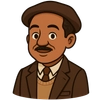
Hello there. My name is Langston Hughes, and I am a poet. I want to tell you about a time and a place that felt like magic. It was the 1920s, and I had just arrived in a neighborhood in New York City called Harlem. Stepping off the train felt like stepping into a brand-new world. All around me, there was a special kind of energy, a buzz of excitement that you could almost touch. You see, I wasn't the only one who had traveled a long way to get there. My family, and thousands of other African American families, were part of what people called the Great Migration. We moved from the southern parts of the country to the big cities in the North, searching for better jobs and a life free from the unfair rules that held us back. For us, Harlem was more than just a place to live; it was a promise. The sounds of the city were a song—the rumble of the subway below, the chatter of people on the sidewalks, and the faint sound of music drifting from open windows. It was a symphony of hope. I saw families greeting each other, children playing in the streets, and artists sketching in their notebooks. This wasn't just a neighborhood; it was a capital of Black America, a place where our culture could blossom. The feeling was electric, and I couldn't wait to add my own voice, my own poems, to the beautiful noise.
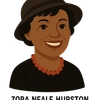
Harlem in the 1920s wasn't just busy; it was bursting with creativity. We called it the Harlem Renaissance, which means a 'rebirth' of art and learning. It felt like everyone I met was a painter, a musician, a writer, or a thinker with big ideas. I would spend my days writing poems about the lives of the people I saw, trying to capture their strength, their struggles, and their joy. At night, the neighborhood came alive with a new kind of music called jazz. I would go to clubs like the Cotton Club to hear amazing musicians like Duke Ellington play the piano. His music didn't just follow the rules; it danced and leaped and told stories without a single word. It was the heartbeat of Harlem. My friends were creating incredible things, too. I’d visit the studio of Aaron Douglas, a painter who used bold shapes and colors to tell the story of our journey from Africa to America. His paintings were powerful and made you feel the history in your bones. Then there was my brilliant friend, Zora Neale Hurston. She traveled through the South collecting folk tales and stories, and she wrote novels that captured the way real people spoke and lived. We would all get together, share our work, and talk for hours about our dreams. We weren't just making art for ourselves. We were making it for our people, to show the world the beauty and richness of our culture. We were celebrating who we were and telling our own stories, in our own voices, for the very first time. It was a time of incredible friendship and collaboration, as if we were all instruments in one grand orchestra, creating a new and beautiful song for the world to hear.
My Harlem Renaissance
Hello there. My name is Langston Hughes, and I am a poet. I want to tell you about a time and a place that felt like magic. It was the 1920s, and I had just arrived in a neighborhood in New York City called Harlem. Stepping off the train felt like stepping into a brand-new world. All around me, there was a special kind of energy, a buzz of excitement that you could almost touch. You see, I wasn't the only one who had traveled a long way to get there. My family, and thousands of other African American families, were part of what people called the Great Migration. We moved from the southern parts of the country to the big cities in the North, searching for better jobs and a life free from the unfair rules that held us back. For us, Harlem was more than just a place to live; it was a promise. The sounds of the city were a song—the rumble of the subway below, the chatter of people on the sidewalks, and the faint sound of music drifting from open windows. It was a symphony of hope. I saw families greeting each other, children playing in the streets, and artists sketching in their notebooks. This wasn't just a neighborhood; it was a capital of Black America, a place where our culture could blossom. The feeling was electric, and I couldn't wait to add my own voice, my own poems, to the beautiful noise.
Harlem in the 1920s wasn't just busy; it was bursting with creativity. We called it the Harlem Renaissance, which means a 'rebirth' of art and learning. It felt like everyone I met was a painter, a musician, a writer, or a thinker with big ideas. I would spend my days writing poems about the lives of the people I saw, trying to capture their strength, their struggles, and their joy. At night, the neighborhood came alive with a new kind of music called jazz. I would go to clubs like the Cotton Club to hear amazing musicians like Duke Ellington play the piano. His music didn't just follow the rules; it danced and leaped and told stories without a single word. It was the heartbeat of Harlem. My friends were creating incredible things, too. I’d visit the studio of Aaron Douglas, a painter who used bold shapes and colors to tell the story of our journey from Africa to America. His paintings were powerful and made you feel the history in your bones. Then there was my brilliant friend, Zora Neale Hurston. She traveled through the South collecting folk tales and stories, and she wrote novels that captured the way real people spoke and lived. We would all get together, share our work, and talk for hours about our dreams. We weren't just making art for ourselves. We were making it for our people, to show the world the beauty and richness of our culture. We were celebrating who we were and telling our own stories, in our own voices, for the very first time. It was a time of incredible friendship and collaboration, as if we were all instruments in one grand orchestra, creating a new and beautiful song for the world to hear.
A Dream That Keeps Singing
Looking back, that time in Harlem was so much more than just a collection of great songs, paintings, and poems. It was a turning point. For the first time on a grand scale, we, as African Americans, were defining ourselves. We were showing everyone that our lives were worthy of art, that our history was important, and that our voices deserved to be heard. The Harlem Renaissance gave us a new confidence and a deep sense of pride in our heritage. It was like a cultural declaration of independence. The work we created became a beacon of hope and inspiration for the generations that followed, fueling the fight for civil rights and equality. The dream we built in Harlem never faded. It continues to sing in the books, music, and art that still inspire people today, reminding everyone that creativity has the power to change minds, open hearts, and build a better world.
Wow facts
About
An intellectual and cultural revival of African American music, dance, art, fashion, literature, theater, and politics centered in Harlem, Manhattan, New York City, that began in the 1910s and continued into the mid-1930s.
Take a Quiz
Question 1 of 5
In the story, Langston Hughes calls Harlem 'a capital of Black America.' What does he mean by this?
Explore next



Want to do even more?
Go beyond exploring. Unlock tools that turn every story into real learning.

Storypie Plus for families
Full stories, quizzes, and printables. Nights and car rides, sorted.
- Unlimited audio stories
- Create Mode: your child stars in the story
- Offline downloads
- Printable worksheets & coloring pages

Why Storypie for Schools
Students engaged. Prep in seconds. Evenings back to you.
- Worksheets & Quizzes
- Classroom Management
- Formative Assessment
- Custom Curriculum & Lesson Plans
- 27 Languages

Why Storypie for Homeschool
Curriculum done. They'll ask for more. Hours back in your day.
- Worksheet Generator
- First-Person Audio Stories
- Built-in Comprehension Quizzes
- Custom Curriculum & Lesson Plans
- Print & Go Activities