English

Harlem Renaissance
An intellectual and cultural revival of African American music, dance, art, fashion, literature, theater…
Reads at Grades 6–8 Listens at Grades 4–8
Print & create
Answer keys·No prep·Free with an account
28 worksheets · answer keys · full story · quiz · Ages 10-12 · CEFR B2
Plus adds 244,000+ more stories in 27 languages, audio for every one, and printables for all of them.
Just want Harlem Renaissance?
My name is Langston Hughes, and I am a poet. But before the world knew my name, I was just a young man with a suitcase full of notebooks and a heart full of dreams. I arrived in New York City in the early 1920s, a time of great change. I wasn't alone in my journey. My family's story was part of a much larger one called the Great Migration. From the early 1900s, millions of Black families like mine were leaving the harshness and prejudice of the rural South, seeking a new life in the industrial cities of the North. For us, the ultimate destination, the brightest beacon of hope, was a neighborhood in New York City called Harlem. When I first stepped off the train, the energy of Harlem hit me like a wave. The streets were alive, buzzing with a new kind of confidence. It was more than just a place on a map; it was an idea. It was a place where Black people were not just surviving, but thriving. We were building our own businesses, running our own newspapers, and creating a community that felt safe and strong. For the first time, in a big way, we had a place that was truly ours. This wasn't just a neighborhood; it was the capital of Black America, a place where our dreams, long deferred, felt like they could finally take flight. I had come to study at Columbia University, but I soon realized my real education would take place on the vibrant streets of Harlem.
It wasn't long before that energy began to express itself in a beautiful and powerful way. We called it a Renaissance, a rebirth. All around me, there was an explosion of creativity. You could hear it spilling out of the doors of clubs like the Cotton Club and the Savoy Ballroom. The air was filled with a new sound called jazz, a music born from our joy and our pain. I would listen for hours to the brilliant piano of Duke Ellington, his music telling stories without a single word. It was the heartbeat of our community. But the art wasn't just in the music. I saw it in the paintings of my friend Aaron Douglas. He used bold shapes and colors to paint murals that told our history, from our ancestral homes in Africa to our struggles and triumphs in America. His art was a declaration of our strength and resilience. And then there were the writers. I was lucky to know incredible storytellers like Zora Neale Hurston. She traveled through the South, listening to the stories of everyday people and writing them down in their own voices, preserving our folklore and our unique way of speaking. For my part, I tried to do the same with my poetry. I didn't want to write in a stuffy, old-fashioned style. I wanted my poems to have the rhythm of jazz and the soul of the blues. I wrote about the people I saw every day: the cooks, the singers, the dreamers, the dancers. I wrote about our beauty, our struggles, and our unshakeable pride in who we were. During those years, from the early 1920s through the mid-1930s, we were creating a new identity. We were the “New Negro,” a term that meant we were defining ourselves, for ourselves. We were showing the world our talent, our intellect, and our soul, and it was a magnificent thing to be a part of.
Langston Hughes and the Harlem Renaissance
My name is Langston Hughes, and I am a poet. But before the world knew my name, I was just a young man with a suitcase full of notebooks and a heart full of dreams. I arrived in New York City in the early 1920s, a time of great change. I wasn't alone in my journey. My family's story was part of a much larger one called the Great Migration. From the early 1900s, millions of Black families like mine were leaving the harshness and prejudice of the rural South, seeking a new life in the industrial cities of the North. For us, the ultimate destination, the brightest beacon of hope, was a neighborhood in New York City called Harlem. When I first stepped off the train, the energy of Harlem hit me like a wave. The streets were alive, buzzing with a new kind of confidence. It was more than just a place on a map; it was an idea. It was a place where Black people were not just surviving, but thriving. We were building our own businesses, running our own newspapers, and creating a community that felt safe and strong. For the first time, in a big way, we had a place that was truly ours. This wasn't just a neighborhood; it was the capital of Black America, a place where our dreams, long deferred, felt like they could finally take flight. I had come to study at Columbia University, but I soon realized my real education would take place on the vibrant streets of Harlem.
It wasn't long before that energy began to express itself in a beautiful and powerful way. We called it a Renaissance, a rebirth. All around me, there was an explosion of creativity. You could hear it spilling out of the doors of clubs like the Cotton Club and the Savoy Ballroom. The air was filled with a new sound called jazz, a music born from our joy and our pain. I would listen for hours to the brilliant piano of Duke Ellington, his music telling stories without a single word. It was the heartbeat of our community. But the art wasn't just in the music. I saw it in the paintings of my friend Aaron Douglas. He used bold shapes and colors to paint murals that told our history, from our ancestral homes in Africa to our struggles and triumphs in America. His art was a declaration of our strength and resilience. And then there were the writers. I was lucky to know incredible storytellers like Zora Neale Hurston. She traveled through the South, listening to the stories of everyday people and writing them down in their own voices, preserving our folklore and our unique way of speaking. For my part, I tried to do the same with my poetry. I didn't want to write in a stuffy, old-fashioned style. I wanted my poems to have the rhythm of jazz and the soul of the blues. I wrote about the people I saw every day: the cooks, the singers, the dreamers, the dancers. I wrote about our beauty, our struggles, and our unshakeable pride in who we were. During those years, from the early 1920s through the mid-1930s, we were creating a new identity. We were the “New Negro,” a term that meant we were defining ourselves, for ourselves. We were showing the world our talent, our intellect, and our soul, and it was a magnificent thing to be a part of.
Like all golden ages, that intense period of prosperity couldn't last forever. The carefree energy of the 1920s came to a sudden halt with the great stock market crash on October 29th, 1929. This event triggered the Great Depression, a time of severe economic hardship that spread across the entire country, and Harlem was hit very hard. The money that had supported many artists and theaters began to disappear. The party, it seemed, was over. But the music never truly stopped. While the economic boom faded, the cultural legacy of the Harlem Renaissance was permanent. We had proven something to the world and, more importantly, to ourselves. We had created a body of work—in music, art, and literature—that was undeniably brilliant and undeniably American. Our voices, once silenced, now echoed across the nation and the world. The movement I was so proud to be a part of opened doors for generations of Black artists, thinkers, and leaders who came after us. We had held a mirror up to our community and reflected its beauty and strength. That legacy of pride, creativity, and self-expression is the true gift of the Harlem Renaissance, a song that continues to play on.
Wow facts
About
An intellectual and cultural revival of African American music, dance, art, fashion, literature, theater, and politics centered in Harlem, Manhattan, New York City, that began in the 1910s and continued into the mid-1930s.
Take a Quiz
Question 1 of 5
In your own words, retell the main events of the story Langston Hughes shares about the Harlem Renaissance.
Explore next






Want to do even more?
Go beyond exploring. Unlock tools that turn every story into real learning.

Storypie Plus for families
Full stories, quizzes, and printables. Nights and car rides, sorted.
- Unlimited audio stories
- Create Mode: your child stars in the story
- Offline downloads
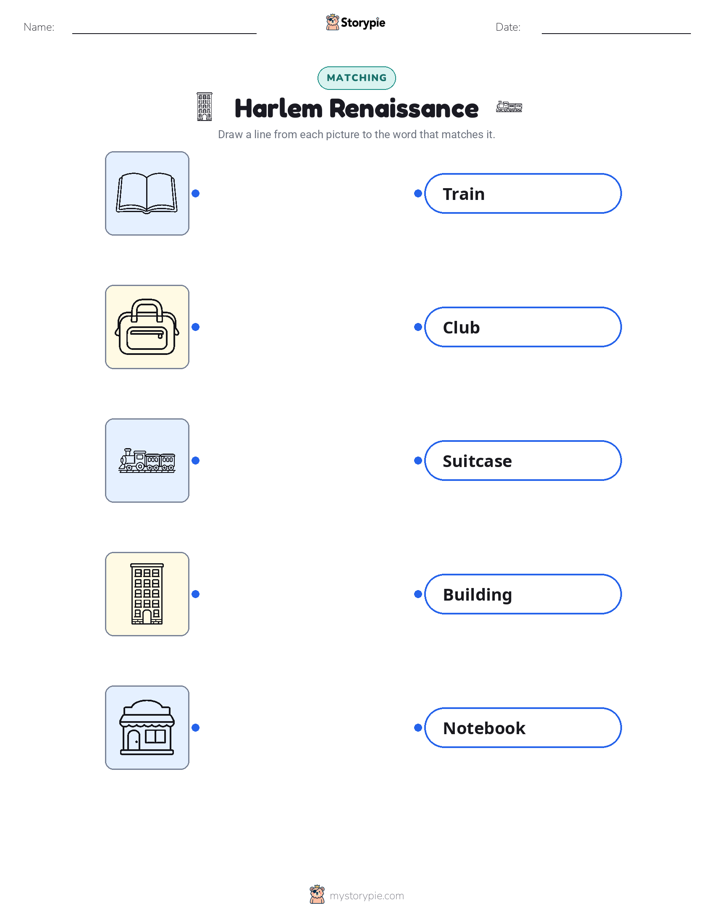
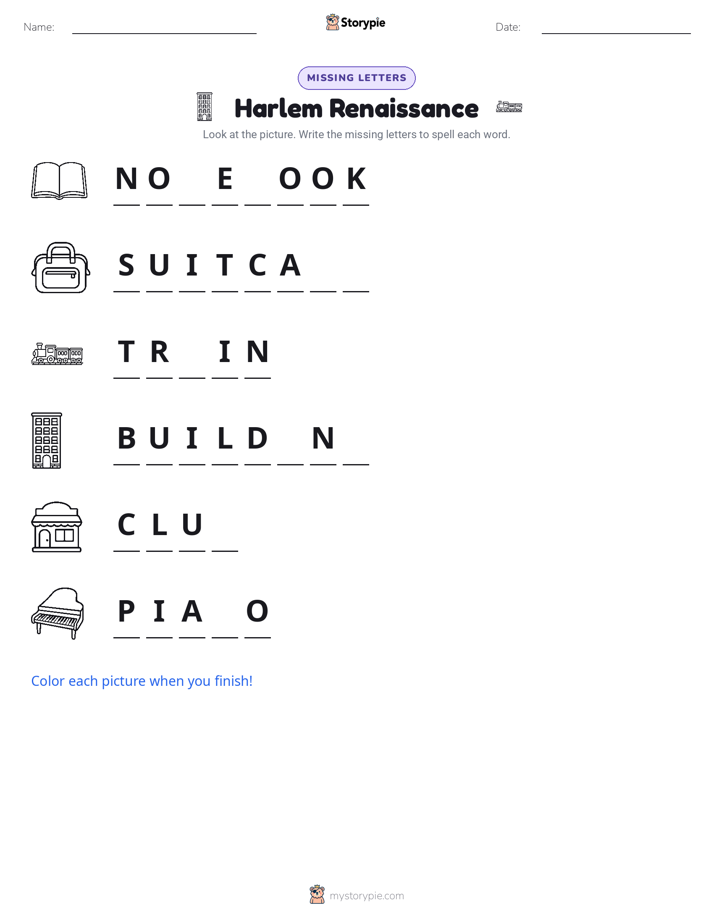
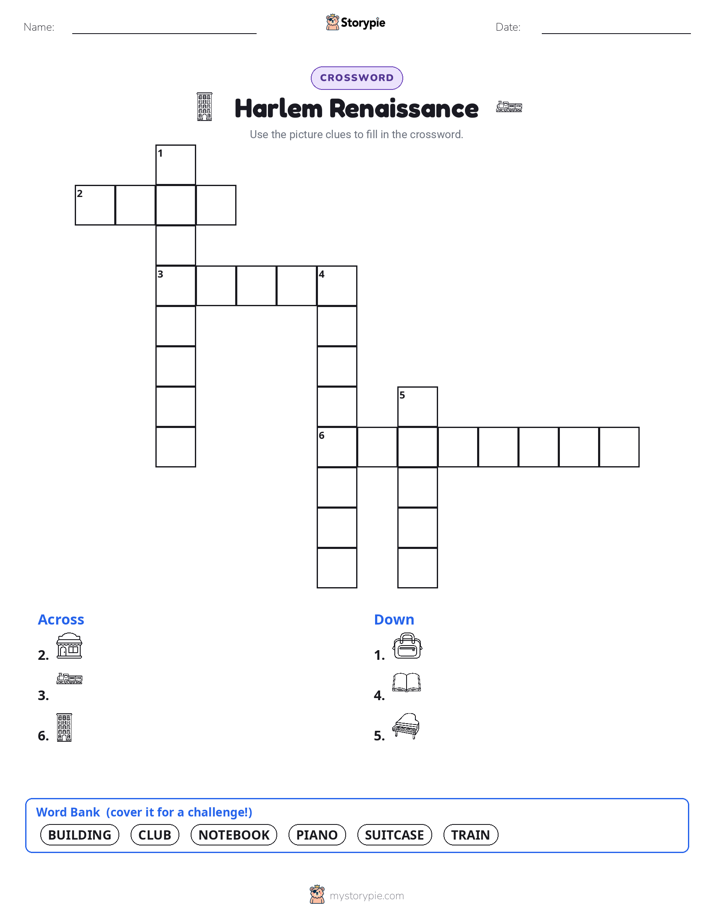
- Printable worksheets & coloring pages

Why Storypie for Schools
Students engaged. Prep in seconds. Evenings back to you.
- Worksheets & Quizzes
- Classroom Management
- Formative Assessment
- Custom Curriculum & Lesson Plans
- 27 Languages

Why Storypie for Homeschool
Curriculum done. They'll ask for more. Hours back in your day.
- Worksheet Generator
- First-Person Audio Stories
- Built-in Comprehension Quizzes
- Custom Curriculum & Lesson Plans
- Print & Go Activities