English

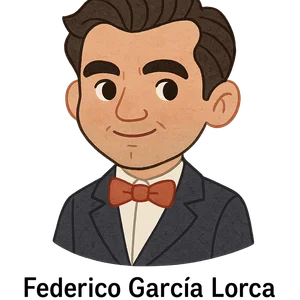
Federico García Lorca
A celebrated Spanish poet, playwright, and theatre director…
Reads at Grades 6–8 Listens at Grades 4–8
Print & create
Answer keys·No prep·Free with an account
28 worksheets · answer keys · full story · quiz · Ages 10-12 · CEFR B2
Plus adds 279,000+ more stories in 27 languages, audio for every one, and printables for all of them.
Just want Federico García Lorca?
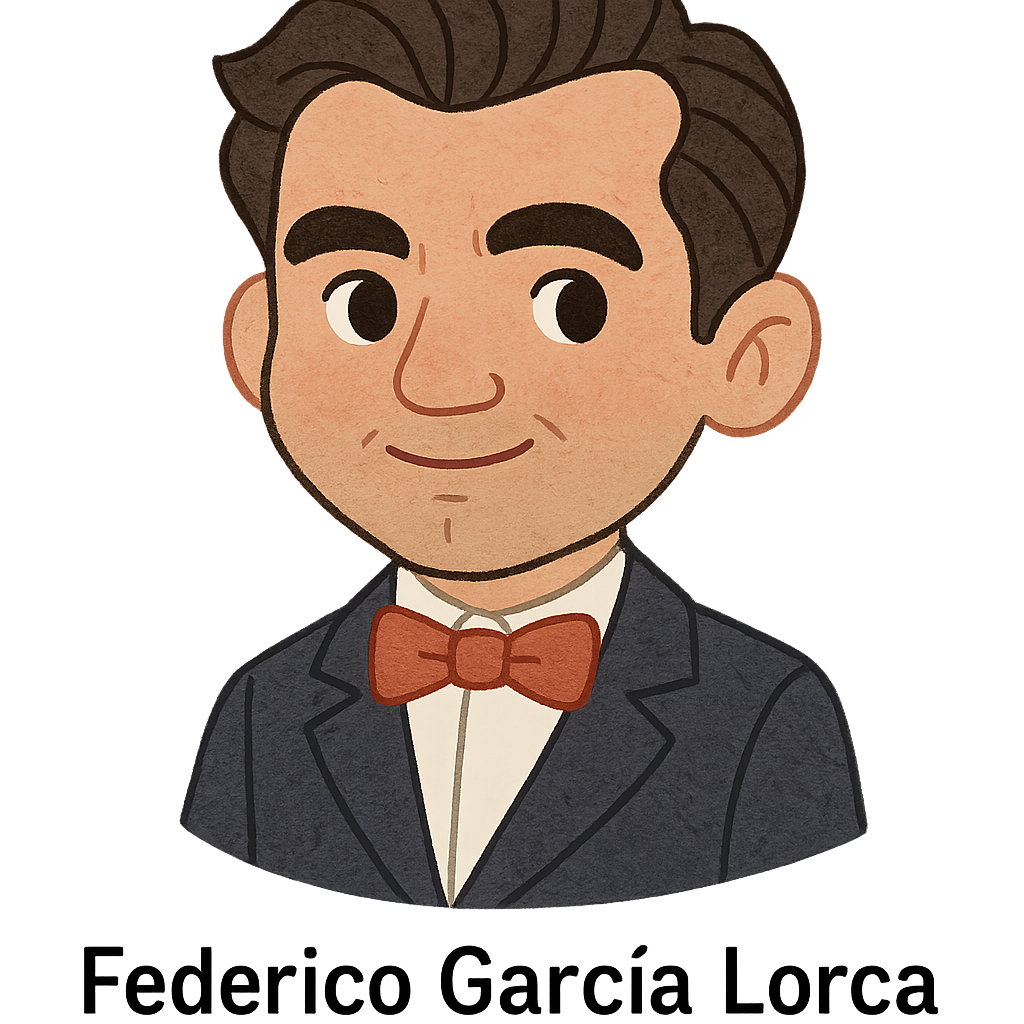
Hello, my name is Federico García Lorca, and I am a poet and playwright from the beautiful country of Spain. My story begins in a small town called Fuente Vaqueros, near the city of Granada in a region known as Andalusia. I was born there on June 5th, 1898, into a world filled with art and imagination. The air in Andalusia carried the scent of orange blossoms, and the nights were often filled with the passionate sounds of flamenco music. My mother was a wonderful storyteller, and she filled my head with folk tales and songs. This magical environment was the soil in which my love for music and poetry grew. From a very young age, I knew I wanted to capture the beauty and emotion of the world around me with words.
In 1919, when I was old enough for university, I moved to the bustling capital city of Madrid. It was a big change from my quiet town, but it was also incredibly exciting. I lived at a special student residence called the Residencia de Estudiantes, which was more than just a place to live; it was a vibrant hub of creativity and new ideas. It was there that I met some of the people who would become my closest friends and fellow artists. I spent countless hours talking and dreaming with the brilliant painter Salvador Dalí and the future filmmaker Luis Buñuel. Together, we were part of a group of artists and writers known as the 'Generation of '27.' We were young and full of energy, and we shared a powerful dream: to create new, modern forms of art that would express the true spirit of Spain.
Federico García Lorca: A Poet's Voice
Hello, my name is Federico García Lorca, and I am a poet and playwright from the beautiful country of Spain. My story begins in a small town called Fuente Vaqueros, near the city of Granada in a region known as Andalusia. I was born there on June 5th, 1898, into a world filled with art and imagination. The air in Andalusia carried the scent of orange blossoms, and the nights were often filled with the passionate sounds of flamenco music. My mother was a wonderful storyteller, and she filled my head with folk tales and songs. This magical environment was the soil in which my love for music and poetry grew. From a very young age, I knew I wanted to capture the beauty and emotion of the world around me with words.
In 1919, when I was old enough for university, I moved to the bustling capital city of Madrid. It was a big change from my quiet town, but it was also incredibly exciting. I lived at a special student residence called the Residencia de Estudiantes, which was more than just a place to live; it was a vibrant hub of creativity and new ideas. It was there that I met some of the people who would become my closest friends and fellow artists. I spent countless hours talking and dreaming with the brilliant painter Salvador Dalí and the future filmmaker Luis Buñuel. Together, we were part of a group of artists and writers known as the 'Generation of '27.' We were young and full of energy, and we shared a powerful dream: to create new, modern forms of art that would express the true spirit of Spain.
As the years went on, my poetry began to find an audience. In 1928, I published a collection of poems called 'Romancero gitano,' or 'Gypsy Ballads.' The book was a huge success, and soon people all over Spain were reading my words. My poems celebrated the culture and spirit of the Andalusian people, especially the Romani, or gypsy, community. The following year, in 1929, I embarked on a journey to a completely different world: New York City. I went to study at Columbia University, but I found myself overwhelmed by the massive, noisy city with its towering skyscrapers. It was a place of great energy but also great loneliness. This intense experience inspired me to write a very different kind of book, 'Poet in New York,' which captured my feelings about modern life in the big city.
After my time in America, I returned to Spain with a new sense of purpose. I believed deeply that art, especially theatre, should be for everyone, not just for wealthy people who lived in big cities. This belief led to one of my proudest achievements. In 1932, I helped create a traveling theatre company called 'La Barraca.' We were a group of university students who drove a truck to small, remote villages all across the Spanish countryside. We would set up our simple stage in the village square and perform classic Spanish plays for free. The joy on the faces of people who had never seen a play before was my greatest reward. It was during this period of my life that I also wrote my own most famous plays, including the powerful tragedies 'Blood Wedding' and 'Yerma.'
But my beloved country was heading toward a difficult time. In July 1936, a terrible conflict known as the Spanish Civil War began. The war divided friends, families, and the entire nation. My art and my ideas were about freedom, celebrating the poor and forgotten, and questioning old traditions. These were not beliefs that everyone shared, and in the tense atmosphere of the war, my views put me in danger. In August of that year, I was back in my home city of Granada, hoping to find safety. Instead, I was arrested by Nationalist forces, the group that opposed the government and disagreed with my beliefs about art and society.
My life ended tragically during that dark time in Spain's history. I lived to be 38 years old. Although my voice was silenced far too soon, my words lived on. Today, my poems and plays are translated into many languages and are shared in schools and performed on stages all around the globe. I am remembered for the music and passion in my writing and for my belief that art has the power to give a voice to the forgotten. My story shows that even when faced with darkness, the light of creativity and the human spirit can never truly be extinguished.
Wow facts
About
A celebrated Spanish poet, playwright, and theatre director, he was a leading member of the Generation of '27 and is considered one of Spain's most important literary figures of the 20th century.
Take a Quiz
Question 1 of 5
What was the main goal of the 'La Barraca' theatre company which I helped create in 1932?
Explore next



Want to do even more?
Go beyond exploring. Unlock tools that turn every story into real learning.

Storypie Plus for families
Full stories, quizzes, and printables. Nights and car rides, sorted.
- Unlimited audio stories
- Create Mode: your child stars in the story
- Offline downloads
- Printable worksheets & coloring pages

Why Storypie for Schools
Students engaged. Prep in seconds. Evenings back to you.
- Worksheets & Quizzes
- Classroom Management
- Formative Assessment
- Custom Curriculum & Lesson Plans
- 27 Languages

Why Storypie for Homeschool
Curriculum done. They'll ask for more. Hours back in your day.
- Worksheet Generator
- First-Person Audio Stories
- Built-in Comprehension Quizzes
- Custom Curriculum & Lesson Plans
- Print & Go Activities