English

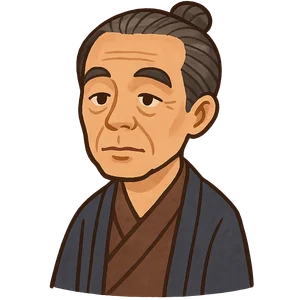
Fukuzawa Yukichi
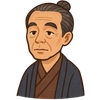
Fukuzawa Yukichi was a Japanese author, educator, and publisher who founded Keio University…
Reads at Grades 3–5 Listens at Grades 1–5
Print & create
Answer keys·No prep·Free with an account
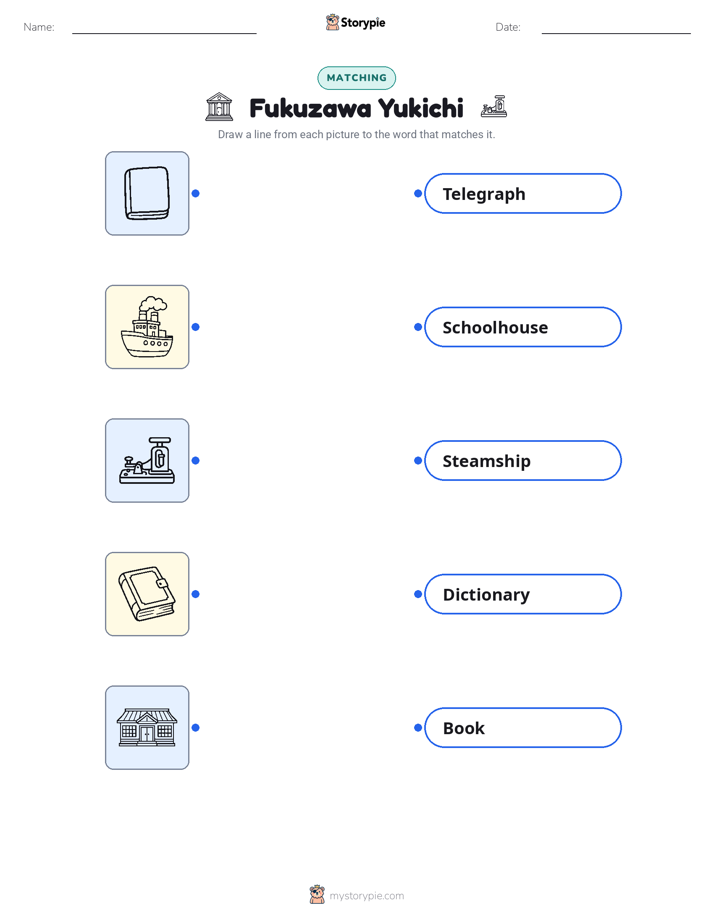
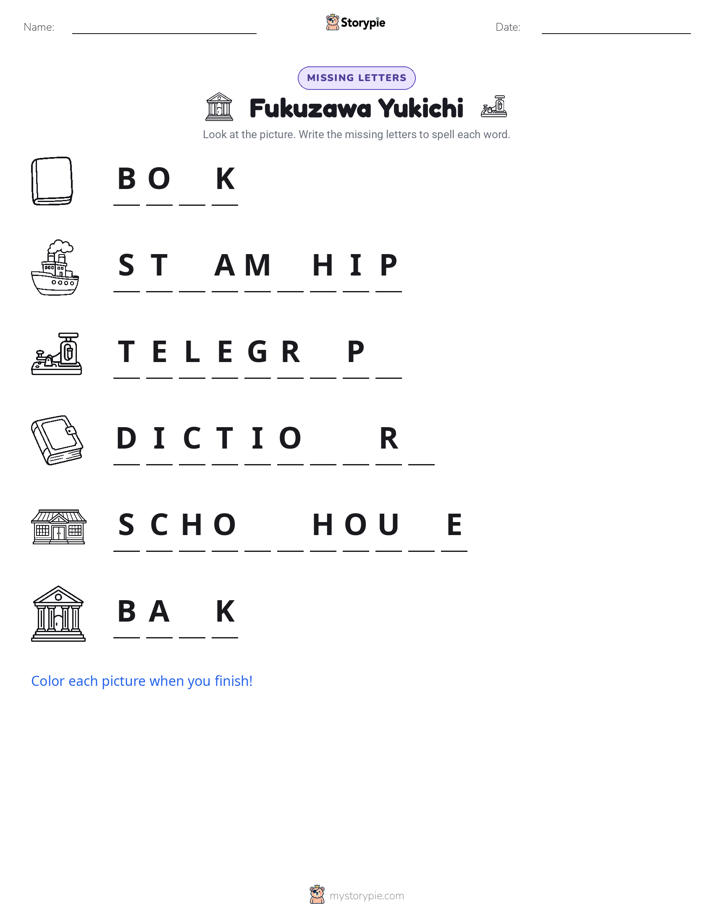
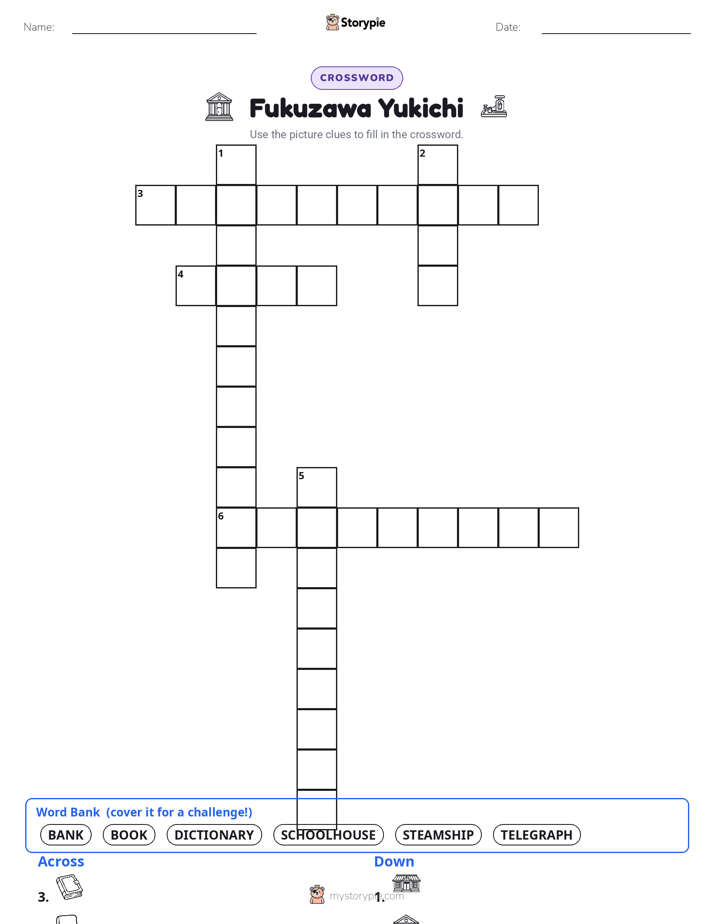
28 worksheets · answer keys · full story · quiz · Ages 8-10 · CEFR B1
Plus adds 164,000+ more stories in 27 languages, audio for every one, and printables for all of them.
Just want Fukuzawa Yukichi?
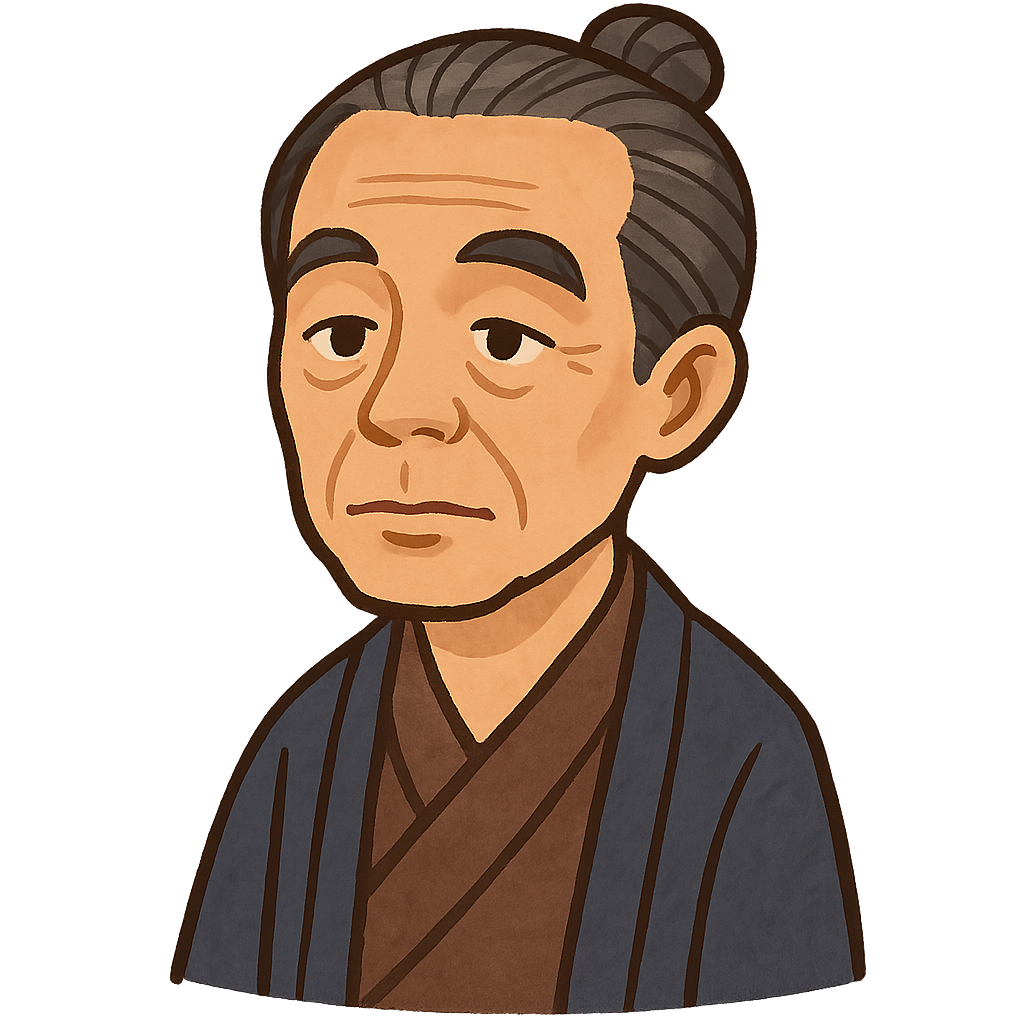
Hello! My name is Fukuzawa Yukichi, and I helped build a new future for my country, Japan. I was born on January 10th, 1835, in a city called Osaka. My family were samurai, who were skilled warriors, but my father was a scholar who loved books more than swords. When I was just a little boy, my father passed away, and my family moved back to our hometown. Life was hard, and because we were a low-ranking samurai family, I was not expected to do much more than become a local official. But I was curious about the world and, like my father, I loved to learn more than anything else.
When I was 19 years old, in 1854, I traveled to the city of Nagasaki to study Dutch. At that time, Japan was mostly closed off from the rest of the world, and Dutch was the only European language we were allowed to learn. It was how we learned about Western medicine and science. A few years later, in 1858, my clan asked me to go to our capital city, Edo—which you now know as Tokyo—to start a school to teach Dutch to other samurai. But when I visited the port of Yokohama, I noticed something surprising. Most of the foreign traders there were speaking English, not Dutch! I knew right away that I had to learn English to truly understand the world. It was a difficult language, but I studied very hard. The small school I started in 1858 would one day grow into the famous Keio University.
In 1860, I got the chance of a lifetime! I was invited to join Japan's very first diplomatic mission to the United States, and I worked as a translator on the journey. I was so amazed by everything I saw in San Francisco. I saw thick, soft carpets that covered entire floors and learned about ice being delivered right to hotels to keep things cold. I even saw men and women dancing together at a party, which was very different from how things were done back home! I bought an English-Chinese dictionary there and brought it back to Japan to help me study. Just two years later, in 1862, I traveled again, this time all over Europe. These trips opened my eyes to how different the world was and filled my head with new ideas for Japan.
Fukuzawa Yukichi
Hello! My name is Fukuzawa Yukichi, and I helped build a new future for my country, Japan. I was born on January 10th, 1835, in a city called Osaka. My family were samurai, who were skilled warriors, but my father was a scholar who loved books more than swords. When I was just a little boy, my father passed away, and my family moved back to our hometown. Life was hard, and because we were a low-ranking samurai family, I was not expected to do much more than become a local official. But I was curious about the world and, like my father, I loved to learn more than anything else.
When I was 19 years old, in 1854, I traveled to the city of Nagasaki to study Dutch. At that time, Japan was mostly closed off from the rest of the world, and Dutch was the only European language we were allowed to learn. It was how we learned about Western medicine and science. A few years later, in 1858, my clan asked me to go to our capital city, Edo—which you now know as Tokyo—to start a school to teach Dutch to other samurai. But when I visited the port of Yokohama, I noticed something surprising. Most of the foreign traders there were speaking English, not Dutch! I knew right away that I had to learn English to truly understand the world. It was a difficult language, but I studied very hard. The small school I started in 1858 would one day grow into the famous Keio University.
In 1860, I got the chance of a lifetime! I was invited to join Japan's very first diplomatic mission to the United States, and I worked as a translator on the journey. I was so amazed by everything I saw in San Francisco. I saw thick, soft carpets that covered entire floors and learned about ice being delivered right to hotels to keep things cold. I even saw men and women dancing together at a party, which was very different from how things were done back home! I bought an English-Chinese dictionary there and brought it back to Japan to help me study. Just two years later, in 1862, I traveled again, this time all over Europe. These trips opened my eyes to how different the world was and filled my head with new ideas for Japan.
I wanted to share everything I had learned with the people of Japan. So, I started writing books. In 1866, I published my first big hit, a book called 'Seiyō Jijō,' which means 'Things Western.' It explained Western hospitals, schools, and governments in a simple way so that everyone could understand them. People loved it! Later, starting in 1872, I wrote another very important series of essays called 'Gakumon no Susume,' or 'An Encouragement of Learning.' In it, I wrote my most famous words: 'It is said that heaven does not create one person above or below another.' I wanted everyone to understand that they were born equal and that through education, they could achieve anything they dreamed of.
During this time, Japan was changing fast. This period was called the Meiji Restoration. The old samurai government ended, and Japan began to modernize, adopting new technologies and ideas. Many people with my knowledge went to work for the new government, but I decided the best way I could help my country was as a teacher and a writer. I wanted to remain independent so I could speak freely about my ideas. In 1882, I started my own newspaper, the 'Jiji-Shinpō,' to share my thoughts about freedom, science, and how Japan could become a strong and modern nation. I believed that to have an independent country, you first needed to have independent people.
I lived to be 66 years old, and I spent my whole life encouraging learning and new ideas. Today, people remember me as one of the great thinkers who helped shape modern Japan. My school, Keio University, is still one of the best universities in the country, teaching new generations of students to be curious and independent. If you ever visit Japan and see a 10,000 yen bill, you'll see my face on it! It's a reminder that the most valuable thing you can have is knowledge, and that learning can change not just your own life, but the world.
Wow facts
About
Fukuzawa Yukichi was a Japanese author, educator, and publisher who founded Keio University, the newspaper Jiji-Shinpō, and is regarded as one of the key figures in the modernization of Japan.
Take a Quiz
Question 1 of 5
Why did Fukuzawa Yukichi decide he needed to learn English after visiting the port of Yokohama?
Explore next






Want to do even more?
Go beyond exploring. Unlock tools that turn every story into real learning.

Storypie Plus for families
Full stories, quizzes, and printables. Nights and car rides, sorted.
- Unlimited audio stories
- Create Mode: your child stars in the story
- Offline downloads
- Printable worksheets & coloring pages

Why Storypie for Schools
Students engaged. Prep in seconds. Evenings back to you.
- Worksheets & Quizzes
- Classroom Management
- Formative Assessment
- Custom Curriculum & Lesson Plans
- 27 Languages

Why Storypie for Homeschool
Curriculum done. They'll ask for more. Hours back in your day.
- Worksheet Generator
- First-Person Audio Stories
- Built-in Comprehension Quizzes
- Custom Curriculum & Lesson Plans
- Print & Go Activities