English

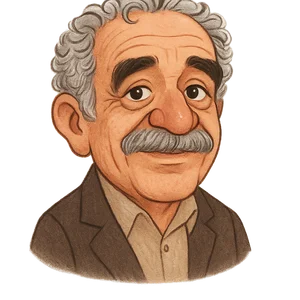
Gabriel García Márquez
Gabriel García Márquez was a Nobel Prize-winning Colombian novelist, short-story writer, and journalist…
Reads at Grades 6–8 Listens at Grades 4–8
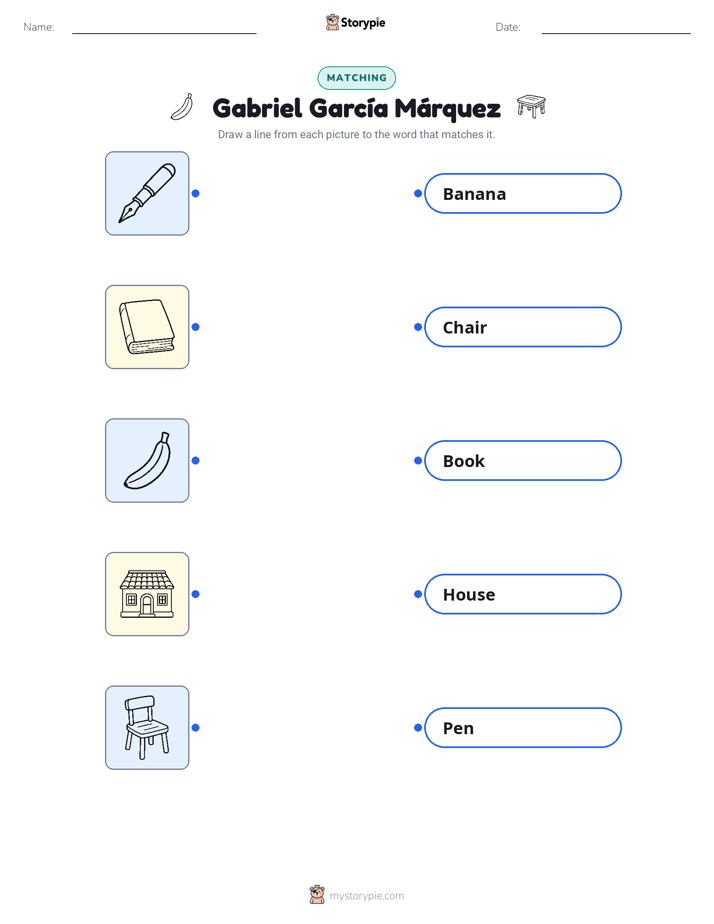
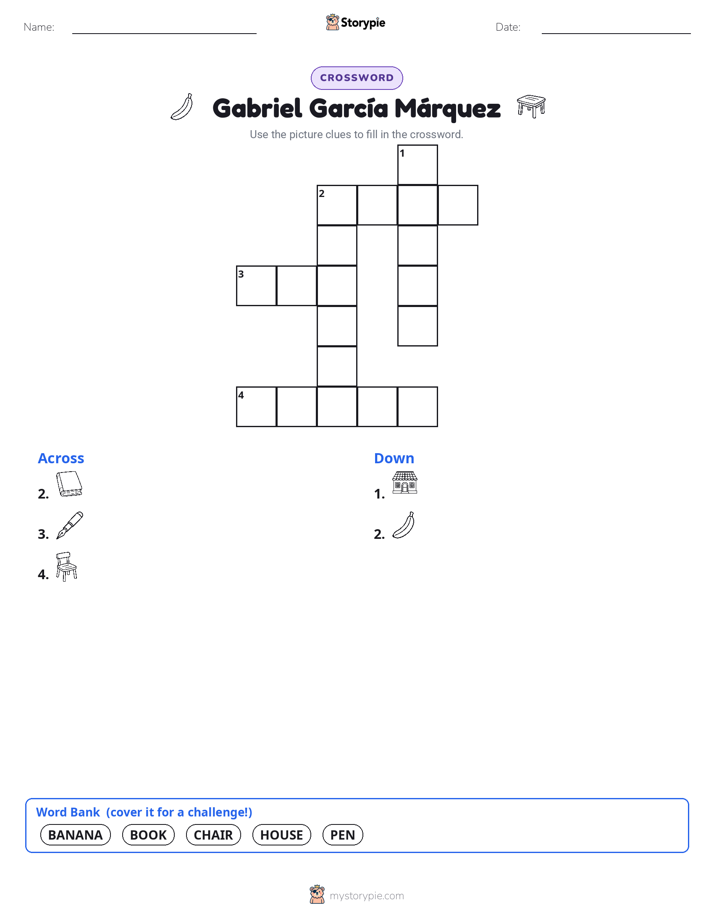
Print & create
Answer keys·No prep·Free with an account
28 worksheets · answer keys · full story · quiz · Ages 10-12 · CEFR B2
Plus adds 164,000+ more stories in 27 languages, audio for every one, and printables for all of them.
Just want Gabriel García Márquez?
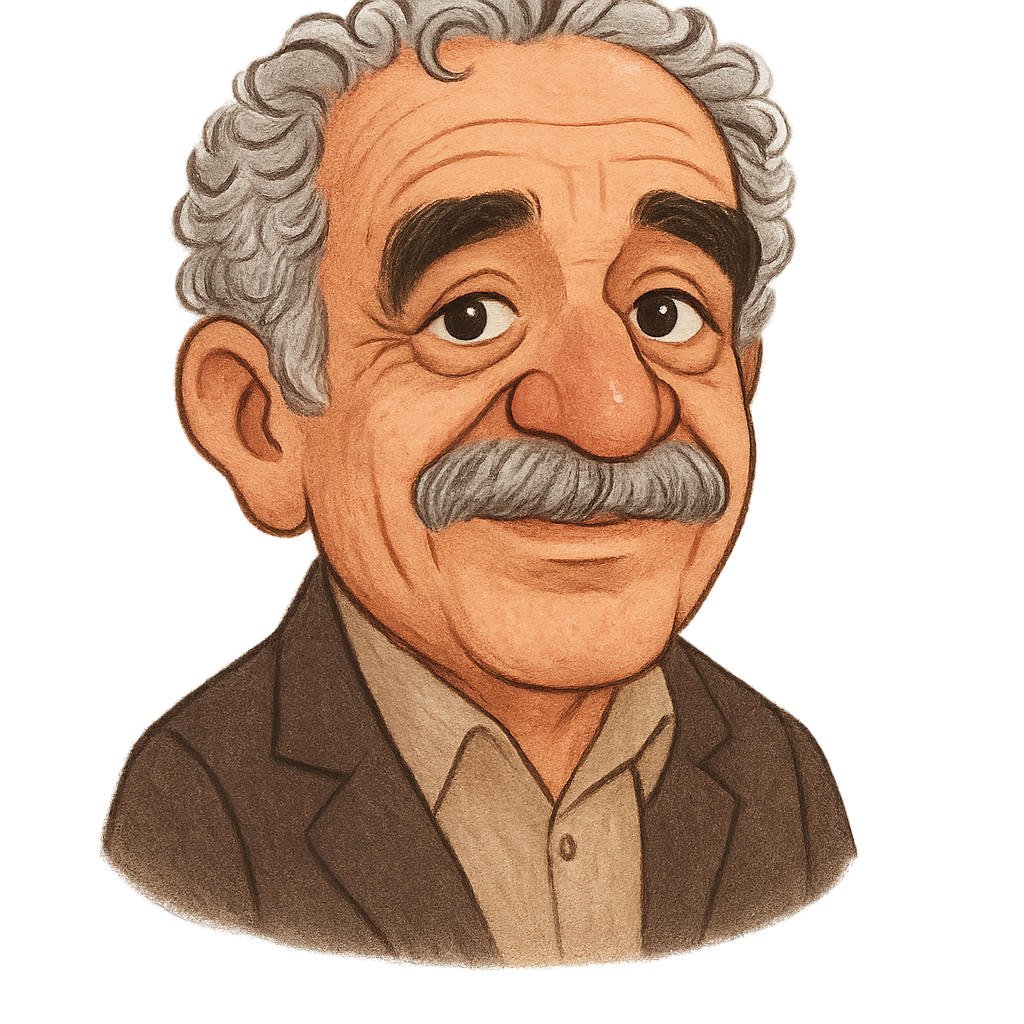
Hello. My name is Gabriel García Márquez, but you can call me Gabo, as my friends and family always did. I want to tell you the story of my life, which was as full of wonder as the books I wrote. I was born on March 6th, 1927, in a small, hot, and dusty town in Colombia called Aracataca. This little town, with its banana plantations and quiet streets, would later become the inspiration for the magical places in my novels. I didn't grow up with my parents; instead, I was raised by my loving grandparents. This was the greatest gift of my childhood, because their house was a universe of stories. My grandfather, Colonel Nicolás Ricardo Márquez Mejía, was a retired soldier and a wonderful realist. He told me true, incredible stories from his time in our country's civil wars. He taught me about history, honor, and the harsh realities of life. He was my connection to the real world.
My grandmother, Doña Tranquilina Iguarán, was the complete opposite. She was my connection to the magical world. Our house was filled with her tales of ghosts, spirits, and ancestors who whispered in the dark. She told these stories with a perfectly straight face, as if seeing a ghost was as normal as drinking a glass of water. For her, the line between the living and the dead, the possible and the impossible, was wonderfully blurry. Growing up listening to my grandfather's factual war histories and my grandmother's matter-of-fact ghost stories taught me a unique way of seeing the world. I learned that reality itself could be fantastical and that the most amazing things could be found in the fabric of everyday life. This blend of the real and the magical became the very foundation of my imagination and everything I would ever write.
Gabriel García Márquez: A Life of Magical Stories
Hello. My name is Gabriel García Márquez, but you can call me Gabo, as my friends and family always did. I want to tell you the story of my life, which was as full of wonder as the books I wrote. I was born on March 6th, 1927, in a small, hot, and dusty town in Colombia called Aracataca. This little town, with its banana plantations and quiet streets, would later become the inspiration for the magical places in my novels. I didn't grow up with my parents; instead, I was raised by my loving grandparents. This was the greatest gift of my childhood, because their house was a universe of stories. My grandfather, Colonel Nicolás Ricardo Márquez Mejía, was a retired soldier and a wonderful realist. He told me true, incredible stories from his time in our country's civil wars. He taught me about history, honor, and the harsh realities of life. He was my connection to the real world.
My grandmother, Doña Tranquilina Iguarán, was the complete opposite. She was my connection to the magical world. Our house was filled with her tales of ghosts, spirits, and ancestors who whispered in the dark. She told these stories with a perfectly straight face, as if seeing a ghost was as normal as drinking a glass of water. For her, the line between the living and the dead, the possible and the impossible, was wonderfully blurry. Growing up listening to my grandfather's factual war histories and my grandmother's matter-of-fact ghost stories taught me a unique way of seeing the world. I learned that reality itself could be fantastical and that the most amazing things could be found in the fabric of everyday life. This blend of the real and the magical became the very foundation of my imagination and everything I would ever write.
When I was old enough, I moved to the capital city, Bogotá, to study law at the university, beginning around 1947. My parents wanted me to have a respectable career, but my heart wasn't in law books. I found myself drawn to cafes where writers and artists gathered, and I spent more time writing stories than studying legal codes. I soon realized that my true calling was not to argue cases in a courtroom but to tell the stories of my people and my continent. I left my law studies and began a career as a journalist, writing for newspapers like El Espectador. This job became my true education. As a reporter, I traveled, listened carefully to people from all walks of life, and learned to observe the world with a writer's eye. I saw how the most extraordinary events could be hidden in the simplest lives. In 1955, I published my first novella, Leaf Storm. It was a small book, but it was incredibly important to me because it was the first time I wrote about a fictional town I called Macondo, a place deeply inspired by my childhood home of Aracataca. A few years later, in 1958, I married Mercedes Barcha. She was my greatest friend and supporter, and she stood by my side for the rest of my life, believing in my work even when I wasn't sure of it myself.
For many years, I worked as a journalist and wrote several books, but I carried a much larger story inside me, a story about Macondo and the family that lived there. The idea was always with me, but I couldn't figure out how to tell it. Then, one day in 1965, I was driving my family on a trip to Acapulco when the entire story came to me in a flash of inspiration. I saw the first sentence, the characters, and the ending all at once. It was so clear that I turned the car around, went home, and told Mercedes, "I am going to write my best book." For the next 18 months, I locked myself in my room and did nothing but write. It was a difficult time for our family, as we had little money. But Mercedes took care of everything. She managed our finances, cared for our children, and created a peaceful space where I could bring the world of Macondo to life. When I finally finished, the book was called One Hundred Years of Solitude. It was published in 1967, and it changed my life and the world of literature forever. The book tells the story of seven generations of the Buendía family in Macondo. In it, magical things happen—people fly, ghosts wander, and it rains flowers—but it is all told in the same straightforward, serious tone my grandmother used for her stories. People called this style "magical realism," and it became what I am known for around the world.
My work continued to explore the world I knew, blending history, memory, and imagination. In 1982, I received the greatest honor a writer can achieve: the Nobel Prize in Literature. Standing in Stockholm to accept the award, I felt it was not just for me. I felt the prize was a recognition of all of Latin America. For centuries, our continent's history had been full of unbelievable events, struggles, and beauty that often seemed like fiction. I believed this award was a way of telling the world that our stories, our reality, mattered. It was a chance to share the richness of our culture with a global audience. Following the prize, I continued to write. In 1985, I published another of my most beloved novels, Love in the Time of Cholera, a beautiful story about patience and undying love. Through all my books, I tried to explore the themes that connect us all as human beings: the power of love, the loneliness of power, the importance of family, and the way memory shapes our lives.
I lived a long and wonderful life, filled with stories and love, for 87 years. My time came to an end in 2014, but the stories I told live on. People all over the world still read my books and journey to the magical town of Macondo, finding a piece of their own world in its pages. I hope my work reminds everyone that our lives are full of wonder and that the best stories are often found in that beautiful space where reality and imagination meet. Always remember to look for the magic in your own everyday life.
Wow facts
About
Gabriel García Márquez was a Nobel Prize-winning Colombian novelist, short-story writer, and journalist, celebrated as a master of magical realism for his novel 'One Hundred Years of Solitude'.
Take a Quiz
Question 1 of 5
Why did Gabriel García Márquez decide to become a journalist instead of continuing his law studies?
Explore next





Want to do even more?
Go beyond exploring. Unlock tools that turn every story into real learning.

Storypie Plus for families
Full stories, quizzes, and printables. Nights and car rides, sorted.
- Unlimited audio stories
- Create Mode: your child stars in the story
- Offline downloads
- Printable worksheets & coloring pages

Why Storypie for Schools
Students engaged. Prep in seconds. Evenings back to you.
- Worksheets & Quizzes
- Classroom Management
- Formative Assessment
- Custom Curriculum & Lesson Plans
- 27 Languages

Why Storypie for Homeschool
Curriculum done. They'll ask for more. Hours back in your day.
- Worksheet Generator
- First-Person Audio Stories
- Built-in Comprehension Quizzes
- Custom Curriculum & Lesson Plans
- Print & Go Activities