English

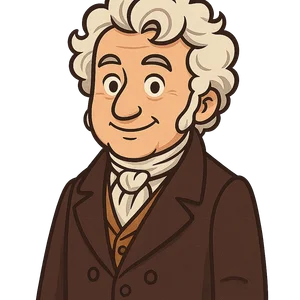
Georges Cuvier
French naturalist and zoologist, known as the "father of paleontology…
Reads at Grades 3–5 Listens at Grades 1–5
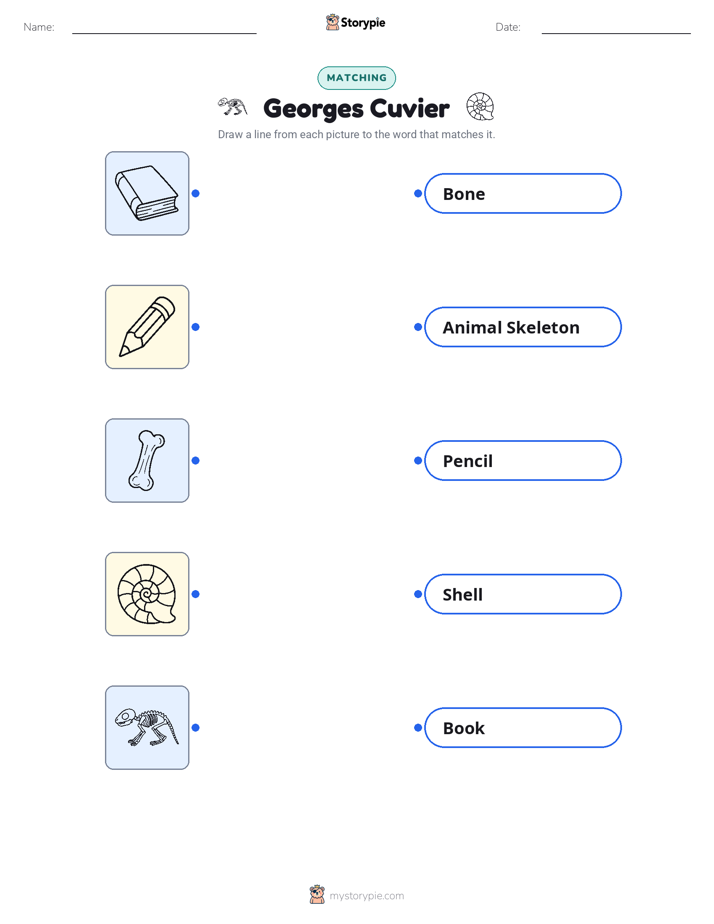
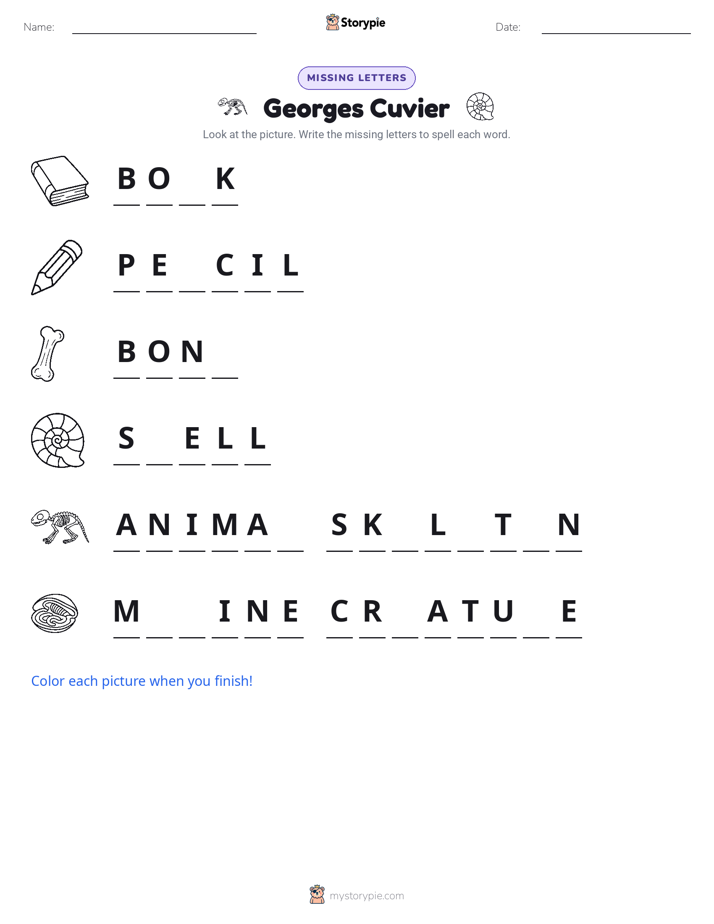
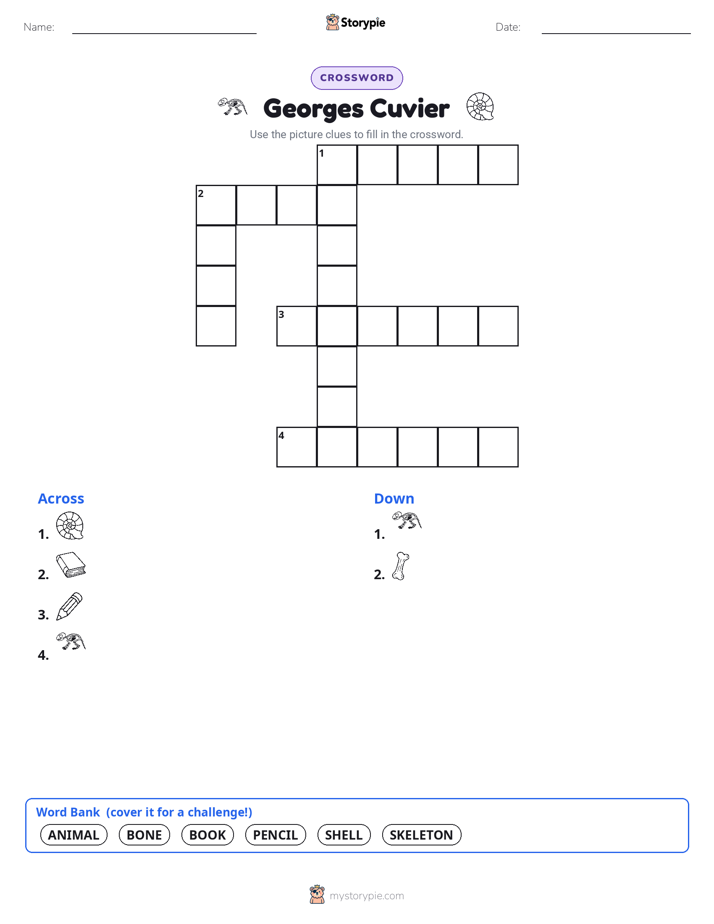
Print & create
Answer keys·No prep·Free with an account
28 worksheets · answer keys · full story · quiz · Ages 8-10 · CEFR B1
Plus adds 244,000+ more stories in 27 languages, audio for every one, and printables for all of them.
Just want Georges Cuvier?
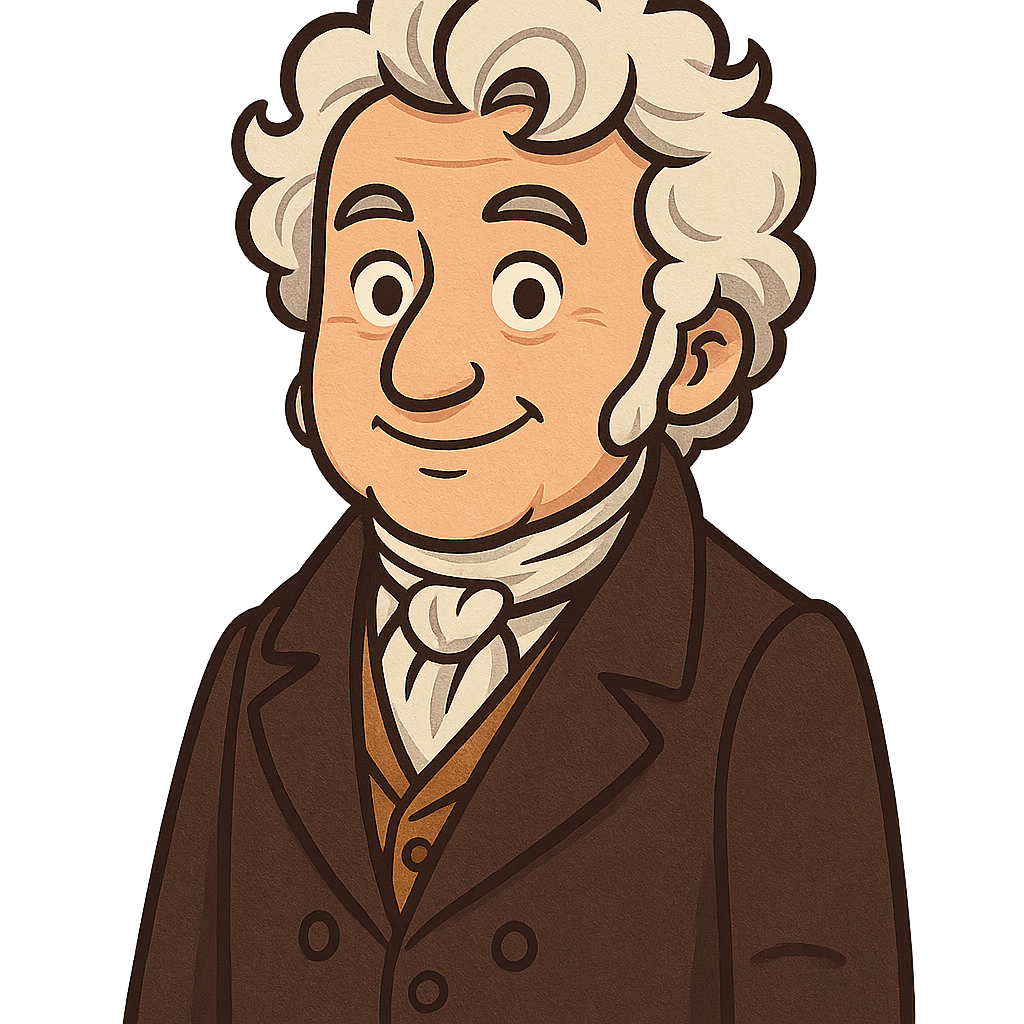
Hello! My name is Georges Cuvier. I would like to tell you the story of how I became a detective of ancient life. I was born on August 23rd, 1769, in a town called Montbéliard. Even as a little boy, I was fascinated by the natural world. I spent hours and hours drawing every animal I could find, from the tiniest insect to the birds in the sky. I filled countless notebooks with my drawings, trying to capture every detail of their bodies. This love for observing and comparing animals was the very beginning of my life's great adventure.
When I grew up, my passion for animals led me to the big city of Paris. In 1795, I got the most exciting job I could imagine: I became a professor at the National Museum of Natural History. This museum was like a giant treasure chest filled with skeletons and fossils from all over the world. My job was to study them. I developed a method called 'comparative anatomy.' It sounds complicated, but it just means I carefully compared the bones of different animals. I realized that every part of an animal's body is built for a special purpose, like a piece in a perfect puzzle. A sharp tooth meant the animal ate meat, while a flat tooth meant it ate plants. These clues helped me understand animals I had never even seen alive.
The museum had bones of enormous creatures that puzzled everyone. In 1796, I studied the skeleton of a giant animal from America that looked like an elephant. But when I compared its teeth and jaw to living elephants, I saw they were very different. This couldn't be an elephant! It was something else entirely, a creature that no longer existed on Earth. I called it a 'Mastodon.' This led me to a huge idea: extinction. At the time, most people believed that no animal could ever truly disappear. But I showed them proof that some species had lived long ago and then vanished forever. It meant that Earth's history was much older and more dramatic than anyone had guessed.
Georges Cuvier: Detective of Ancient Life
Hello! My name is Georges Cuvier. I would like to tell you the story of how I became a detective of ancient life. I was born on August 23rd, 1769, in a town called Montbéliard. Even as a little boy, I was fascinated by the natural world. I spent hours and hours drawing every animal I could find, from the tiniest insect to the birds in the sky. I filled countless notebooks with my drawings, trying to capture every detail of their bodies. This love for observing and comparing animals was the very beginning of my life's great adventure.
When I grew up, my passion for animals led me to the big city of Paris. In 1795, I got the most exciting job I could imagine: I became a professor at the National Museum of Natural History. This museum was like a giant treasure chest filled with skeletons and fossils from all over the world. My job was to study them. I developed a method called 'comparative anatomy.' It sounds complicated, but it just means I carefully compared the bones of different animals. I realized that every part of an animal's body is built for a special purpose, like a piece in a perfect puzzle. A sharp tooth meant the animal ate meat, while a flat tooth meant it ate plants. These clues helped me understand animals I had never even seen alive.
The museum had bones of enormous creatures that puzzled everyone. In 1796, I studied the skeleton of a giant animal from America that looked like an elephant. But when I compared its teeth and jaw to living elephants, I saw they were very different. This couldn't be an elephant! It was something else entirely, a creature that no longer existed on Earth. I called it a 'Mastodon.' This led me to a huge idea: extinction. At the time, most people believed that no animal could ever truly disappear. But I showed them proof that some species had lived long ago and then vanished forever. It meant that Earth's history was much older and more dramatic than anyone had guessed.
After that, I found evidence of all sorts of amazing, extinct animals. I studied the fossil of a giant sea lizard called a Mosasaurus and figured out it was a powerful ocean predator. In 1801, I was the first to identify a fossil of a flying reptile, which I named Pterodactylus. It had long wings made of skin, but it wasn't a bird. It was like discovering a whole lost world, piece by piece. My work helped create a brand-new science for studying ancient life: paleontology.
I spent my life putting together the puzzle of Earth's ancient history, showing that our planet has been home to many incredible creatures that have since disappeared. I lived to be 62 years old, and my work continued until I passed away in 1832. I am often called the 'father of paleontology.' The next time you visit a museum and stand before the giant skeleton of a dinosaur or a woolly mammoth, you can remember that the exciting adventure of discovering them began with a curious boy who loved to draw animals and compare their bones.
Wow facts
About
French naturalist and zoologist, known as the "father of paleontology," who established the reality of extinction and pioneered the field of comparative anatomy.
Take a Quiz
Question 1 of 5
In the story, I mention my method of 'comparative anatomy.' What does this method involve?
Explore next




Want to do even more?
Go beyond exploring. Unlock tools that turn every story into real learning.

Storypie Plus for families
Full stories, quizzes, and printables. Nights and car rides, sorted.
- Unlimited audio stories
- Create Mode: your child stars in the story
- Offline downloads
- Printable worksheets & coloring pages

Why Storypie for Schools
Students engaged. Prep in seconds. Evenings back to you.
- Worksheets & Quizzes
- Classroom Management
- Formative Assessment
- Custom Curriculum & Lesson Plans
- 27 Languages

Why Storypie for Homeschool
Curriculum done. They'll ask for more. Hours back in your day.
- Worksheet Generator
- First-Person Audio Stories
- Built-in Comprehension Quizzes
- Custom Curriculum & Lesson Plans
- Print & Go Activities