English

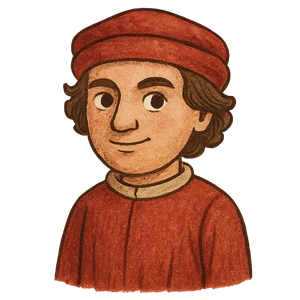
Giotto di Bondone
Giotto di Bondone was an Italian painter and architect from the late Middle Ages.
Reads at Grades 6–8 Listens at Grades 4–8
Print & create
Answer keys·No prep·Free with an account
28 worksheets · answer keys · full story · quiz · Ages 10-12 · CEFR B2
Plus adds 164,000+ more stories in 27 languages, audio for every one, and printables for all of them.
Just want Giotto di Bondone?
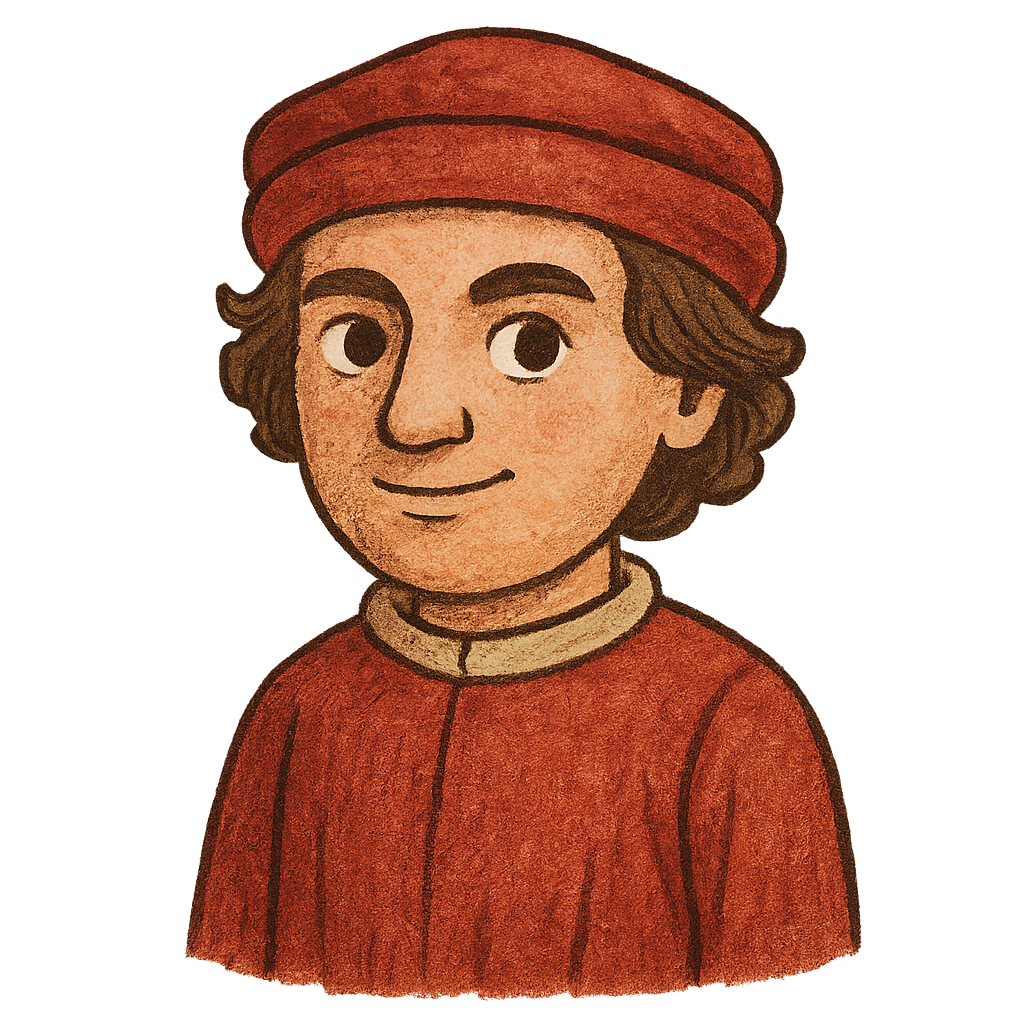
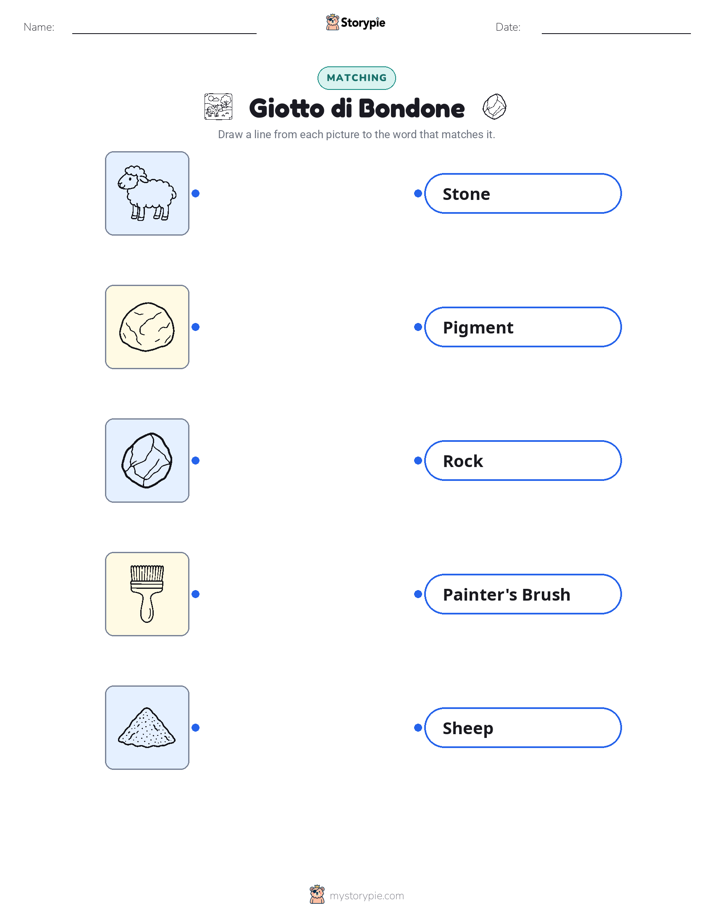
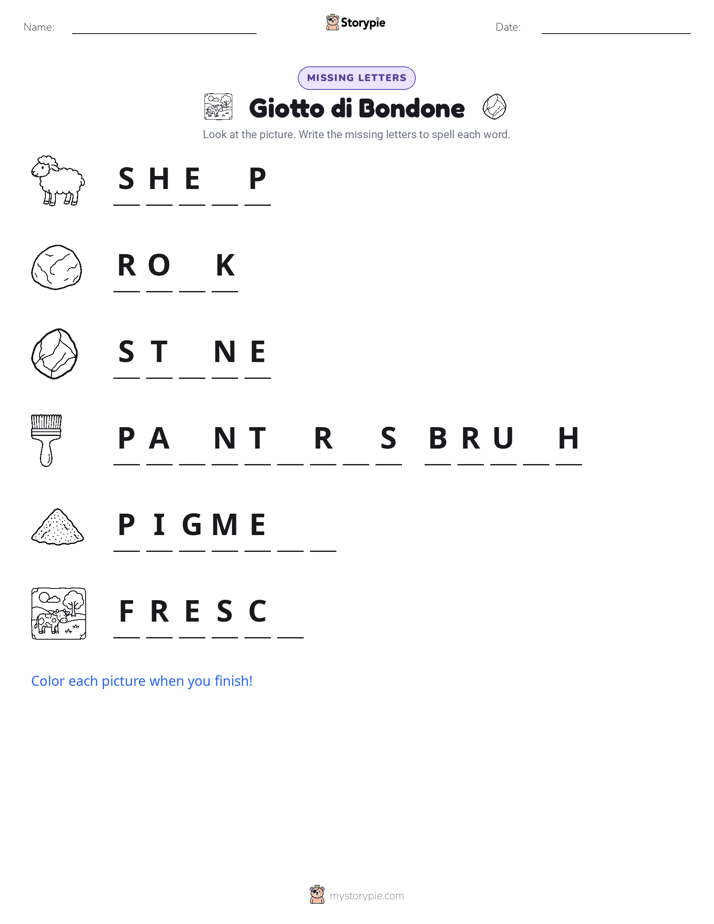
Hello! My name is Giotto di Bondone, and I want to tell you my story. I was born around the year 1267 in a small village called Vespignano, not far from the magnificent city of Florence in Italy. My family were farmers, and as a young boy, my job was to watch over our sheep. While the sheep grazed peacefully, I discovered my greatest passion: drawing. I didn’t have paper or pencils, so I used what I had. I would find a smooth, flat rock and use a sharp stone to sketch the world around me—the sheep, the trees, the rolling hills. One day, a famous painter named Cimabue was traveling through my village and saw me drawing a sheep so realistically that he was amazed. He asked my father if I could come to Florence to be his apprentice, and that single moment changed my life forever.
Moving to Florence to study in Cimabue's workshop was like stepping into another world. In the late 1200s, art was very different from what you might see today. Paintings, especially religious ones, were made in what is called the Byzantine style. The figures often looked flat and stiff, almost like paper cutouts, and they floated against golden backgrounds. They were beautiful, but they didn't look like real people with real feelings. I wanted to change that. I wanted to paint people who looked solid and three-dimensional, as if you could reach out and touch them. I wanted to show their emotions—their joy, their sadness, their love. I started to paint figures with weight, who stood firmly on the ground, and I placed them in settings that looked like real places. This was a revolutionary idea, and it set me on a path to change the world of art.
Giotto di Bondone: The Shepherd Boy Who Painted a New World
Hello! My name is Giotto di Bondone, and I want to tell you my story. I was born around the year 1267 in a small village called Vespignano, not far from the magnificent city of Florence in Italy. My family were farmers, and as a young boy, my job was to watch over our sheep. While the sheep grazed peacefully, I discovered my greatest passion: drawing. I didn’t have paper or pencils, so I used what I had. I would find a smooth, flat rock and use a sharp stone to sketch the world around me—the sheep, the trees, the rolling hills. One day, a famous painter named Cimabue was traveling through my village and saw me drawing a sheep so realistically that he was amazed. He asked my father if I could come to Florence to be his apprentice, and that single moment changed my life forever.
Moving to Florence to study in Cimabue's workshop was like stepping into another world. In the late 1200s, art was very different from what you might see today. Paintings, especially religious ones, were made in what is called the Byzantine style. The figures often looked flat and stiff, almost like paper cutouts, and they floated against golden backgrounds. They were beautiful, but they didn't look like real people with real feelings. I wanted to change that. I wanted to paint people who looked solid and three-dimensional, as if you could reach out and touch them. I wanted to show their emotions—their joy, their sadness, their love. I started to paint figures with weight, who stood firmly on the ground, and I placed them in settings that looked like real places. This was a revolutionary idea, and it set me on a path to change the world of art.
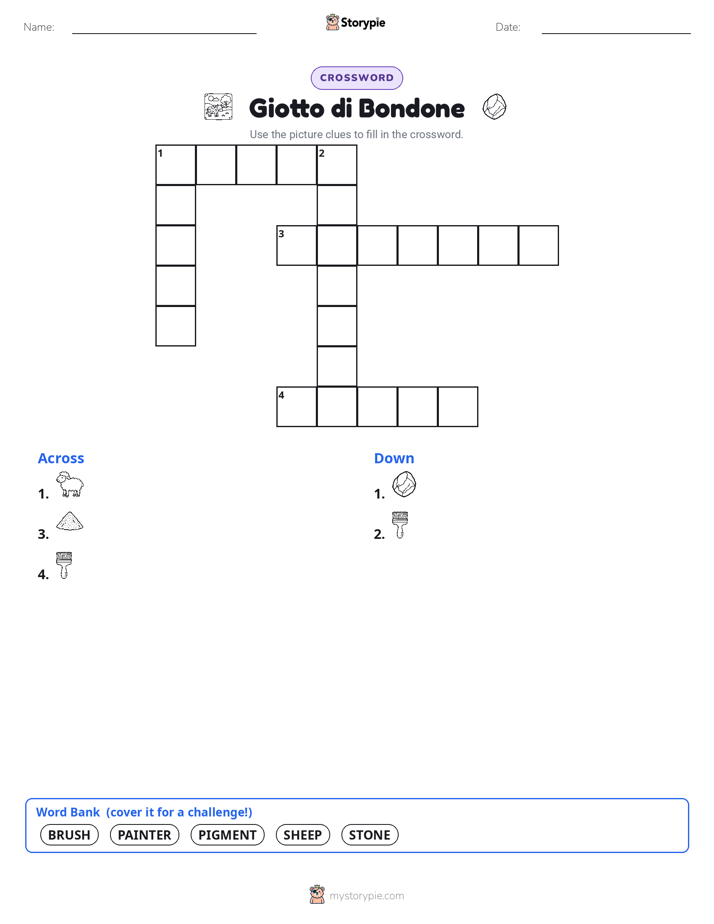
Soon, I was given incredible opportunities to tell stories through my art. One of my first major projects was painting large pictures, called frescoes, on the walls of the Basilica of Saint Francis in Assisi in the 1290s. I filled the walls with scenes from the life of St. Francis, showing him as a real person with deep emotions. Around the year 1300, I was called to Rome to work for the Pope. But my most famous work, the one people still travel from all over the world to see, is in a small chapel in Padua. It’s called the Scrovegni Chapel. Between 1303 and 1305, I covered every inch of its walls and ceiling with frescoes. The ceiling is a brilliant blue, dotted with golden stars, and the walls tell the stories of Mary and Jesus. I tried to make each scene feel like a moment frozen in time, filled with real human drama. In one painting, you can see the deep grief on the faces of angels; in another, the tender kiss between two people. I wanted everyone who entered that chapel to feel like they were right there, witnessing the stories for themselves.
My work in the Scrovegni Chapel made me one of the most famous artists in all of Italy. I returned to Florence a celebrated master, and I opened a large workshop where I taught many young artists my new techniques. My fame wasn't just as a painter. In 1334, I was given one of the greatest honors of my life: I was appointed the chief architect for the magnificent Florence Cathedral, known as the Duomo. I was put in charge of all the building and art projects for this grand church. My main task was to design the cathedral's bell tower, or Campanile. I designed a beautiful, slender tower decorated with marble and sculptures. I wanted it to be the most beautiful bell tower in the world. I oversaw the beginning of its construction, laying the foundation for a landmark that would define the skyline of Florence.
I continued to paint and design for the rest of my days, working in Florence, Milan, and Naples. On January 8th, 1337, my journey came to an end. I lived to be about 70 years old and was buried with great honor in the Florence Cathedral I had helped to build. People remember me today as the artist who sparked the Renaissance. By breaking away from the old, flat style and painting people with real bodies and real emotions, I showed artists a new way to see the world. My work inspired generations of masters who came after me, like Leonardo da Vinci and Michelangelo. I was just a shepherd boy who loved to draw on rocks, but I learned that if you look closely at the world and follow your passion, you can create something that lasts forever.
Wow facts
About
Giotto di Bondone was an Italian painter and architect from the late Middle Ages. He is considered one of the first great artists who contributed to the Italian Renaissance by introducing a new style of realism and emotional depth.
Take a Quiz
Question 1 of 5
According to the story, what was the main difference between Giotto's art and the Byzantine style that came before him?
Explore next






Want to do even more?
Go beyond exploring. Unlock tools that turn every story into real learning.

Storypie Plus for families
Full stories, quizzes, and printables. Nights and car rides, sorted.
- Unlimited audio stories
- Create Mode: your child stars in the story
- Offline downloads
- Printable worksheets & coloring pages

Why Storypie for Schools
Students engaged. Prep in seconds. Evenings back to you.
- Worksheets & Quizzes
- Classroom Management
- Formative Assessment
- Custom Curriculum & Lesson Plans
- 27 Languages

Why Storypie for Homeschool
Curriculum done. They'll ask for more. Hours back in your day.
- Worksheet Generator
- First-Person Audio Stories
- Built-in Comprehension Quizzes
- Custom Curriculum & Lesson Plans
- Print & Go Activities