English

Giotto di Bondone
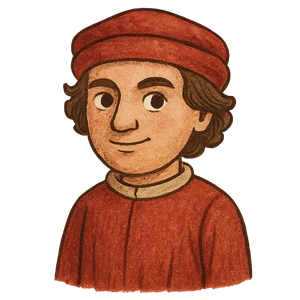
Giotto di Bondone was an Italian painter and architect from the late Middle Ages.
Reads at Grades 3–5 Listens at Grades 1–5
Print & create
Answer keys·No prep·Free with an account
28 worksheets · answer keys · full story · quiz · Ages 8-10 · CEFR B1
Plus adds 164,000+ more stories in 27 languages, audio for every one, and printables for all of them.
Just want Giotto di Bondone?
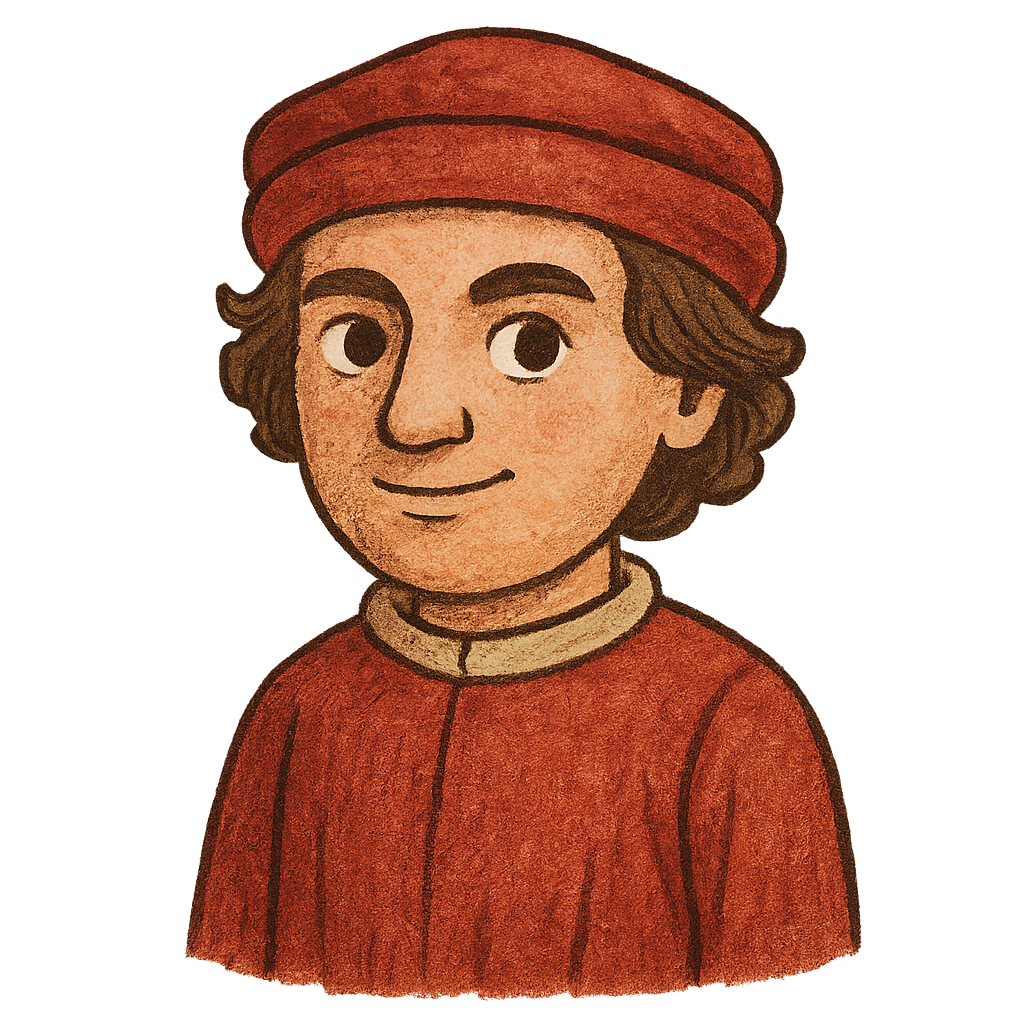
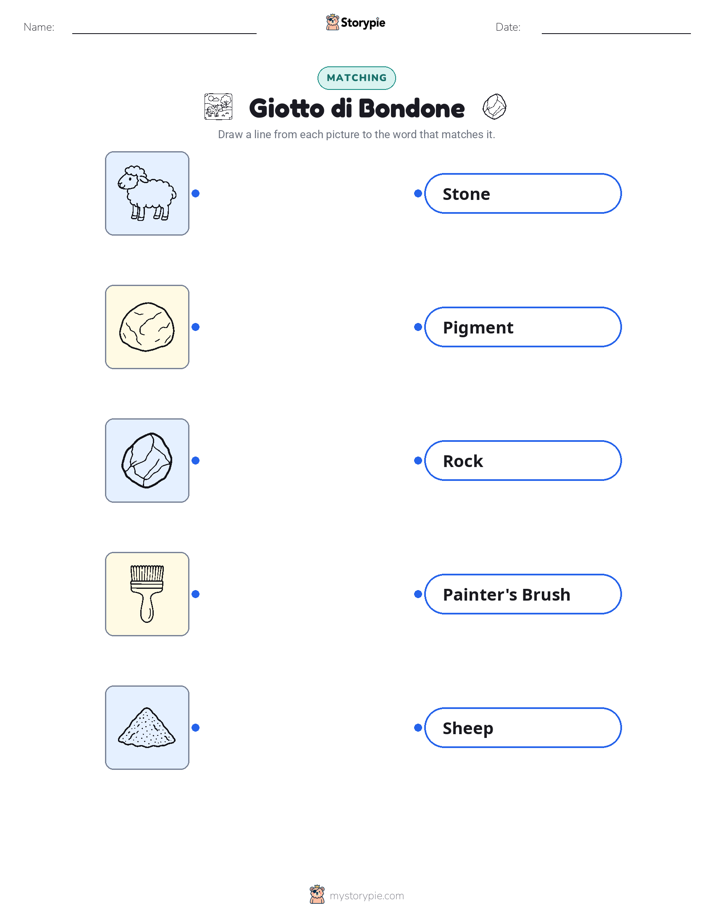
Hello, my name is Giotto di Bondone. I was born in a small village called Vespignano, not far from the great city of Florence, around the year 1267. My family was not wealthy, and as a boy, I spent my days as a shepherd, watching over our flock of sheep in the quiet hills. While the sheep grazed, I found my own way to pass the time. I loved to draw. I didn't have paper or special tools, so I would pick up a sharp stone and sketch the world around me. My favorite subjects were my sheep, and I would draw their woolly shapes on large, flat rocks. One day, around the year 1277, a famous artist named Cimabue was traveling through my village. He saw me completely lost in my drawing, scratching the image of a sheep onto a stone. He was so surprised by how lifelike it looked that he stopped to speak with me. Cimabue saw something special in my art, and he asked my father if he could take me to Florence to become his apprentice. It was the beginning of a whole new life for me.
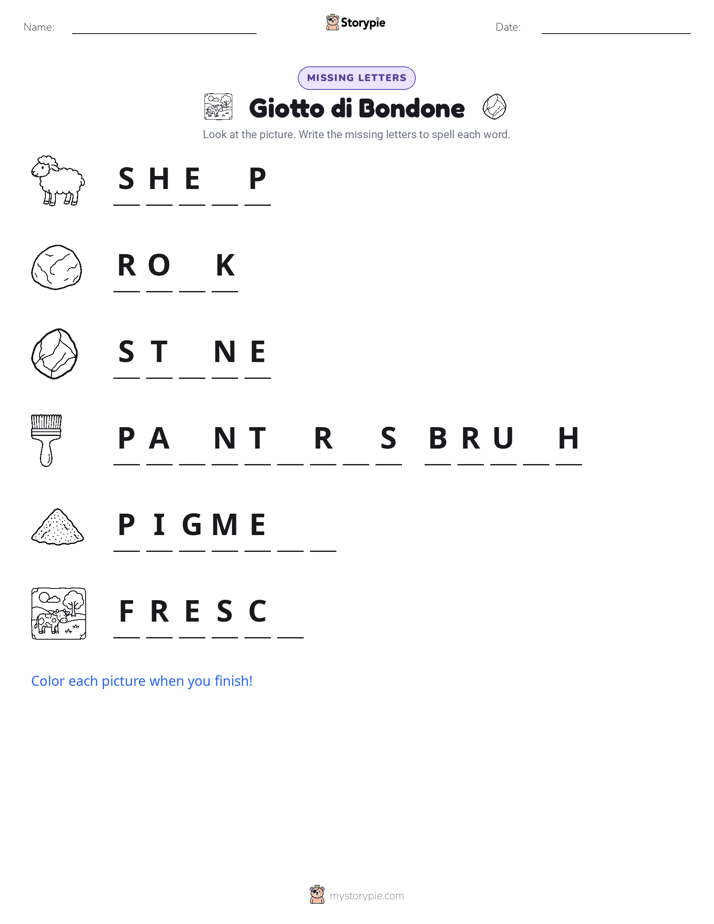
Moving to Florence to live and work in Cimabue's workshop was an incredible adventure. I was no longer a shepherd boy but a student of art. Learning from a master like Cimabue was hard work. I had to learn every part of the craft, starting from the very beginning. I spent hours grinding colorful minerals and rocks into fine powders, then mixing them to create the bright paints we used. I also learned how to prepare the large walls for painting, making the plaster smooth and ready for art. Cimabue painted in the style of the time, which was often very formal and flat. But as I learned, I felt a strong desire to do something different. I wanted my paintings to look real, as if you could step right into the scene. I wanted the people in my paintings to have real expressions and feelings. I remember one day, as a fun prank, I painted a tiny fly on the nose of a figure in one of Cimabue’s paintings. It looked so real that when he saw it, he tried to swat it away with his hand. I knew then that I was on the right path to making art that felt alive.
Giotto di Bondone: The Shepherd Boy Who Painted the Stars
Hello, my name is Giotto di Bondone. I was born in a small village called Vespignano, not far from the great city of Florence, around the year 1267. My family was not wealthy, and as a boy, I spent my days as a shepherd, watching over our flock of sheep in the quiet hills. While the sheep grazed, I found my own way to pass the time. I loved to draw. I didn't have paper or special tools, so I would pick up a sharp stone and sketch the world around me. My favorite subjects were my sheep, and I would draw their woolly shapes on large, flat rocks. One day, around the year 1277, a famous artist named Cimabue was traveling through my village. He saw me completely lost in my drawing, scratching the image of a sheep onto a stone. He was so surprised by how lifelike it looked that he stopped to speak with me. Cimabue saw something special in my art, and he asked my father if he could take me to Florence to become his apprentice. It was the beginning of a whole new life for me.
Moving to Florence to live and work in Cimabue's workshop was an incredible adventure. I was no longer a shepherd boy but a student of art. Learning from a master like Cimabue was hard work. I had to learn every part of the craft, starting from the very beginning. I spent hours grinding colorful minerals and rocks into fine powders, then mixing them to create the bright paints we used. I also learned how to prepare the large walls for painting, making the plaster smooth and ready for art. Cimabue painted in the style of the time, which was often very formal and flat. But as I learned, I felt a strong desire to do something different. I wanted my paintings to look real, as if you could step right into the scene. I wanted the people in my paintings to have real expressions and feelings. I remember one day, as a fun prank, I painted a tiny fly on the nose of a figure in one of Cimabue’s paintings. It looked so real that when he saw it, he tried to swat it away with his hand. I knew then that I was on the right path to making art that felt alive.
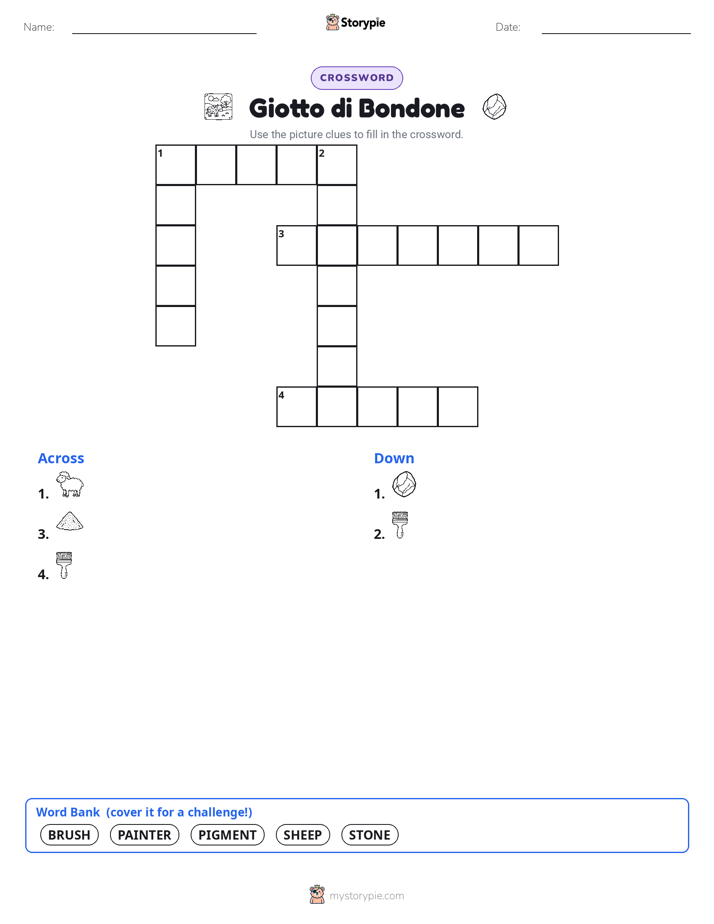
As I grew into a professional painter, my dream was to tell important stories on giant walls for everyone to see. I became known for a special technique called fresco painting. This means painting directly onto wet plaster. You have to work very quickly, before the plaster dries, but when it does, the paint becomes part of the wall itself and can last for centuries. My most famous work was a project I completed around the year 1305 in the city of Padua. I was hired to decorate the inside of a small building called the Scrovegni Chapel. I covered every single wall from floor to ceiling with scenes from the Bible. I wanted people who couldn't read to understand these powerful stories just by looking at my art. I painted the figures with gestures and facial expressions that showed exactly what they were feeling. I also painted the sky a beautiful, deep blue, which was very different from the gold backgrounds many artists used at the time. It made the scenes feel like they were happening right here on Earth. I also had the honor of painting important frescoes in the famous Basilica of Saint Francis of Assisi.
My new way of painting became very popular, and soon my fame spread all across Italy. I was invited by kings, popes, and wealthy families to paint in churches and palaces. It was a long way from my childhood as a shepherd boy in the hills. But one of the greatest honors of my life came much later. In the year 1334, the leaders of my home city of Florence gave me a very important job. They appointed me as the chief architect for their magnificent new cathedral, which was the heart of the city. My main task was to design the grand bell tower that would stand beside it. I put all my artistic knowledge into designing a beautiful and elegant tower, decorated with marble and detailed carvings. Even today, that tower still stands tall in Florence, and people call it ‘Giotto’s Campanile,’ which means Giotto’s Bell Tower.
My life was filled with art, from sketching on rocks as a boy to designing a grand tower for my city. I lived to be about 70 years old, and my journey ended in Florence on January 8th, 1337. The way I painted—making people and scenes look solid, real, and full of emotion—was new and exciting for the people of my time. My work helped change the way everyone thought about art, and it helped to inspire the incredible period of creativity that we now call the Renaissance. I am so glad that my paintings and my bell tower can still be seen today, telling stories and sharing a little bit of beauty with the world so many hundreds of years later.
Wow facts
About
Giotto di Bondone was an Italian painter and architect from the late Middle Ages. He is considered one of the first great artists who contributed to the Italian Renaissance by introducing a new style of realism and emotional depth.
Take a Quiz
Question 1 of 5
In what year was Giotto appointed the chief architect of the cathedral in Florence?
Explore next






Want to do even more?
Go beyond exploring. Unlock tools that turn every story into real learning.

Storypie Plus for families
Full stories, quizzes, and printables. Nights and car rides, sorted.
- Unlimited audio stories
- Create Mode: your child stars in the story
- Offline downloads
- Printable worksheets & coloring pages

Why Storypie for Schools
Students engaged. Prep in seconds. Evenings back to you.
- Worksheets & Quizzes
- Classroom Management
- Formative Assessment
- Custom Curriculum & Lesson Plans
- 27 Languages

Why Storypie for Homeschool
Curriculum done. They'll ask for more. Hours back in your day.
- Worksheet Generator
- First-Person Audio Stories
- Built-in Comprehension Quizzes
- Custom Curriculum & Lesson Plans
- Print & Go Activities