English

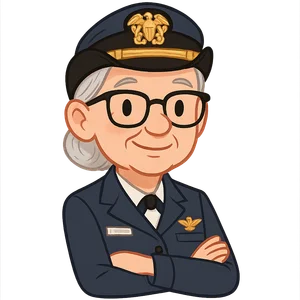
Grace Hopper
Grace Hopper was an American computer scientist and United States Navy rear admiral.
Reads at Grades 3–5 Listens at Grades 1–5
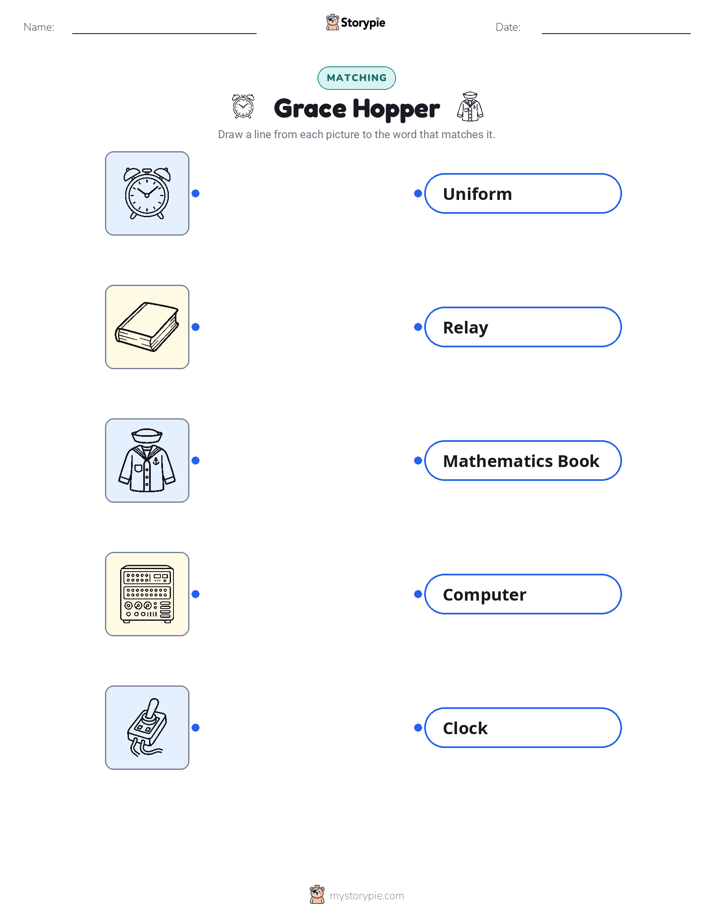
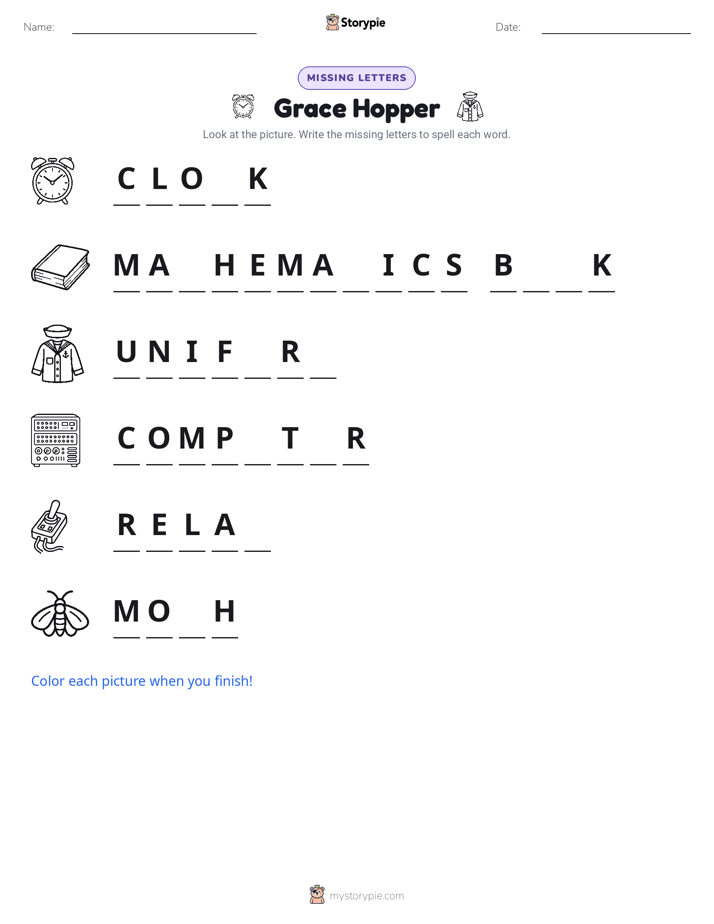
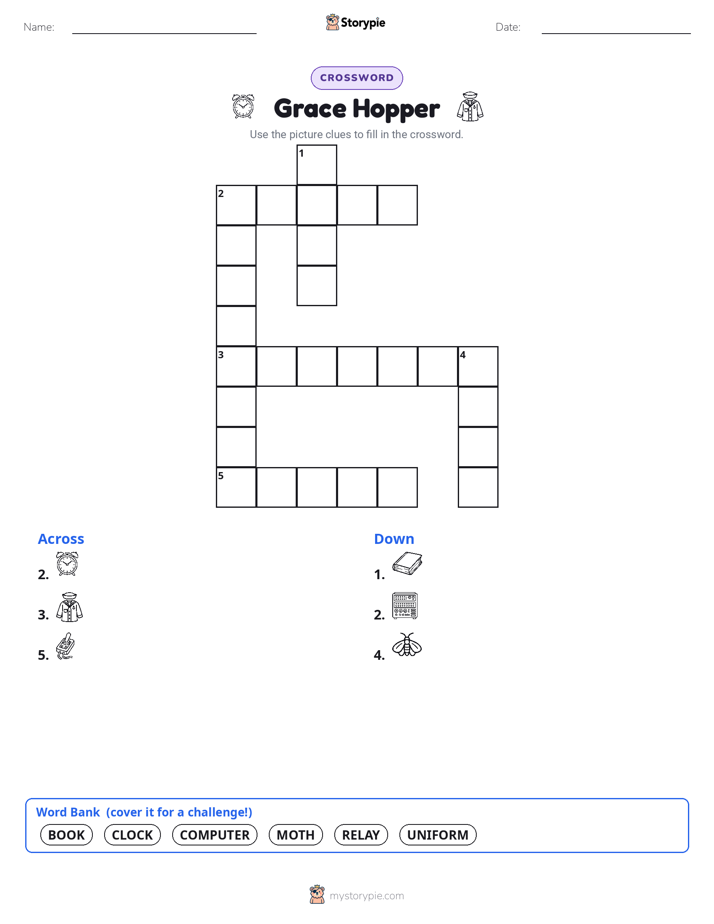
Print & create
Answer keys·No prep·Free with an account
28 worksheets · answer keys · full story · quiz · Ages 8-10 · CEFR B1
Plus adds 102,000+ more stories in 27 languages, audio for every one, and printables for all of them.
Just want Grace Hopper?
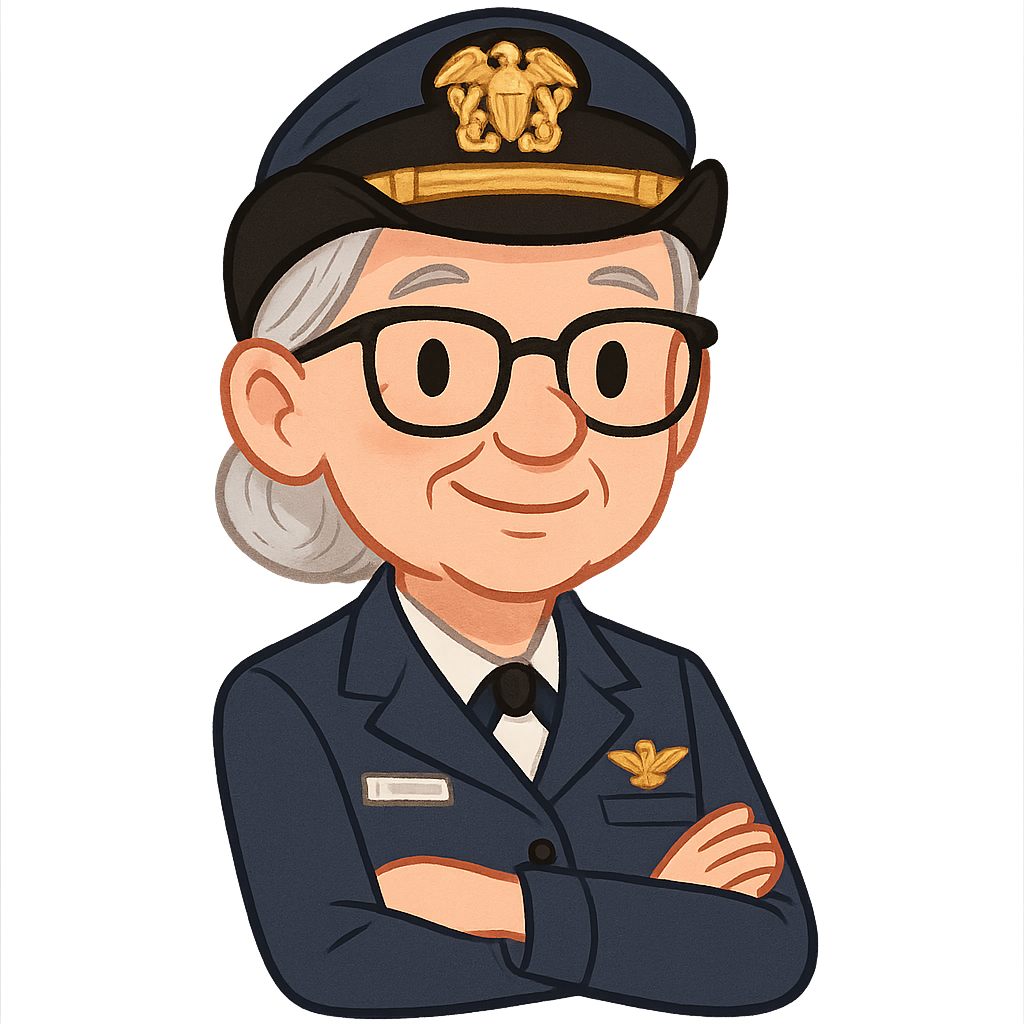
Hello! My name is Grace Hopper. I was born on December 9th, 1906, in New York City. Ever since I was a little girl, I was incredibly curious. I wanted to know how everything worked! When I was seven, I took apart all seven alarm clocks in my house just to see how the gears and springs fit together. My parents encouraged my curiosity, especially my love for math and gadgets. This love for figuring things out was a big part of my childhood and it led me to study mathematics and physics at Vassar College, where I graduated in 1928.
After Vassar, I kept on studying because there was so much more I wanted to learn. I went to Yale University and earned my Ph.D. in mathematics in 1934. Back then, it was very unusual for a woman to earn such an advanced degree in math! After I finished my studies, I became a professor at a college and I loved teaching students. But in 1943, the world was in the middle of World War II, and I felt I had to do more to help my country. So, I decided to leave my teaching job and join the U.S. Navy Reserve. The Navy saw how good I was with numbers and sent me to work on a top-secret project at Harvard University.
At Harvard, I met my new partner: a giant machine called the Mark I computer. It was huge! It filled an entire room, weighed five tons, and was filled with miles and miles of wires. It looked like a giant, mechanical brain, and it was my job to tell it what to do. We call that programming. It was a very challenging puzzle. One famous day in 1947, while I was working on a newer computer called the Mark II, it suddenly stopped working. We looked inside to find the problem and discovered a real moth was stuck in the machine, blocking a switch! We carefully removed it and taped it into our logbook. Next to it, we wrote, 'first actual case of bug being found.' That's why we still call problems in computer programs 'bugs' today!
Grace Hopper: Queen of Code
Hello! My name is Grace Hopper. I was born on December 9th, 1906, in New York City. Ever since I was a little girl, I was incredibly curious. I wanted to know how everything worked! When I was seven, I took apart all seven alarm clocks in my house just to see how the gears and springs fit together. My parents encouraged my curiosity, especially my love for math and gadgets. This love for figuring things out was a big part of my childhood and it led me to study mathematics and physics at Vassar College, where I graduated in 1928.
After Vassar, I kept on studying because there was so much more I wanted to learn. I went to Yale University and earned my Ph.D. in mathematics in 1934. Back then, it was very unusual for a woman to earn such an advanced degree in math! After I finished my studies, I became a professor at a college and I loved teaching students. But in 1943, the world was in the middle of World War II, and I felt I had to do more to help my country. So, I decided to leave my teaching job and join the U.S. Navy Reserve. The Navy saw how good I was with numbers and sent me to work on a top-secret project at Harvard University.
At Harvard, I met my new partner: a giant machine called the Mark I computer. It was huge! It filled an entire room, weighed five tons, and was filled with miles and miles of wires. It looked like a giant, mechanical brain, and it was my job to tell it what to do. We call that programming. It was a very challenging puzzle. One famous day in 1947, while I was working on a newer computer called the Mark II, it suddenly stopped working. We looked inside to find the problem and discovered a real moth was stuck in the machine, blocking a switch! We carefully removed it and taped it into our logbook. Next to it, we wrote, 'first actual case of bug being found.' That's why we still call problems in computer programs 'bugs' today!
Working with those early computers was tricky. We had to use very complicated codes made of numbers and symbols that were hard for people to understand. I had a big idea: what if we could talk to computers using words that felt more like English, not just complicated codes? Many people thought it was an impossible idea, but I knew we could do it. In 1952, my team and I proved them wrong when we created the first compiler. A compiler is a special program that translates English-like instructions into code the computer can understand. This idea was a breakthrough and it helped lead to the creation of a new programming language in 1959 called COBOL, which made it so much easier for people to use computers for business and many other things.
I loved my work and my time in the Navy. I served for many years and was even called back to duty after I retired because my skills were still needed. Because of my important work in computers and my long service, I earned the nickname 'Amazing Grace.' One of the proudest moments of my life came in 1985, when I was promoted to Rear Admiral. I always encouraged young people to be curious and brave. I used to carry a piece of wire in my purse that was about a foot long to show people what a 'nanosecond' looked like—it was the distance electricity could travel in one-billionth of a second!
I lived to be 85 years old. The ideas I worked on helped change the world. By making computers easier to talk to, I helped open the door for the amazing technology we have today, like the laptops and smartphones you might use. I hope my story shows you that you should never be afraid to ask 'Why?' and that a little curiosity can lead to big, amazing things.
Wow facts
About
Grace Hopper was an American computer scientist and United States Navy rear admiral. A pioneer of computer programming, she invented one of the first compilers and was instrumental in the development of user-friendly, English-like programming languages like COBOL.
Take a Quiz
Question 1 of 5
In the story, I say I took apart seven alarm clocks 'just to see how the gears and springs fit together.' What does this tell you about me as a child?
Explore next






Want to do even more?
Go beyond exploring. Unlock tools that turn every story into real learning.

Storypie Plus for families
Full stories, quizzes, and printables. Nights and car rides, sorted.
- Unlimited audio stories
- Create Mode: your child stars in the story
- Offline downloads
- Printable worksheets & coloring pages

Why Storypie for Schools
Students engaged. Prep in seconds. Evenings back to you.
- Worksheets & Quizzes
- Classroom Management
- Formative Assessment
- Custom Curriculum & Lesson Plans
- 27 Languages

Why Storypie for Homeschool
Curriculum done. They'll ask for more. Hours back in your day.
- Worksheet Generator
- First-Person Audio Stories
- Built-in Comprehension Quizzes
- Custom Curriculum & Lesson Plans
- Print & Go Activities