English


Debugging (Finding and Fixing Mistakes)
Debugging is the process of finding and resolving defects or problems ('bugs') within a computer program or…
Reads at Grades 3–5 Listens at Grades 1–5
Print & create
Answer keys·No prep·Free with an account
28 worksheets · answer keys · full story · quiz · Ages 8-10 · CEFR B1
Plus adds 244,000+ more stories in 27 languages, audio for every one, and printables for all of them.
Just want Debugging (Finding and Fixing Mistakes)?

Have you ever been building the most amazing castle out of blocks, when one piece just won’t fit right, making the whole tower wobble. Or maybe you’re playing a video game and your character suddenly gets stuck walking into a wall, over and over again. It’s a frustrating, itchy kind of feeling, like a recipe with a missing step or a bike chain that keeps slipping off the gear. You know something is wrong, but you can’t see what it is. It’s a small, confusing puzzle that pops up when you least expect it, turning something fun into a challenge. This feeling happens to everyone, whether they are trying to write a sentence that makes sense, draw a picture, or make a machine work. That little glitch, that mysterious problem, needs a special kind of detective to solve it. I am the special kind of superpower you use to solve these puzzles. Hello. You can call me Debugging.
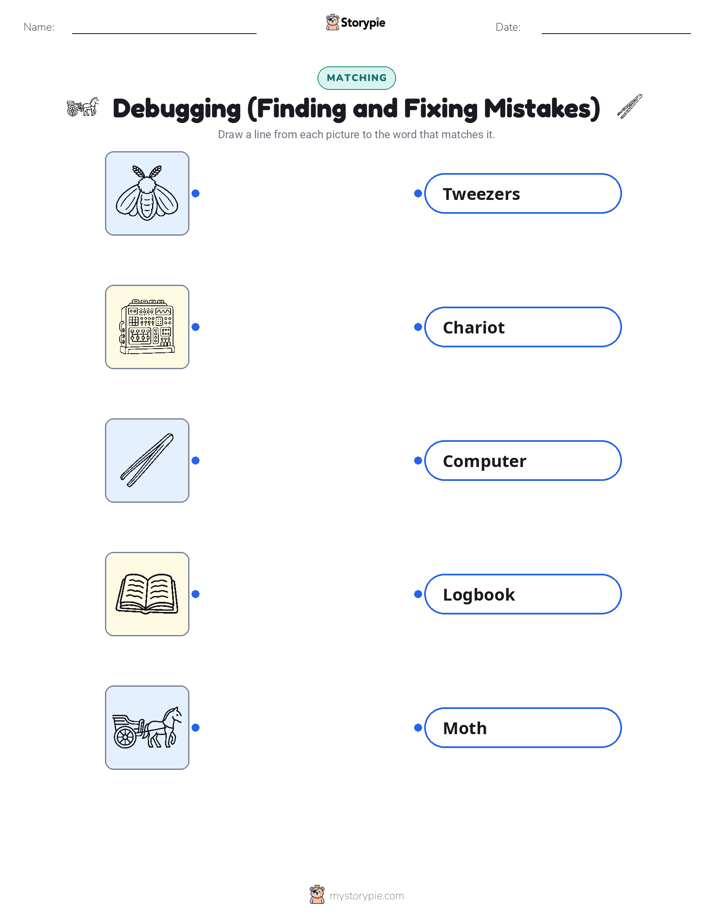
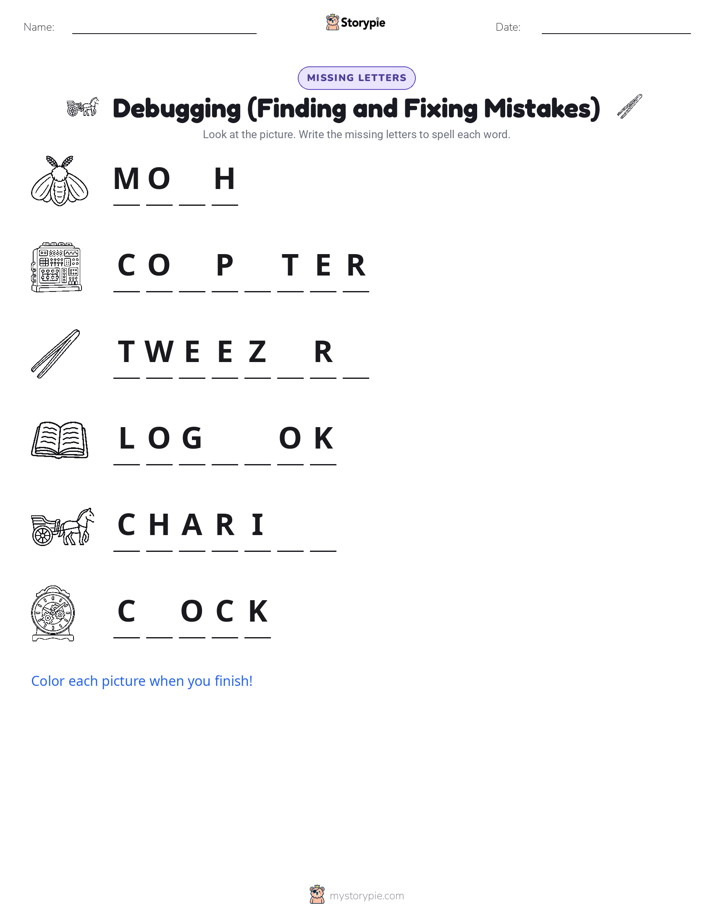
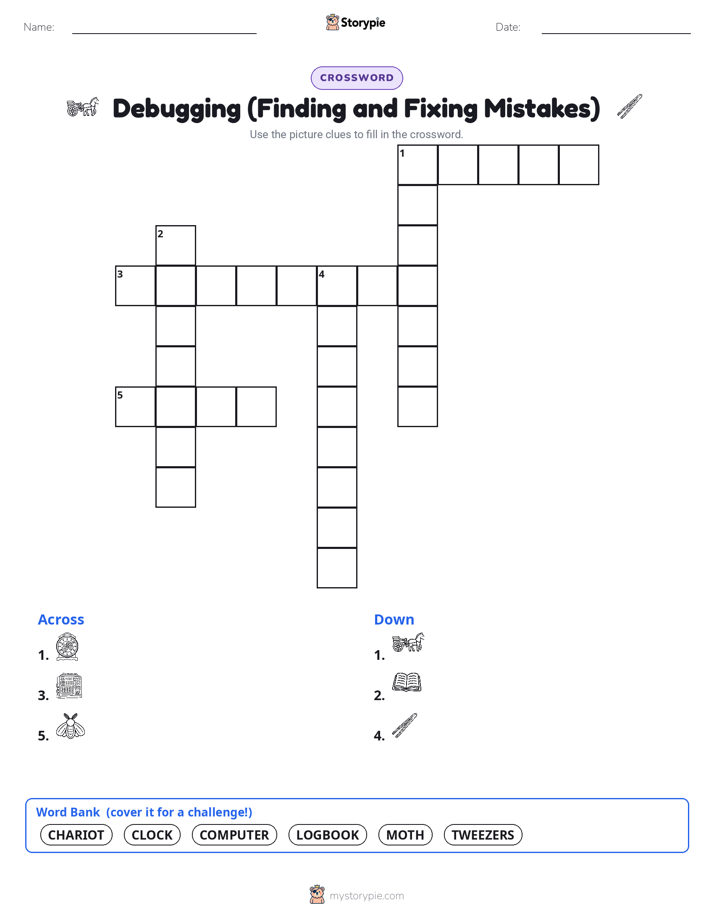
My job of finding and fixing little problems has been around for a very long time, long before fancy computers existed. Can you imagine a giant machine that weaves beautiful patterns into fabric all by itself. Back in the early 1800s, huge machines called Jacquard looms did just that, following instructions from special cards with holes punched in them. If even one hole was in the wrong place on a card, the whole pattern would get messed up. The weavers had to become detectives, finding the mistaken punch card and fixing it. Even the word people use for my puzzles—a 'bug'—is older than you might think. The famous inventor Thomas Edison used it in his notes in the 1870s to describe flaws in his new inventions. But I became truly famous on September 9th, 1947. A brilliant computer scientist named Admiral Grace Hopper and her team were working on a massive computer called the Harvard Mark II. This machine was not like the small laptops of today; it filled an entire room with its clicking relays and flashing lights. Suddenly, it just stopped working. The team searched and searched through all the wires and switches. Finally, they found the culprit. A real, fuzzy moth had flown into the machine and gotten stuck in one of the switches, causing the whole computer to fail. They carefully removed the little insect and taped it into their official logbook. Beside it, they wrote, 'First actual case of bug being found'. From that day on, finding and fixing a problem in a computer was famously called 'debugging'.
The Bug in the Machine
Have you ever been building the most amazing castle out of blocks, when one piece just won’t fit right, making the whole tower wobble. Or maybe you’re playing a video game and your character suddenly gets stuck walking into a wall, over and over again. It’s a frustrating, itchy kind of feeling, like a recipe with a missing step or a bike chain that keeps slipping off the gear. You know something is wrong, but you can’t see what it is. It’s a small, confusing puzzle that pops up when you least expect it, turning something fun into a challenge. This feeling happens to everyone, whether they are trying to write a sentence that makes sense, draw a picture, or make a machine work. That little glitch, that mysterious problem, needs a special kind of detective to solve it. I am the special kind of superpower you use to solve these puzzles. Hello. You can call me Debugging.
My job of finding and fixing little problems has been around for a very long time, long before fancy computers existed. Can you imagine a giant machine that weaves beautiful patterns into fabric all by itself. Back in the early 1800s, huge machines called Jacquard looms did just that, following instructions from special cards with holes punched in them. If even one hole was in the wrong place on a card, the whole pattern would get messed up. The weavers had to become detectives, finding the mistaken punch card and fixing it. Even the word people use for my puzzles—a 'bug'—is older than you might think. The famous inventor Thomas Edison used it in his notes in the 1870s to describe flaws in his new inventions. But I became truly famous on September 9th, 1947. A brilliant computer scientist named Admiral Grace Hopper and her team were working on a massive computer called the Harvard Mark II. This machine was not like the small laptops of today; it filled an entire room with its clicking relays and flashing lights. Suddenly, it just stopped working. The team searched and searched through all the wires and switches. Finally, they found the culprit. A real, fuzzy moth had flown into the machine and gotten stuck in one of the switches, causing the whole computer to fail. They carefully removed the little insect and taped it into their official logbook. Beside it, they wrote, 'First actual case of bug being found'. From that day on, finding and fixing a problem in a computer was famously called 'debugging'.
Now, you don’t need a room-sized computer or a real moth to use my power. Debugging is a way of thinking that you can use every single day to solve all sorts of puzzles. It’s your own personal superpower for making things right. The process is actually pretty simple. First, you have to notice the problem—you’ve found the 'bug'. Is your Lego tower falling over. Is your drawing not looking the way you want it to. Second, you think about what might be causing it. Is the base of the tower too small. Is the pencil tip dull. Third, you try one small change to fix it. You add more blocks to the bottom or you sharpen your pencil. And fourth, you test it out to see if your fix worked. Did the tower stay up. Does the line look better. This process helps you solve problems with your homework, with a game you’re playing with friends, or with a project you are building. Every time you patiently find and fix a 'bug', you are becoming a more creative and confident problem-solver. You’re not just fixing a mistake; you are learning how things work and making your own creations even better.
Wow facts
About
Debugging is the process of finding and resolving defects or problems ('bugs') within a computer program or other system. The term "bug" to describe problems in machines was used even before Grace Hopper's famous incident in 1947, but she is known for making it popular in computing.
Take a Quiz
Question 1 of 5
According to the story, what are the four steps of debugging you can use in your life?
Explore next






Want to do even more?
Go beyond exploring. Unlock tools that turn every story into real learning.

Storypie Plus for families
Full stories, quizzes, and printables. Nights and car rides, sorted.
- Unlimited audio stories
- Create Mode: your child stars in the story
- Offline downloads
- Printable worksheets & coloring pages

Why Storypie for Schools
Students engaged. Prep in seconds. Evenings back to you.
- Worksheets & Quizzes
- Classroom Management
- Formative Assessment
- Custom Curriculum & Lesson Plans
- 27 Languages

Why Storypie for Homeschool
Curriculum done. They'll ask for more. Hours back in your day.
- Worksheet Generator
- First-Person Audio Stories
- Built-in Comprehension Quizzes
- Custom Curriculum & Lesson Plans
- Print & Go Activities