English

Debugging (Finding and Fixing Mistakes)
Debugging is the process of finding and resolving defects or problems ('bugs') within a computer program or…
Reads at Grades 6–8 Listens at Grades 4–8
Print & create
Answer keys·No prep·Free with an account
28 worksheets · answer keys · full story · quiz · Ages 10-12 · CEFR B2
Plus adds 244,000+ more stories in 27 languages, audio for every one, and printables for all of them.
Just want Debugging (Finding and Fixing Mistakes)?

Have you ever felt that little tickle in your brain when something just isn’t working right? Maybe your video game character gets stuck walking into a wall, or a complex Lego creation you spent hours on keeps collapsing in the same spot. It’s that moment of confusion, a puzzle that lands right in your lap. I am that quiet voice in your head that says, 'Wait a minute, that’s not supposed to happen.' I am the focused curiosity that makes you lean in closer, squinting to see the details. I am the patience that encourages you to retrace your steps, one by one, and the sudden spark of excitement when you finally spot the tiny, hidden mistake. You have known me your whole life, even before you knew what to call me. I am the process of finding what’s wrong and making it right. I am the detective work that fixes the glitch and solves the mystery. Hello, my name is Debugging.
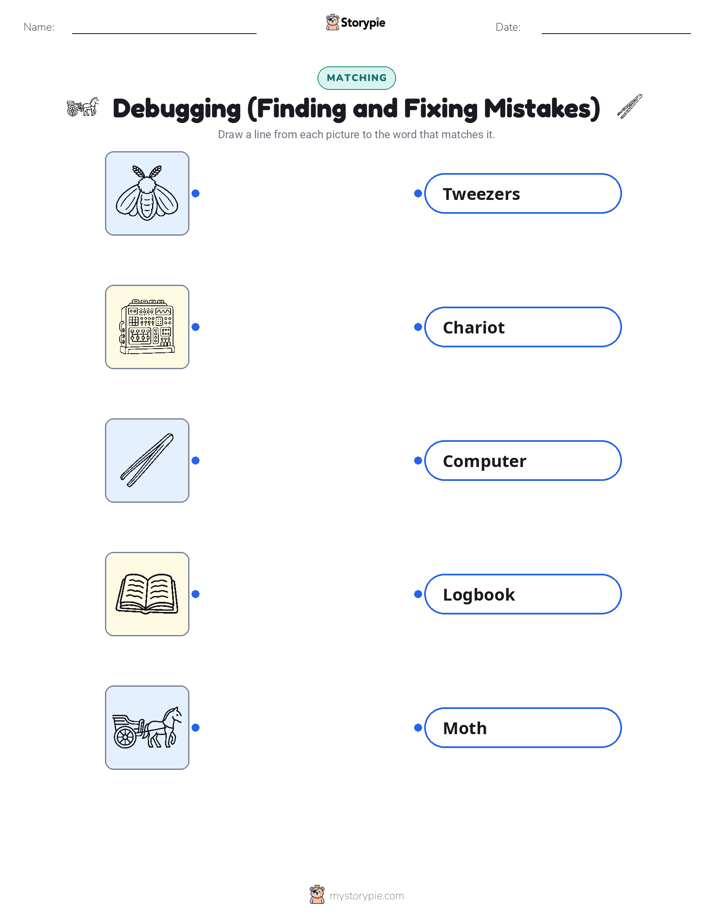
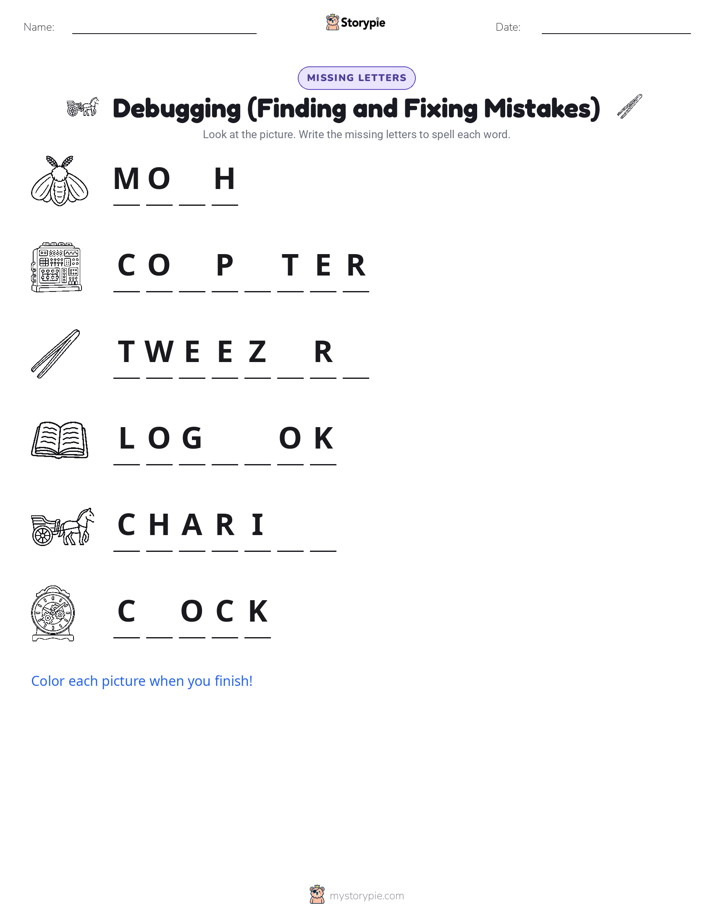
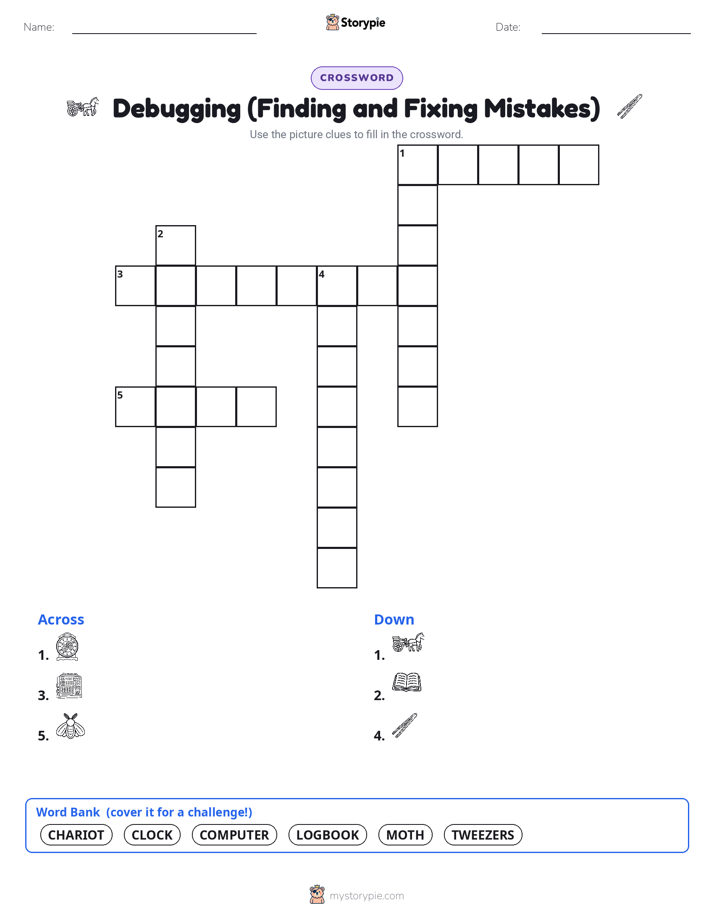
My story, however, is much older than the gadgets you use every day. For centuries, people have been using me to fix their world, whether it was figuring out why a chariot had a wobbly wheel or why a grand cathedral clock suddenly stopped ticking. I was especially important during the Industrial Revolution in the 18th and 19th centuries, where my skills were essential for keeping giant, complicated factory machines running smoothly. Brilliant inventors like Thomas Edison were even using the word 'bug' back in the 1870s to describe a flaw or glitch in a new design. But my most famous moment, the one that cemented my place in history, happened on a warm day, September 9th, 1947. A team of pioneering computer scientists, led by the brilliant Grace Hopper, was working with a colossal machine called the Harvard Mark II. This computer filled an entire room, a maze of clicking relays and flashing lights. Suddenly, it just stopped. The team began a meticulous search, investigating every one of the thousands of electromechanical parts. After hours of patient searching, they found the culprit. A real, fuzzy moth had flown into the machine and gotten stuck in a relay, blocking an electrical circuit and causing the entire system to fail. They carefully removed the insect with tweezers and taped it into their official logbook. Beside it, they wrote: 'First actual case of bug being found.' That moment made me a star in the new world of computing. As computers evolved, shrinking from the size of rooms to devices that fit in your hand, the 'bugs' changed, too. They weren't moths anymore, but tiny, invisible mistakes hidden in the millions of lines of code—the secret language that tells all our technology what to do. My job became more like being a digital detective, hunting for clues in a world you can't even see.
The Case of the Curious Moth
Have you ever felt that little tickle in your brain when something just isn’t working right? Maybe your video game character gets stuck walking into a wall, or a complex Lego creation you spent hours on keeps collapsing in the same spot. It’s that moment of confusion, a puzzle that lands right in your lap. I am that quiet voice in your head that says, 'Wait a minute, that’s not supposed to happen.' I am the focused curiosity that makes you lean in closer, squinting to see the details. I am the patience that encourages you to retrace your steps, one by one, and the sudden spark of excitement when you finally spot the tiny, hidden mistake. You have known me your whole life, even before you knew what to call me. I am the process of finding what’s wrong and making it right. I am the detective work that fixes the glitch and solves the mystery. Hello, my name is Debugging.
My story, however, is much older than the gadgets you use every day. For centuries, people have been using me to fix their world, whether it was figuring out why a chariot had a wobbly wheel or why a grand cathedral clock suddenly stopped ticking. I was especially important during the Industrial Revolution in the 18th and 19th centuries, where my skills were essential for keeping giant, complicated factory machines running smoothly. Brilliant inventors like Thomas Edison were even using the word 'bug' back in the 1870s to describe a flaw or glitch in a new design. But my most famous moment, the one that cemented my place in history, happened on a warm day, September 9th, 1947. A team of pioneering computer scientists, led by the brilliant Grace Hopper, was working with a colossal machine called the Harvard Mark II. This computer filled an entire room, a maze of clicking relays and flashing lights. Suddenly, it just stopped. The team began a meticulous search, investigating every one of the thousands of electromechanical parts. After hours of patient searching, they found the culprit. A real, fuzzy moth had flown into the machine and gotten stuck in a relay, blocking an electrical circuit and causing the entire system to fail. They carefully removed the insect with tweezers and taped it into their official logbook. Beside it, they wrote: 'First actual case of bug being found.' That moment made me a star in the new world of computing. As computers evolved, shrinking from the size of rooms to devices that fit in your hand, the 'bugs' changed, too. They weren't moths anymore, but tiny, invisible mistakes hidden in the millions of lines of code—the secret language that tells all our technology what to do. My job became more like being a digital detective, hunting for clues in a world you can't even see.
Today, I am everywhere, working silently behind the scenes. I help programmers create the apps you love, the video games you play, and the mind-blowing special effects you see in movies. I travel to the farthest reaches of our solar system, helping engineers make sure that robotic rovers on Mars and satellites orbiting Earth work perfectly millions of miles from home. But I am not just for computer scientists and engineers. I am a superpower that belongs to anyone who wants to create, build, or solve problems. When you methodically check your math homework for errors before turning it in, you're using me. When you patiently figure out why your bike chain fell off and then carefully put it back on, that’s me at work. I teach you to be patient, to look at a problem from different angles, and most importantly, to understand that making mistakes is a normal, necessary part of learning and creating something new. So the next time you hit a snag and feel that wave of frustration, don't give up. Take a deep breath and welcome me. I am the exciting challenge of the hunt and the amazing 'Aha!' feeling when you finally figure it all out. I am Debugging, and I'm here to help you make anything you can imagine work beautifully.
Wow facts
About
Debugging is the process of finding and resolving defects or problems ('bugs') within a computer program or other system. The term "bug" to describe problems in machines was used even before Grace Hopper's famous incident in 1947, but she is known for making it popular in computing.
Take a Quiz
Question 1 of 5
In your own words, retell the story of how the first 'computer bug' was found by Grace Hopper's team.
Explore next






Want to do even more?
Go beyond exploring. Unlock tools that turn every story into real learning.

Storypie Plus for families
Full stories, quizzes, and printables. Nights and car rides, sorted.
- Unlimited audio stories
- Create Mode: your child stars in the story
- Offline downloads
- Printable worksheets & coloring pages

Why Storypie for Schools
Students engaged. Prep in seconds. Evenings back to you.
- Worksheets & Quizzes
- Classroom Management
- Formative Assessment
- Custom Curriculum & Lesson Plans
- 27 Languages

Why Storypie for Homeschool
Curriculum done. They'll ask for more. Hours back in your day.
- Worksheet Generator
- First-Person Audio Stories
- Built-in Comprehension Quizzes
- Custom Curriculum & Lesson Plans
- Print & Go Activities