English

Gustave Eiffel
A French civil engineer…
Reads at Grades 6–8 Listens at Grades 4–8
Print & create
Answer keys·No prep·Free with an account
28 worksheets · answer keys · full story · quiz · Ages 10-12 · CEFR B2
Plus adds 280,000+ more stories in 27 languages, audio for every one, and printables for all of them.
Just want Gustave Eiffel?
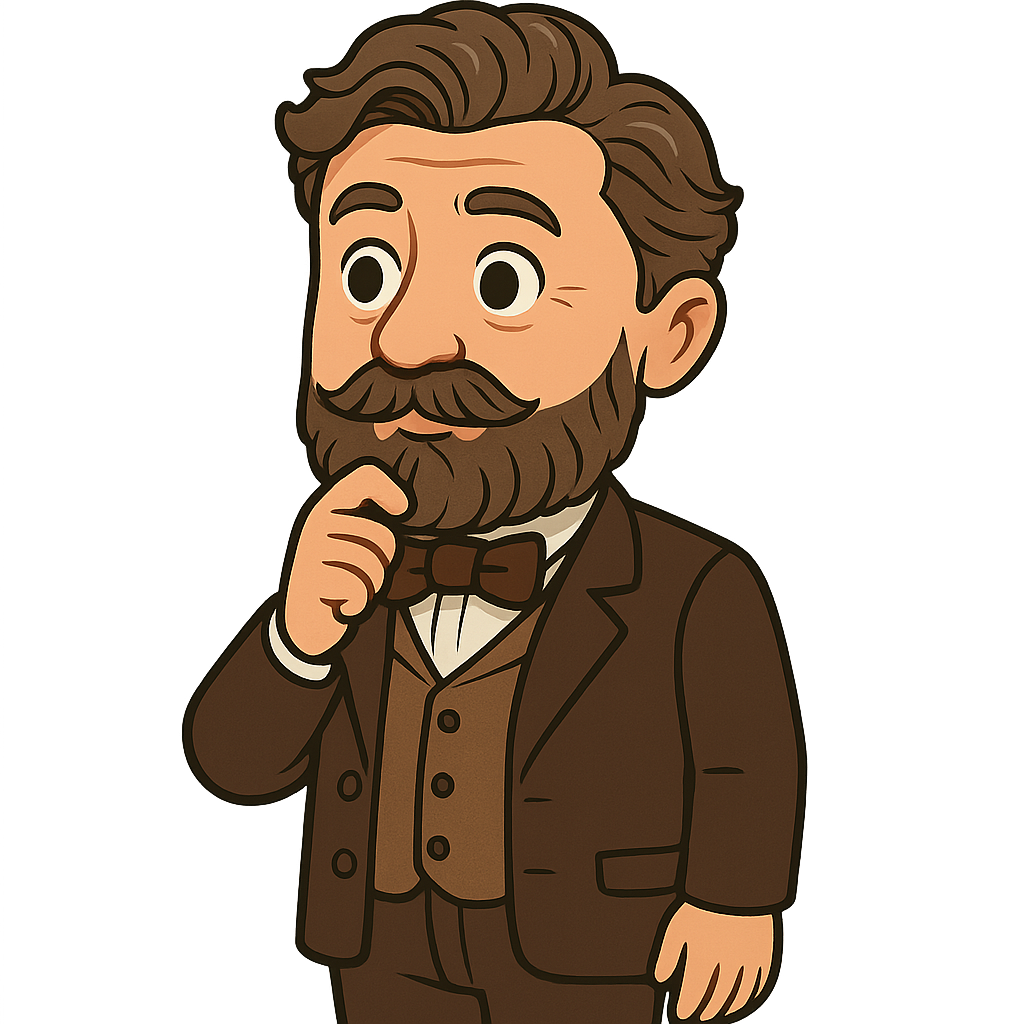
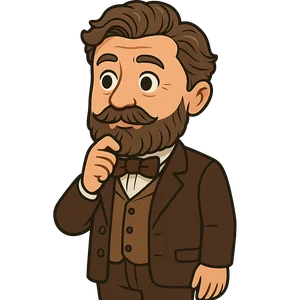
Hello, my name is Gustave Eiffel, and I am an engineer who loved to build things the world had never seen before. My story begins on December 15th, 1832, in a lovely city called Dijon, France. From a very young age, I was fascinated by how things were constructed. I didn't just see a building; I saw the beams, bolts, and brilliant ideas that held it together. This curiosity led me to Paris to study at a special school, the École Centrale des Arts et Manufactures. I originally planned to become a chemist, but during my studies, I became captivated by a remarkable new building material that was changing the world: iron. When I graduated in 1855, I knew my destiny was not in a chemistry lab but out in the world, as an engineer, shaping this strong and versatile metal into magnificent structures.
My career began with a thrilling challenge that set the course for my life's work. In 1858, I was given my first major project: to build a massive iron railway bridge in the city of Bordeaux. In those days, working with iron was revolutionary. It allowed engineers like me to design structures that were not only stronger than traditional stone or wood but also lighter and more elegant. We could create longer spans and more delicate arches, connecting cities and people in new ways. My company quickly gained a reputation for our innovative designs. We built the soaring Maria Pia Bridge in Portugal, which was completed in 1877, and then we broke records with the Garabit Viaduct in France, finished in 1884. Each project pushed the limits of what was thought possible, and our fame grew with every bridge that stretched across a valley or river.
Gustave Eiffel: The Man Who Built the Sky
Hello, my name is Gustave Eiffel, and I am an engineer who loved to build things the world had never seen before. My story begins on December 15th, 1832, in a lovely city called Dijon, France. From a very young age, I was fascinated by how things were constructed. I didn't just see a building; I saw the beams, bolts, and brilliant ideas that held it together. This curiosity led me to Paris to study at a special school, the École Centrale des Arts et Manufactures. I originally planned to become a chemist, but during my studies, I became captivated by a remarkable new building material that was changing the world: iron. When I graduated in 1855, I knew my destiny was not in a chemistry lab but out in the world, as an engineer, shaping this strong and versatile metal into magnificent structures.
My career began with a thrilling challenge that set the course for my life's work. In 1858, I was given my first major project: to build a massive iron railway bridge in the city of Bordeaux. In those days, working with iron was revolutionary. It allowed engineers like me to design structures that were not only stronger than traditional stone or wood but also lighter and more elegant. We could create longer spans and more delicate arches, connecting cities and people in new ways. My company quickly gained a reputation for our innovative designs. We built the soaring Maria Pia Bridge in Portugal, which was completed in 1877, and then we broke records with the Garabit Viaduct in France, finished in 1884. Each project pushed the limits of what was thought possible, and our fame grew with every bridge that stretched across a valley or river.
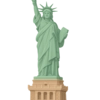
Around 1881, I was presented with one of the most unique challenges of my career. It was not a bridge, but a skeleton for a giant. The people of France were gifting a monumental statue to the United States, a statue that would become known as the Statue of Liberty. The artist had designed a beautiful copper skin, but it needed an internal structure to hold it up. The problem was complex: the skeleton had to be strong enough to support the immense weight of the copper and withstand the powerful winds of New York Harbor, yet flexible enough to allow the metal to expand and contract with changing temperatures. My solution was to design a central iron pylon, like a spine, with a network of beams that attached to the copper skin. This allowed the 'skin' to move independently without cracking. I was immensely proud to contribute to this powerful symbol of freedom, which was officially dedicated in America in 1886.
My greatest and most famous project began with a competition. In 1889, Paris was preparing to host the Exposition Universelle, a grand World's Fair, and the city wanted a magnificent monument to serve as its entrance. I proposed a bold and daring idea: a tower made entirely of iron, soaring 300 meters into the sky, which would make it the tallest man-made structure in the world. At first, many people in Paris were horrified by the design. They called it a useless and monstrous factory smokestack. Despite the controversy, my vision was chosen, and construction began in 1887. For two years, my team of brave workers assembled the intricate lattice of iron beams with incredible precision. It was a marvel of engineering and teamwork. When the tower finally opened for the 1889 Exposition, its critics fell silent. It was a triumphant success, and it soon transformed from a controversial structure into the beloved and iconic symbol of Paris.
After the great success of my tower, I faced a difficult period in my career related to the French project to build the Panama Canal in the late 1880s. The project faced many troubles, and it was a challenging time for everyone involved. This experience led me to turn my focus back to my greatest creation, which was originally intended to be a temporary structure. I refused to let my tower be torn down after the fair. Instead, I was determined to give it a new and lasting purpose. I transformed the top of the tower into a laboratory for science. I built a weather station to collect data and conducted pioneering experiments in aerodynamics, studying how wind resistance affects objects. Later, the tower proved essential for radio transmissions. I proved to the world that my tower was not just a beautiful monument but a valuable tool for scientific discovery and progress.
I lived a long and full life, reaching the age of 91 before I passed away in 1923. Looking back, I see a world connected by the iron structures I helped create. My bridges still carry trains and people across vast distances, and the skeleton I designed still holds Lady Liberty high. I hope that when you look at my tower in Paris, you see more than just iron and rivets. I hope it continues to inspire people to dream big, to believe in the power of science and imagination, and to have the courage to build things that the world has never seen before.
Wow facts
About
A French civil engineer, best known for designing the world-famous Eiffel Tower and the internal framework for the Statue of Liberty.
Take a Quiz
Question 1 of 5
What is the main idea of the section 'A Skeleton for Liberty'?
Explore next


Want to do even more?
Go beyond exploring. Unlock tools that turn every story into real learning.

Storypie Plus for families
Full stories, quizzes, and printables. Nights and car rides, sorted.
- Unlimited audio stories
- Create Mode: your child stars in the story
- Offline downloads
- Printable worksheets & coloring pages

Why Storypie for Schools
Students engaged. Prep in seconds. Evenings back to you.
- Worksheets & Quizzes
- Classroom Management
- Formative Assessment
- Custom Curriculum & Lesson Plans
- 27 Languages

Why Storypie for Homeschool
Curriculum done. They'll ask for more. Hours back in your day.
- Worksheet Generator
- First-Person Audio Stories
- Built-in Comprehension Quizzes
- Custom Curriculum & Lesson Plans
- Print & Go Activities