English

Gustave Eiffel
A French civil engineer…
Reads at Grades 3–5 Listens at Grades 1–5
Print & create
Answer keys·No prep·Free with an account
28 worksheets · answer keys · full story · quiz · Ages 8-10 · CEFR B1
Plus adds 280,000+ more stories in 27 languages, audio for every one, and printables for all of them.
Just want Gustave Eiffel?
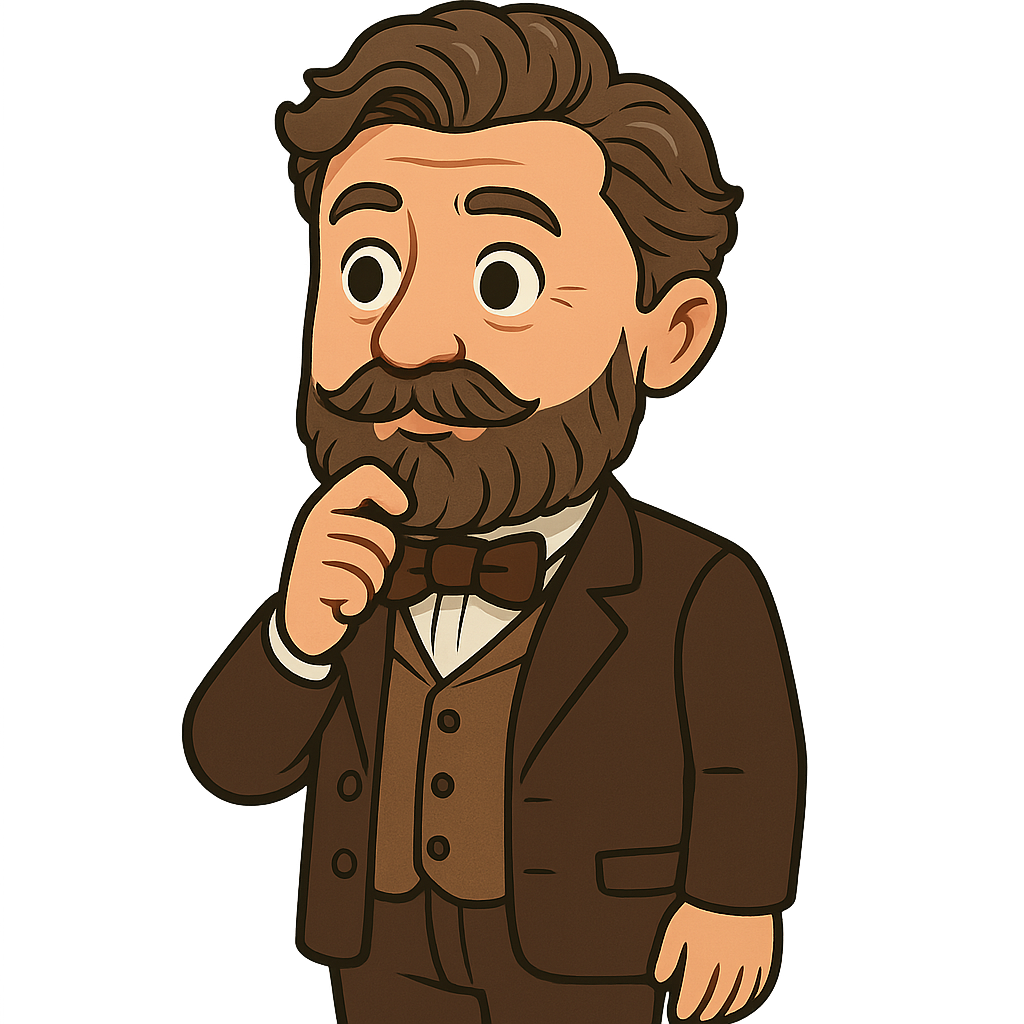
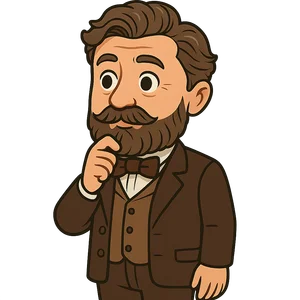
Hello, my name is Gustave Eiffel, and I am an engineer who loved to build amazing things with metal. I was born on December 15th, 1832, in a French city called Dijon. Even as a young boy, I was fascinated with how things were put together and had a great love for science. This passion led me to Paris to attend a special school, the École Centrale des Arts et Manufactures, where I studied to become an engineer. After graduating in 1855, I was ready to start my journey. My very first big project came in 1858 when I was asked to build a huge iron bridge in a city called Bordeaux. Seeing that massive metal structure come to life sparked a love for using iron in new and exciting ways that would last my entire life.
After my first success, I started my own company and quickly became known across Europe for building strong and beautiful bridges. My work was like solving giant puzzles made of iron. Two of my proudest creations were the Ponte Maria Pia bridge in Portugal and the Garabit Viaduct in France. The Ponte Maria Pia, which was completed in 1877, soared over a river with a giant metal arch that no one had ever seen before. A few years later, I built the Garabit Viaduct, finishing it in 1884. This bridge was even higher and seemed to float among the clouds. These projects taught me everything I needed to know about making structures that were not just strong, but also light and elegant. I learned how to design them to stand up to powerful winds, a skill that would soon become very important.
Gustave Eiffel
Hello, my name is Gustave Eiffel, and I am an engineer who loved to build amazing things with metal. I was born on December 15th, 1832, in a French city called Dijon. Even as a young boy, I was fascinated with how things were put together and had a great love for science. This passion led me to Paris to attend a special school, the École Centrale des Arts et Manufactures, where I studied to become an engineer. After graduating in 1855, I was ready to start my journey. My very first big project came in 1858 when I was asked to build a huge iron bridge in a city called Bordeaux. Seeing that massive metal structure come to life sparked a love for using iron in new and exciting ways that would last my entire life.
After my first success, I started my own company and quickly became known across Europe for building strong and beautiful bridges. My work was like solving giant puzzles made of iron. Two of my proudest creations were the Ponte Maria Pia bridge in Portugal and the Garabit Viaduct in France. The Ponte Maria Pia, which was completed in 1877, soared over a river with a giant metal arch that no one had ever seen before. A few years later, I built the Garabit Viaduct, finishing it in 1884. This bridge was even higher and seemed to float among the clouds. These projects taught me everything I needed to know about making structures that were not just strong, but also light and elegant. I learned how to design them to stand up to powerful winds, a skill that would soon become very important.
One day, I was asked to help with a very special project—a gift from the people of France to the people of America. You may know it as the Statue of Liberty. Now, I did not design the outside of this famous lady; another artist did that. My job, which I began around 1881, was to figure out what would hold her up from the inside. I designed her secret, super-strong iron skeleton. Think of it like a human spine holding up a body. This sturdy frame supported all of the heavy copper skin that you see on the outside. My design was very clever because it allowed her to sway just a little bit in the strong winds of the New York Harbor without ever breaking.
My greatest challenge came when Paris decided to host a World’s Fair in 1889. I had a huge dream: to build the tallest structure in the entire world, made completely out of iron. At first, many people in Paris thought my idea for a giant tower was very ugly and didn't want it in their city. But I knew it would be magnificent. The building process was an incredible adventure that lasted from 1887 to 1889. My team and I worked carefully, piecing together over 18,000 iron parts with millions of special metal pins called rivets. When it was finally finished, standing tall against the sky, I felt so much pride. It wasn't long before everyone fell in love with my tower, and it became the most famous symbol of Paris.
My work didn't stop once the tower was built. It was so tall that I realized it was the perfect place for a giant laboratory. I used my tower to conduct scientific experiments, studying the weather and aerodynamics, which is the science of how things fly. I lived a very full and exciting life and was 91 years old when I passed away. Today, my tower is one of the most famous landmarks in the world. It is visited by millions of people who look up and see what can be achieved with a big imagination and a lot of hard work. My name, and my tower, are remembered as a testament to dreaming big.
Wow facts
About
A French civil engineer, best known for designing the world-famous Eiffel Tower and the internal framework for the Statue of Liberty.
Take a Quiz
Question 1 of 5
The story says Gustave Eiffel's bridges were 'elegant.' What does the word 'elegant' mean in this context?
Explore next






Want to do even more?
Go beyond exploring. Unlock tools that turn every story into real learning.

Storypie Plus for families
Full stories, quizzes, and printables. Nights and car rides, sorted.
- Unlimited audio stories
- Create Mode: your child stars in the story
- Offline downloads
- Printable worksheets & coloring pages

Why Storypie for Schools
Students engaged. Prep in seconds. Evenings back to you.
- Worksheets & Quizzes
- Classroom Management
- Formative Assessment
- Custom Curriculum & Lesson Plans
- 27 Languages

Why Storypie for Homeschool
Curriculum done. They'll ask for more. Hours back in your day.
- Worksheet Generator
- First-Person Audio Stories
- Built-in Comprehension Quizzes
- Custom Curriculum & Lesson Plans
- Print & Go Activities