English

Gwendolyn Brooks
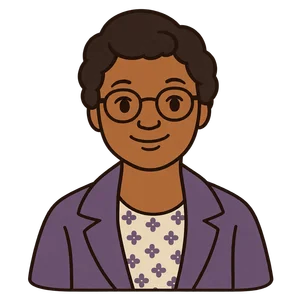
Gwendolyn Brooks was a celebrated American poet, author…
Reads at Grades 3–5 Listens at Grades 1–5
Print & create
Answer keys·No prep·Free with an account
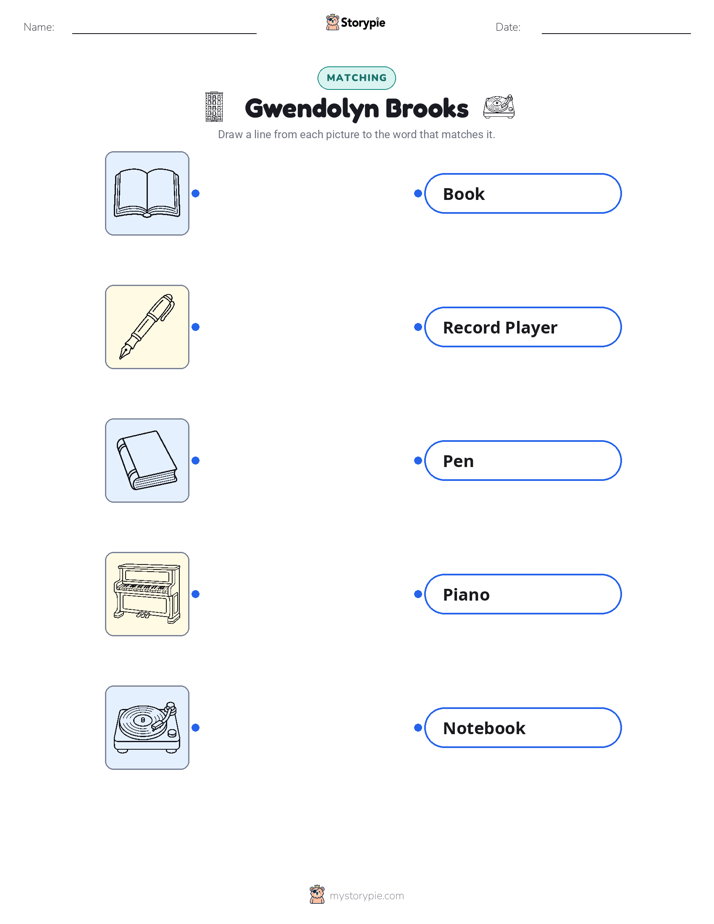
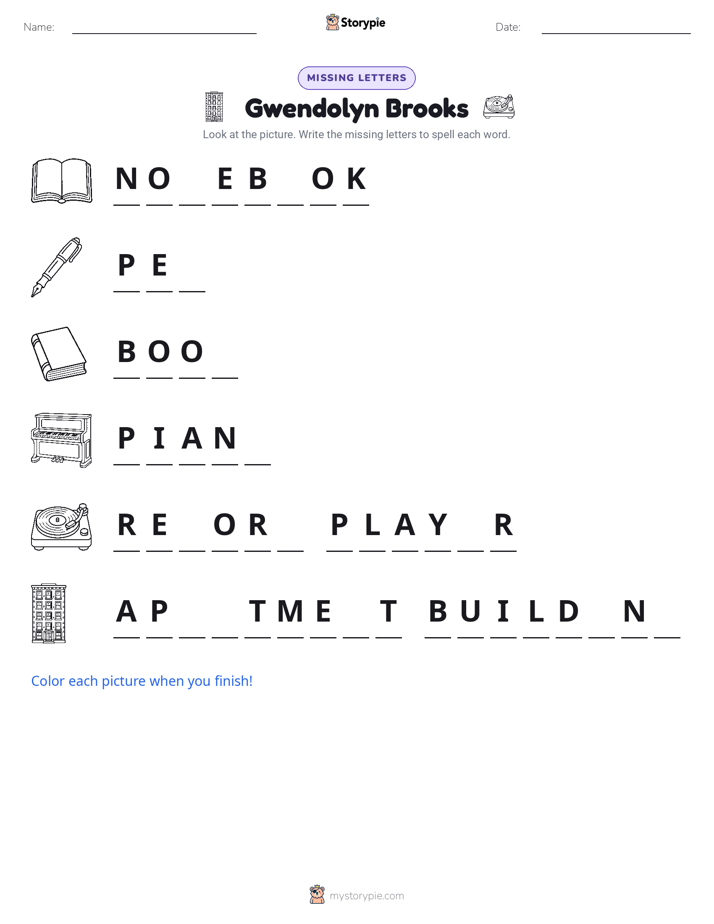
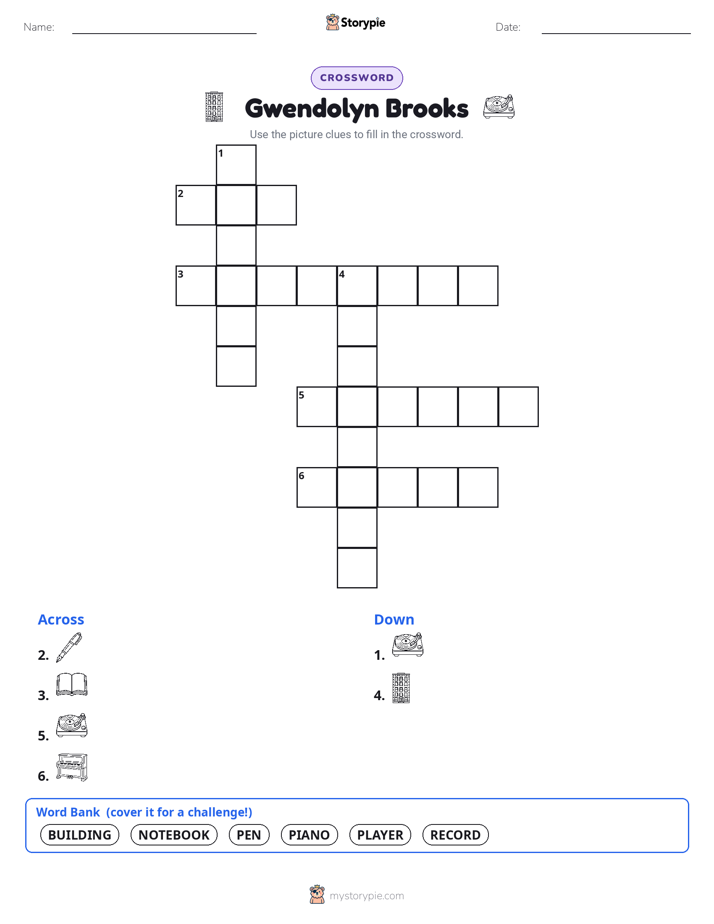
28 worksheets · answer keys · full story · quiz · Ages 8-10 · CEFR B1
Plus adds 290,000+ more stories in 27 languages, audio for every one, and printables for all of them.
Just want Gwendolyn Brooks?
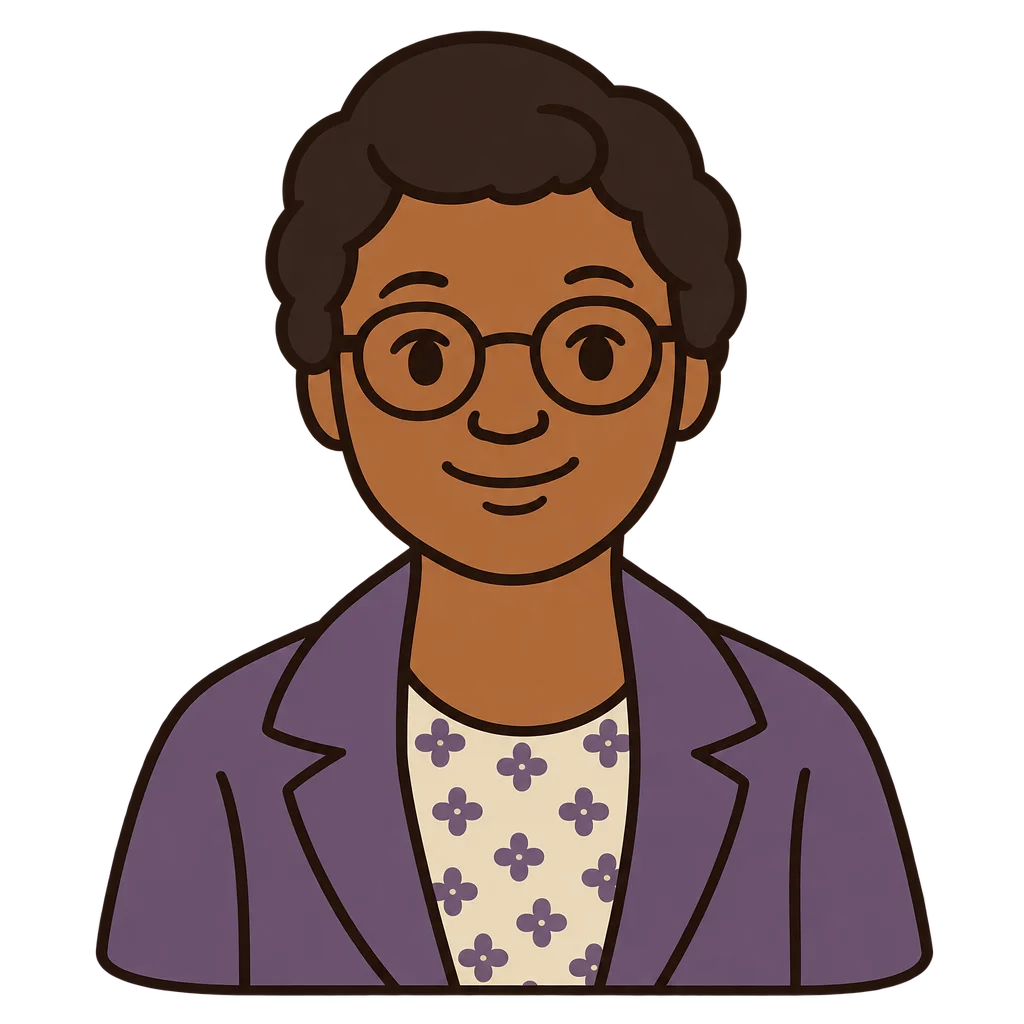
Hello! My name is Gwendolyn Brooks, and I was a poet. My story begins on June 7th, 1917, in Topeka, Kansas, but my family moved to the big city of Chicago when I was just a baby. From a very young age, I fell in love with words. I was a shy child, and books and poems became my best friends. I carried a notebook everywhere, jotting down rhymes and observations about the world around me. My mother always believed in me. She would tell me, 'You are going to be the lady Paul Laurence Dunbar!' That made me feel so proud. All that practice paid off, because in 1930, when I was only 13 years old, I had my very first poem published in a children's magazine. Seeing my words in print was one of the most exciting feelings in the world!
I grew up in a neighborhood on the South Side of Chicago that was nicknamed 'Bronzeville.' It was a busy, vibrant community, and it became the inspiration for almost all of my writing. I loved watching the people, listening to the music spilling out of windows, and soaking in the energy of the streets. After I graduated from Wilson Junior College in 1936, I started sending my poems to the Chicago Defender, a newspaper that was very important to the African American community. It was wonderful to share my work with my neighbors. During this time, I also met my husband, Henry Blakely, and we started our family. I kept writing all the time, joining poetry groups and working hard to make my poems the very best they could be.
In 1945, I published my very first book of poems, called 'A Street in Bronzeville.' It was filled with poems about the real lives of the people I saw every day. A few years later, in 1949, I published my second book, 'Annie Allen.' I was so proud of it, but I never could have imagined what would happen next. On May 1st, 1950, I received a phone call telling me that 'Annie Allen' had won the Pulitzer Prize for Poetry! I was so surprised I could barely speak. It was an amazing honor because I was the very first African American ever to win a Pulitzer Prize. It felt like a victory not just for me, but for all Black writers, showing everyone that our stories and our voices mattered.
Gwendolyn Brooks
Hello! My name is Gwendolyn Brooks, and I was a poet. My story begins on June 7th, 1917, in Topeka, Kansas, but my family moved to the big city of Chicago when I was just a baby. From a very young age, I fell in love with words. I was a shy child, and books and poems became my best friends. I carried a notebook everywhere, jotting down rhymes and observations about the world around me. My mother always believed in me. She would tell me, 'You are going to be the lady Paul Laurence Dunbar!' That made me feel so proud. All that practice paid off, because in 1930, when I was only 13 years old, I had my very first poem published in a children's magazine. Seeing my words in print was one of the most exciting feelings in the world!
I grew up in a neighborhood on the South Side of Chicago that was nicknamed 'Bronzeville.' It was a busy, vibrant community, and it became the inspiration for almost all of my writing. I loved watching the people, listening to the music spilling out of windows, and soaking in the energy of the streets. After I graduated from Wilson Junior College in 1936, I started sending my poems to the Chicago Defender, a newspaper that was very important to the African American community. It was wonderful to share my work with my neighbors. During this time, I also met my husband, Henry Blakely, and we started our family. I kept writing all the time, joining poetry groups and working hard to make my poems the very best they could be.
In 1945, I published my very first book of poems, called 'A Street in Bronzeville.' It was filled with poems about the real lives of the people I saw every day. A few years later, in 1949, I published my second book, 'Annie Allen.' I was so proud of it, but I never could have imagined what would happen next. On May 1st, 1950, I received a phone call telling me that 'Annie Allen' had won the Pulitzer Prize for Poetry! I was so surprised I could barely speak. It was an amazing honor because I was the very first African American ever to win a Pulitzer Prize. It felt like a victory not just for me, but for all Black writers, showing everyone that our stories and our voices mattered.
Winning that prize was wonderful, but my work wasn't done. As I got older, especially during the Civil Rights Movement of the 1960s, I wanted my poetry to do more. I wanted it to inspire young Black people and speak directly to my community. I began teaching at colleges and visiting schools to lead poetry workshops. I loved helping young writers find their own voices. In 1968, I was named the Poet Laureate of Illinois, which meant I was the official poet for my home state! Later, in 1985, I was given another big job: Consultant in Poetry to the Library of Congress, which is like being the top poet for the whole country.
I wrote poems for my entire life, telling stories about ordinary people with extraordinary hearts. I lived to be 83 years old, and I was so happy to see my work shared in classrooms and homes all over the world. People remember me for the stories I told about my beloved Bronzeville and for opening doors for other writers to follow. I hope my poems continue to show you that there is beauty and poetry all around you—in your family, in your neighborhood, and especially inside yourself.
Wow facts
About
Gwendolyn Brooks was a celebrated American poet, author, and teacher who became the first African American to win the Pulitzer Prize in 1950. Her work often focused on the everyday lives of Black people in urban communities.
Take a Quiz
Question 1 of 5
According to the story, what was the name of Gwendolyn Brooks's second book, which won the Pulitzer Prize?
Explore next






Want to do even more?
Go beyond exploring. Unlock tools that turn every story into real learning.

Storypie Plus for families
Full stories, quizzes, and printables. Nights and car rides, sorted.
- Unlimited audio stories
- Create Mode: your child stars in the story
- Offline downloads
- Printable worksheets & coloring pages

Why Storypie for Schools
Students engaged. Prep in seconds. Evenings back to you.
- Worksheets & Quizzes
- Classroom Management
- Formative Assessment
- Custom Curriculum & Lesson Plans
- 27 Languages

Why Storypie for Homeschool
Curriculum done. They'll ask for more. Hours back in your day.
- Worksheet Generator
- First-Person Audio Stories
- Built-in Comprehension Quizzes
- Custom Curriculum & Lesson Plans
- Print & Go Activities