English

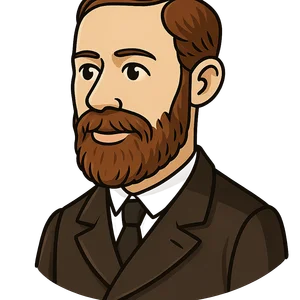
Heinrich Hertz
Heinrich Hertz was a German physicist who proved the existence of electromagnetic waves…
Reads at Grades 3–5 Listens at Grades 1–5
Print & create
Answer keys·No prep·Free with an account
28 worksheets · answer keys · full story · quiz · Ages 8-10 · CEFR B1
Plus adds 164,000+ more stories in 27 languages, audio for every one, and printables for all of them.
Just want Heinrich Hertz?
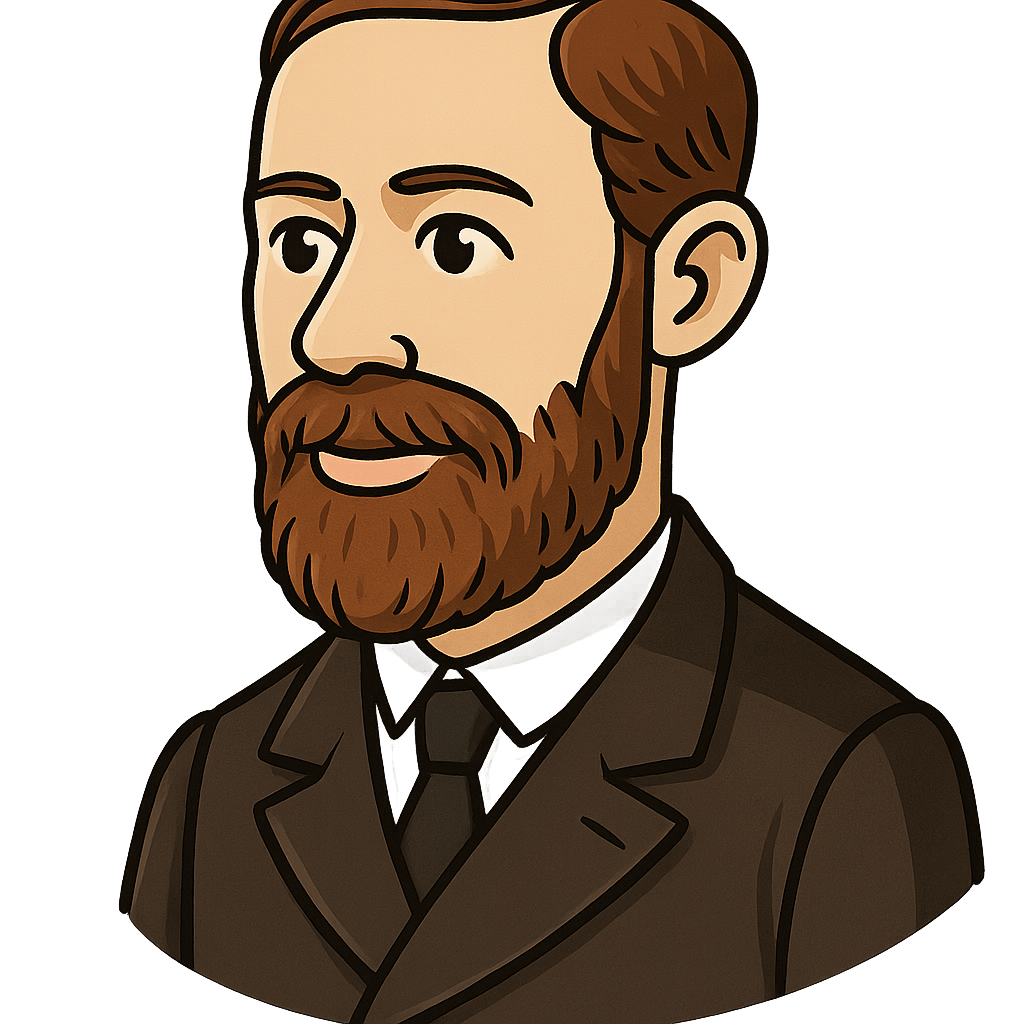
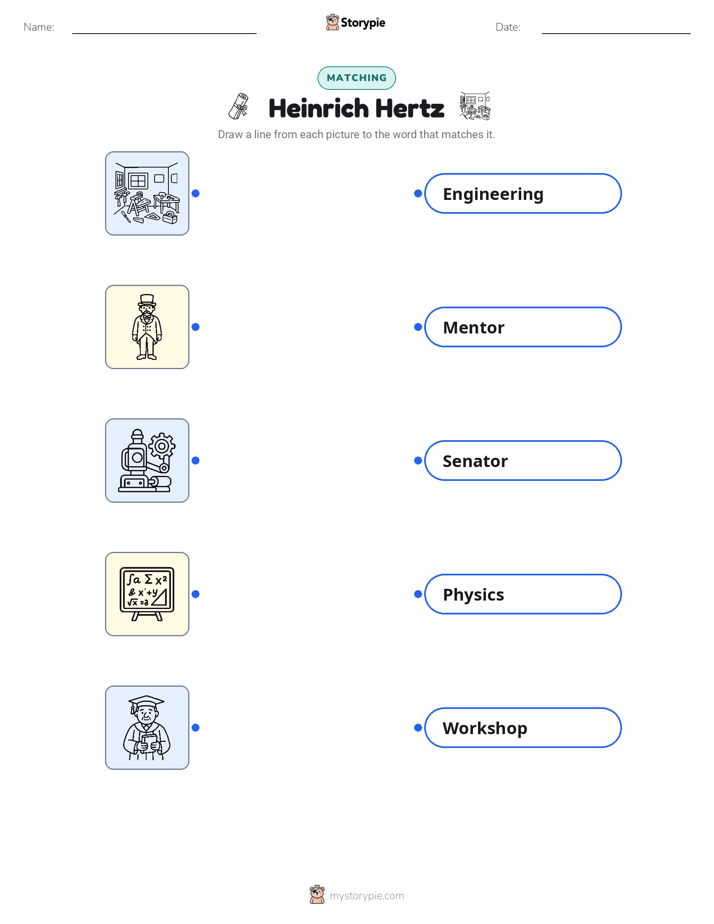
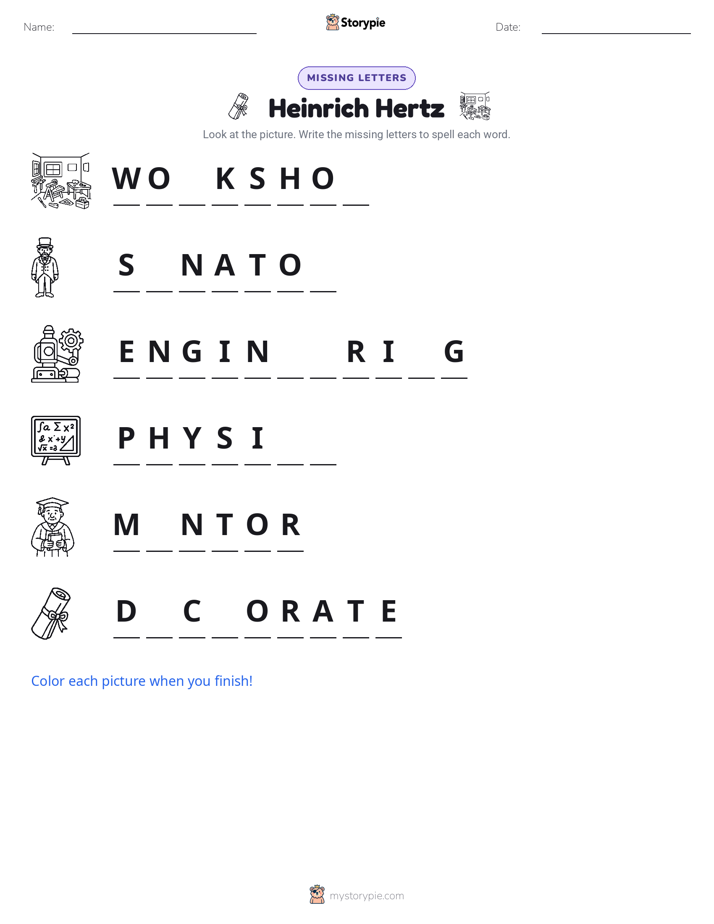
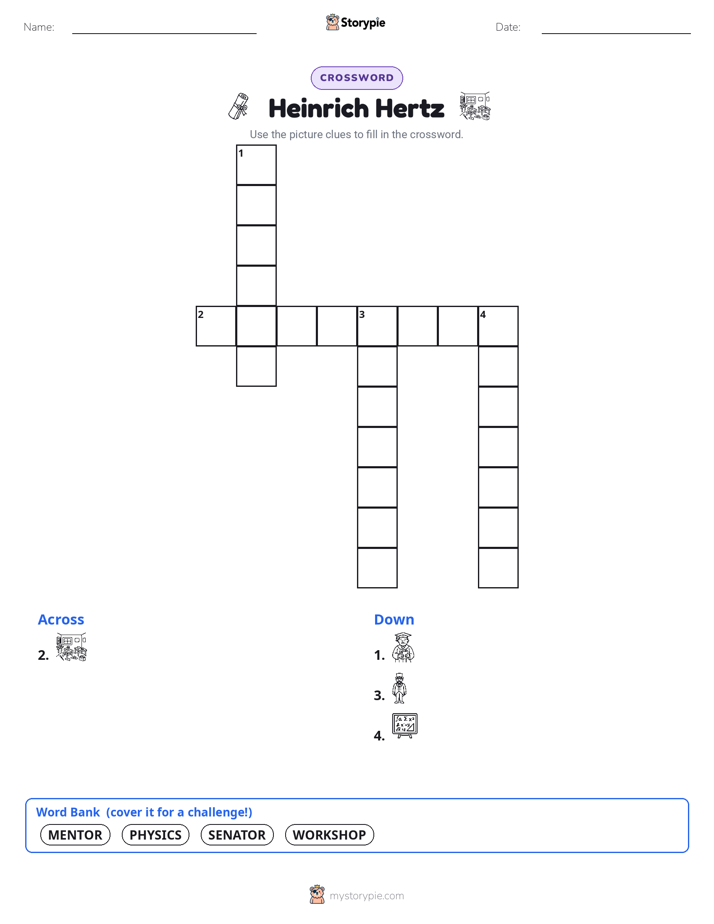
Hello! My name is Heinrich Hertz, and I want to tell you about my life and a discovery that changed the world. I was born on February 22nd, 1857, in a busy city called Hamburg, in Germany. Even as a little boy, I was fascinated by how things worked. While other kids were playing outside, I was often in my own little workshop, which my father helped me build. I loved using tools to create all sorts of gadgets and models. I wasn't just good with my hands; I also loved learning languages and reading books. My family always encouraged my curiosity, which was the best gift they could have given me.
When it was time for college, I first thought I would become an engineer because I loved building things so much. But soon, I realized my true passion was for science, especially physics—the study of energy and matter. I wanted to understand the invisible forces that shape our world. Around 1878, I went to the University of Berlin to study with some of the greatest scientists of my time, including a brilliant man named Hermann von Helmholtz. He became my teacher and guide. One day, he told me about an amazing idea from another scientist, James Clerk Maxwell. Maxwell believed there were invisible waves, which he called 'electromagnetic waves,' all around us, but no one had ever been able to prove they were real. Professor von Helmholtz knew I loved a good puzzle, and this was the biggest one yet!
I became a professor myself and got to work in my own laboratory at the Karlsruhe Institute of Technology. I was determined to find Maxwell's mysterious waves. Between 1887 and 1888, I spent countless hours building special equipment for my experiments. I made a device that could create a powerful electric spark that jumped across a small gap—think of it like a tiny, contained bolt of lightning. I called this my transmitter. Then, across the room, I set up a simple loop of wire with its own tiny gap, which I called my receiver. One day, something incredible happened. When my transmitter made a spark, a second, smaller spark leaped across the gap in my receiver across the room! There were no wires connecting them. The energy had traveled through the air! I had done it. I had proven that invisible electromagnetic waves were real. I even showed that these waves behaved a lot like light waves—they could be blocked and even bounced off surfaces.
Heinrich Hertz
Hello! My name is Heinrich Hertz, and I want to tell you about my life and a discovery that changed the world. I was born on February 22nd, 1857, in a busy city called Hamburg, in Germany. Even as a little boy, I was fascinated by how things worked. While other kids were playing outside, I was often in my own little workshop, which my father helped me build. I loved using tools to create all sorts of gadgets and models. I wasn't just good with my hands; I also loved learning languages and reading books. My family always encouraged my curiosity, which was the best gift they could have given me.
When it was time for college, I first thought I would become an engineer because I loved building things so much. But soon, I realized my true passion was for science, especially physics—the study of energy and matter. I wanted to understand the invisible forces that shape our world. Around 1878, I went to the University of Berlin to study with some of the greatest scientists of my time, including a brilliant man named Hermann von Helmholtz. He became my teacher and guide. One day, he told me about an amazing idea from another scientist, James Clerk Maxwell. Maxwell believed there were invisible waves, which he called 'electromagnetic waves,' all around us, but no one had ever been able to prove they were real. Professor von Helmholtz knew I loved a good puzzle, and this was the biggest one yet!
I became a professor myself and got to work in my own laboratory at the Karlsruhe Institute of Technology. I was determined to find Maxwell's mysterious waves. Between 1887 and 1888, I spent countless hours building special equipment for my experiments. I made a device that could create a powerful electric spark that jumped across a small gap—think of it like a tiny, contained bolt of lightning. I called this my transmitter. Then, across the room, I set up a simple loop of wire with its own tiny gap, which I called my receiver. One day, something incredible happened. When my transmitter made a spark, a second, smaller spark leaped across the gap in my receiver across the room! There were no wires connecting them. The energy had traveled through the air! I had done it. I had proven that invisible electromagnetic waves were real. I even showed that these waves behaved a lot like light waves—they could be blocked and even bounced off surfaces.
My discovery was more important than I ever could have imagined. Other brilliant inventors and scientists took my work and used it to create amazing things like the radio, television, cell phones, and even Wi-Fi. All of these technologies work by sending and receiving these invisible waves. My health was often a challenge, and my time on Earth was shorter than I would have liked. I lived to be 36 years old. But I am so proud that my curiosity helped connect the world in ways that seem like magic. To honor my work, the unit used to measure the frequency of waves—from radio waves to the processor in your computer—was named the 'hertz.' So every time you hear that word, you can remember the curious boy from Hamburg who found the invisible waves all around us.
Wow facts
About
Heinrich Hertz was a German physicist who proved the existence of electromagnetic waves, which paved the way for radio, television, and other wireless technologies.
Take a Quiz
Question 1 of 5
According to the story, what did Heinrich Hertz prove was real between 1887 and 1888?
Explore next





Want to do even more?
Go beyond exploring. Unlock tools that turn every story into real learning.

Storypie Plus for families
Full stories, quizzes, and printables. Nights and car rides, sorted.
- Unlimited audio stories
- Create Mode: your child stars in the story
- Offline downloads
- Printable worksheets & coloring pages

Why Storypie for Schools
Students engaged. Prep in seconds. Evenings back to you.
- Worksheets & Quizzes
- Classroom Management
- Formative Assessment
- Custom Curriculum & Lesson Plans
- 27 Languages

Why Storypie for Homeschool
Curriculum done. They'll ask for more. Hours back in your day.
- Worksheet Generator
- First-Person Audio Stories
- Built-in Comprehension Quizzes
- Custom Curriculum & Lesson Plans
- Print & Go Activities