English

Henrietta Swan Leavitt
An American astronomer whose discovery of the period-luminosity relationship for Cepheid variable stars…
Reads at Grades 6–8 Listens at Grades 4–8
Print & create
Answer keys·No prep·Free with an account
28 worksheets · answer keys · full story · quiz · Ages 10-12 · CEFR B2
Plus adds 290,000+ more stories in 27 languages, audio for every one, and printables for all of them.
Just want Henrietta Swan Leavitt?
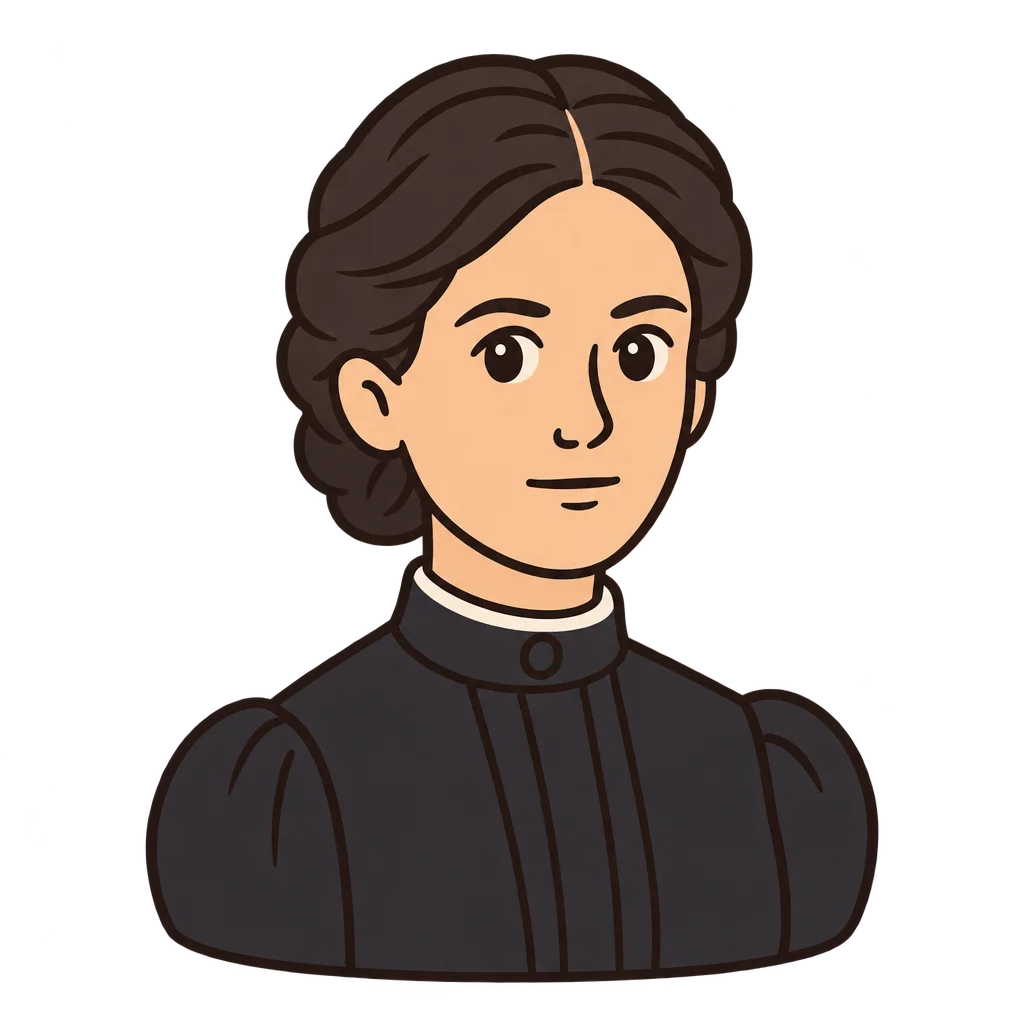
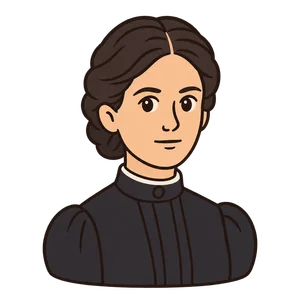
Hello. My name is Henrietta Swan Leavitt. I was born on July 4th, 1868, in Lancaster, Massachusetts. From a young age, I was deeply curious about the world, but my gaze was always drawn upward to the vast, star-filled night sky. I developed a love for mathematics and science, subjects that were not commonly encouraged for girls to study during that time. I attended Oberlin College and then continued my education at the Society for the Collegiate Instruction of Women, which you would now know as Radcliffe College, a part of Harvard University. I graduated in 1892, but it was a senior-year astronomy course that truly cemented my passion. I felt a powerful pull toward the stars and knew my life's work was waiting for me among those distant, twinkling lights.
After I graduated, I became ill, which unfortunately delayed my ambitions, but I never lost sight of my dream. In 1893, I started volunteering at the Harvard College Observatory, which was directed by an astronomer named Edward Charles Pickering. He was undertaking a monumental project: to map and catalog every star in the sky. To accomplish this, he hired a team of women who became known as the 'Harvard Computers.' Our job was to meticulously examine thousands of glass photographic plates, each capturing a small portion of the night sky. We were not permitted to operate the large telescopes—that was considered a job for men—but we performed the essential work of analyzing all the data they collected. I was officially hired as a permanent staff member in 1902. The pay was only 30 cents an hour, but the opportunity was priceless. I was finally a professional astronomer with an entire universe to explore from my desk.
Henrietta Swan Leavitt: A Yardstick for the Universe
Hello. My name is Henrietta Swan Leavitt. I was born on July 4th, 1868, in Lancaster, Massachusetts. From a young age, I was deeply curious about the world, but my gaze was always drawn upward to the vast, star-filled night sky. I developed a love for mathematics and science, subjects that were not commonly encouraged for girls to study during that time. I attended Oberlin College and then continued my education at the Society for the Collegiate Instruction of Women, which you would now know as Radcliffe College, a part of Harvard University. I graduated in 1892, but it was a senior-year astronomy course that truly cemented my passion. I felt a powerful pull toward the stars and knew my life's work was waiting for me among those distant, twinkling lights.
After I graduated, I became ill, which unfortunately delayed my ambitions, but I never lost sight of my dream. In 1893, I started volunteering at the Harvard College Observatory, which was directed by an astronomer named Edward Charles Pickering. He was undertaking a monumental project: to map and catalog every star in the sky. To accomplish this, he hired a team of women who became known as the 'Harvard Computers.' Our job was to meticulously examine thousands of glass photographic plates, each capturing a small portion of the night sky. We were not permitted to operate the large telescopes—that was considered a job for men—but we performed the essential work of analyzing all the data they collected. I was officially hired as a permanent staff member in 1902. The pay was only 30 cents an hour, but the opportunity was priceless. I was finally a professional astronomer with an entire universe to explore from my desk.
Mr. Pickering assigned me a very specific task: to study 'variable stars.' These are fascinating stars that do not shine with a constant light; instead, their brightness increases and decreases in a regular, repeating cycle, like a cosmic heartbeat. My research focused on a group of these stars located in the Small and Large Magellanic Clouds, which are actually small galaxies that orbit our own Milky Way galaxy. Day after day, I sat at my desk, carefully comparing the photographic plates, measuring the brightness of each star, and timing its unique pulse. It was detailed and painstaking work that required incredible patience. But as I cataloged thousands of these variable stars, I began to notice something extraordinary. In 1908, I identified a remarkable pattern among a specific type known as Cepheid variables. The relationship was elegantly simple: the brighter a Cepheid star was in its true luminosity, the longer its period—the time it took to cycle from bright to dim and back again. The bigger, more luminous stars had a slow, steady pulse, while the dimmer ones blinked more rapidly.
My discovery might not have sounded revolutionary at first, but its implications were profound. In 1912, I published a paper that detailed this precise relationship between a Cepheid variable's period and its luminosity, or its intrinsic brightness. This relationship became a key to unlocking the true scale of the cosmos—a 'cosmic yardstick' that could be used to measure the universe itself. Imagine seeing two streetlights at night; if you know that one is inherently much brighter than the other, you can conclude that the one that appears dimmer must be farther away. My discovery applied the same logic to the stars. By measuring a Cepheid's pulse, astronomers could determine its true brightness. Then, by comparing that to how bright it appeared from Earth, they could accurately calculate its distance. For the first time in history, we had a reliable method for measuring the immense distances to stars and galaxies. My work provided the fundamental tool that other astronomers, including the famous Edwin Hubble, later used to prove that our Milky Way was just one of many galaxies and that the universe was expanding.
I spent the rest of my career at the Harvard College Observatory, continuing my quiet, focused study of the stars even as my hearing began to fail. I loved the work that I did. I lived to be 53 years old, passing away from cancer in 1921. I never sought fame, and for many years, my contribution was not widely known. However, I am incredibly proud that my discovery became a cornerstone of modern astronomy. My simple observation of a pattern in the stars gave humanity a ruler to measure the cosmos, helping us all understand our place in a universe far more vast and wonderful than we had ever imagined. Today, when you look up at the night sky, remember that there are incredible patterns and secrets waiting to be discovered, often in the quiet details.
Wow facts
About
An American astronomer whose discovery of the period-luminosity relationship for Cepheid variable stars allowed astronomers to measure the distance to faraway galaxies, fundamentally changing the understanding of the universe.
Take a Quiz
Question 1 of 5
What was Henrietta Swan Leavitt's most significant contribution to the field of astronomy?
Explore next






Want to do even more?
Go beyond exploring. Unlock tools that turn every story into real learning.

Storypie Plus for families
Full stories, quizzes, and printables. Nights and car rides, sorted.
- Unlimited audio stories
- Create Mode: your child stars in the story
- Offline downloads
- Printable worksheets & coloring pages

Why Storypie for Schools
Students engaged. Prep in seconds. Evenings back to you.
- Worksheets & Quizzes
- Classroom Management
- Formative Assessment
- Custom Curriculum & Lesson Plans
- 27 Languages

Why Storypie for Homeschool
Curriculum done. They'll ask for more. Hours back in your day.
- Worksheet Generator
- First-Person Audio Stories
- Built-in Comprehension Quizzes
- Custom Curriculum & Lesson Plans
- Print & Go Activities