English

Henrietta Swan Leavitt
An American astronomer whose discovery of the period-luminosity relationship for Cepheid variable stars…
Reads at Grades 3–5 Listens at Grades 1–5
Print & create
Answer keys·No prep·Free with an account
28 worksheets · answer keys · full story · quiz · Ages 8-10 · CEFR B1
Plus adds 290,000+ more stories in 27 languages, audio for every one, and printables for all of them.
Just want Henrietta Swan Leavitt?
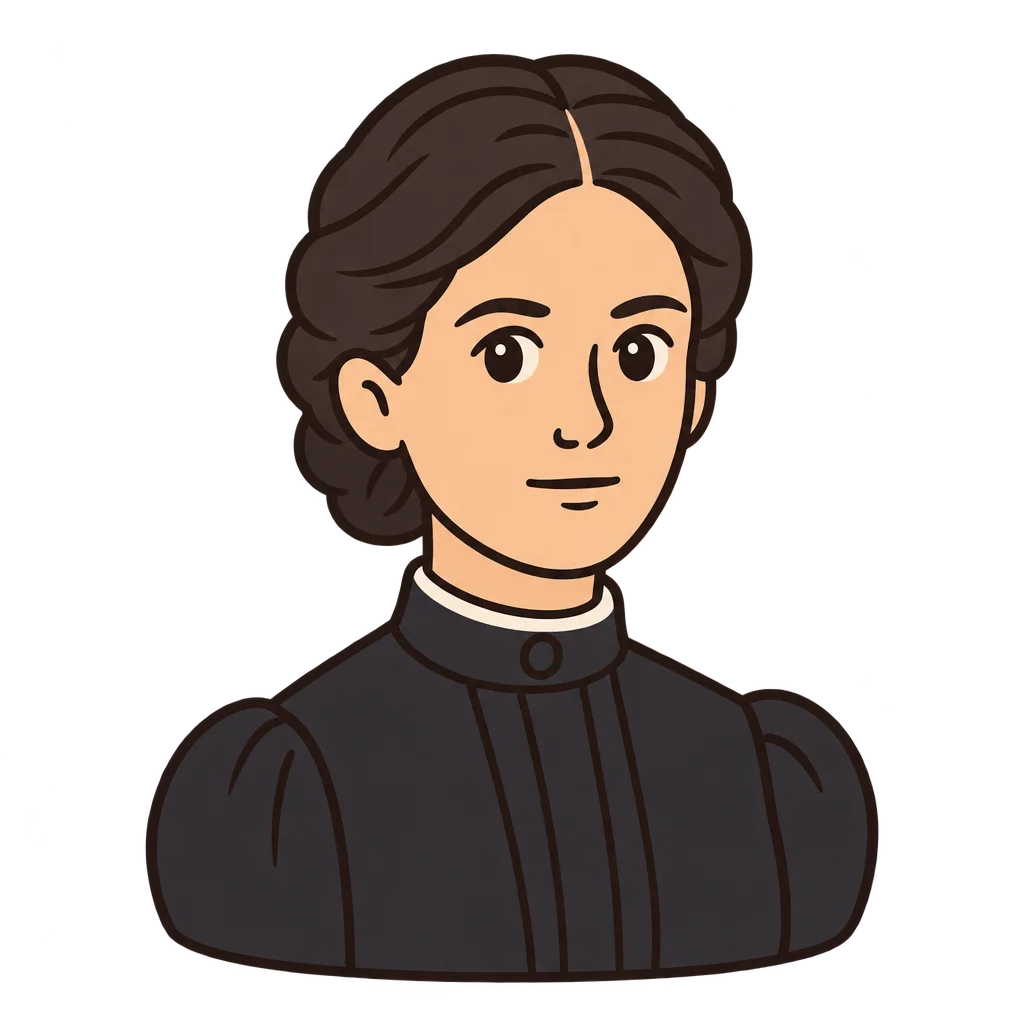
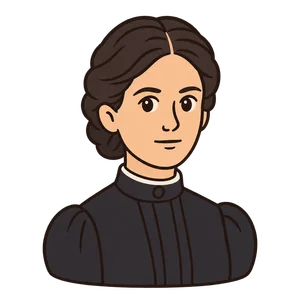
Hello! My name is Henrietta Swan Leavitt, and I want to tell you how I helped us understand just how big our universe is. I was born a long time ago, on July 4th, 1868, in Lancaster, Massachusetts. Even as a young girl, I was curious about everything, especially the twinkling lights in the night sky. I loved to learn, and I was lucky enough to go to college, which was not very common for women back then. In 1892, I graduated from the Society for the Collegiate Instruction of Women, which later became Radcliffe College. It was there that my love for astronomy, the study of stars and space, truly began to sparkle.
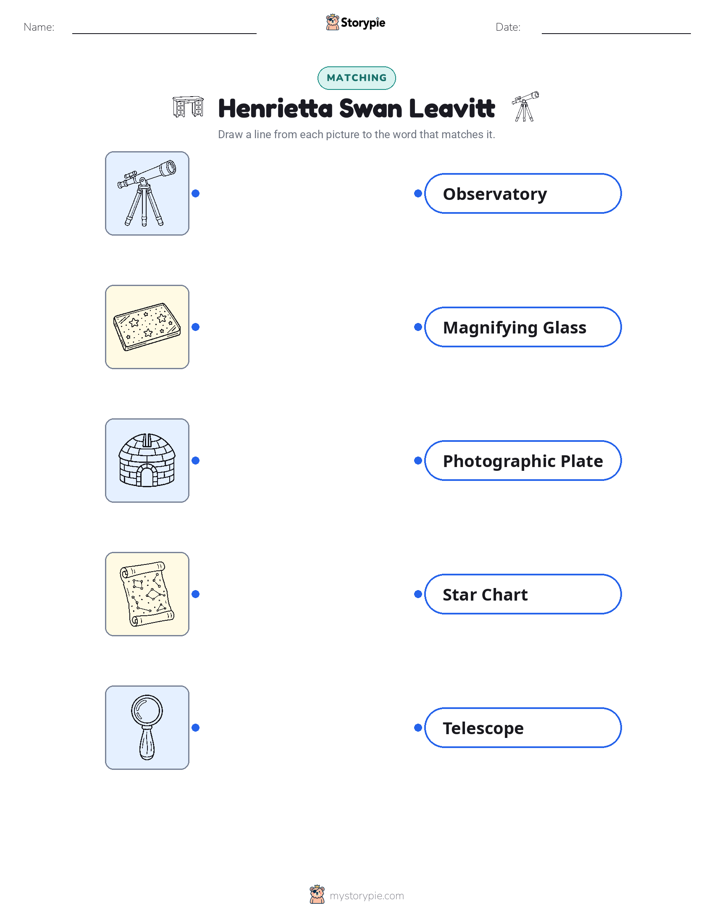
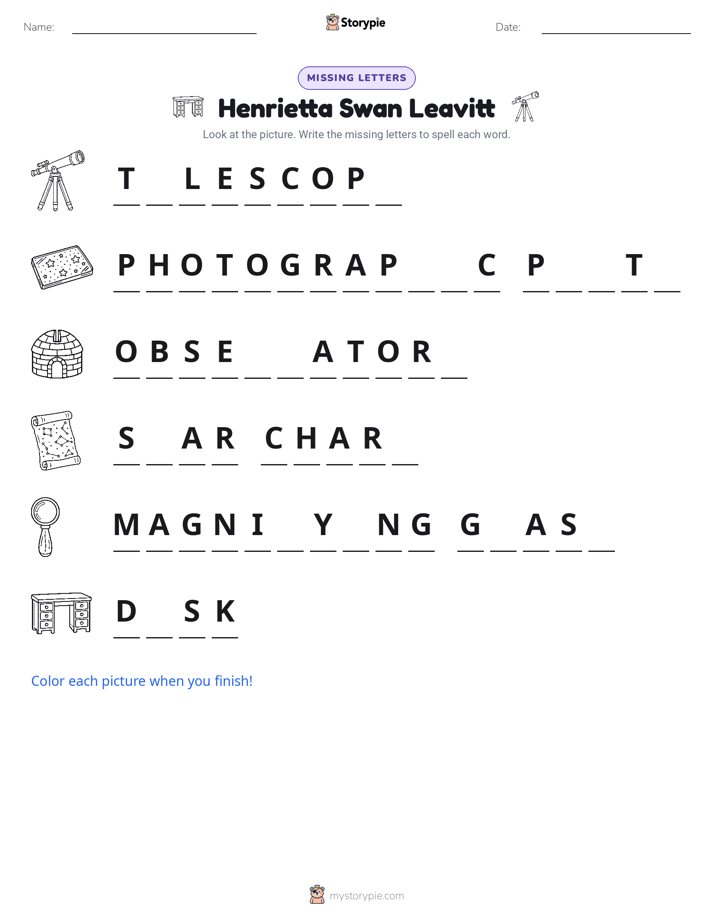
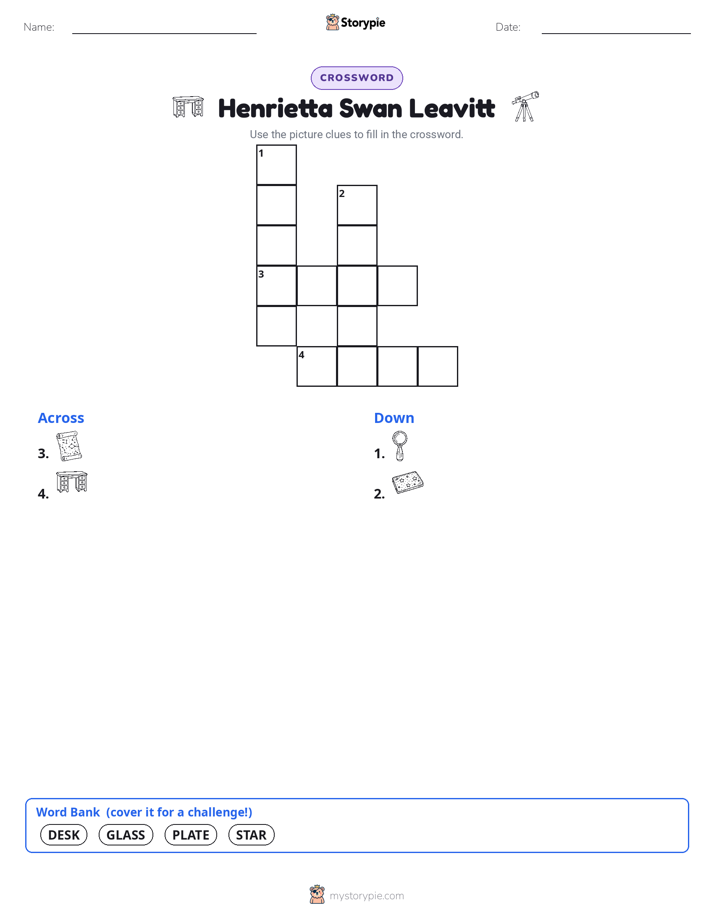
After I finished college, something happened that made life a little quieter for me—I began to lose my hearing. But that didn't stop my curiosity! In 1893, I got a job at the Harvard College Observatory. My title was a 'computer.' That might sound strange to you, but in my day, before we had electronic computers, a 'computer' was a person who did all the math and calculations by hand! My boss, a man named Edward Charles Pickering, hired a group of women, and our job was to look at thousands of glass photographic plates of the night sky. We would carefully measure the position and brightness of each star. It was detailed work, but I loved it. I felt like I was a detective, looking for clues hidden among the stars.
While studying these photographs, I became fascinated by a special kind of star called a Cepheid variable. These stars are not like our sun; they don't shine with a steady light. Instead, they get brighter, then dimmer, then brighter again, like a slow, cosmic heartbeat. I spent years carefully studying thousands of these stars in a faraway star cluster called the Small Magellanic Cloud. As I recorded their brightness and the time it took for them to pulse, I noticed something amazing. I saw a pattern! The brighter a star was, the longer its pulse, or period, was. I published my discovery in 1908 and shared even more details in 1912. I had found a special relationship between how bright these stars truly were and how fast they blinked.
Henrietta Swan Leavitt
Hello! My name is Henrietta Swan Leavitt, and I want to tell you how I helped us understand just how big our universe is. I was born a long time ago, on July 4th, 1868, in Lancaster, Massachusetts. Even as a young girl, I was curious about everything, especially the twinkling lights in the night sky. I loved to learn, and I was lucky enough to go to college, which was not very common for women back then. In 1892, I graduated from the Society for the Collegiate Instruction of Women, which later became Radcliffe College. It was there that my love for astronomy, the study of stars and space, truly began to sparkle.
After I finished college, something happened that made life a little quieter for me—I began to lose my hearing. But that didn't stop my curiosity! In 1893, I got a job at the Harvard College Observatory. My title was a 'computer.' That might sound strange to you, but in my day, before we had electronic computers, a 'computer' was a person who did all the math and calculations by hand! My boss, a man named Edward Charles Pickering, hired a group of women, and our job was to look at thousands of glass photographic plates of the night sky. We would carefully measure the position and brightness of each star. It was detailed work, but I loved it. I felt like I was a detective, looking for clues hidden among the stars.
While studying these photographs, I became fascinated by a special kind of star called a Cepheid variable. These stars are not like our sun; they don't shine with a steady light. Instead, they get brighter, then dimmer, then brighter again, like a slow, cosmic heartbeat. I spent years carefully studying thousands of these stars in a faraway star cluster called the Small Magellanic Cloud. As I recorded their brightness and the time it took for them to pulse, I noticed something amazing. I saw a pattern! The brighter a star was, the longer its pulse, or period, was. I published my discovery in 1908 and shared even more details in 1912. I had found a special relationship between how bright these stars truly were and how fast they blinked.
You might be wondering why this pattern was so important. Well, imagine you see two lights in the distance. It's hard to tell if one is a bright light that's far away or a dim light that's close. But because of my discovery, if an astronomer saw a Cepheid variable star, they could measure how long it took to pulse. That told them the star's true brightness. By comparing its true brightness to how bright it looked from Earth, they could figure out exactly how far away it was! My discovery created a 'yardstick' that could measure enormous distances across space. For the very first time, we had a way to measure the universe.
My work opened up the cosmos in a way no one had imagined. A few years after my discovery, another famous astronomer named Edwin Hubble used my 'yardstick' to prove that our Milky Way was not the only galaxy. He showed that the universe was filled with billions of other galaxies, each one millions of light-years away. I lived to be 53 years old, passing away in 1921. Though I never knew just how far my discovery would reach, I am so proud that my careful, quiet work looking for patterns in the stars helped show everyone the true, breathtaking size of our incredible universe. My work is still used by astronomers today to continue exploring the great beyond.
Wow facts
About
An American astronomer whose discovery of the period-luminosity relationship for Cepheid variable stars allowed astronomers to measure the distance to faraway galaxies, fundamentally changing the understanding of the universe.
Take a Quiz
Question 1 of 5
In the story, what did it mean to be a 'computer' in Henrietta's time?
Explore next





Want to do even more?
Go beyond exploring. Unlock tools that turn every story into real learning.

Storypie Plus for families
Full stories, quizzes, and printables. Nights and car rides, sorted.
- Unlimited audio stories
- Create Mode: your child stars in the story
- Offline downloads
- Printable worksheets & coloring pages

Why Storypie for Schools
Students engaged. Prep in seconds. Evenings back to you.
- Worksheets & Quizzes
- Classroom Management
- Formative Assessment
- Custom Curriculum & Lesson Plans
- 27 Languages

Why Storypie for Homeschool
Curriculum done. They'll ask for more. Hours back in your day.
- Worksheet Generator
- First-Person Audio Stories
- Built-in Comprehension Quizzes
- Custom Curriculum & Lesson Plans
- Print & Go Activities