English

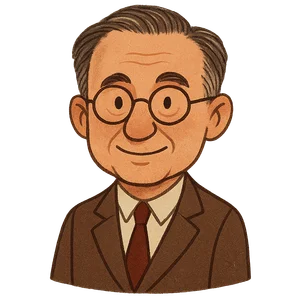
Howard Florey
Howard Florey was an Australian pharmacologist and pathologist who, with his team…
Reads at Grades 6–8 Listens at Grades 4–8
Print & create
Answer keys·No prep·Free with an account
28 worksheets · answer keys · full story · quiz · Ages 10-12 · CEFR B2
Plus adds 208,000+ more stories in 27 languages, audio for every one, and printables for all of them.
Just want Howard Florey?
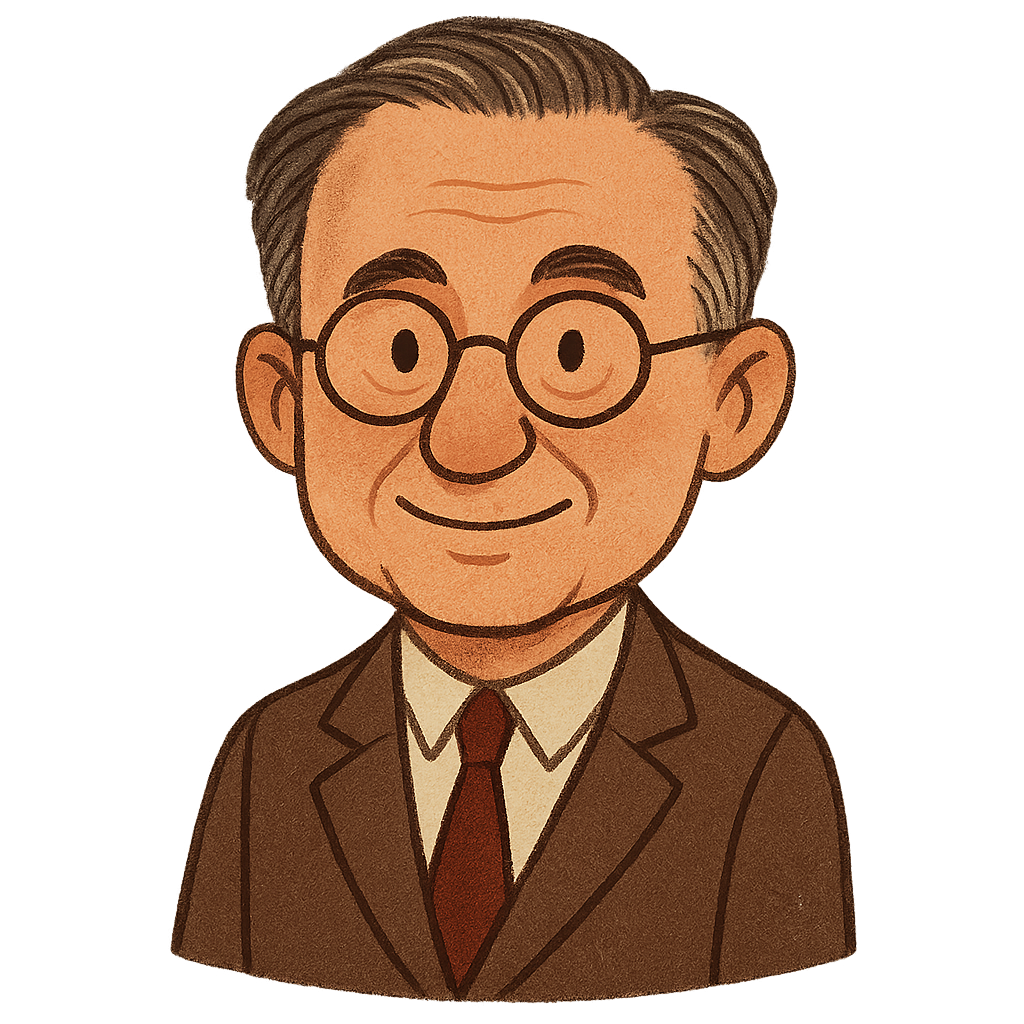
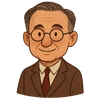
Hello! My name is Howard Florey, and I want to tell you the story of how my team and I helped turn a bit of fuzzy mold into one of the world's most important medicines. I was born way back on September 24th, 1898, in a sunny city called Adelaide in Australia. Even as a boy, I was fascinated by how things worked, especially the human body. I knew I wanted to be a scientist and study medicine. I worked very hard in school, and in 1921, my hard work paid off when I won a special award called a Rhodes Scholarship. This was my ticket to travel all the way to England to study at the famous University of Oxford. It was a new country and a new adventure, and I couldn't wait to get started in the world of scientific research.
By 1935, I was a professor of pathology at Oxford, leading a team of researchers at the Sir William Dunn School of Pathology. One of my most brilliant partners was a biochemist named Ernst Boris Chain. In 1938, Ernst and I decided to investigate natural things that could fight off dangerous bacteria. We read through old scientific papers, and Ernst found one from 1929 by a doctor named Alexander Fleming. Dr. Fleming had described a strange mold, *Penicillium notatum*, that seemed to kill germs in his lab dishes. But he couldn't figure out how to get the 'germ-killing juice' out of the mold or make it stable enough to use as a medicine. For nearly a decade, his amazing discovery had just been sitting there. To us, it was a fascinating puzzle just waiting to be solved.
Howard Florey
Hello! My name is Howard Florey, and I want to tell you the story of how my team and I helped turn a bit of fuzzy mold into one of the world's most important medicines. I was born way back on September 24th, 1898, in a sunny city called Adelaide in Australia. Even as a boy, I was fascinated by how things worked, especially the human body. I knew I wanted to be a scientist and study medicine. I worked very hard in school, and in 1921, my hard work paid off when I won a special award called a Rhodes Scholarship. This was my ticket to travel all the way to England to study at the famous University of Oxford. It was a new country and a new adventure, and I couldn't wait to get started in the world of scientific research.
By 1935, I was a professor of pathology at Oxford, leading a team of researchers at the Sir William Dunn School of Pathology. One of my most brilliant partners was a biochemist named Ernst Boris Chain. In 1938, Ernst and I decided to investigate natural things that could fight off dangerous bacteria. We read through old scientific papers, and Ernst found one from 1929 by a doctor named Alexander Fleming. Dr. Fleming had described a strange mold, Penicillium notatum, that seemed to kill germs in his lab dishes. But he couldn't figure out how to get the 'germ-killing juice' out of the mold or make it stable enough to use as a medicine. For nearly a decade, his amazing discovery had just been sitting there. To us, it was a fascinating puzzle just waiting to be solved.
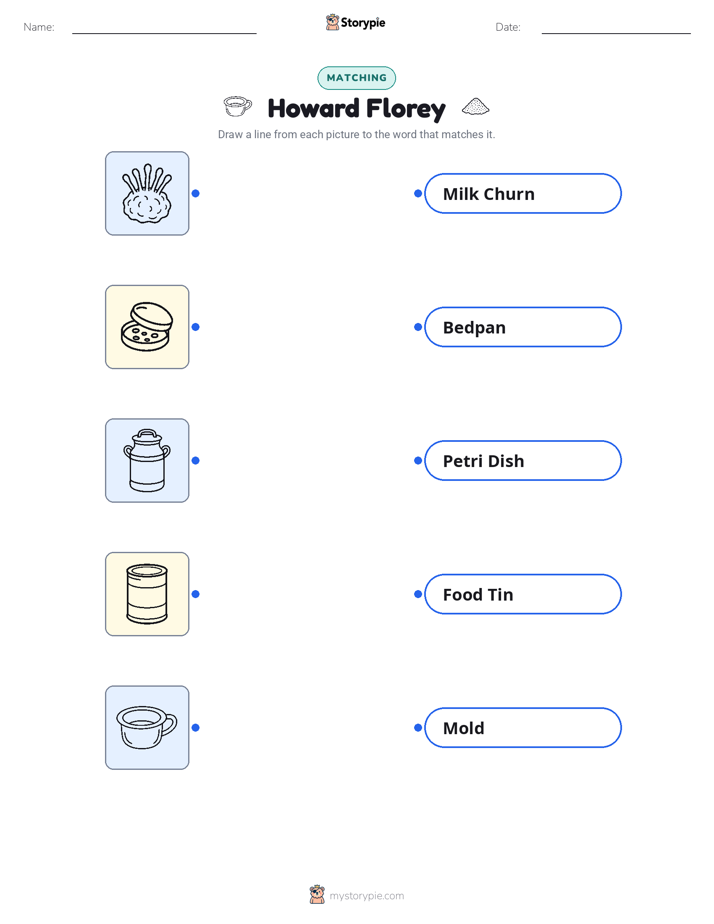
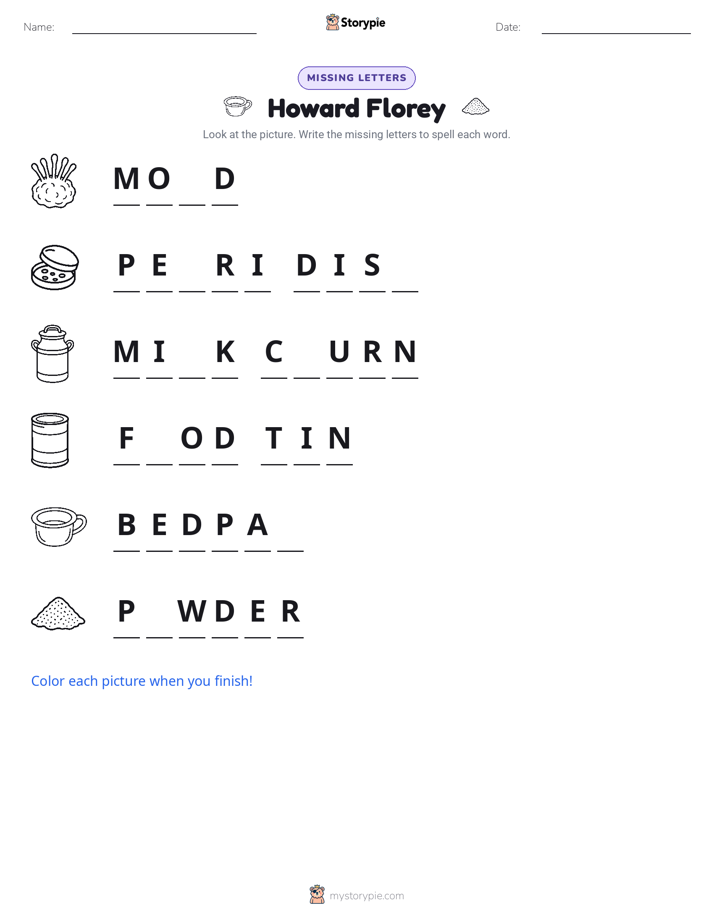
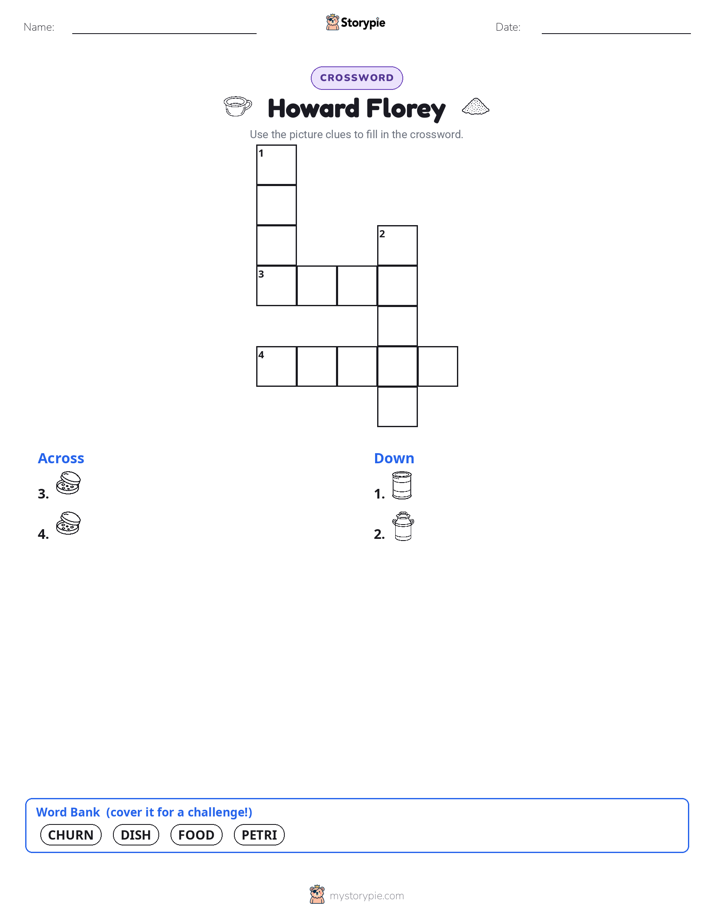
The team got to work right away. It was incredibly difficult. We had to grow the mold perfectly, and we grew it on anything we could find—milk churns, food tins, and even hospital bedpans! From all that mold, we could only get a tiny pinch of a brownish powder. We called it penicillin. In 1940, we were ready for the big test. We infected eight mice with deadly streptococcus bacteria. We gave four of them our penicillin, and the other four got nothing. The next morning, I came into the lab to find that the four untreated mice had died, but the four we had given penicillin to were perfectly healthy! It was a miracle! In 1941, we tried it on our first human patient, a policeman named Albert Alexander. He began to recover, but we ran out of our tiny supply of the drug, and his infection returned. He sadly didn't survive, but his case proved to us that penicillin worked and that we had to find a way to make huge amounts of it.
At that time, the world was in the middle of a terrible conflict, World War II. Soldiers were getting horrible infections from their injuries, and doctors had no way to treat them. We knew penicillin could save them, but we couldn't make it fast enough in Britain because all the factories were busy with the war effort. So, in 1941, my colleague Norman Heatley and I sailed across the ocean to the United States. We carried a secret with us—a little bit of our mold spores rubbed into the linings of our coats. We met with American scientists and government officials and convinced them to help. They figured out how to produce penicillin on a massive scale. By 1944, there was enough of our miracle medicine to treat all the Allied soldiers wounded on D-Day. It saved thousands upon thousands of lives.
After the war, the world learned about our discovery. In 1945, Ernst Chain, Alexander Fleming, and I were awarded the Nobel Prize in Physiology or Medicine. It was the greatest honor of my life. But the real prize was knowing that our teamwork had helped so many people. I lived to be 69 years old, and I spent the rest of my life continuing my scientific work. People remember me not just for one discovery, but for leading the team that took a scientific curiosity and turned it into a life-saving medicine for the entire world. Our work on penicillin started the 'Age of Antibiotics,' and the medicines that grew from our research continue to save lives every single day.
Wow facts
About
Howard Florey was an Australian pharmacologist and pathologist who, with his team, developed penicillin into a life-saving drug, for which he shared the 1945 Nobel Prize in Physiology or Medicine.
Take a Quiz
Question 1 of 5
Why did Howard Florey and Norman Heatley travel to the United States in 1941?
Explore next


Want to do even more?
Go beyond exploring. Unlock tools that turn every story into real learning.

Storypie Plus for families
Full stories, quizzes, and printables. Nights and car rides, sorted.
- Unlimited audio stories
- Create Mode: your child stars in the story
- Offline downloads
- Printable worksheets & coloring pages

Why Storypie for Schools
Students engaged. Prep in seconds. Evenings back to you.
- Worksheets & Quizzes
- Classroom Management
- Formative Assessment
- Custom Curriculum & Lesson Plans
- 27 Languages

Why Storypie for Homeschool
Curriculum done. They'll ask for more. Hours back in your day.
- Worksheet Generator
- First-Person Audio Stories
- Built-in Comprehension Quizzes
- Custom Curriculum & Lesson Plans
- Print & Go Activities