English

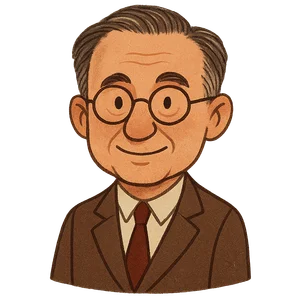
Howard Florey
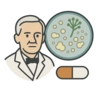
Howard Florey was an Australian pharmacologist and pathologist who, with his team…
Reads at Grades 3–5 Listens at Grades 1–5
Print & create
Answer keys·No prep·Free with an account
28 worksheets · answer keys · full story · quiz · Ages 8-10 · CEFR B1
Plus adds 208,000+ more stories in 27 languages, audio for every one, and printables for all of them.
Just want Howard Florey?
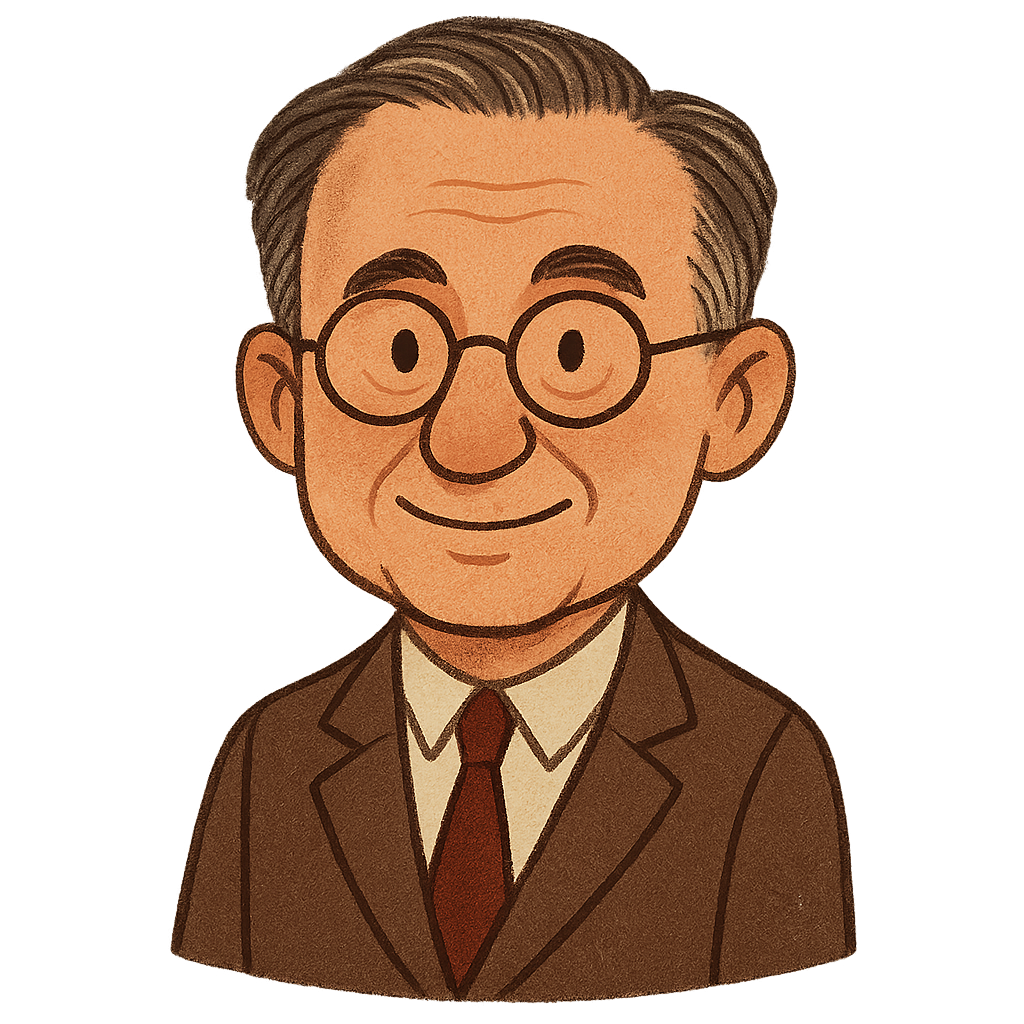
Hello, my name is Howard Florey, and I want to tell you the story of how my team and I helped give the world a powerful new medicine. My journey started in a city called Adelaide in Australia, where I was born on September 24th, 1898. Even as a young boy, I was fascinated by science. I loved figuring out how things worked, and this curiosity inspired me to study medicine when I grew up. I worked very hard, and in 1921, I won a special award called the Rhodes Scholarship. It was an incredible honor that allowed me to travel all the way across the world to England and study at the famous Oxford University. This was the beginning of an adventure that would change medicine forever.
As a scientist, I wanted to use my knowledge to solve some of the world's biggest problems. In those days, one of the most serious problems was that tiny germs called bacteria could cause dangerous illnesses. Doctors didn't have strong medicines to fight them. I had heard about another scientist, Alexander Fleming, who had made an interesting observation back in 1928. He had noticed a special blue-green mold that seemed to kill bacteria in his lab dish. For years, this was just a scientific curiosity. But I believed it could be something more. In 1938, I put together a brilliant team of scientists at Oxford to investigate this moldy puzzle. One of my key partners was a very clever biochemist named Ernst Boris Chain. Together, our team worked tirelessly in the laboratory. Our goal was to get the powerful, bacteria-fighting 'juice' out of the mold and turn it into a pure, safe medicine.
Howard Florey: The Man Who Made a Miracle Medicine
Hello, my name is Howard Florey, and I want to tell you the story of how my team and I helped give the world a powerful new medicine. My journey started in a city called Adelaide in Australia, where I was born on September 24th, 1898. Even as a young boy, I was fascinated by science. I loved figuring out how things worked, and this curiosity inspired me to study medicine when I grew up. I worked very hard, and in 1921, I won a special award called the Rhodes Scholarship. It was an incredible honor that allowed me to travel all the way across the world to England and study at the famous Oxford University. This was the beginning of an adventure that would change medicine forever.
As a scientist, I wanted to use my knowledge to solve some of the world's biggest problems. In those days, one of the most serious problems was that tiny germs called bacteria could cause dangerous illnesses. Doctors didn't have strong medicines to fight them. I had heard about another scientist, Alexander Fleming, who had made an interesting observation back in 1928. He had noticed a special blue-green mold that seemed to kill bacteria in his lab dish. For years, this was just a scientific curiosity. But I believed it could be something more. In 1938, I put together a brilliant team of scientists at Oxford to investigate this moldy puzzle. One of my key partners was a very clever biochemist named Ernst Boris Chain. Together, our team worked tirelessly in the laboratory. Our goal was to get the powerful, bacteria-fighting 'juice' out of the mold and turn it into a pure, safe medicine.
After countless experiments, we finally had a breakthrough moment in 1940. We had managed to purify a small amount of the substance, which we called penicillin. To see if it truly worked, we tested it on mice that had been infected with deadly bacteria. The mice that received penicillin survived, while the others did not. It worked! Our next big step was to try it on a person. In February 1941, our first human patient was a policeman who was very sick from a bacterial infection. We gave him our precious penicillin, and he started to get better. It was an amazing sight. But we faced a heartbreaking problem—we ran out of the medicine before he could be fully cured. This taught us a very important lesson: our medicine was powerful, but we needed to find a way to make much, much more of it. At that time, World War II was happening, and I knew penicillin could save thousands of wounded soldiers. So, in 1941, my colleague and I traveled to the United States to ask for help in making it in huge quantities.
I am so happy to tell you that our trip was a success. With the help of American companies and the government, factories began producing penicillin on a massive scale. Soon, there were tons of it. By 1944, there was enough of our medicine to treat many of the Allied soldiers fighting in the war, saving countless lives. The feeling of knowing our work was helping so many people was the greatest reward. Then, in 1945, another great honor came. For our work in turning a mold into a miracle drug, I was awarded the Nobel Prize in Physiology or Medicine, along with my partner Ernst Chain and the man who first noticed the mold, Alexander Fleming. I was incredibly proud, not just for myself, but for our entire team who had worked so hard to make it happen.
I lived to be 69 years old, passing away in 1968. People today remember me not for being the first to see the mold, but for leading the dedicated team that figured out how to turn that discovery into the life-saving medicine we know as penicillin. Our work helped begin the age of antibiotics, giving doctors all over the world a powerful new tool to fight infections and help people get well. It shows that with teamwork and determination, a little bit of mold can change the world.
Wow facts
About
Howard Florey was an Australian pharmacologist and pathologist who, with his team, developed penicillin into a life-saving drug, for which he shared the 1945 Nobel Prize in Physiology or Medicine.
Take a Quiz
Question 1 of 5
When did Howard Florey's team first test penicillin on a human patient?
Explore next


Want to do even more?
Go beyond exploring. Unlock tools that turn every story into real learning.

Storypie Plus for families
Full stories, quizzes, and printables. Nights and car rides, sorted.
- Unlimited audio stories
- Create Mode: your child stars in the story
- Offline downloads
- Printable worksheets & coloring pages

Why Storypie for Schools
Students engaged. Prep in seconds. Evenings back to you.
- Worksheets & Quizzes
- Classroom Management
- Formative Assessment
- Custom Curriculum & Lesson Plans
- 27 Languages

Why Storypie for Homeschool
Curriculum done. They'll ask for more. Hours back in your day.
- Worksheet Generator
- First-Person Audio Stories
- Built-in Comprehension Quizzes
- Custom Curriculum & Lesson Plans
- Print & Go Activities