English

Igor Sikorsky
Igor Sikorsky was a pioneering Russian-American aviation engineer who designed the first successful…
Reads at Grades 6–8 Listens at Grades 4–8
Print & create
Answer keys·No prep·Free with an account
28 worksheets · answer keys · full story · quiz · Ages 10-12 · CEFR B2
Plus adds 164,000+ more stories in 27 languages, audio for every one, and printables for all of them.
Just want Igor Sikorsky?
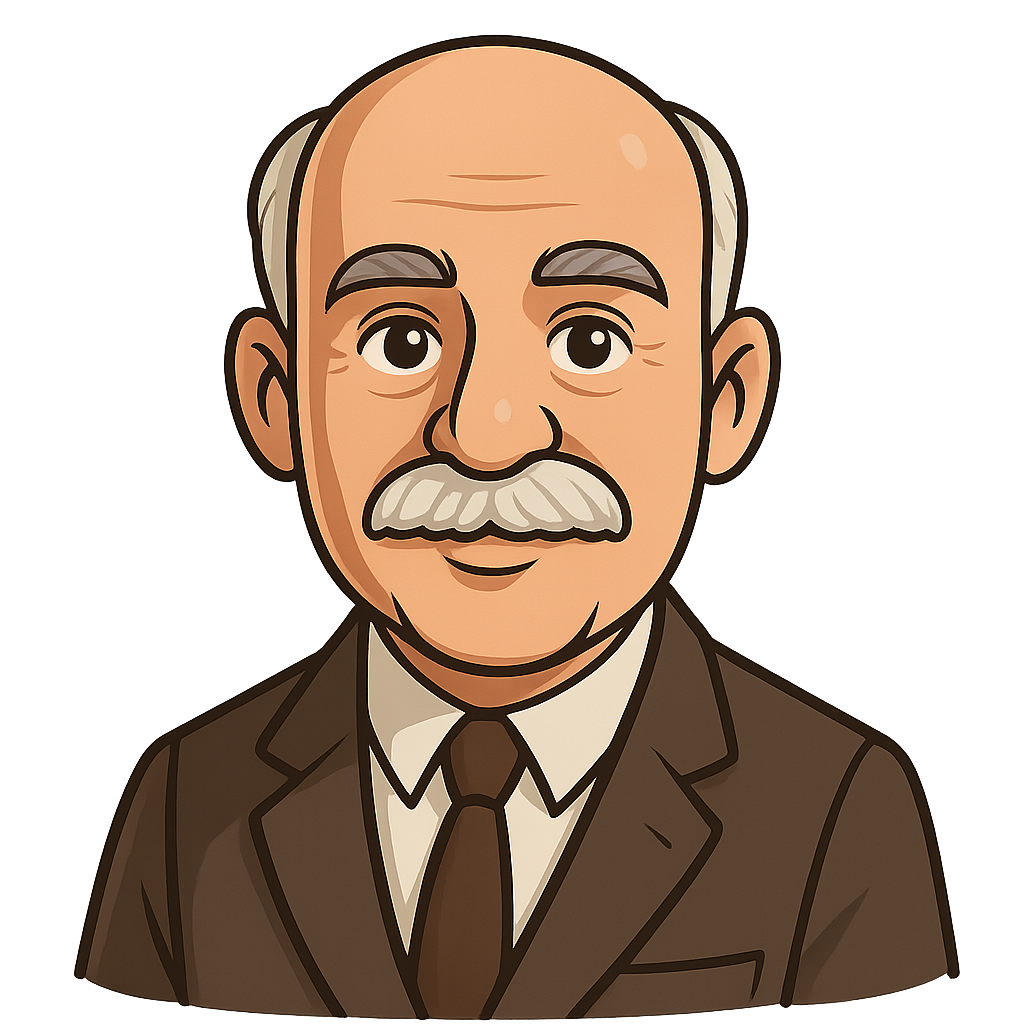
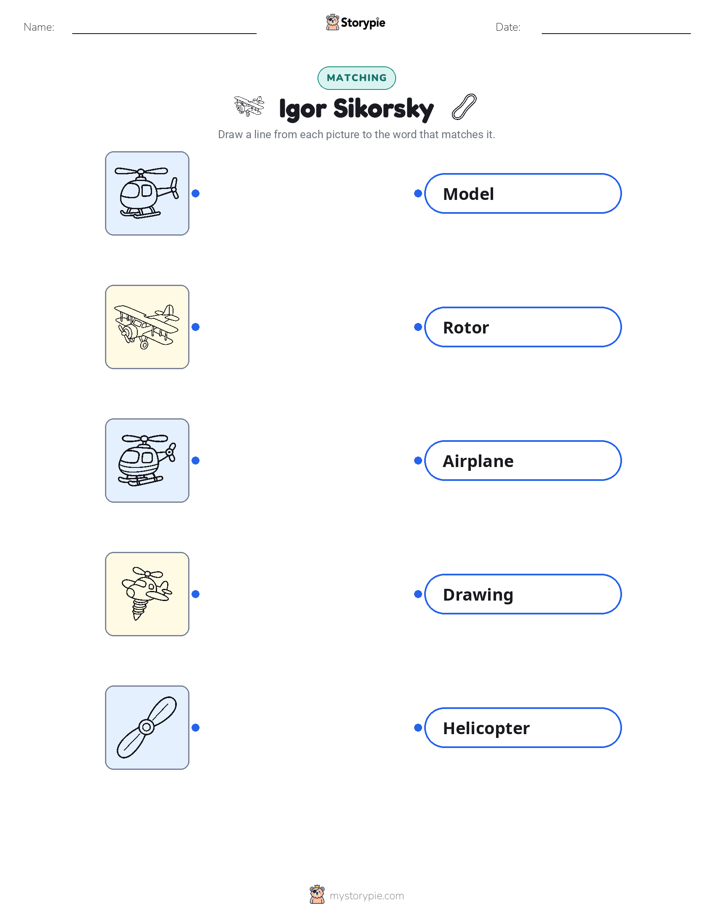
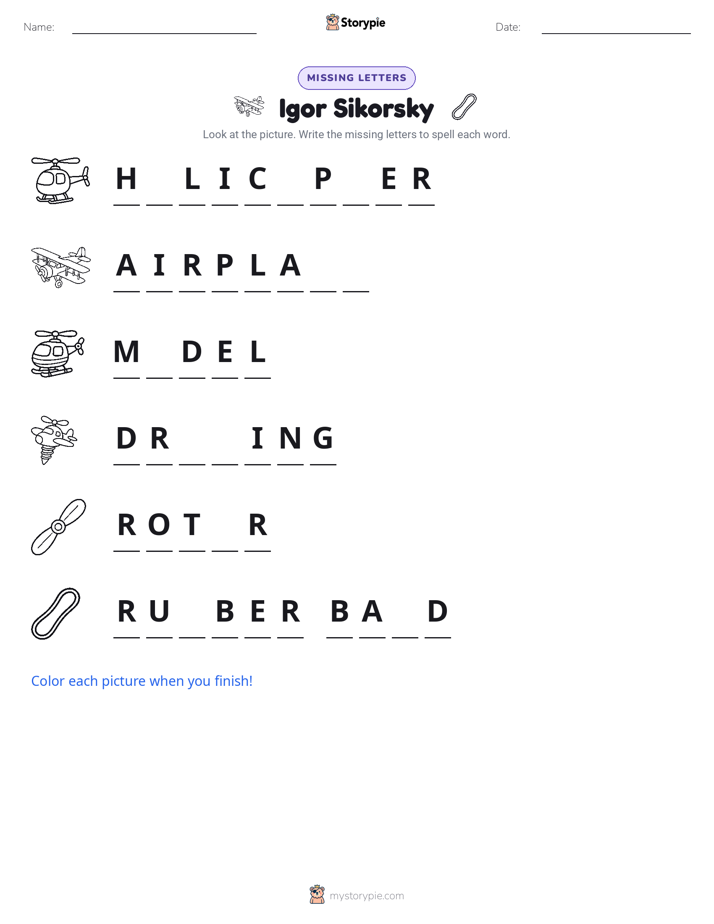
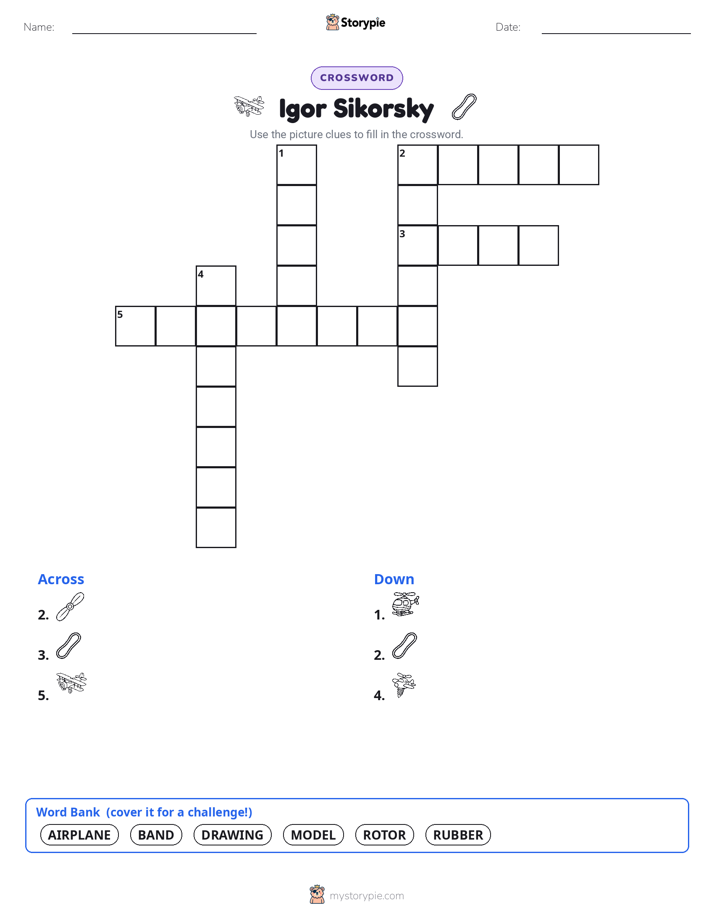
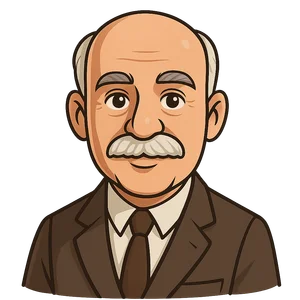
Hello, my name is Igor Sikorsky, and I want to tell you how I spent my life chasing a dream that could lift off the ground straight into the air. I was born on May 25th, 1889, in the city of Kyiv, which was then part of the Russian Empire. My mother, who was a doctor, loved telling me stories about the great artist and inventor Leonardo da Vinci. I was fascinated by his drawings of a machine that could screw itself into the air. When I was just 12 years old, around 1901, I was so inspired that I made a small model helicopter out of wood and rubber bands. When I wound it up, it buzzed like an insect and flew right up to the ceiling. That little toy planted a big idea in my mind that would guide the rest of my life.
When I was a young man, I decided to build a full-sized helicopter. In 1909, I built my first one, the S-1. It had two rotors that spun in opposite directions, and while it shook and vibrated, it simply refused to fly. The next year, in 1910, I tried again with the S-2. It was a little better, but it still couldn't lift its own weight off the ground. I was disappointed, but I realized that I had to learn more about the basics of flight before I could succeed. So, I switched to designing airplanes. I found success there, and in 1913, I designed and flew the world's first four-engine airplane, the 'Russky Vityaz,' or 'Russian Knight.' It was enormous for its time and proved that large aircraft were possible. But even as my planes flew, I never forgot my dream of a machine that could hover in one spot.
Igor Sikorsky
Hello, my name is Igor Sikorsky, and I want to tell you how I spent my life chasing a dream that could lift off the ground straight into the air. I was born on May 25th, 1889, in the city of Kyiv, which was then part of the Russian Empire. My mother, who was a doctor, loved telling me stories about the great artist and inventor Leonardo da Vinci. I was fascinated by his drawings of a machine that could screw itself into the air. When I was just 12 years old, around 1901, I was so inspired that I made a small model helicopter out of wood and rubber bands. When I wound it up, it buzzed like an insect and flew right up to the ceiling. That little toy planted a big idea in my mind that would guide the rest of my life.
When I was a young man, I decided to build a full-sized helicopter. In 1909, I built my first one, the S-1. It had two rotors that spun in opposite directions, and while it shook and vibrated, it simply refused to fly. The next year, in 1910, I tried again with the S-2. It was a little better, but it still couldn't lift its own weight off the ground. I was disappointed, but I realized that I had to learn more about the basics of flight before I could succeed. So, I switched to designing airplanes. I found success there, and in 1913, I designed and flew the world's first four-engine airplane, the 'Russky Vityaz,' or 'Russian Knight.' It was enormous for its time and proved that large aircraft were possible. But even as my planes flew, I never forgot my dream of a machine that could hover in one spot.
Life in Russia changed dramatically after the Russian Revolution began in 1917. I knew that to continue my work safely, I had to leave my home. I moved first to France and then, in 1919, to the United States. Starting over was hard. At first, I had to teach to earn money, as I had very little. But I was determined to build aircraft again. In 1923, a group of friends, including the famous Russian composer Sergei Rachmaninoff, helped me start my own company, the Sikorsky Aero Engineering Corporation. We began our work on an old chicken farm on Long Island, New York. We started building 'flying boats,' which were airplanes that could take off and land on water. Our S-42 'Clipper,' which we built in 1934, was a great success and helped airlines pioneer flights across the vast Pacific and Atlantic Oceans.
Even with the success of my flying boats, that helicopter idea kept buzzing in my head. In the late 1930s, I decided it was time to try again, armed with new ideas about how to control the machine. On September 14th, 1939, I climbed into the pilot's seat of my new creation, the VS-300. It was a strange-looking machine made of steel tubes, with one big rotor on top and a smaller one on the tail. I lifted it a few feet off the ground. It worked. I often flew it while wearing my fedora hat to show people how smooth and stable it was, unlike my first attempts. This was the first truly practical helicopter. A few years later, in 1942, we developed the R-4, the world's first mass-produced helicopter. During World War II, it was used for rescue missions, saving pilots from hard-to-reach places. Seeing my invention save lives was the greatest reward of all.
I dedicated my life to the sky. My dream was never just about creating a new type of machine; it was about creating a tool that could help humanity. I lived to be 83 years old, and my work continued long after my first flights. Today, helicopters based on my designs are used all over the world. They are air ambulances rushing people to hospitals, they rescue stranded hikers from mountains, and they help build our cities. Every time you see a helicopter hovering in the sky, you are seeing a dream that began with a boy, a rubber band, and a story about Leonardo da Vinci.
Wow facts
About
Igor Sikorsky was a pioneering Russian-American aviation engineer who designed the first successful four-engine airplane and is best known for developing the first practical, mass-produced helicopter.
Take a Quiz
Question 1 of 5
What was the main lesson Igor Sikorsky's story teaches about achieving a goal?
Explore next





Want to do even more?
Go beyond exploring. Unlock tools that turn every story into real learning.

Storypie Plus for families
Full stories, quizzes, and printables. Nights and car rides, sorted.
- Unlimited audio stories
- Create Mode: your child stars in the story
- Offline downloads
- Printable worksheets & coloring pages

Why Storypie for Schools
Students engaged. Prep in seconds. Evenings back to you.
- Worksheets & Quizzes
- Classroom Management
- Formative Assessment
- Custom Curriculum & Lesson Plans
- 27 Languages

Why Storypie for Homeschool
Curriculum done. They'll ask for more. Hours back in your day.
- Worksheet Generator
- First-Person Audio Stories
- Built-in Comprehension Quizzes
- Custom Curriculum & Lesson Plans
- Print & Go Activities