English

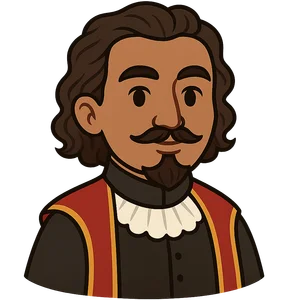
Inca Garcilaso de la Vega
Inca Garcilaso de la Vega was a Peruvian-Spanish chronicler and writer…
Reads at Grades 3–5 Listens at Grades 1–5
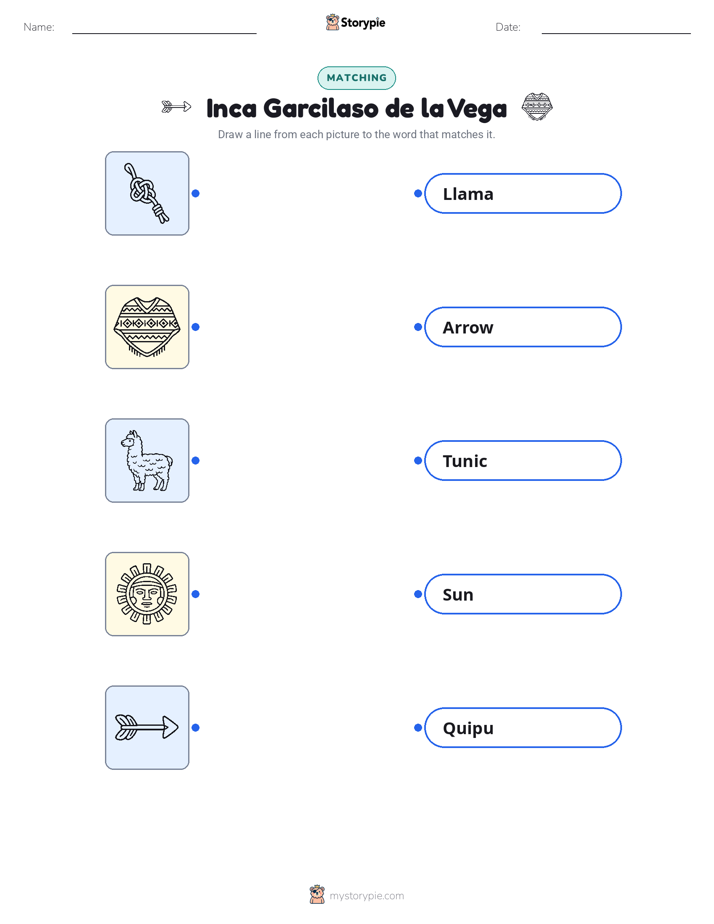
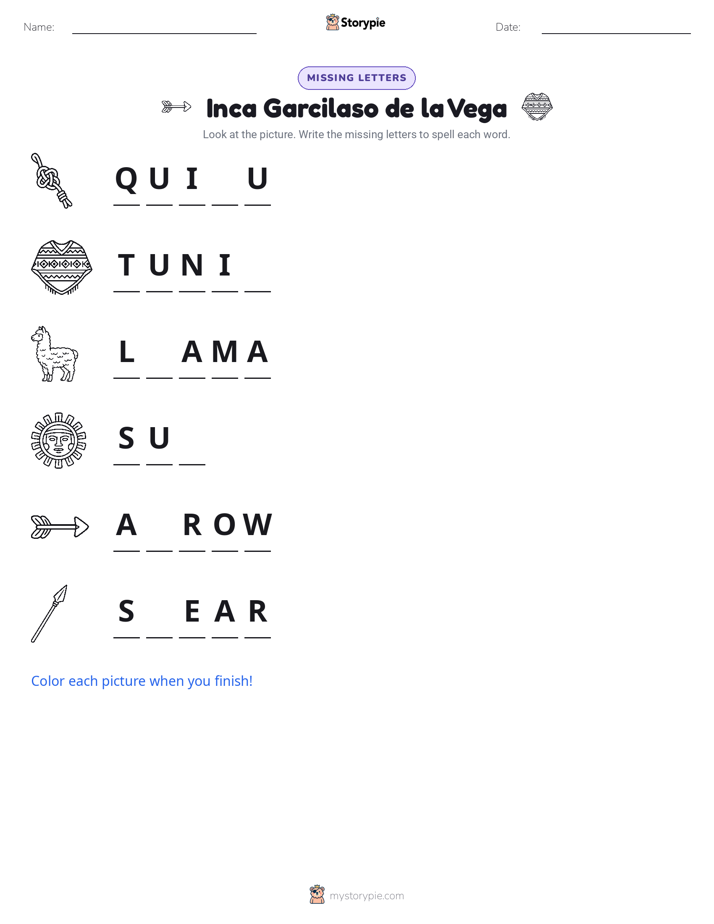
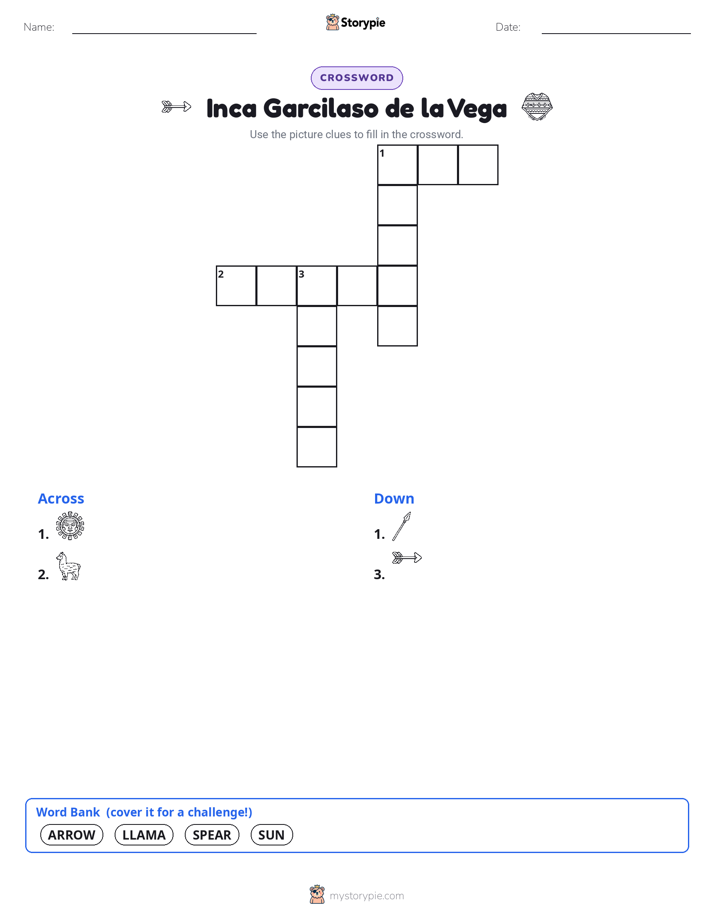
Print & create
Answer keys·No prep·Free with an account
28 worksheets · answer keys · full story · quiz · Ages 8-10 · CEFR B1
Plus adds 208,000+ more stories in 27 languages, audio for every one, and printables for all of them.
Just want Inca Garcilaso de la Vega?
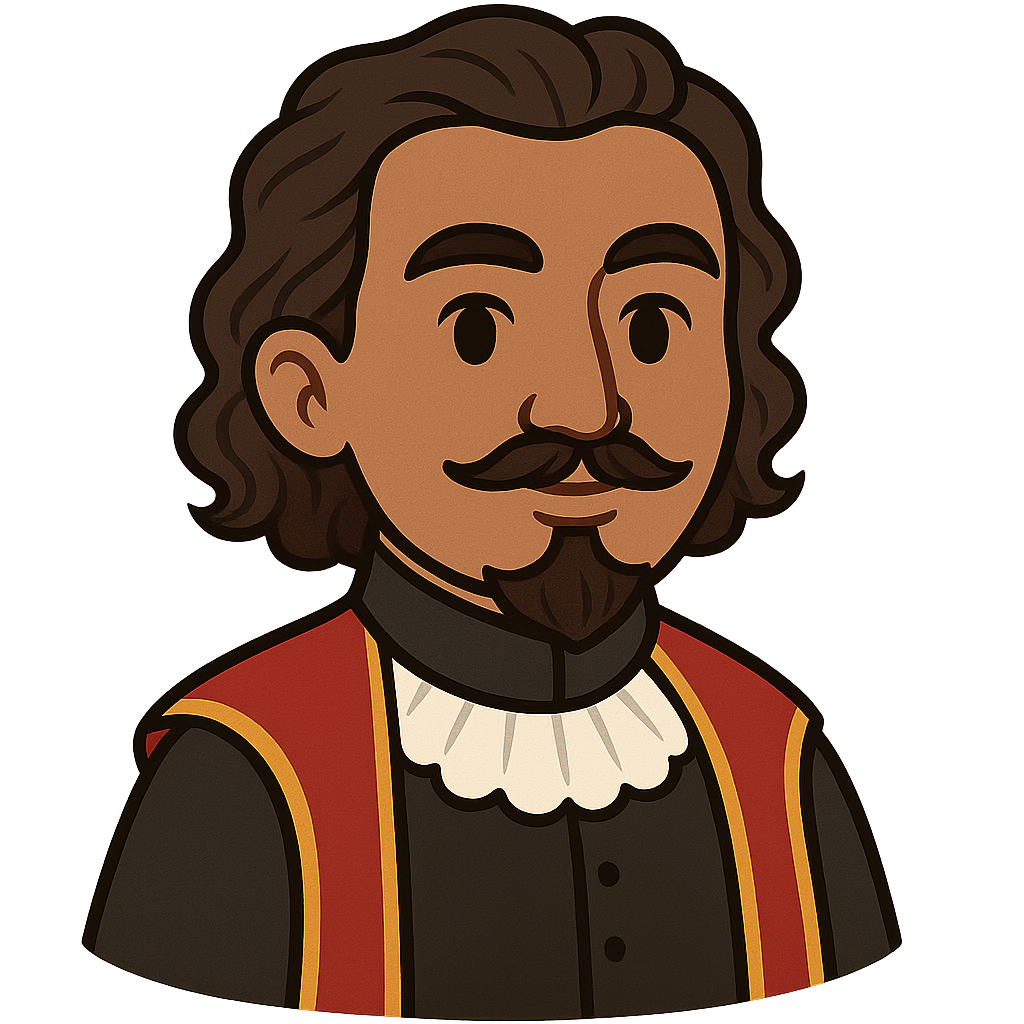
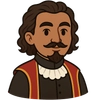
Hello, my name is Inca Garcilaso de la Vega, but when I was born, I was given the name Gómez Suárez de Figueroa. I am known as one of the very first great writers from the Americas. I was born on April 12th, 1539, in a city called Cuzco, which was once the magnificent capital of the Inca Empire in what is now Peru. My life was very special because I was a boy of two worlds. My father, Sebastián Garcilaso de la Vega y Vargas, was a Spanish captain who came to my land as a conqueror. My mother, Isabel Chimpu Ocllo, was an Inca princess, a direct descendant of the great Inca rulers. Because my father was Spanish and my mother was Inca, I was what is known as ‘mestizo,’ a person of mixed European and Indigenous heritage. I grew up learning about both sides of my family. I learned Spanish customs from my father, but I spent many hours with my mother’s family. They would tell me amazing stories of our ancestors, the history of our empire, and the meanings of our traditions, all in our beautiful Quechua language. These stories filled my imagination and stayed with me my entire life.
When my father passed away, my life changed completely. In 1561, when I was 21 years old, I left my home in Peru and sailed across the vast ocean to Spain. I went there to receive an education and claim what my father had left for me. Imagine leaving the only home you have ever known and arriving in a place that is completely different. The buildings, the language, the customs—everything was new and unfamiliar. To make my way in this new land, I even joined the Spanish army and served as a soldier for a time. But even though I was in my father’s homeland, I often felt like I didn't truly belong. I missed the mountains of Peru, the food, and the sound of my mother's Quechua language. I was proud of my Spanish heritage, but my Inca roots were just as strong. I felt caught between my two worlds, a part of both but not fully at home in either.
A Bridge Between Two Worlds: The Story of Inca Garcilaso de la Vega
Hello, my name is Inca Garcilaso de la Vega, but when I was born, I was given the name Gómez Suárez de Figueroa. I am known as one of the very first great writers from the Americas. I was born on April 12th, 1539, in a city called Cuzco, which was once the magnificent capital of the Inca Empire in what is now Peru. My life was very special because I was a boy of two worlds. My father, Sebastián Garcilaso de la Vega y Vargas, was a Spanish captain who came to my land as a conqueror. My mother, Isabel Chimpu Ocllo, was an Inca princess, a direct descendant of the great Inca rulers. Because my father was Spanish and my mother was Inca, I was what is known as ‘mestizo,’ a person of mixed European and Indigenous heritage. I grew up learning about both sides of my family. I learned Spanish customs from my father, but I spent many hours with my mother’s family. They would tell me amazing stories of our ancestors, the history of our empire, and the meanings of our traditions, all in our beautiful Quechua language. These stories filled my imagination and stayed with me my entire life.
When my father passed away, my life changed completely. In 1561, when I was 21 years old, I left my home in Peru and sailed across the vast ocean to Spain. I went there to receive an education and claim what my father had left for me. Imagine leaving the only home you have ever known and arriving in a place that is completely different. The buildings, the language, the customs—everything was new and unfamiliar. To make my way in this new land, I even joined the Spanish army and served as a soldier for a time. But even though I was in my father’s homeland, I often felt like I didn't truly belong. I missed the mountains of Peru, the food, and the sound of my mother's Quechua language. I was proud of my Spanish heritage, but my Inca roots were just as strong. I felt caught between my two worlds, a part of both but not fully at home in either.
After my time as a soldier, I decided to pick up a pen and become a writer. I had read many books written by Spanish authors about my mother’s people, the Inca, but I felt their stories were not quite right. They were outsiders looking in, and they often misunderstood our beliefs, our history, and our way of life. I knew I had a unique story to tell because I had heard the history of the Inca from my own family. I spent years gathering all the memories from my childhood, remembering every story my uncles and relatives told me. I wanted to write a true history, one that honored my mother's people and corrected the mistakes others had written. In 1609, I published my most important book, which was called 'Comentarios Reales de los Incas,' or 'Royal Commentaries of the Incas.' My goal in writing it was to build a bridge of understanding and to preserve the culture and history of the Inca Empire for everyone to read, so it would never be forgotten.
I spent the rest of my life in Spain, writing and studying, but my heart always remained in my homeland of Peru. I never forgot the stories I learned as a child in Cuzco. I lived to be 77 years old and passed away in the year 1616. Today, people remember me as one of the first and most important writers of the Americas. My books gave a voice to my Inca ancestors and helped people all over the world understand their incredible history and culture. I am remembered for building a bridge between two different worlds and ensuring that the grand story of the Inca would be told for generations to come.
Wow facts
About
Inca Garcilaso de la Vega was a Peruvian-Spanish chronicler and writer, celebrated for his historical accounts of Inca culture, history, and the Spanish conquest of Peru, written from his unique perspective as a man of mixed heritage.
Take a Quiz
Question 1 of 5
In the story, what does the word 'mestizo' mean?
Explore next


Want to do even more?
Go beyond exploring. Unlock tools that turn every story into real learning.

Storypie Plus for families
Full stories, quizzes, and printables. Nights and car rides, sorted.
- Unlimited audio stories
- Create Mode: your child stars in the story
- Offline downloads
- Printable worksheets & coloring pages

Why Storypie for Schools
Students engaged. Prep in seconds. Evenings back to you.
- Worksheets & Quizzes
- Classroom Management
- Formative Assessment
- Custom Curriculum & Lesson Plans
- 27 Languages

Why Storypie for Homeschool
Curriculum done. They'll ask for more. Hours back in your day.
- Worksheet Generator
- First-Person Audio Stories
- Built-in Comprehension Quizzes
- Custom Curriculum & Lesson Plans
- Print & Go Activities