English

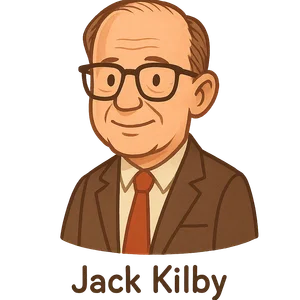
Jack Kilby
Jack Kilby was an American electrical engineer who co-invented the first integrated circuit (microchip) in…
Reads at Grades 6–8 Listens at Grades 4–8
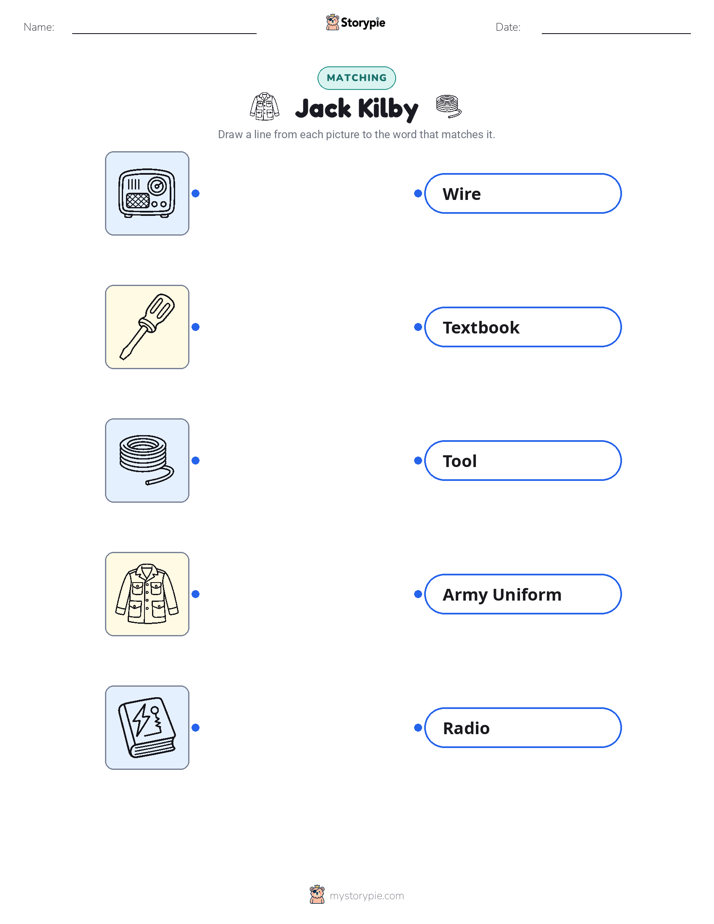
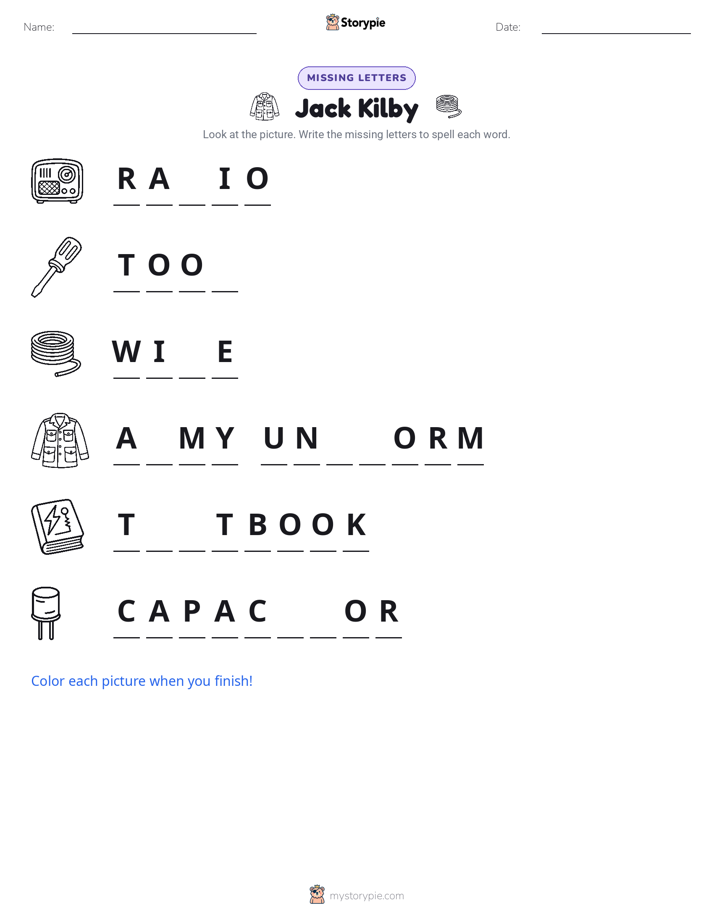
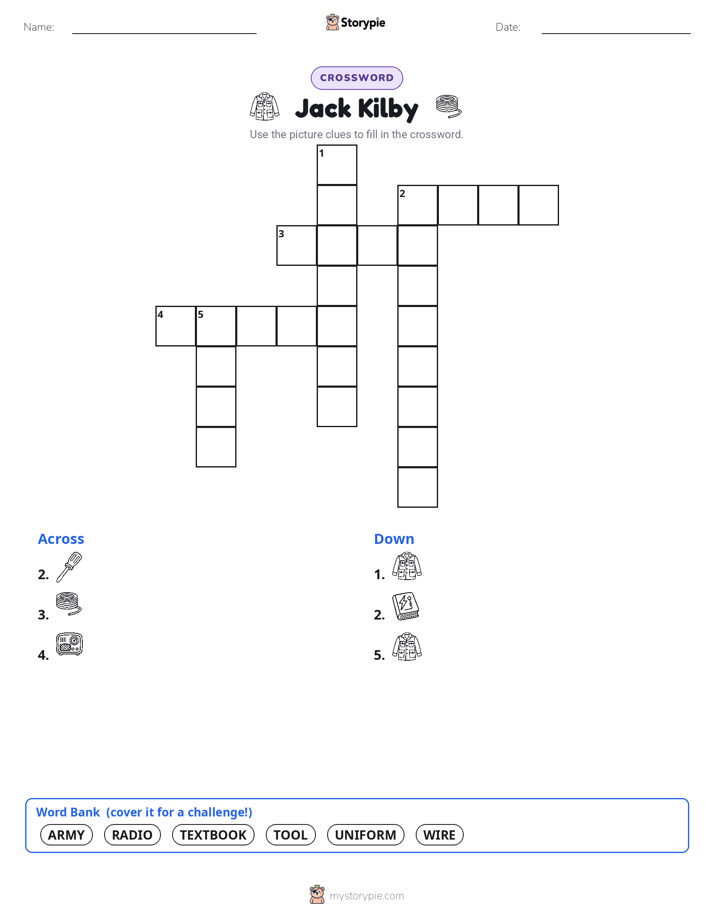
Print & create
Answer keys·No prep·Free with an account
28 worksheets · answer keys · full story · quiz · Ages 10-12 · CEFR B2
Plus adds 244,000+ more stories in 27 languages, audio for every one, and printables for all of them.
Just want Jack Kilby?
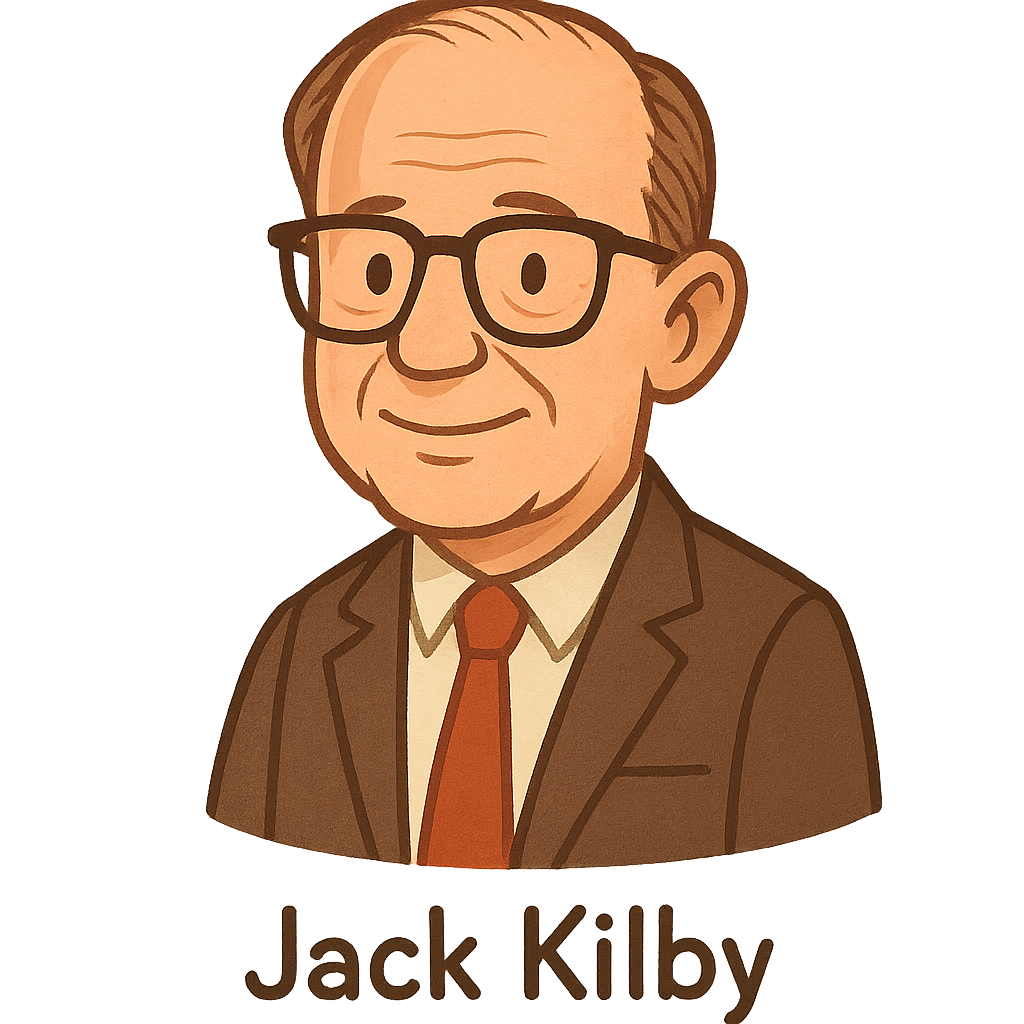
Hello, my name is Jack Kilby, and I am an engineer who helped change the world with a very small invention. My story begins in a time before smartphones or laptops, in a world just discovering the power of electronics. I was born on November 8th, 1923, in Jefferson City, Missouri. My father's job with a power company meant that our home was often filled with the tools and gadgets of the electrical world, which I found fascinating. My curiosity truly sparked during a massive ice storm in the late 1930s. The storm was so severe that it snapped power and telephone lines, cutting off communication for our entire community. I watched in amazement as my father worked with amateur radio operators to pass along vital messages. Seeing how radio waves could connect people when all the wires were down was like magic to me. That single event set me on a path. As a teenager, I became completely absorbed in the world of electronics. While other kids might have been playing sports, I spent my hours in our basement, building my own radio equipment and learning everything I could about how circuits and signals worked.
My path to becoming an engineer wasn't a straight line. After high school, I served in the United States Army during World War II. When the war was over, I was more determined than ever to pursue my passion. I enrolled in the University of Illinois and dedicated myself to studying electrical engineering, graduating with my degree in 1947. My first job was at a company in Milwaukee, Wisconsin, called Centralab. The work was interesting, but I knew I wanted to learn more. So, while working full-time, I also studied for my master's degree at the University of Wisconsin, which I earned in 1950. At Centralab, I was part of a team that focused on making electronic components, like transistors and capacitors, smaller and more efficient. This experience was incredibly valuable. I learned the precise, detailed process of manufacturing tiny electronic parts. I didn't know it at the time, but the skills I was developing there would become the foundation for my most important work just a few years later.
Jack Kilby
Hello, my name is Jack Kilby, and I am an engineer who helped change the world with a very small invention. My story begins in a time before smartphones or laptops, in a world just discovering the power of electronics. I was born on November 8th, 1923, in Jefferson City, Missouri. My father's job with a power company meant that our home was often filled with the tools and gadgets of the electrical world, which I found fascinating. My curiosity truly sparked during a massive ice storm in the late 1930s. The storm was so severe that it snapped power and telephone lines, cutting off communication for our entire community. I watched in amazement as my father worked with amateur radio operators to pass along vital messages. Seeing how radio waves could connect people when all the wires were down was like magic to me. That single event set me on a path. As a teenager, I became completely absorbed in the world of electronics. While other kids might have been playing sports, I spent my hours in our basement, building my own radio equipment and learning everything I could about how circuits and signals worked.
My path to becoming an engineer wasn't a straight line. After high school, I served in the United States Army during World War II. When the war was over, I was more determined than ever to pursue my passion. I enrolled in the University of Illinois and dedicated myself to studying electrical engineering, graduating with my degree in 1947. My first job was at a company in Milwaukee, Wisconsin, called Centralab. The work was interesting, but I knew I wanted to learn more. So, while working full-time, I also studied for my master's degree at the University of Wisconsin, which I earned in 1950. At Centralab, I was part of a team that focused on making electronic components, like transistors and capacitors, smaller and more efficient. This experience was incredibly valuable. I learned the precise, detailed process of manufacturing tiny electronic parts. I didn't know it at the time, but the skills I was developing there would become the foundation for my most important work just a few years later.
In the 1950s, the world of electronics faced a giant obstacle. Early computers were incredible machines, but they were enormous, sometimes filling entire rooms. The reason for their size was a problem we called the 'tyranny of numbers.' To make a computer work, you needed thousands upon thousands of individual electronic components—transistors, resistors, capacitors, and more. Each one of these parts had to be connected to the others with wires, and every single connection had to be soldered by hand. Imagine a tangled web of wires so complex that it was difficult to build, incredibly expensive to produce, and almost impossible to repair if a single connection broke. This 'tyranny of numbers' was holding back progress. You couldn't make computers smaller, faster, or more affordable as long as you were trapped by this method. In 1958, I took a new job at a company called Texas Instruments, and I was determined to find a way to defeat this problem.
That summer of 1958 was a quiet one at Texas Instruments. The company had a mass vacation policy, so most of the laboratories were empty. But I was a new employee and didn't have any vacation time yet, so I stayed behind. This quiet time gave me the freedom to think deeply about the 'tyranny of numbers.' An idea began to form in my mind: what if all the different parts of a circuit didn't have to be separate pieces? What if the transistors, resistors, and capacitors could all be made from a single, solid piece of the same material? If that were possible, it would eliminate the need for all that complicated, hand-soldered wiring. It was a radical thought. I drew up my designs and presented the idea to my bosses. They were skeptical but gave me permission to try to build a prototype. I got to work, and on September 12th, 1958, I was ready. I demonstrated the world's first integrated circuit. It wasn't much to look at—just a small slice of germanium with a few wires sticking out—but when I pressed a switch, it produced a perfect sine wave on the oscilloscope. It worked. My idea was real. A few years later, in 1967, I used this same technology to help invent the first handheld calculator, proving how powerful these tiny circuits could be.
I soon learned that I wasn't the only person thinking along these lines. Around the same time I was developing my integrated circuit, another brilliant engineer named Robert Noyce had a similar idea. He found an even better way to connect the components on the chip, making them easier to manufacture. It was our combined work that truly launched the microchip revolution. My invention proved it could be done, and his improvements helped make it practical for mass production. This is how science often works—not with one person having a single flash of genius, but with different people building on each other's ideas. Over the years, I was honored to receive recognition for my contribution. In 1969, I was awarded the National Medal of Science. Decades later, in the year 2000, I had the incredible honor of sharing the Nobel Prize in Physics with other scientists for our work. It was truly amazing to look back and see how my quiet summer in an empty lab had led to an invention that was now in computers and electronics all over the globe.
I lived to be 81 years old, and I was fortunate enough to witness the incredible world that the integrated circuit helped create. I am often remembered as the inventor of the microchip, a tiny device that became the building block of the modern digital age. It powers almost everything we rely on today, from the smartphone in your pocket to the complex computers that guide rockets into space. My story shows that sometimes, the biggest changes in the world don't come from the most complicated plans. They can start with a simple idea, born from curiosity and a desire to solve a tricky problem, and end up changing everything for generations to come.
Wow facts
About
Jack Kilby was an American electrical engineer who co-invented the first integrated circuit (microchip) in 1958 while working at Texas Instruments, an invention that earned him the Nobel Prize in Physics in 2000.
Take a Quiz
Question 1 of 5
Which of these best summarizes Jack Kilby's journey?
Explore next



Want to do even more?
Go beyond exploring. Unlock tools that turn every story into real learning.

Storypie Plus for families
Full stories, quizzes, and printables. Nights and car rides, sorted.
- Unlimited audio stories
- Create Mode: your child stars in the story
- Offline downloads
- Printable worksheets & coloring pages

Why Storypie for Schools
Students engaged. Prep in seconds. Evenings back to you.
- Worksheets & Quizzes
- Classroom Management
- Formative Assessment
- Custom Curriculum & Lesson Plans
- 27 Languages

Why Storypie for Homeschool
Curriculum done. They'll ask for more. Hours back in your day.
- Worksheet Generator
- First-Person Audio Stories
- Built-in Comprehension Quizzes
- Custom Curriculum & Lesson Plans
- Print & Go Activities