English

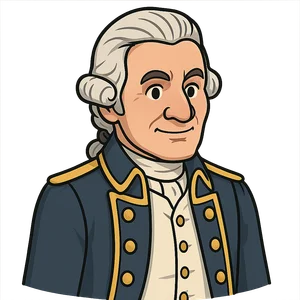
James Cook
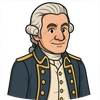
James Cook was a British explorer, navigator, and cartographer in the Royal Navy.
Reads at Grades 6–8 Listens at Grades 4–8
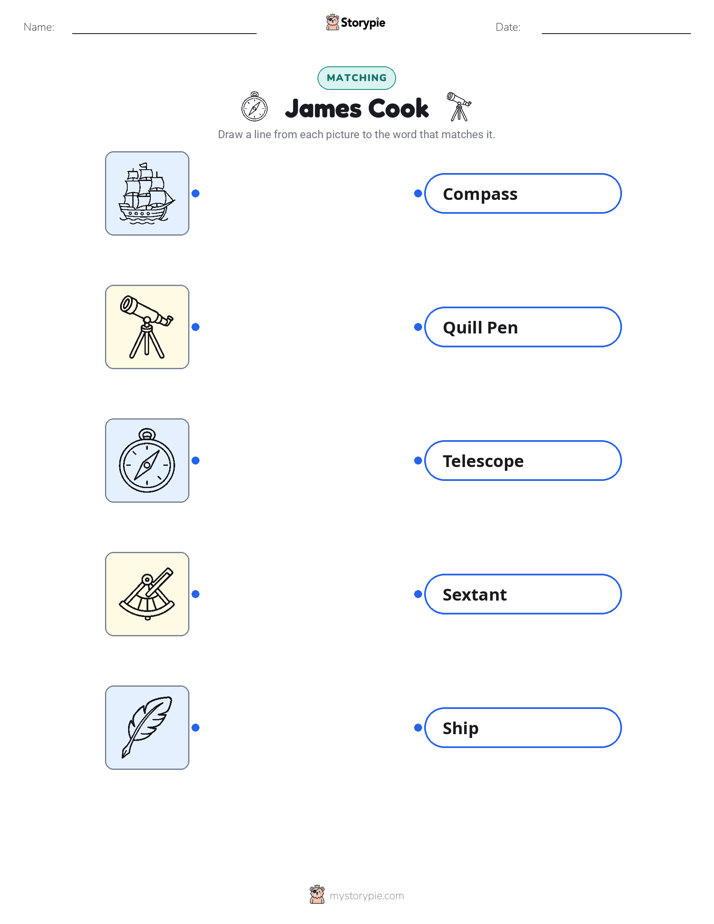
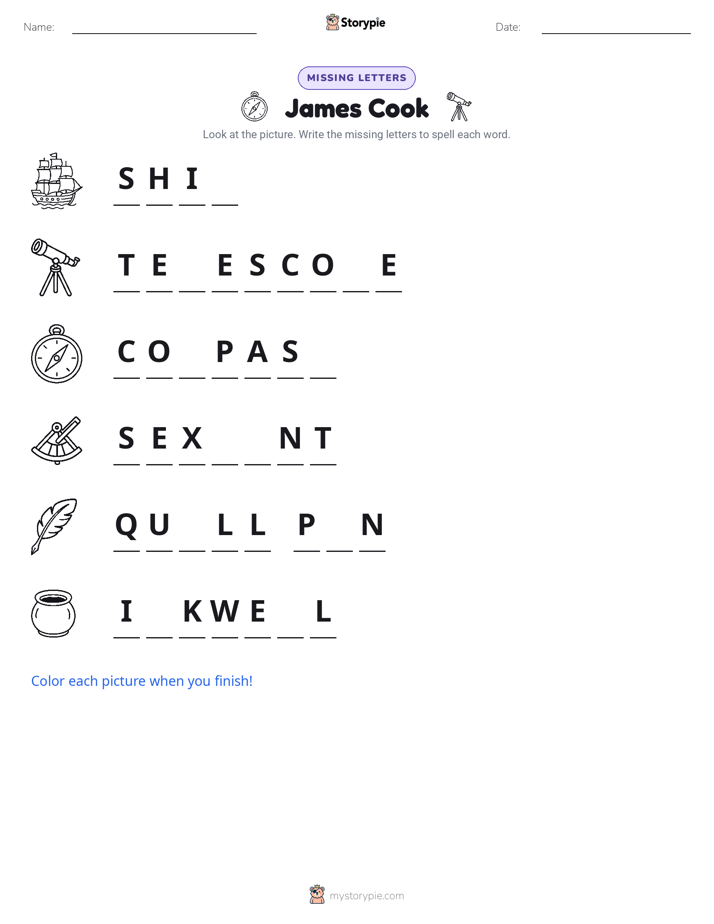
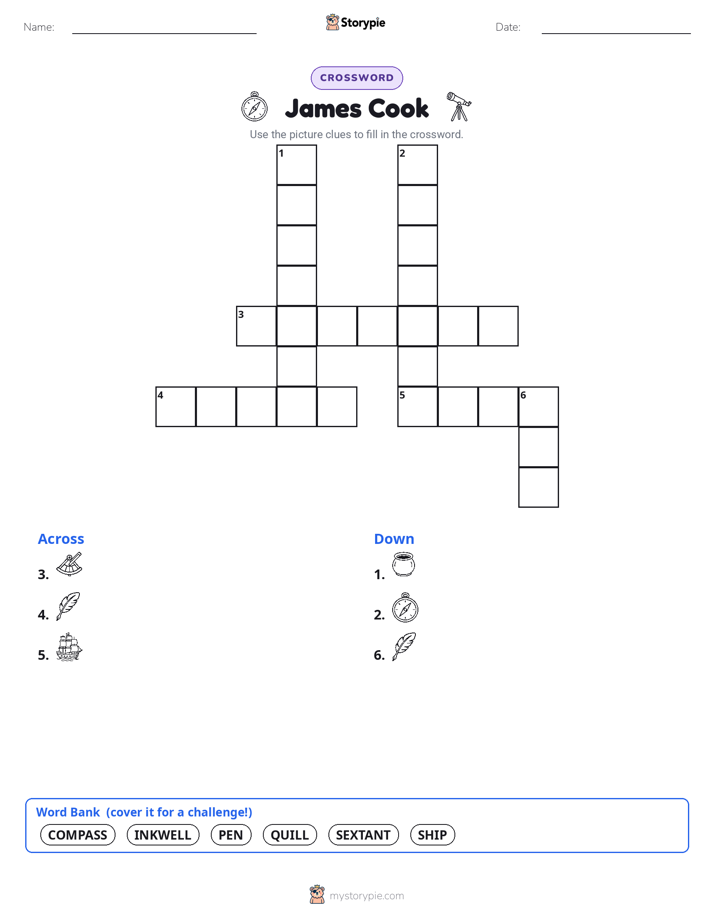
Print & create
Answer keys·No prep·Free with an account
28 worksheets · answer keys · full story · quiz · Ages 10-12 · CEFR B2
Plus adds 102,000+ more stories in 27 languages, audio for every one, and printables for all of them.
Just want James Cook?
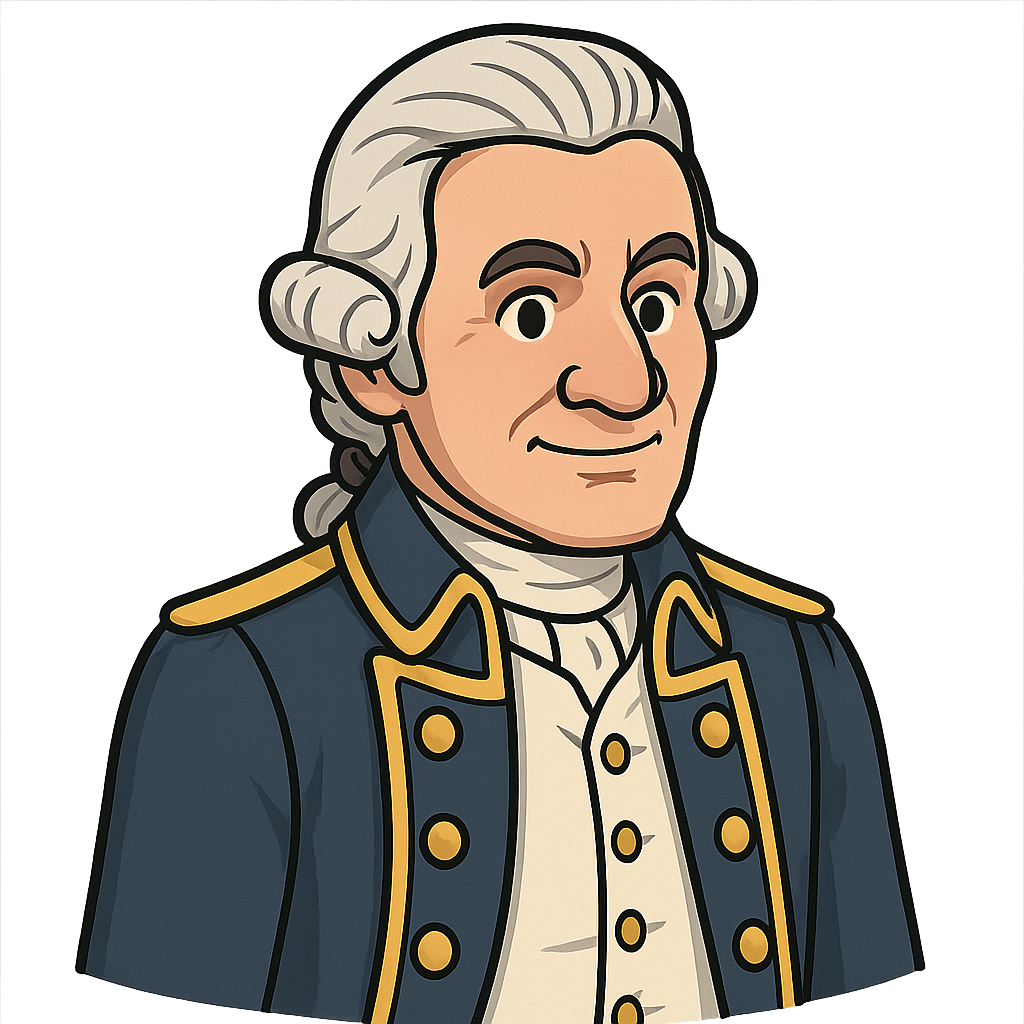
Hello! My name is James Cook, and I was a captain and an explorer who sailed the world's oceans. I was born in a small English village called Marton in Yorkshire on October 27th, 1728. My father was a farm worker, and our family did not have much money, but I had big dreams. From a young age, I was drawn to the sea. As a teenager, I moved to the port town of Whitby to work for a shipowner. It was there, smelling the salty air and watching the tall ships, that I truly began my education. I learned to be a sailor and studied everything I could about mathematics and navigation, skills that would serve me well for the rest of my life. In 1755, I decided to join the Royal Navy to see more of the world and serve my country.
In the Navy, I quickly found I had a special skill: making maps, a practice known as cartography. My ability to chart coastlines and waterways with great precision set me apart. During a conflict called the Seven Years' War, I was sent to North America. In 1759, a great challenge arose when my commanders needed to sail warships up the dangerous St. Lawrence River to the city of Quebec. No one had a reliable map of the river's treacherous currents and hidden shallows. I spent weeks in a small boat, carefully measuring the depths and currents, often working at night to avoid being seen by enemy forces. My charts were so accurate that the British fleet navigated the river safely, which was a major turning point. This difficult work got me noticed. My superiors saw that I was not just a good sailor, but also a careful scientist and a gifted mapmaker.
The Voyages of Captain James Cook
Hello! My name is James Cook, and I was a captain and an explorer who sailed the world's oceans. I was born in a small English village called Marton in Yorkshire on October 27th, 1728. My father was a farm worker, and our family did not have much money, but I had big dreams. From a young age, I was drawn to the sea. As a teenager, I moved to the port town of Whitby to work for a shipowner. It was there, smelling the salty air and watching the tall ships, that I truly began my education. I learned to be a sailor and studied everything I could about mathematics and navigation, skills that would serve me well for the rest of my life. In 1755, I decided to join the Royal Navy to see more of the world and serve my country.
In the Navy, I quickly found I had a special skill: making maps, a practice known as cartography. My ability to chart coastlines and waterways with great precision set me apart. During a conflict called the Seven Years' War, I was sent to North America. In 1759, a great challenge arose when my commanders needed to sail warships up the dangerous St. Lawrence River to the city of Quebec. No one had a reliable map of the river's treacherous currents and hidden shallows. I spent weeks in a small boat, carefully measuring the depths and currents, often working at night to avoid being seen by enemy forces. My charts were so accurate that the British fleet navigated the river safely, which was a major turning point. This difficult work got me noticed. My superiors saw that I was not just a good sailor, but also a careful scientist and a gifted mapmaker.
Because of my mapping skills, I was given a huge mission in 1768. I was to command a ship called HMS Endeavour and sail to the other side of the world. It was the beginning of my first great voyage, which would last until 1771. My first official task was to sail to the island of Tahiti to observe a rare astronomical event: the planet Venus passing in front of the Sun. But I also had secret orders from the British government. I was to search for a rumored great southern continent, a mysterious land called Terra Australis Incognita. After our scientific work in Tahiti, we sailed south and then west into unknown waters. We reached the islands of New Zealand, and I spent six months meticulously charting its entire coastline, proving it was two large islands and not the edge of a continent. Then, in 1770, we sailed further west and became the first Europeans to see the eastern coast of a vast land I named New South Wales, which you now know as Australia. I mapped its coast for thousands of miles and claimed it for Britain.
My first voyage was a success, but there were still questions about the great southern continent. So, in 1772, I set off on a second voyage with two ships, the Resolution and the Adventure. This time, our goal was to settle the question once and for all. We sailed farther south than anyone had ever gone, becoming the first crew to cross the Antarctic Circle in 1773. We were surrounded by giant icebergs and freezing fog, a world of ice that seemed to stretch on forever. Through this dangerous journey, we proved there was no giant, habitable continent in the temperate southern latitudes. On this trip, I also tested a new invention, a special clock called a chronometer, which allowed us to calculate our longitude with incredible accuracy for the first time. In 1776, I left on my third and final voyage, again on the Resolution. Our primary goal was to find a 'Northwest Passage' from the Pacific Ocean to the Atlantic Ocean. We sailed along the coast of North America and, in 1778, became the first Europeans to visit a beautiful island chain in the middle of the Pacific, which I named the Sandwich Islands, now known as Hawaii.
My third voyage was my last. We returned to Hawaii in 1779 to rest and repair our ship, but this time, there were misunderstandings and a conflict with the islanders. During a dispute at Kealakekua Bay, I was killed. I lived to be 50 years old. Though my life ended far from home, my work lived on. The maps I created were so accurate that they were used by sailors for over a century, changing how people saw the world. I also showed that it was possible to keep a crew healthy on long voyages by providing fresh food to prevent diseases like scurvy. My journeys opened up the Pacific to Europeans, and the scientific information brought back by my crew taught the world about thousands of new plants, animals, and cultures. I am remembered as an explorer who connected distant parts of the globe through careful observation and brave exploration.
Wow facts
About
James Cook was a British explorer, navigator, and cartographer in the Royal Navy. He led three major expeditions to the Pacific Ocean, resulting in the first recorded European contact with the eastern coast of Australia and the Hawaiian Islands, and the first circumnavigation of New Zealand.
Take a Quiz
Question 1 of 5
In your own words, describe James Cook's journey from a farm boy to a respected officer in the Royal Navy.
Explore next



Want to do even more?
Go beyond exploring. Unlock tools that turn every story into real learning.

Storypie Plus for families
Full stories, quizzes, and printables. Nights and car rides, sorted.
- Unlimited audio stories
- Create Mode: your child stars in the story
- Offline downloads
- Printable worksheets & coloring pages

Why Storypie for Schools
Students engaged. Prep in seconds. Evenings back to you.
- Worksheets & Quizzes
- Classroom Management
- Formative Assessment
- Custom Curriculum & Lesson Plans
- 27 Languages

Why Storypie for Homeschool
Curriculum done. They'll ask for more. Hours back in your day.
- Worksheet Generator
- First-Person Audio Stories
- Built-in Comprehension Quizzes
- Custom Curriculum & Lesson Plans
- Print & Go Activities