English


James Hutton
James Hutton was a Scottish geologist, physician, and farmer…
Reads at Grades 6–8 Listens at Grades 4–8
Print & create
Answer keys·No prep·Free with an account
28 worksheets · answer keys · full story · quiz · Ages 10-12 · CEFR B2
Plus adds 244,000+ more stories in 27 languages, audio for every one, and printables for all of them.
Just want James Hutton?

My name is James Hutton, and I am known for helping the world understand the true age of our planet. I was born in the bustling city of Edinburgh, Scotland, on June 3rd, 1726. From a young age, my mind was filled with questions about how everything worked. I was fascinated by chemistry and the sciences, but my greatest curiosity lay with the very ground beneath my feet. In 1740, I enrolled at the University of Edinburgh, eager to soak up as much knowledge as I could. My studies eventually led me to Paris and then to Leiden, where I earned a degree as a medical doctor in 1749. While I was qualified to heal people, I felt a stronger pull to understand the health and history of the Earth itself. My passion wasn't for medicine, but for the story that I believed was written in the rocks, hills, and rivers all around me.
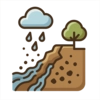
Beginning in the 1750s, I spent many years as a farmer in a region called Berwickshire. This was no ordinary farm life for me; it was my outdoor laboratory. Every day, I worked the land, and every day, I observed the world around me with a scientific eye. I watched as the rain fell, noticing how it washed soil from my fields and carried it away in streams toward the sea. This simple observation sparked a profound question in my mind: if the land is constantly being worn away, where does new soil and new land come from? To find answers, I began traveling throughout Scotland during the 1760s and 1770s. I explored canals, descended into mines, and studied the towering cliffs along the coast. I saw rocks that appeared to have been melted by intense heat, as if they were once molten. In other places, I found rocks clearly formed from countless layers of sand, mud, and shells, all pressed together over time. Each observation was a clue, and I was determined to piece together the puzzle of our planet's formation.
James Hutton: The Man Who Read the Rocks
My name is James Hutton, and I am known for helping the world understand the true age of our planet. I was born in the bustling city of Edinburgh, Scotland, on June 3rd, 1726. From a young age, my mind was filled with questions about how everything worked. I was fascinated by chemistry and the sciences, but my greatest curiosity lay with the very ground beneath my feet. In 1740, I enrolled at the University of Edinburgh, eager to soak up as much knowledge as I could. My studies eventually led me to Paris and then to Leiden, where I earned a degree as a medical doctor in 1749. While I was qualified to heal people, I felt a stronger pull to understand the health and history of the Earth itself. My passion wasn't for medicine, but for the story that I believed was written in the rocks, hills, and rivers all around me.
Beginning in the 1750s, I spent many years as a farmer in a region called Berwickshire. This was no ordinary farm life for me; it was my outdoor laboratory. Every day, I worked the land, and every day, I observed the world around me with a scientific eye. I watched as the rain fell, noticing how it washed soil from my fields and carried it away in streams toward the sea. This simple observation sparked a profound question in my mind: if the land is constantly being worn away, where does new soil and new land come from? To find answers, I began traveling throughout Scotland during the 1760s and 1770s. I explored canals, descended into mines, and studied the towering cliffs along the coast. I saw rocks that appeared to have been melted by intense heat, as if they were once molten. In other places, I found rocks clearly formed from countless layers of sand, mud, and shells, all pressed together over time. Each observation was a clue, and I was determined to piece together the puzzle of our planet's formation.
In my time, the most popular scientific idea about the Earth’s history was called Catastrophism. Most scholars believed the Earth was only a few thousand years old and that its mountains, valleys, and oceans were shaped by sudden, violent events, like a great global flood. But what I saw with my own eyes told a different story. I came to believe that the Earth was not young, but incredibly ancient. The same slow, steady processes I watched on my farm—the gentle erosion by rain, the slow depositing of sediment by rivers—were the very forces that had shaped the entire planet over an immense span of time. In 1785, I felt ready to share my thoughts. I presented a paper called 'Theory of the Earth' to my colleagues at the Royal Society of Edinburgh. In it, I proposed a radical new idea: that the Earth was in a constant, slow-moving cycle of decay and renewal, with old rocks being eroded away and new rocks being formed from their remains.
My theory needed powerful evidence, and in 1788, I found it at a remote coastal location called Siccar Point. I traveled there by boat with some friends, and what we saw was breathtaking. There, in the cliffs, was the proof I had been searching for. At the bottom was a set of very old rock layers, which were tilted almost vertically. But they had been worn down, their tops planed completely flat by erosion. Lying directly on top of this eroded surface was a much newer set of horizontal layers of red sandstone. I had found what geologists now call an 'unconformity.' It was a clear picture of two different worlds of rock, separated by a vast gap in time. For the bottom layers to be formed, tilted, and eroded away before the top layers could be deposited, an unimaginable amount of time must have passed. My heart raced with excitement. This was physical proof of immense cycles of rock formation, uplift, erosion, and new creation, a history that stretched back not thousands, but millions of years.
In 1795, I published my ideas in a two-volume book, also titled 'Theory of the Earth,' which detailed all my observations and conclusions. My theories were complex and went against everything people had been taught, so it took many years for them to be fully understood and accepted by the scientific community. I lived to be 70 years old, passing away in my beloved hometown of Edinburgh on March 26th, 1797. Today, I am honored with the title 'Father of Modern Geology.' My discovery of 'deep time' completely changed our understanding of the Earth’s age and history. This new, vast timeline provided a crucial foundation for other scientific breakthroughs, including Charles Darwin's theory of evolution. I hope my story shows you that by looking closely at the world around us, we can learn to read the great and ancient story written in the rocks.
Wow facts
About
James Hutton was a Scottish geologist, physician, and farmer, often called the 'Father of Modern Geology.' He developed the theory of uniformitarianism, which explained that the Earth's features were formed by slow, continuous processes over immense periods of time.
Take a Quiz
Question 1 of 5
What was the main conflict between James Hutton's theory and the popular belief of his time, known as Catastrophism?
Explore next





Want to do even more?
Go beyond exploring. Unlock tools that turn every story into real learning.

Storypie Plus for families
Full stories, quizzes, and printables. Nights and car rides, sorted.
- Unlimited audio stories
- Create Mode: your child stars in the story
- Offline downloads
- Printable worksheets & coloring pages

Why Storypie for Schools
Students engaged. Prep in seconds. Evenings back to you.
- Worksheets & Quizzes
- Classroom Management
- Formative Assessment
- Custom Curriculum & Lesson Plans
- 27 Languages

Why Storypie for Homeschool
Curriculum done. They'll ask for more. Hours back in your day.
- Worksheet Generator
- First-Person Audio Stories
- Built-in Comprehension Quizzes
- Custom Curriculum & Lesson Plans
- Print & Go Activities