English

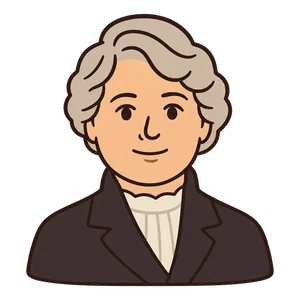
Jeannette Rankin
Jeannette Rankin was an American politician and women's rights advocate…
Reads at Grades 6–8 Listens at Grades 4–8
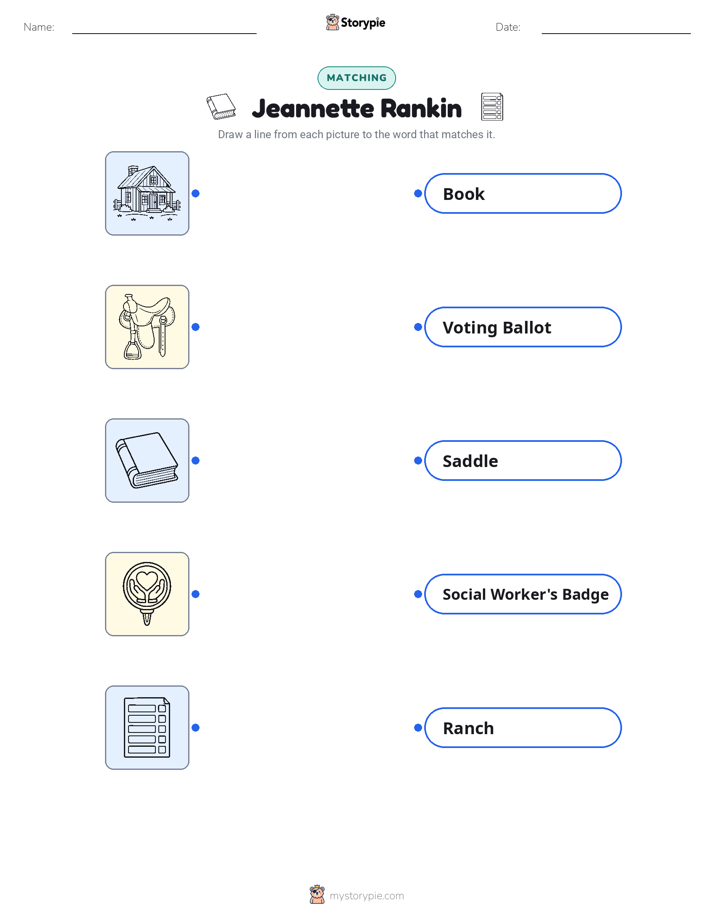
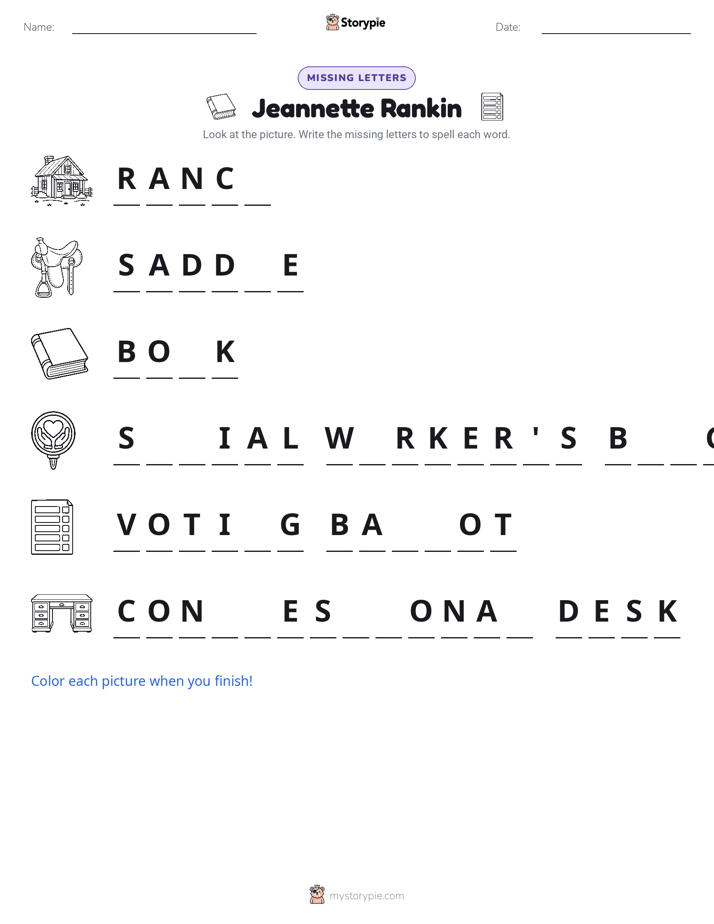
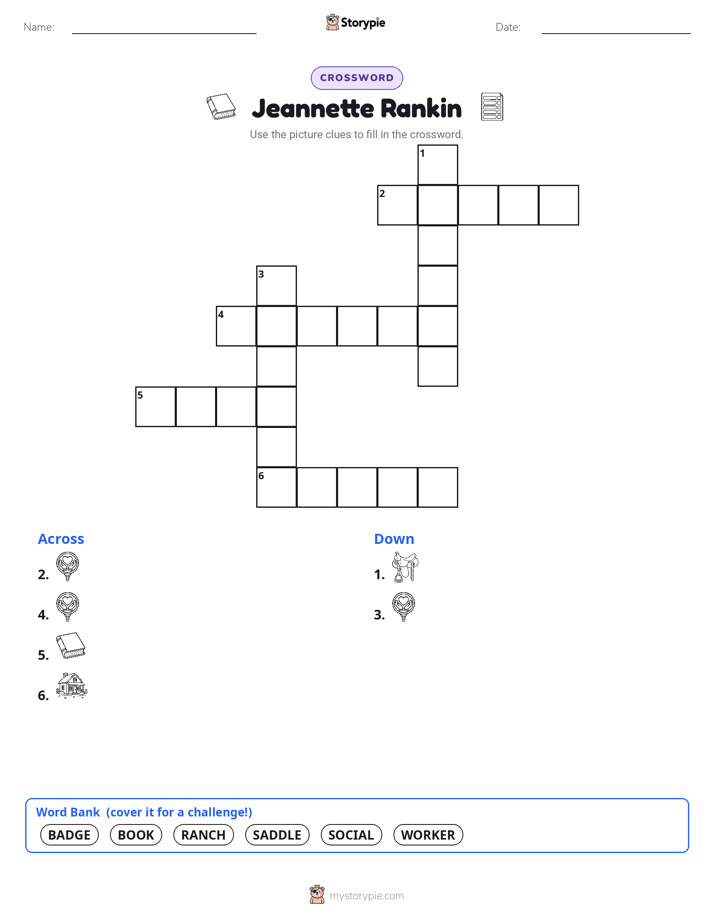
Print & create
Answer keys·No prep·Free with an account
28 worksheets · answer keys · full story · quiz · Ages 10-12 · CEFR B2
Plus adds 290,000+ more stories in 27 languages, audio for every one, and printables for all of them.
Just want Jeannette Rankin?
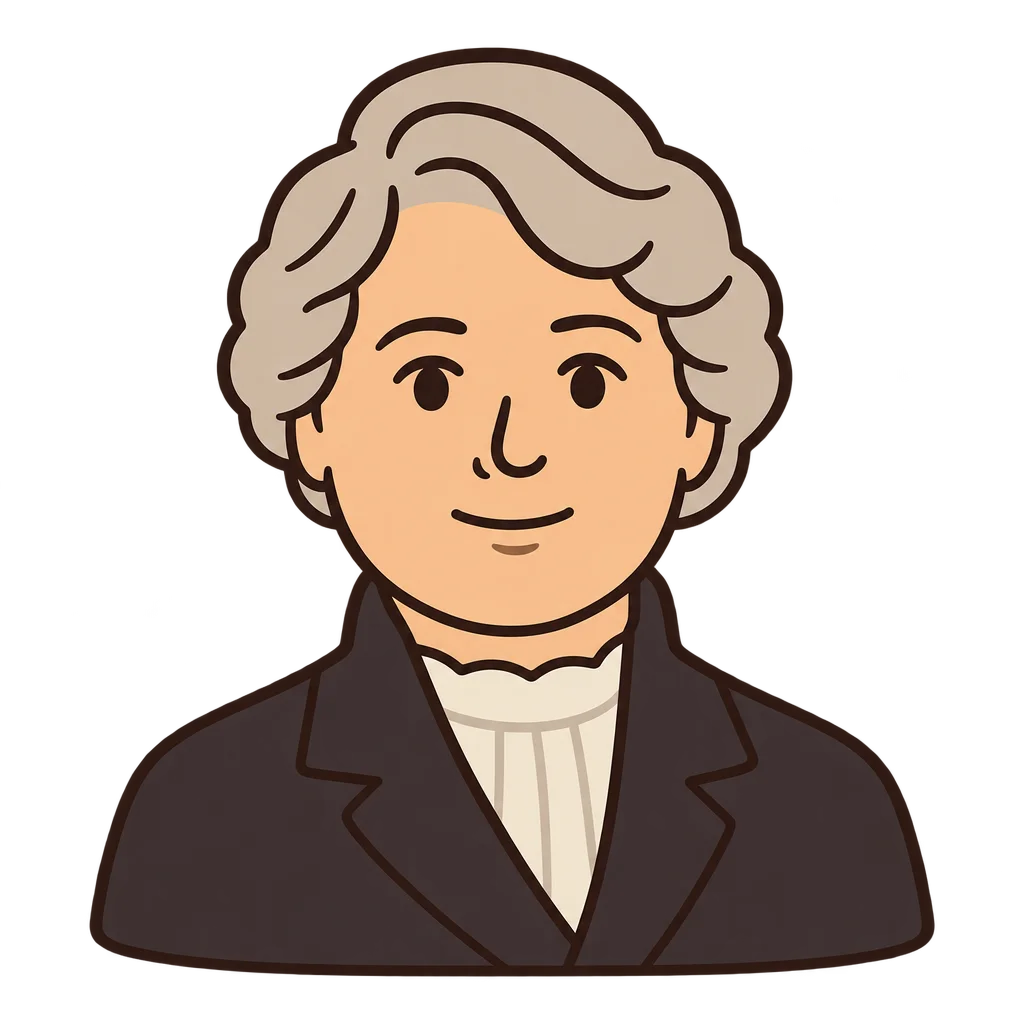
Hello, my name is Jeannette Rankin, and I have a story to tell about standing up for what you believe in. I was the first woman ever elected to the United States Congress, and my journey began on the American frontier. I was born on June 11th, 1880, on a ranch near Missoula, in what was then the Montana Territory. Life on a ranch was filled with hard work, and growing up with my six brothers and sisters taught me a great deal about fairness and cooperation. I always loved learning, and after finishing my early schooling, I attended the University of Montana. In 1902, I graduated with a degree in biology. I felt a strong desire to help people, but I hadn't yet found the right path for me.
My purpose became clearer after I moved to the state of Washington and began a career as a social worker. In my work, I saw firsthand how many laws were unfair, especially to women and children who had very little power to change their circumstances. I came to believe that for real, lasting change to happen, women needed to have a voice in making the laws that governed their lives. To do that, we needed the right to vote. This movement was known as women's suffrage. I dedicated myself to the cause, joining the national movement and traveling across the country to organize parades, give speeches, and convince people to support our mission. It was challenging work, but we were determined. In 1914, our efforts led to a major victory when women in my home state of Montana finally won the right to vote.
Jeannette Rankin
Hello, my name is Jeannette Rankin, and I have a story to tell about standing up for what you believe in. I was the first woman ever elected to the United States Congress, and my journey began on the American frontier. I was born on June 11th, 1880, on a ranch near Missoula, in what was then the Montana Territory. Life on a ranch was filled with hard work, and growing up with my six brothers and sisters taught me a great deal about fairness and cooperation. I always loved learning, and after finishing my early schooling, I attended the University of Montana. In 1902, I graduated with a degree in biology. I felt a strong desire to help people, but I hadn't yet found the right path for me.
My purpose became clearer after I moved to the state of Washington and began a career as a social worker. In my work, I saw firsthand how many laws were unfair, especially to women and children who had very little power to change their circumstances. I came to believe that for real, lasting change to happen, women needed to have a voice in making the laws that governed their lives. To do that, we needed the right to vote. This movement was known as women's suffrage. I dedicated myself to the cause, joining the national movement and traveling across the country to organize parades, give speeches, and convince people to support our mission. It was challenging work, but we were determined. In 1914, our efforts led to a major victory when women in my home state of Montana finally won the right to vote.
That victory opened a new door for me. With women in Montana now able to vote—and be voted for—I decided to run for a seat in the U.S. House of Representatives. To the surprise of many, I won the election in 1916! It was a historic moment. When I arrived in Washington, D.C., to take my place in Congress, I made a promise to the nation, saying, 'I may be the first woman member of Congress, but I won’t be the last.' My time in office was immediately put to the test. Just a few days into my term, in April of 1917, I was faced with one of the most difficult decisions of my life: whether to vote for the United States to enter World War I. I have always been a pacifist, which means I believe that war is not the right way to solve problems. I listened to my conscience and voted no, even though it was a very unpopular choice at the time.
After my first term in Congress ended, I continued to work for peace and social justice, fighting for the rights of women and children. Years passed, and the world changed, but my beliefs did not. In 1940, the people of Montana elected me to Congress for a second time, believing in my commitment to serving them. Unfortunately, the world was once again on the brink of war. On December 8th, 1941, the day after the attack on Pearl Harbor, Congress gathered to vote on whether to enter World War II. As the votes were cast, one after another in favor of war, I knew I had to stand by my principles. I was the only person in the entire Congress to vote 'no.' I explained my decision by saying, 'As a woman, I can't go to war, and I refuse to send anyone else.' That single vote effectively ended my political career, but my work was far from over.
Even after leaving Congress for the final time, I never stopped fighting for peace. I dedicated the rest of my life to activism. During the 1960s, I spoke out and protested against the war in Vietnam. In 1968, I even led thousands of women in a march for peace in Washington, D.C., showing that my voice was as strong as ever. I lived a long and full life, reaching the age of 92. Today, people remember me as a pioneer who opened the doors for countless women in government and as a person who always stood up for her beliefs, no matter how high the cost. My story shows that one person, standing firm for what they believe is right, can make a lasting difference in the world.
Wow facts
About
Jeannette Rankin was an American politician and women's rights advocate, who became the first woman to hold federal office in the United States. A lifelong pacifist, she was the only member of Congress to vote against U.S. entry into both World War I and World War II.
Take a Quiz
Question 1 of 5
What is the main theme of Jeannette Rankin's story?
Explore next




Want to do even more?
Go beyond exploring. Unlock tools that turn every story into real learning.

Storypie Plus for families
Full stories, quizzes, and printables. Nights and car rides, sorted.
- Unlimited audio stories
- Create Mode: your child stars in the story
- Offline downloads
- Printable worksheets & coloring pages

Why Storypie for Schools
Students engaged. Prep in seconds. Evenings back to you.
- Worksheets & Quizzes
- Classroom Management
- Formative Assessment
- Custom Curriculum & Lesson Plans
- 27 Languages

Why Storypie for Homeschool
Curriculum done. They'll ask for more. Hours back in your day.
- Worksheet Generator
- First-Person Audio Stories
- Built-in Comprehension Quizzes
- Custom Curriculum & Lesson Plans
- Print & Go Activities