English

Jeannette Rankin
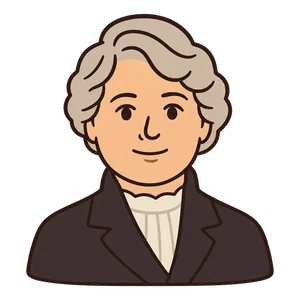
Jeannette Rankin was an American politician and women's rights advocate…
Reads at Grades 3–5 Listens at Grades 1–5
Print & create
Answer keys·No prep·Free with an account
28 worksheets · answer keys · full story · quiz · Ages 8-10 · CEFR B1
Plus adds 290,000+ more stories in 27 languages, audio for every one, and printables for all of them.
Just want Jeannette Rankin?
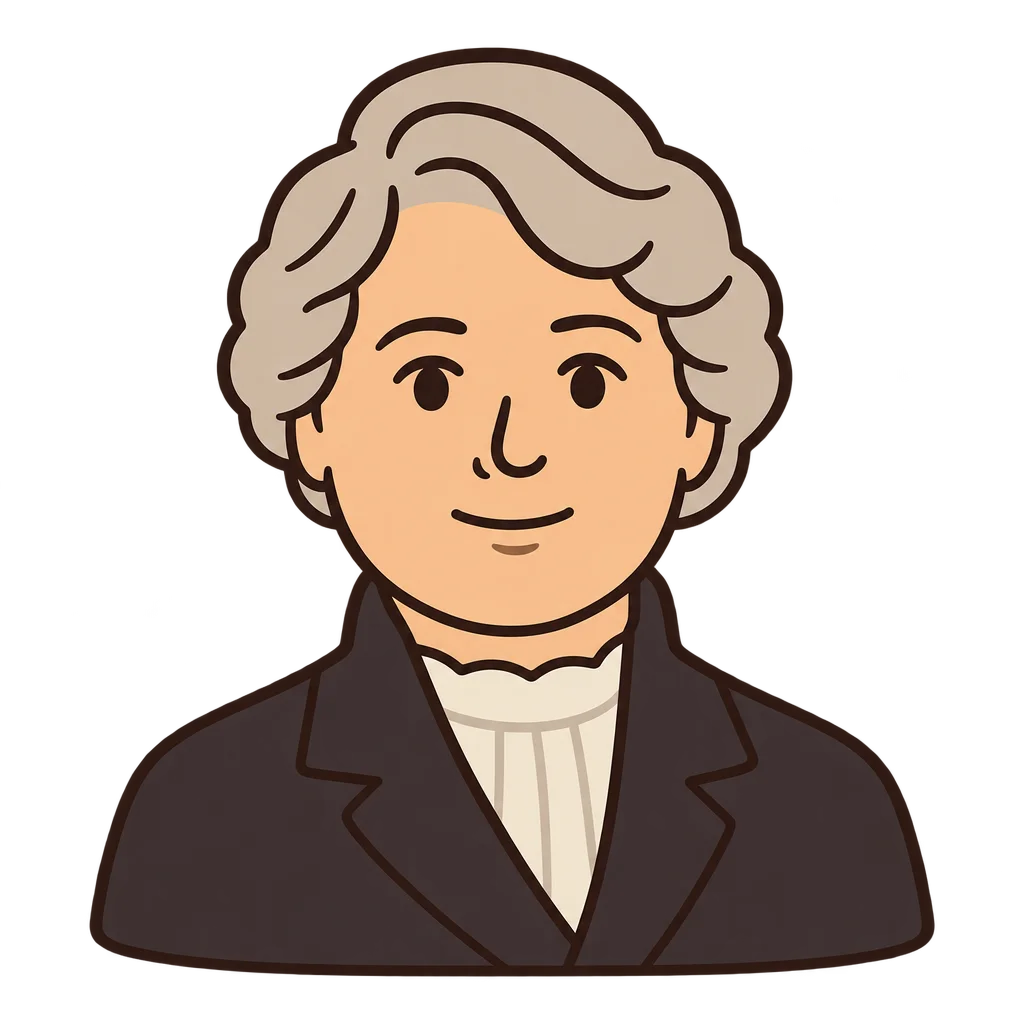
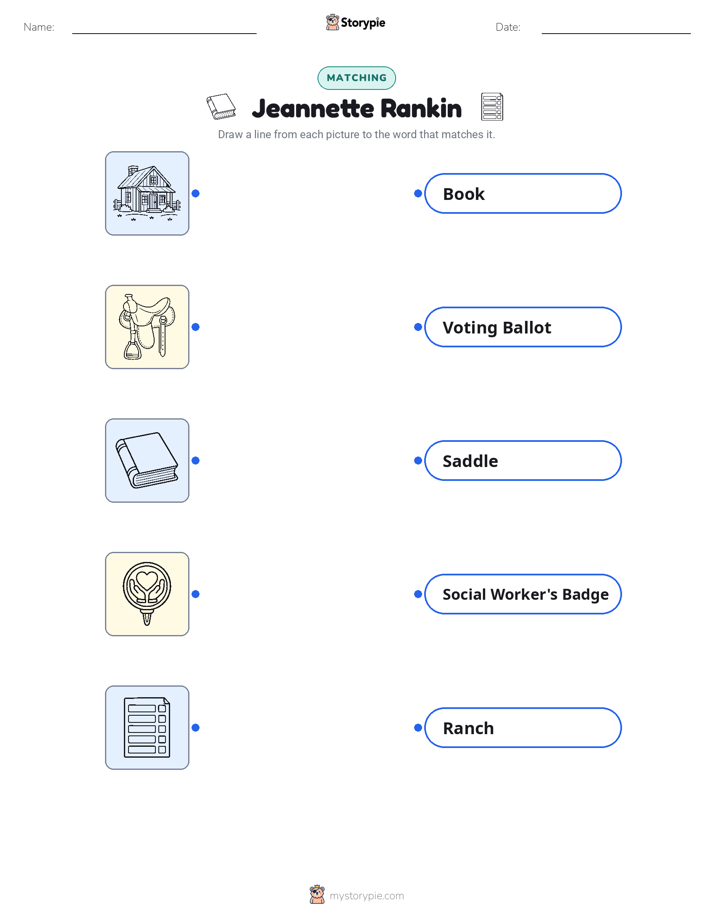
Hello! My name is Jeannette Rankin. I'd like to tell you my story. I was born on June 11th, 1880, on a big ranch near Missoula, Montana. Back then, Montana wasn't even a state yet. It was still a territory, a wild and beautiful place with wide-open skies. I was the oldest of seven children, and life on the frontier meant everyone had to pitch in. I learned how to cook, clean, and help take care of the farm animals. But I also loved exploring the outdoors, riding my horse, and seeing how things worked. I noticed that many people, especially women and children, worked very hard but didn't have much say in how things were run. I knew from a young age that I wanted to find a way to help make life fairer for everyone.
I was very curious and loved to learn, so after finishing school in Montana, I went to college and graduated from the University of Montana in 1902. I wanted to do more to help people directly, so in 1908, I moved all the way across the country to New York City to study and become a social worker. I worked in neighborhoods where people were struggling, and I saw how laws and politics could either help them or make their lives harder. It was during this time that I became passionate about a very important idea: women's suffrage. That's a fancy term for the right of women to vote. I realized that if women could vote, they could help elect leaders who cared about their families and communities. I knew this was my calling. I decided to dedicate myself to the fight for women's voting rights.
Jeannette Rankin
Hello! My name is Jeannette Rankin. I'd like to tell you my story. I was born on June 11th, 1880, on a big ranch near Missoula, Montana. Back then, Montana wasn't even a state yet. It was still a territory, a wild and beautiful place with wide-open skies. I was the oldest of seven children, and life on the frontier meant everyone had to pitch in. I learned how to cook, clean, and help take care of the farm animals. But I also loved exploring the outdoors, riding my horse, and seeing how things worked. I noticed that many people, especially women and children, worked very hard but didn't have much say in how things were run. I knew from a young age that I wanted to find a way to help make life fairer for everyone.
I was very curious and loved to learn, so after finishing school in Montana, I went to college and graduated from the University of Montana in 1902. I wanted to do more to help people directly, so in 1908, I moved all the way across the country to New York City to study and become a social worker. I worked in neighborhoods where people were struggling, and I saw how laws and politics could either help them or make their lives harder. It was during this time that I became passionate about a very important idea: women's suffrage. That's a fancy term for the right of women to vote. I realized that if women could vote, they could help elect leaders who cared about their families and communities. I knew this was my calling. I decided to dedicate myself to the fight for women's voting rights.
I returned to the West and started working with other amazing women to win the right to vote. We traveled all over, giving speeches and convincing people why it was so important. In 1914, our hard work paid off, and Montana granted women the right to vote. Two years later, in 1916, I decided to do something no woman had ever done before: I ran for a seat in the United States Congress. And I won. I couldn't believe it. In 1917, I walked into the U.S. House of Representatives in Washington, D.C., as the very first woman elected to federal office. One of my first and most difficult votes was whether America should enter World War I. I have always been a pacifist, which means I believe that violence and war are not the way to solve problems. So, on April 6th, 1917, I voted 'no.' Many years later, I was elected to Congress again in 1940. When the time came to vote on entering World War II on December 8th, 1941, I stayed true to my beliefs and was the only person to vote 'no.' It wasn't an easy choice, but I had to follow my conscience.
After my time in Congress, I continued to travel the world and work for peace and equal rights for the rest of my life. I lived to be 92 years old. People remember me today as the first woman to serve in the U.S. Congress, a pioneer who opened the door for so many other women to follow. I hope my story reminds you to always stand up for what you believe in, even if you are standing alone.
Wow facts
About
Jeannette Rankin was an American politician and women's rights advocate, who became the first woman to hold federal office in the United States. A lifelong pacifist, she was the only member of Congress to vote against U.S. entry into both World War I and World War II.
Take a Quiz
Question 1 of 5
In what year was Jeannette Rankin first elected to the United States Congress?
Explore next



Want to do even more?
Go beyond exploring. Unlock tools that turn every story into real learning.
Storypie Plus for families
Full stories, quizzes, and printables. Nights and car rides, sorted.
- Unlimited audio stories
- Create Mode: your child stars in the story
- Offline downloads
- Printable worksheets & coloring pages

Why Storypie for Schools
Students engaged. Prep in seconds. Evenings back to you.
- Worksheets & Quizzes
- Classroom Management
- Formative Assessment
- Custom Curriculum & Lesson Plans
- 27 Languages

Why Storypie for Homeschool
Curriculum done. They'll ask for more. Hours back in your day.
- Worksheet Generator
- First-Person Audio Stories
- Built-in Comprehension Quizzes
- Custom Curriculum & Lesson Plans
- Print & Go Activities