English

John Brown
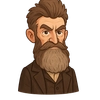
John Brown was an American abolitionist who advocated for and practiced armed insurrection as a means to…
Reads at Grades 6–8 Listens at Grades 4–8
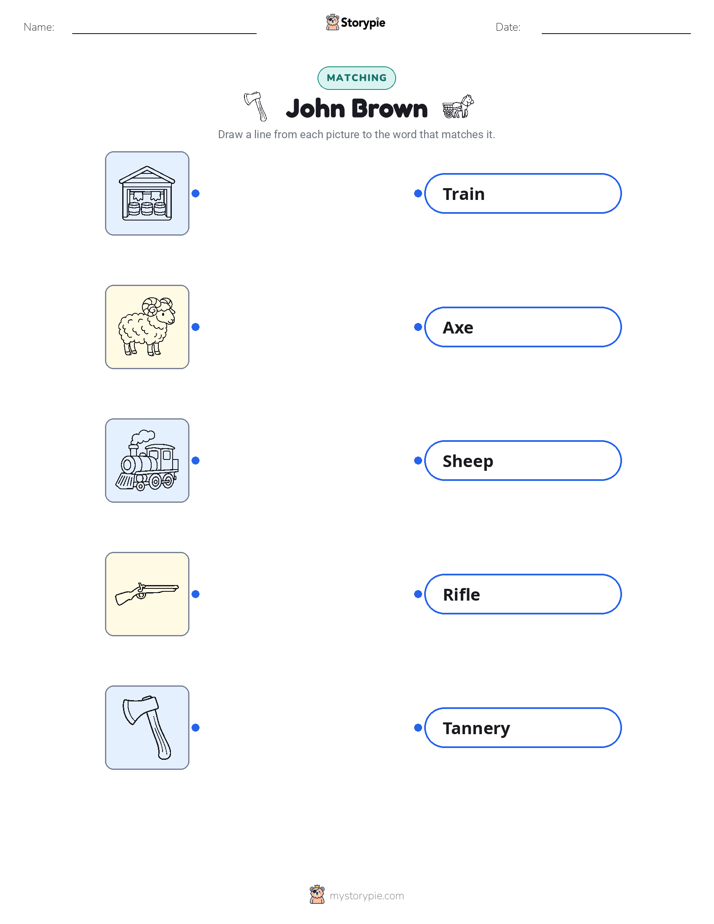
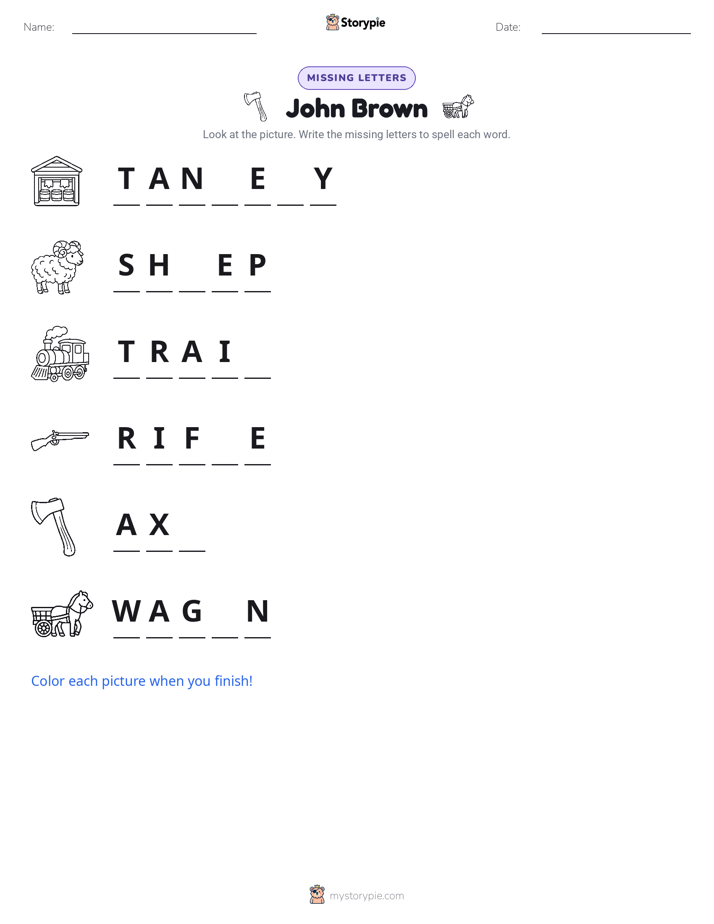
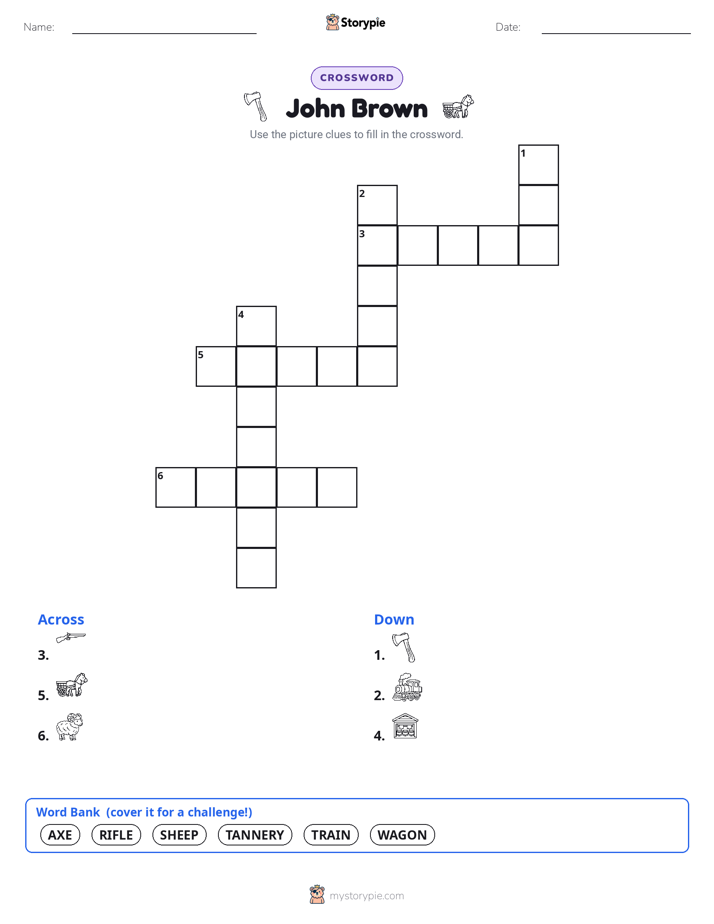
Print & create
Answer keys·No prep·Free with an account
28 worksheets · answer keys · full story · quiz · Ages 10-12 · CEFR B2
Plus adds 102,000+ more stories in 27 languages, audio for every one, and printables for all of them.
Just want John Brown?
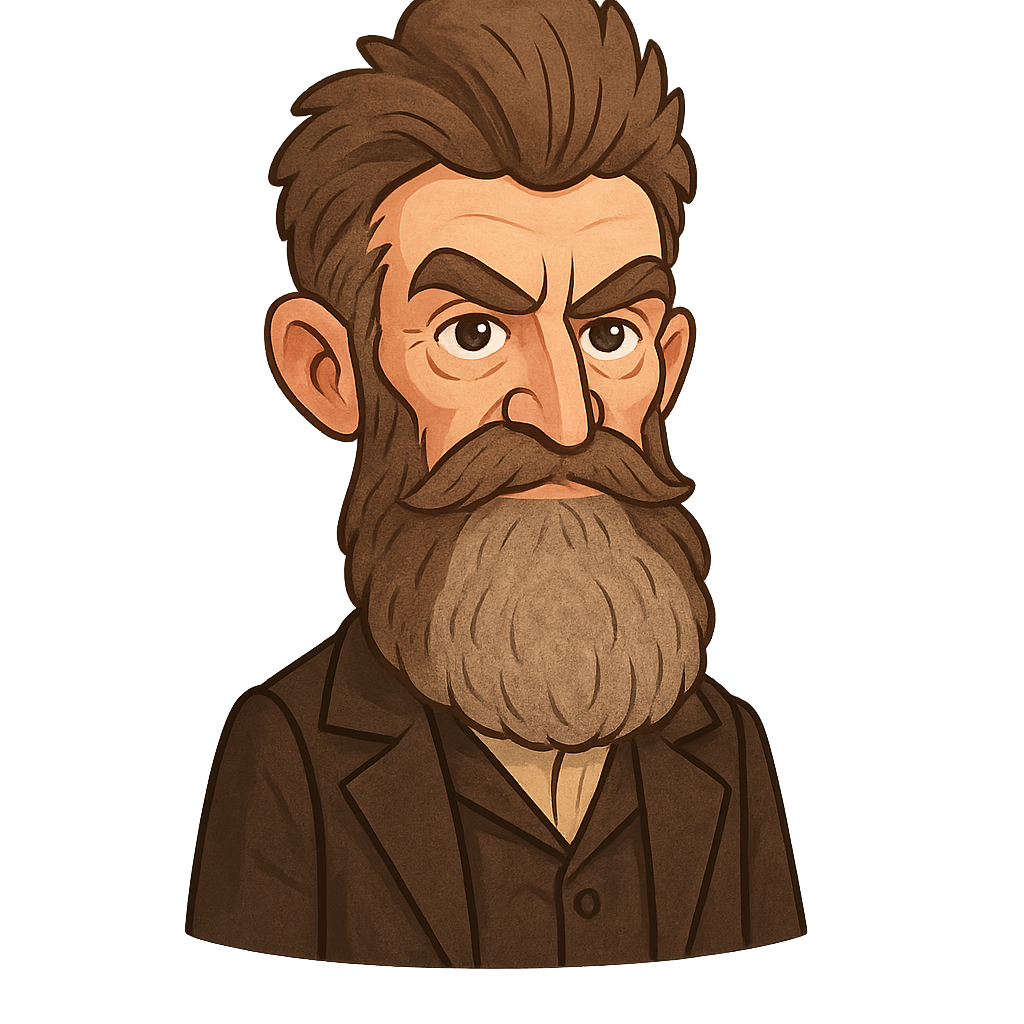
My name is John Brown, and I believed that every person deserved to be free. I was born on May 9th, 1800, in Torrington, Connecticut. My father, Owen Brown, was a tanner, and he taught me from a young age that slavery was a great sin against God. One of my earliest memories, from when I was about 12 years old, was seeing an enslaved boy my own age get beaten horribly. That sight never left me and filled my heart with a fire to fight against such cruelty. I tried many jobs as I grew up, from running a tannery like my father to raising sheep, but my true calling was always the fight against slavery. In 1837, after an abolitionist newspaper editor named Elijah P. Lovejoy was murdered for speaking out against slavery, I stood up in my church and made a public promise. I vowed before everyone that I would dedicate the rest of my life to the destruction of slavery.
For many years, I helped enslaved people find freedom by being a 'conductor' on the Underground Railroad, guiding them to safety in the North. But I knew this wasn't enough. In the 1850s, the country was fiercely debating whether new territories should allow slavery. A new law, the Kansas-Nebraska Act of 1854, said the settlers in the Kansas Territory could decide for themselves. Immediately, people from both sides rushed there to influence the vote. The territory became a battleground, a place people called 'Bleeding Kansas.' I knew I had to go. In 1855, I moved to Kansas with five of my sons to join the anti-slavery fighters. The conflict there was brutal. In May of 1856, a pro-slavery group attacked and burned the town of Lawrence. I believed that such violence had to be met with equal force. In response, I led a small group, including my sons, on a nighttime raid along Pottawatomie Creek, where we fought and killed five pro-slavery men. It was a terrible, violent act, but I believed it was necessary to show that we would not be intimidated and that we would fight back to stop slavery from spreading.
John Brown: A Fight for Freedom
My name is John Brown, and I believed that every person deserved to be free. I was born on May 9th, 1800, in Torrington, Connecticut. My father, Owen Brown, was a tanner, and he taught me from a young age that slavery was a great sin against God. One of my earliest memories, from when I was about 12 years old, was seeing an enslaved boy my own age get beaten horribly. That sight never left me and filled my heart with a fire to fight against such cruelty. I tried many jobs as I grew up, from running a tannery like my father to raising sheep, but my true calling was always the fight against slavery. In 1837, after an abolitionist newspaper editor named Elijah P. Lovejoy was murdered for speaking out against slavery, I stood up in my church and made a public promise. I vowed before everyone that I would dedicate the rest of my life to the destruction of slavery.
For many years, I helped enslaved people find freedom by being a 'conductor' on the Underground Railroad, guiding them to safety in the North. But I knew this wasn't enough. In the 1850s, the country was fiercely debating whether new territories should allow slavery. A new law, the Kansas-Nebraska Act of 1854, said the settlers in the Kansas Territory could decide for themselves. Immediately, people from both sides rushed there to influence the vote. The territory became a battleground, a place people called 'Bleeding Kansas.' I knew I had to go. In 1855, I moved to Kansas with five of my sons to join the anti-slavery fighters. The conflict there was brutal. In May of 1856, a pro-slavery group attacked and burned the town of Lawrence. I believed that such violence had to be met with equal force. In response, I led a small group, including my sons, on a nighttime raid along Pottawatomie Creek, where we fought and killed five pro-slavery men. It was a terrible, violent act, but I believed it was necessary to show that we would not be intimidated and that we would fight back to stop slavery from spreading.
My time in Kansas convinced me that speeches and small acts of defiance would never be enough to end the powerful system of slavery. I began to form a much bigger, more daring plan. I believed that if I could arm enslaved people, they would rise up and fight for their own freedom. My target was the United States federal armory at Harpers Ferry, Virginia. It was a huge storehouse filled with thousands of rifles and other weapons. My plan was to lead a small, disciplined force to capture the armory, take the weapons, and distribute them to enslaved people in the surrounding countryside. I imagined us starting a great army of liberation, moving south through the mountains, freeing people from plantations as we went. I spent two years gathering money and recruiting brave men, both Black and white, who were willing to risk their lives for the cause. On the night of October 16th, 1859, with a group of about 21 men, including three of my own sons, I put my plan into action. We marched into Harpers Ferry under the cover of darkness and, without much of a fight, we seized the armory.
Although we captured the armory easily, our plan quickly began to fall apart. The townspeople were alerted, and local militia soon surrounded us. The enslaved people in the area did not rise up to join us as I had hoped. We were trapped. The next day, United States Marines, led by Colonel Robert E. Lee, arrived. A fierce battle began. My men fought bravely, but we were outnumbered. During the fighting, two of my sons, Watson and Oliver, were killed. On the morning of October 18th, the marines stormed the engine house where we had made our last stand. I was wounded and captured. I was taken to nearby Charles Town and put on trial for treason against Virginia, murder, and inciting a slave rebellion. I knew I would be found guilty, so I used the trial as my final platform to speak out against the evils of slavery. I told the court and the world, 'I believe that to have interfered as I have done...in behalf of His despised poor, was not wrong, but right.' I was convicted on November 2nd.
On December 2nd, 1859, my life came to an end. I lived to be 59 years old. My actions at Harpers Ferry forced the entire nation to confront the issue of slavery head-on. In the North, many people, like the writer Ralph Waldo Emerson, began to see me as a martyr—a hero who died for a righteous cause. In the South, I was seen as a dangerous villain. My raid deeply divided the country and pushed it closer to war. Just over a year after my death, the Civil War began. During that war, Union soldiers marched into battle singing a song called 'John Brown's Body,' turning my story into an anthem for freedom. Though my methods were violent and are still debated today, I am remembered as a man who was so committed to the cause of abolition that he was willing to sacrifice everything to see others set free.
Wow facts
About
John Brown was an American abolitionist who advocated for and practiced armed insurrection as a means to overthrow the institution of slavery in the United States.
Take a Quiz
Question 1 of 5
In your own words, describe the main events of my raid on Harpers Ferry.
Explore next


Want to do even more?
Go beyond exploring. Unlock tools that turn every story into real learning.

Storypie Plus for families
Full stories, quizzes, and printables. Nights and car rides, sorted.
- Unlimited audio stories
- Create Mode: your child stars in the story
- Offline downloads
- Printable worksheets & coloring pages

Why Storypie for Schools
Students engaged. Prep in seconds. Evenings back to you.
- Worksheets & Quizzes
- Classroom Management
- Formative Assessment
- Custom Curriculum & Lesson Plans
- 27 Languages

Why Storypie for Homeschool
Curriculum done. They'll ask for more. Hours back in your day.
- Worksheet Generator
- First-Person Audio Stories
- Built-in Comprehension Quizzes
- Custom Curriculum & Lesson Plans
- Print & Go Activities